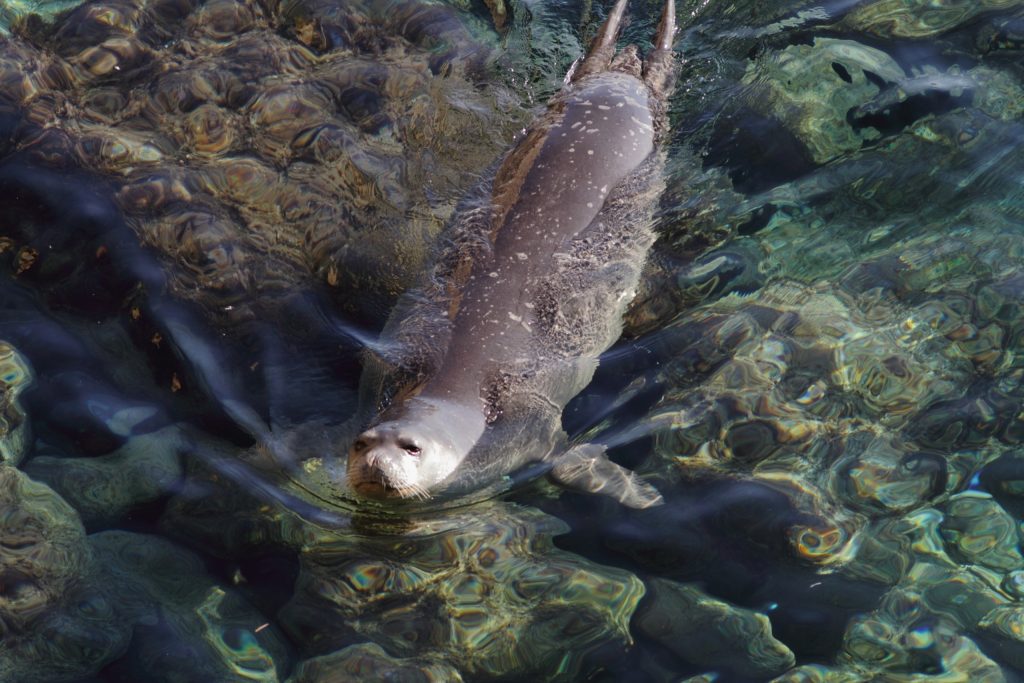
Imagine standing on a rocky ledge along the wild Akamas coast, gazing out at the turquoise water below, when a large, dark shape quietly surfaces – blinking at you with wide, soulful eyes before silently slipping back beneath the waves. That is the Mediterranean Monk Seal, and if you are lucky enough to witness this, you are looking at one of the rarest mammals on Earth. What makes this moment even more extraordinary in Cyprus is that, not so long ago, most scientists believed this animal was completely gone from the island’s waters forever.
- What Exactly Is a Monk Seal?
- An Ancient Presence: From Myth to History
- Portrait of an Agile Freediver
- Fun Facts That Will Stay With You
- The Cyprus Story: Near Extinction and a Remarkable Return
- Conservation Status and the Threats That Remain
- Where to Experience This Encounter in Cyprus
- Why This Story Matters to Cyprus
What Exactly Is a Monk Seal?
Seals belong to a group of marine mammals called pinnipeds – a Latin word meaning “fin-footed” – a family that includes seals, sea lions, and walruses. These are air-breathing animals that evolved from land-dwelling ancestors and gradually returned to the sea, becoming masterful swimmers while still needing land or rocky shores to rest and give birth.
The Mediterranean Monk Seal (Monachus monachus) is the only seal species native to the Mediterranean Sea and is the sole surviving member of its genus, Monachus. Its closest relatives, the Caribbean monk seal and the Hawaiian monk seal, belong to a closely related genus. The Caribbean monk seal, tragically, went extinct in the mid-20th century, making the Mediterranean species a living thread of an ancient lineage.
An Ancient Presence: From Myth to History
The Mediterranean monk seal has appeared in writings across 3,000 years of human history. Homer, Aristotle, Hippocrates, Plutarch, and Galen are among the luminaries who recorded observations about this creature and its relationship to human culture, folklore, science, and economy.
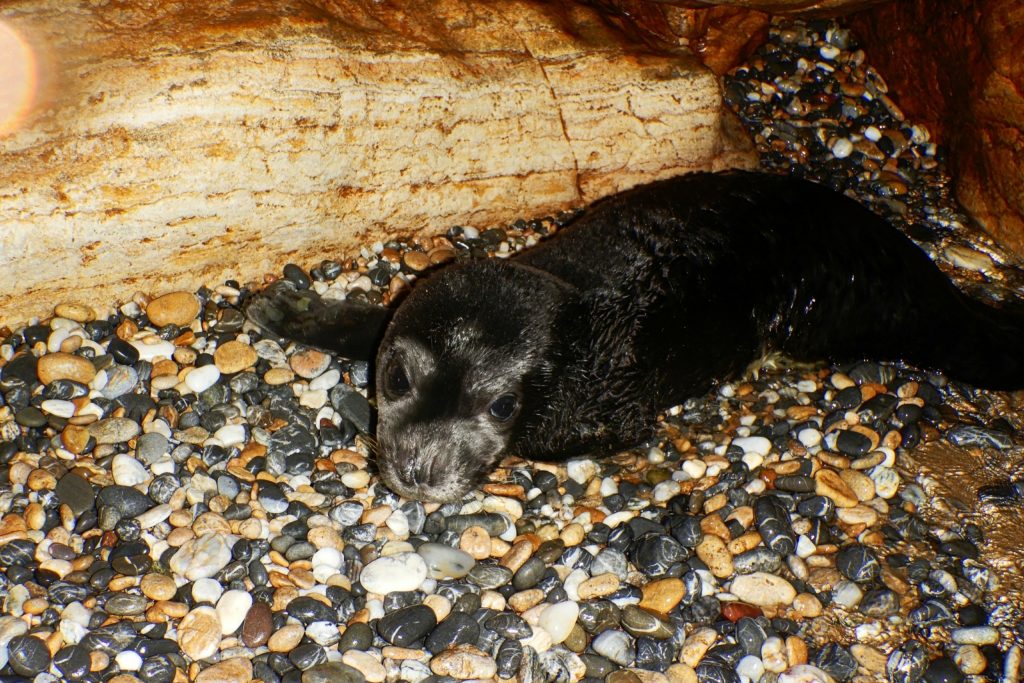
In Homer’s The Odyssey, the sea god Proteus is depicted herding monk seals for Poseidon. The mythical hero Phocus of Aegina – with phokos literally translating to “seal” in Greek – was said to be the son of the nereid Psamathe, conceived while she was transformed into a seal. The ancient city of Phocaea even took on the monk seal as its emblem.
In ancient texts such as those of Aristotle, Mediterranean monk seals are described as very curious and friendly with humans, hauling out in big colonies on open beaches. In ancient Greece, monk seals bore an elevated status as protected animals of Apollo, being depicted on coins, art, and even buried in graves alongside humans.
Yet this reverence was fragile. Ancient Greek and Roman texts indicate that the Mediterranean monk seal was exploited heavily for its fur, oil, and meat, and for its use in medicines and entertainment, particularly during the Roman era. Centuries of hunting, persecution by fishermen who saw them as competitors, and progressive coastal development gradually pushed this magnificent animal to the very edge of extinction.
Portrait of an Agile Freediver
The Mediterranean monk seal grows from roughly 80 centimetres at birth to an average of 2.4 metres as an adult. Males weigh an average of 320 kilograms, and females around 300 kilograms. In other words, this is a sizeable animal – roughly the length of a small car and heavier than many motorcycles, yet it moves through the water with breathtaking grace.
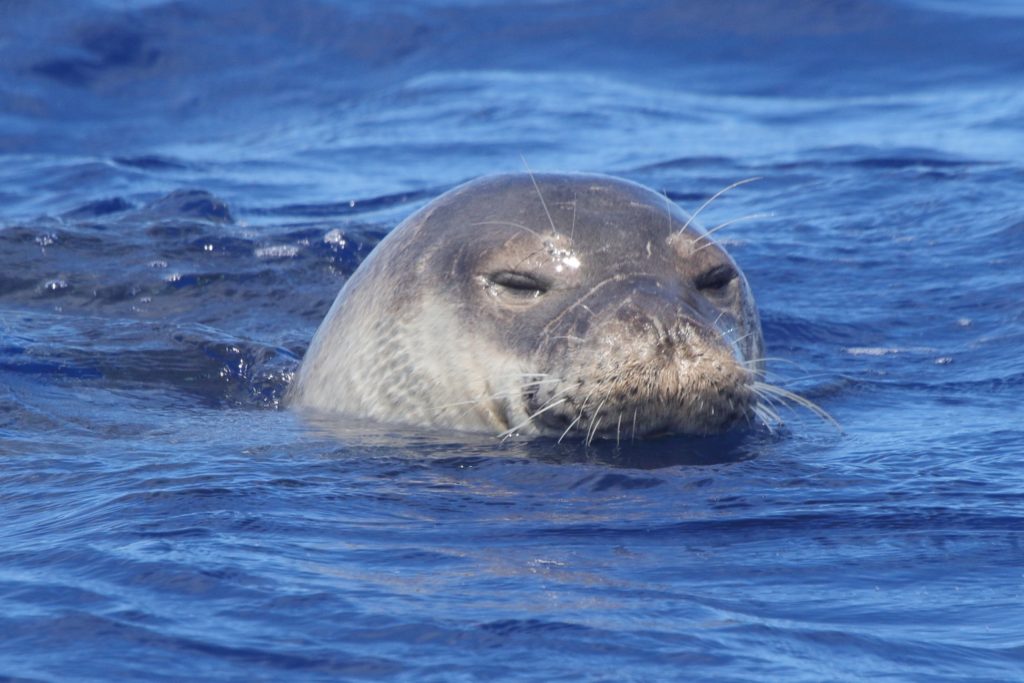
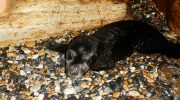
The fur is black in males and brown to dark grey in females, with a paler, almost white belly. Pups are born with dark brown to black hair and a distinctive white stripe on the belly, which differs in shape between males and females. This baby coat is replaced after six to eight weeks.
Mediterranean monk seals are diurnal hunters, feeding on a variety of fish, crustaceans, and molluscs, primarily octopus, squid, lobsters, mullets, flatfish, tuna, sardines, and eels – up to 25 kilograms of food per day. Although they commonly feed in shallow coastal waters, they are also known to forage at depths of up to 250 metres.
One of the most poignant shifts in the species’ behaviour reveals the weight of human pressure. In ancient times, and up until the 20th century, Mediterranean monk seals would congregate, give birth, and seek refuge on open beaches. In more recent times, they have retreated from open shores and now use only sea caves for these activities – hidden from the world that has so consistently disturbed them.
Fun Facts That Will Stay With You
- The name “monk” seal does not come from any monastery. It is said to derive from the animal’s somewhat solitary nature and the brownish folds of skin around its neck, which reminded early naturalists of a monk’s hood or cowl.
- The Mediterranean monk seal is believed to be the world’s rarest pinniped species.
- In 2016, a monk seal was documented swimming up a river in Turkey’s Antalya Province – believed to be the first ever documented sighting of a monk seal in a river.
- Ancient Greeks reportedly used monk seal fat as a remedy for gout, and their skin as a protective charm against lightning – hanging seal hide from the mast of a ship was believed to ward off storms.
- Some of the imaginative stories of mermaids and sea nymphs in Mediterranean folklore are believed to have originated from distant sightings of monk seals lounging on rocks or partially submerged in cave entrances – their round heads and curious eyes easily mistaken at a distance for something distinctly more human.
The Cyprus Story: Near Extinction and a Remarkable Return
Cyprus and the monk seal share a long, troubled, and now increasingly hopeful story. Monk seals were first mentioned as part of the native fauna of Cyprus in 1959, and the species appears to have steadily declined since then.
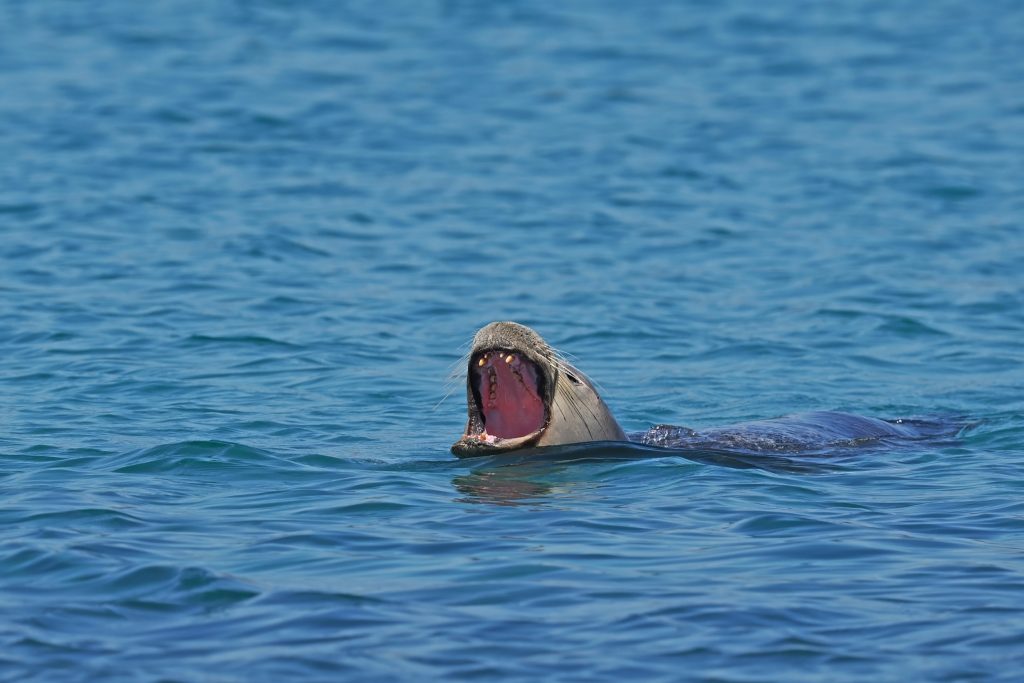
By the late 20th century, the outlook was grim. Evidence suggests the species became effectively extinct in Cyprus at the end of the 20th century. A combination of hunting, deliberate killing by fishermen, entanglement in fishing nets, and destruction of the coastal cave habitats that seals use for pupping had reduced the population to the point where sightings were vanishingly rare.
Then, something shifted. Following an increase of seal sightings around the island, a monitoring programme was established in 2009 to evaluate the status of the species. During 2009–2018, using field surveys, photographs from camera traps and an information network, researchers recorded an increasing number of seal sightings and the birth of several pups, indicating the permanent presence of the species on the island. This is the first recorded re-establishment of a Mediterranean monk seal population in an area of its former range following near eradication.
Both the Republic of Cyprus and Northern Cyprus have now confirmed regular breeding activity, a remarkable conservation achievement that has been celebrated across the scientific community.
The three areas of Cyprus where most monk seal sightings have been made are the Paphos–Akamas coastline, the Limassol area, and the Cape Greco–Cape Pyla stretch of coastline.
Conservation Status and the Threats That Remain
In June 2023, the IUCN reclassified the Mediterranean monk seal from Endangered to Vulnerable – a meaningful step in the right direction that reflects genuine population recovery, the discovery of previously undocumented breeding areas, and improved coordination between countries.
The current estimated global population stands at fewer than 1,000 individuals, with roughly half inhabiting the Mediterranean basin.
Despite the progress, the threats have not disappeared:
Fishing interactions remain one of the most serious risks. Seals can become entangled in nets, and fishermen sometimes view them as competitors, leading to deliberate harm. Research in Cyprus found that interactions between monk seals and small-scale fisheries are most likely to occur in shallow waters, using trammel nets and gillnets, especially during spring and summer months.
Coastal disturbance is equally dangerous. The sea caves that seals use to give birth and rest are sensitive places. A single thoughtless intrusion by a diver, kayaker, or tourist boat during the pupping season can cause a mother to abandon her pup.
Tourism pressure along Cyprus’s coastline continues to grow, particularly in the very areas – Akamas, Cape Greco – where seals are most likely to be found.
Pollution and marine debris pose ongoing risks, while climate change is expected to affect the availability of prey fish and the stability of cave habitats as sea levels rise.
Habitat protection is widely recognised as the greatest conservation priority. A network of protected areas is considered necessary for the Mediterranean monk seal population to survive long term, and protected areas have been established at locations along Cyprus’s coastline.
Where to Experience This Encounter in Cyprus
Spotting a Mediterranean Monk Seal in the wild is never guaranteed, and that is precisely what makes any sighting so memorable. Here is where your chances are best:
Akamas Peninsula (Paphos District) – The most consistently productive area for sightings. The rugged, largely undeveloped coastline here, with its sea caves and clear waters, offers ideal habitat. The Akamas is already a protected nature area, and boat trips from Latchi Harbour pass along stretches of coast where seals have been regularly observed.
Cape Greco National Forest Park (Famagusta District) – The dramatic sea caves around Cape Greco are another important area. Boat excursions from Ayia Napa pass near cave entrances where seals have been seen resting.
Akrotiri Peninsula (Limassol) – Seals have made notable appearances here, including a famous 2015 event when a group of ten monk seals was spotted at Governor’s Beach nearby.
Practical advice: If you ever do see a monk seal, the most important thing you can do is keep your distance – at least 50 to 100 metres – and never approach a cave if you suspect a seal may be inside. Their welfare always comes first. Citizen science sighting reports have become an invaluable tool for conservation, and organisations like SPOT (the Society for the Protection of Turtles) actively welcome and use public sighting records to monitor individual seals.
Why This Story Matters to Cyprus
The Mediterranean Monk Seal is far more than a rare animal on a conservation checklist. It is a living symbol of what Cyprus’s seas once were – rich, wild, and teeming with life – and, importantly, what they could be again.
Cyprus sits in the heart of the Eastern Mediterranean, a sea under enormous human pressure. The return of the monk seal to these waters tells us that the sea still has the capacity to recover when we give it even a small amount of space and protection. It tells us that the ancient relationship between this island and its most storied marine mammal is not entirely broken.
Conservation efforts and coordination among countries are improving, some populations are increasing in size, and monk seals are beginning to appear in habitats and places where they had not been seen for decades. Cyprus is now part of that hopeful chapter.
In a world where wildlife news is so often grim, the monk seal of Cyprus offers something rare: a genuine reason for optimism. This is an animal that looked extinction in the eye, and on the rocky shores of an island steeped in mythology, quietly chose to stay.