Neptune Grass of Cyprus

Neptune Grass of Cyprus

Beneath the turquoise surface of the Cypriot sea, invisible to the sunbathers on the shore above, lies one of the most extraordinary living communities on Earth. It is not a reef, not a forest of kelp, but something far more ancient and remarkable – a meadow of flowering grass, swaying gently in the current, older than most civilisations. And Cyprus, it turns out, may be home to one of the most resilient stands of this grass anywhere in the Mediterranean. Not an Alga – A True Flowering Plant Many people who encounter Neptune grass – either as tangled brown leaves washed up on a beach or glimpsed through a snorkel mask – assume it must be a seaweed. It is…

Read more

Endangered Plants of Cyprus

Endangered Plants of Cyprus

Cyprus hosts approximately 2,000 plant species, with 146 being endemic to the island. This means they exist nowhere else on Earth. The flora of Cyprus developed over millions of years through a combination of geographic isolation, diverse geology, and varying climate zones. Today, around 258 plant taxa are classified as threatened according to international conservation standards. These include species listed as Critically Endangered, Endangered, or Vulnerable by the International Union for Conservation of Nature. Historical Background The island's plant diversity reflects its position at the crossroads of three continents. Cyprus sits in the eastern Mediterranean where Europe, Asia, and Africa meet. This location allowed species from different regions to colonize the island over time. The Troodos Mountains, formed from ancient…

Read more
Rare Plants and Animals of Cyprus High-Elevation Zones

Rare Plants and Animals of Cyprus High-Elevation Zones

Cyprus hosts an extraordinary concentration of endemic species in its high-elevation zones, particularly within the Troodos Mountains. At altitudes between 1,000 and 1,952 meters, unique geological conditions combine with Mediterranean climate variations to create habitats found nowhere else on Earth. The island supports 143 endemic plant species, with 47 of these confined exclusively to the Troodos range above 1,000 meters. These mountains function as a natural laboratory where volcanic soils, steep valleys, and climate extremes have shaped remarkable biodiversity over millions of years. The Troodos Mountain Environment Mount Olympus, also called Khionistra, rises to 1,952 meters and represents the highest point in Cyprus. The Troodos range occupies roughly half the island's total area, its core composed of igneous rocks formed…

Read more
Cyprus Wild Pistachio

Cyprus Wild Pistachio

High on rocky hillsides where the Mediterranean sun bakes the earth, a sturdy, wide-crowned tree stands like an ancient sentinel. Its twisted trunk oozes fragrant resin, and in autumn its golden leaves and clusters of red-to-black fruits light up the landscape. Meet the wild pistachio, a true survivor and one of the quiet heroes of Cyprus’s native woodlands. A Proud Member of the Cashew Family Scientifically known as Pistacia atlantica, this deciduous tree belongs to the genus Pistacia within the Anacardiaceae family – the cashew or sumac clan, which also includes the closely related mastic tree (Pistacia lentiscus), another iconic native of Cypriot maquis. Both species thrive in the island’s dry, rocky slopes and garigue, sharing the family’s trademark resin…

Read more
Cyprus Rock Rose

Cyprus Rock Rose

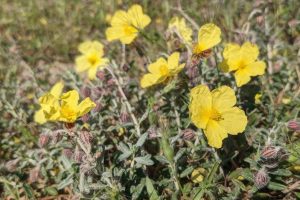
Springtime in Cyprus brings a splash of sunshine to rocky hills with Cyprus Rock-rose Helianthemum obtusifolium, a wildflower that's like a mini sunrose hugging the ground. This tough little plant, found only on the island, turns dry slopes into cheerful displays. But why does it follow the sun, and what ancient stories hide in its petals? Just What Is This Sunny Cypriot Native? Helianthemum obtusifolium is a small, shrub-like wildflower from the rockrose family, the kind of plants that love sunny, dry spots around the Mediterranean. It's a perennial that pops up year after year, adding bright yellow touches to Cyprus's wild landscapes without needing much care. Roots in Cyprus's Ancient Earth and Botanical Tales Millions of years ago, as…

Read more
Calabrian Pine in Cyprus

Calabrian Pine in Cyprus

Imagine stepping onto sun-drenched slopes where tall evergreens sway in the breeze, their long needles catching golden light and filling the air with a fresh, resinous scent. This is the world of Pinus brutia, Cyprus’s most iconic pine and the backbone of the island’s woodlands. Together with its mountain cousin, it reveals a story of ancient resilience that still thrives across the Mediterranean landscape today. A Pine Built for the Island Pinus brutia, commonly known as the Calabrian pine, is a hardy evergreen conifer perfectly suited to the warm, dry conditions of the eastern Mediterranean. In the broad pine family (Pinaceae), it stands out for its fire-adapted seeds and drought tolerance. On Cyprus it reigns supreme, forming the vast majority…

Read more
Anthemis or Mayweed in Cyprus

Anthemis or Mayweed in Cyprus

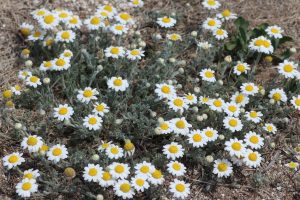
Picture a sun-drenched Cypriot meadow in spring, dotted with cheerful daisy-like flowers that bob like tiny suns on slender stems, their delicate scent mingling with the salty sea air. These are the Anthemis or Mayweed species, often mistaken for their chamomile cousins, a group of wildflowers that paint the island's landscapes with subtle beauty. But what tales do these unassuming blooms tell of Cyprus' wild heart? Getting Acquainted with the Island's Daisies Anthemis is a genus of flowering plants in the vast Asteraceae family, which includes everything from sunflowers to dandelions, showing how these humble herbs fit into a broader world of composite blooms that rely on wind and insects for their spread. In Cyprus, they're known as wild chamomiles…

Read more
Cyprus Big Root Dandelion

Cyprus Big Root Dandelion

Scattered across Cyprus's fields and paths, a sunny yellow flower known as the Cyprus dandelion catches the eye like a little burst of cheer. This humble plant, often mistaken for its common cousins, has roots in ancient remedies and a knack for thriving where others might not. But what makes it stand out in the crowd of dandelions, and why has it been cherished for centuries? Getting to Know This Cheerful Meadow Dweller The Cyprus dandelion, or Taraxacum cyprium, is a wild flowering plant that's part of the vast dandelion family. It's like the familiar backyard weeds we all know, with yellow blooms that turn into fluffy seed balls, but this one has a special Cypriot twist. Locally called "Πικραλίδα"…

Read more
Bosea Cypria of Cyprus

Bosea Cypria of Cyprus

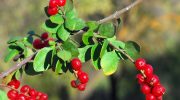
High on a sun-bleached limestone cliff in the Akamas or along a rocky gulley near Paphos, you might spot a graceful evergreen shrub with deep-green leaves cascading like a living curtain. In late summer its branches glow with clusters of bright red berries that shine like tiny rubies against the rock. This is Bosea cypria, a quiet but extraordinary survivor that has clung to the island’s rugged edges for millions of years. An Ancient Shrub from the Amaranth Family Bosea cypria belongs to the Amaranthaceae family – the same group that gives us spinach, beetroot and colourful garden amaranths. Unlike most of its relatives, which are soft-stemmed herbs, this species is a woody evergreen shrub, one of only three living…

Read more