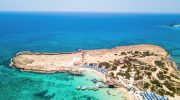
Cyprus’s beaches aren’t just beautiful stretches of sand and sea – they’re ancient gateways where civilizations arrived, traded, and shaped Mediterranean history for over 11,000 years. From the legendary birthplace of Aphrodite rising from sea foam to remote turtle nesting grounds, from Bronze Age harbors buried beneath modern sand to medieval fortresses guarding strategic bays, the island’s 650 kilometers of coastline blend natural beauty with deep cultural memory. Step onto these shores and visitors will find themselves standing where prehistoric sailors first landed, where ancient traders shipped copper to distant empires, and where myths were born from the meeting of land and water.
An Island Defined by Its Edges
Cyprus has over 650 kilometers (about 400 miles) of extraordinarily diverse coastline packed into a relatively small island. This isn’t one uniform beach experience but a spectrum ranging from soft white sand to golden grit, from dark volcanic pebbles to pale limestone shelves, from shallow turquoise bays to dramatic cliffs plunging into deep blue water. Some beaches are calm and protected, perfect for families with small children, while others face open sea with waves that attract surfers and adventurers.
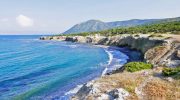
The coastline functions as more than just scenic backdrop or tourism amenity – it’s where Cyprus’s story begins and continues. Long before beaches became places of leisure and sunbathing, they were gateways to survival, settlement, and connection with the wider world. Understanding Cyprus’s beaches means understanding how geography, geology, history, and mythology interweave along the waterline where island meets sea.
From Ancient Harbors to Modern Shores
Cyprus’s coastline is one of the oldest continuously used shorelines in human history. For more than 11,000 years, people have arrived by sea, settled near water sources close to the coast, fished from rocky coves, and launched trade routes from natural harbors. The island’s position in the eastern Mediterranean made it a natural stopping point for ships traveling between Greece, the Levant, Egypt, and Anatolia.

Early Neolithic settlers landed on these shores, carrying seeds, tools, and domesticated animals to establish Cyprus’s first permanent communities. Bronze Age sailors shipped the island’s famous copper from coastal ports, creating trade networks that connected Cyprus to civilizations across the Mediterranean and Near East. Phoenician, Greek, Roman, Byzantine, and medieval ships all anchored along coastlines that modern swimmers and sunbathers enjoy today.
The beaches themselves were shaped by deep geological forces operating over millions of years. Tectonic uplift – the same forces that raised the Troodos Mountains from ancient ocean floor – lifted former seabeds into dramatic cliffs. Coral reefs that once grew underwater hardened into limestone headlands now carved by waves into caves and arches. Rivers carried volcanic sediments from the mountains to the coast, depositing them in long sandy arcs that became beaches. Erosion sculpted coves perfectly sized for small settlements and steep promontories ideal for defensive fortifications.
Myth anchored Cyprus’s coastlines in cultural imagination as powerfully as geology anchored them physically. According to legend, Aphrodite rose from sea foam near Petra tou Romiou on the southwestern coast, making this specific beach the birthplace of the goddess of love and beauty. This myth transformed an already dramatic rock formation into one of the Mediterranean’s most symbolically charged landscapes, visited by pilgrims in antiquity and tourists today.

Throughout history, beaches were not idle recreational spaces but working landscapes – ports where ships loaded and unloaded cargo, salt flats where evaporated seawater yielded precious mineral, fishing grounds providing protein for coastal communities, and military frontiers where invaders landed and defenders positioned fortifications. Only in the 20th century did they gain their modern primary role as tourism destinations, though this transition never completely erased their working character.
A Coastline of Many Characters
The diversity of Cyprus’s beaches reflects the island’s varied geology and exposure to different sea conditions. The eastern coast, particularly around Ayia Napa and Protaras, is known for pale sand and exceptionally clear turquoise water formed by gentle currents, shell-rich sediments, and limestone geology. These beaches tend to be shallow and calm, protected by the island’s position and prevailing wind patterns.
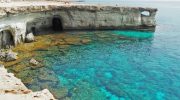
The southern coast blends urban beaches near cities like Limassol and Larnaca with rocky promontories and wide bays. Here one can find beaches like Governor’s Beach, where white limestone cliffs rise dramatically above dark volcanic sand, creating striking visual contrasts. The juxtaposition of different rock types and sediments produces beaches with unique color combinations and textures.
The western coast, particularly around the Akamas Peninsula and Paphos, is more rugged and dramatic. Stronger winds and waves from the open Mediterranean have carved cliffs, sea caves, and wild stretches that remain relatively undeveloped. This is where geology is most visible – uplifted seabeds, folded rock layers, and ongoing erosion creating landscapes that feel primordial and powerful.
The northern coast features long sandy strips backed by the Pentadaktylos Mountains (Kyrenia range), where limestone peaks drop sharply toward the sea. Beaches here tend to be quieter and less developed, partly due to political division but also because of their geography – some are difficult to access, backed by steep slopes rather than flat coastal plains.
Many beaches lie beside ecologically important wetlands, salt lakes, or river mouths. Alykes Beach near Larnaca, for example, sits adjacent to salt flats where thousands of flamingos winter, creating surreal scenes of pink birds against Mediterranean blue. These transitional zones between land and sea support remarkable biodiversity and demonstrate how beaches function as ecological systems, not just recreation areas.
Surprising Coastal Stories
- Aphrodite’s Birthplace Beach – Petra tou Romiou near Paphos marks where legend says Aphrodite emerged from sea foam. The dramatic rock formations rising from turquoise water make the myth feel visually plausible, and swimming here supposedly brings good luck and beauty – traditions that connect modern beachgoers to ancient pilgrims who visited this same shore.

- Europe’s Cleanest Waters – Cyprus consistently ranks among Europe’s beaches with the highest water quality. The island’s Blue Flag beaches meet strict environmental standards for cleanliness, safety, and sustainability, making swimming here not just beautiful but genuinely pristine.
- Turtle Nesting Grounds – Endangered loggerhead and green sea turtles return annually to specific Cypriot beaches, particularly Lara Beach on the Akamas Peninsula, to lay eggs in the same sand where they themselves hatched decades earlier. These nesting sites are carefully protected, with conservation efforts balancing tourism with turtle survival.

- Beaches Covering Ancient Harbors – Some modern beaches literally cover ancient harbors buried by centuries of shifting sands and sediments. Underwater archaeology reveals submerged quays, amphora fields, and sunken anchors showing that the coastline continues beneath the waterline, holding shipwrecks from every era of Mediterranean history.
- Flamingos by the Beach – The salt lakes near Larnaca and the Akrotiri Peninsula attract thousands of flamingos each winter, creating bizarre juxtapositions of tropical-looking pink birds against palm-lined Mediterranean promenades. These wetlands demonstrate how beaches exist within larger ecological systems.

- Medieval Fortresses Guarding Bays – The same strategic bays that now host beach resorts were once defended by medieval fortresses and catapults. Kyrenia, Famagusta, and Paphos all feature castle walls rising directly from the sea, showing how beaches served as military frontiers before becoming leisure destinations.
Sand, Stone, and Sea Life
The color and texture of beach sand reveals geological history. White sands in eastern Cyprus come mainly from crushed shells and limestone eroded from coastal cliffs. Darker sands, particularly on southern beaches, contain volcanic material washed down from the Troodos Mountains by seasonal rivers. Pebble beaches occur near cliff zones where wave energy is strong enough to break rock into rounded stones rather than depositing fine sand.
Beneath the water, seagrass meadows protect shorelines from erosion while serving as nurseries for fish and invertebrates. Rocky coves shelter octopuses, sea urchins, moray eels, and colorful reef fish. The biodiversity isn’t tropical-level abundant, but Mediterranean marine ecosystems support surprising variety for temperate waters.
Cyprus’s seas hold shipwrecks from every era – Bronze Age traders, Roman cargo vessels carrying amphoras of wine and oil, Byzantine ships, Ottoman craft. The famous Kyrenia shipwreck, recovered from the seabed and now preserved in a museum, proves how closely sea and land history intertwine. Some dive sites allow exploration of underwater archaeological zones where history rests on the seafloor.
Mythologically, the sea represented both danger and blessing – bringing destructive storms and foreign invaders but also essential fish and profitable trade. Aphrodite’s connection to the shoreline links beaches symbolically to birth, beauty, and renewal. Coastal chapels dedicated to fishermen’s patron saints show how faith followed the water’s edge, with religious observance seeking divine protection from maritime dangers.
The coastline evolved from primarily working zones – fishing, salt gathering, ship repair, cargo handling – into leisure landscapes dominated by cafés, resorts, promenades, and beach clubs. Some beaches preserve both identities, with traditional fishing boats resting on sand beside sun loungers and parasols, showing layers of use coexisting rather than one replacing another.
Shores in Modern Life
Beaches remain central to contemporary Cypriot life beyond their obvious tourism role. Locals visit year-round for walking, fishing, family picnics, and even winter swimming (which some claim has health benefits). Coastal promenades function as social centers where people stroll, meet friends, drink coffee, and watch the sea – a Mediterranean tradition connecting Cyprus to broader coastal cultures.
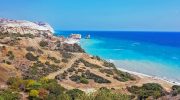
Tourism built around beaches forms one of Cyprus’s main industries, employing tens of thousands and generating significant revenue. This economic importance creates pressure for development while simultaneously demanding environmental protection – a tension playing out in debates about hotel construction, beach access, and coastal preservation.
Environmental conservation has become essential. Turtle nesting beaches are monitored and protected during breeding season, with restrictions on nighttime lights and beach activities that might disturb nests. Development is regulated in ecologically sensitive areas, though enforcement varies. Blue Flag certification programs maintain water quality standards and encourage sustainable beach management.
Climate change and rising sea levels threaten coastal areas, with erosion accelerating on some beaches and storm damage increasing. Coastal engineering projects attempt to protect valuable shoreline, but these interventions sometimes create new problems by disrupting natural sediment flows.
Politically, the coastline reflects Cyprus’s de facto division. Northern beaches tend to be quieter and less developed, partly due to international non-recognition limiting investment. Some southern coastal areas became symbols of loss for communities displaced after 1974, with beaches representing homes and lands no longer accessible. The shore thus carries political meaning beyond its physical beauty.
For Cypriots, the sea isn’t just scenery but livelihood, identity, and continuity. Fishing families maintain traditions stretching back generations. Coastal villages preserve maritime culture in festivals, food, and folklore. Even urban Cypriots maintain strong connections to the sea, visiting beaches regularly regardless of season.
Experiencing Cyprus’s Coast
- Nissi Beach (Ayia Napa) – Famous white sand beach with shallow turquoise water and a sandbar linking to a small islet accessible on foot at low tide. The atmosphere is lively and festive in summer, popular with younger crowds. Water sports, beach bars, and music create energetic vibes, though mornings offer calmer experiences before crowds arrive.
- Fig Tree Bay (Protaras) – Sheltered bay with fine sand and exceptionally calm, clear water perfect for families with small children. The atmosphere is bright and family-friendly, with shallow wading areas and gentle swimming. The bay’s natural protection creates glassy water conditions ideal for snorkeling and observing small fish.
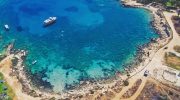
- Coral Bay (Paphos) – Horseshoe-shaped bay with golden sand backed by low cliffs, creating a naturally protected swimming area. The atmosphere is scenic and relaxed, less intense than Ayia Napa but more developed than wild western beaches. Good facilities without overwhelming commercialization.
- Lara Beach (Akamas Peninsula) – Remote turtle nesting site accessible by rough road, keeping development minimal and crowds small. The atmosphere is wild and pristine, with conservation signs marking protected zones. Swimming here feels like discovering an untouched Mediterranean beach, with dramatic headlands and minimal human infrastructure.
- Governor’s Beach (Limassol) – White limestone cliffs rising above dark volcanic sand create dramatic color contrasts and photogenic landscapes. The atmosphere is quieter than major resort beaches, popular with locals and photographers. Multiple small coves separated by rock formations offer semi-private swimming spots.
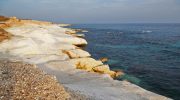
- Finikoudes Beach (Larnaca) – Palm-lined urban beach beside the ancient city of Kition, with a long promenade perfect for strolling. The atmosphere is social and cosmopolitan, with cafés, restaurants, and people-watching. The beach itself is modest, but the setting connects beach culture to urban life and archaeological heritage.
- Konnos Bay (Cape Greco) – Hidden emerald bay beneath pine-covered cliffs in a protected nature area. The atmosphere is secluded and serene despite summer popularity. The pine forest provides shade and creates Mediterranean landscape beauty combining forest and sea in one view.
Why Coastlines Matter
Cyprus’s beaches are not just holiday scenery – they’re the island’s ancient meeting points between land and sea, history and nature, myth and daily life. From turtle nesting sands to fortress-guarded harbors, these shores shaped where people lived, how they traded, what they believed, and how they connected to the wider Mediterranean world.
They continue shaping Cyprus today, supporting tourism that funds modern economy, preserving ecosystems that harbor endangered species, and offering space for recreation, reflection, and connection to elemental forces of water, sand, and sun. To walk Cyprus’s coast is to follow the edge of its story, where prehistoric settlers, Bronze Age traders, medieval sailors, and modern swimmers all meet at the same waterline – standing where land ends and the infinite possibility of the sea begins.