Cyprus Discovery

What interests you?

Discover Cyprus Heritage by Categories

Begin your exploration of the island’s iconic landmarks and vibrant culture.
Fascinating Topics

Dive into the stories that captivate and inspire.
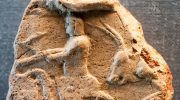
Seasonal Folk Rituals in Cyprus

Seasonal Folk Rituals in Cyprus

Seasonal folk rituals in Cyprus are vibrant traditions that blend ancient agrarian customs with Christian influences, marking the island's cycles of renewal, harvest, and protection. From spring bonfires warding off evil to autumn feasts celebrating abundance, these practices foster community bonds and a deep connection to the land. They offer a glimpse into how Cypriots have long navigated life's uncertainties through shared acts of faith and joy, keeping cultural roots alive in a modern world. Dom-com Echoes of an Agrarian Past Think of Cyprus as a place where the calendar isn't just dates on a page - it's a rhythm dictated by sun, rain, and soil. For millennia, life here revolved around farming and herding, where a good season meant plenty and a bad one spelled hardship. Seasonal folk rituals sprang from this reality, serving as ways to appeal to unseen forces for protection, fertility, and luck. They're not rigid ceremonies but flexible expressions of hope, passed down through generations in villages where everyone pitched in. Whether lighting a fire or sharing a meal, these acts made the unpredictable feel a bit more manageable, turning nature's turns into communal stories. A History Rooted in Survival and Faith These rituals stretch back to prehistoric times, around 3000 BC, when early Cypriots depended on the island's fertile valleys and copper-rich hills for…

Read more
Salt Flats Coastal Wetlands

Salt Flats Coastal Wetlands

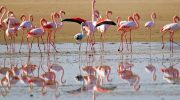
Salt Flats and Coastal Wetlands (Larnaca, Limassol, Akrotiri) are crucial ecosystems in Cyprus, serving as vital stopovers for migratory birds, habitats for flamingos, and homes to brine-adapted flora, holding international significance for biodiversity. These areas, including Larnaca Salt Lake, Limassol's Akrotiri Wetlands, and related sites, form interconnected zones where saltwater and freshwater mix, creating unique conditions that support thousands of species. They highlight the island's role as a Mediterranean biodiversity hotspot, where natural processes and human history intersect to foster life in challenging environments. birdlifecyprus-org A Vital Ecosystem in the Mediterranean Salt flats and coastal wetlands in Cyprus represent dynamic landscapes where land meets sea, characterized by shallow saline lakes, marshes, and mudflats that fluctuate with seasons. Larnaca Salt Lake, the largest inland wetland at 2.2 square kilometers, dries to a white crust in summer but fills with winter rains, hosting algae that tint waters pink. Limassol's Akrotiri Peninsula, covering 150 square kilometers, includes brackish lagoons and reed beds, while smaller sites like Oroklini add diversity. These zones support migratory birds numbering over 10,000 annually, flamingos that winter in flocks of 20,000, and brine-adapted plants like halophytes that thrive in salty soils. Their international significance stems from Ramsar Convention protection since 1997, recognizing them as wetlands of global importance for conservation and sustainable use. cyprusisland-net Formation Through Geology and Climate…

Read more
Ottoman Era Mosques Urban Architecture

Ottoman Era Mosques Urban Architecture

Ottoman architecture in Cyprus refers to the Islamic buildings and urban structures constructed or adapted during Ottoman rule from 1571 to 1878. This three century period significantly reshaped the physical appearance of Cypriot cities, especially Nicosia and Famagusta. The Ottomans introduced architectural forms developed in Istanbul and Anatolia, including domed mosques, hans or caravanserais, hammams or bathhouses, covered markets, and medrese schools. wikimedia.org Unlike other Ottoman territories where Islamic architecture replaced earlier structures, Cyprus presented a distinct situation. The Ottomans inherited large scale Gothic buildings from the Lusignan and Venetian periods, particularly cathedrals that were too monumental to demolish. Instead of destroying these structures, Ottoman authorities converted them for Islamic use through the addition of minarets, the removal of Christian imagery, and the installation of prayer niches. This practical approach produced hybrid monuments that combine French Gothic exteriors with Ottoman Islamic interiors. Historical Background The Ottoman conquest reached its conclusion in August 1571 when Famagusta fell after a brutal ten month siege during which six thousand Christian defenders resisted an Ottoman force exceeding one hundred thousand soldiers. Lala Mustafa Pasha, the Ottoman commander who led the invasion, became the first Turkish governor of Cyprus and immediately initiated the conversion of major churches into mosques. The transformation of urban landscapes reflected a deliberate policy aimed at establishing Ottoman authority through architecture.…

Read more

Cyprus: A Tapestry of Life

Uncover the island’s spiritual depth, natural beauty, and diverse ecosystems.
Curated Insights

Journey through Cyprus's most intriguing stories and themes.
Church of Panagia tou Araka

Church of Panagia tou Araka

The Church of Panagia tou Araka, located near the village of Lagoudera in the Troodos Mountains of Cyprus, is one of the most celebrated monuments within the UNESCO World Heritage group known as the Painted Churches of the Troodos Region. behance-net Built in the late 12th century, the church stands as a remarkable testament to the artistic and spiritual vitality of Cyprus during the Middle Byzantine period. Its significance lies primarily in its interior decoration, which preserves some of the finest examples of Comnenian art an artistic style associated with the reign of the Comnenian dynasty in Byzantium and closely linked to the cultural life of Constantinople. At a Glance Location: Lagoudera village, Pitsilia region, Troodos MountainsDate of frescoes: 1192Artist: Theodore ApsevdisStatus: UNESCO World Heritage Site (Painted Churches of the Troodos Region)Best known for: One of the most complete Middle Byzantine fresco cycles in Cyprus Historical Background The church demonstrates how artistic developments from the imperial capital reached even remote regions, shaping local expressions of faith and aesthetics. The late 12th century was a period of renewed artistic refinement in the Byzantine world. Under the Comnenian emperors, art displayed greater emotional depth, elegance of form, and complex theological symbolism. Cyprus, strategically positioned in the eastern Mediterranean, maintained strong cultural connections with the Byzantine Empire despite political challenges. Panagia tou Araka…

Read more
Ayia Napa Sea Caves

Ayia Napa Sea Caves

The Ayia Napa Sea Caves represent one of Cyprus's most photographed coastal features. Located just outside the resort town, these caves attract visitors year-round with their combination of geological beauty and recreational opportunities. shutterstock-com The sea caves form part of the rugged coastline around Cape Greco National Forest Park, positioned between Ayia Napa and Protaras on the southeastern edge of Cyprus. The caves themselves are carved into limestone cliffs that rise 6 to 12 meters above the sea. Some caves extend up to 80 meters into the rock. The area marks the western boundary of the 385-hectare Cape Greco National Forest Park, designated as protected land in 1993. Historical Background The formation of these caves demonstrates basic geological erosion over thousands of years. The cliffs consist of layered limestone, with each layer having different hardness levels. The middle layer is softer limestone that erodes more easily when waves crash against it repeatedly. The upper layer, made of harder rock, resists erosion better and creates a protective cap over the caves. This prevents collapse while the waves continue hollowing out the softer material underneath. The lowest layer, also harder, forms a natural platform or ledge several meters wide. tripadvisor-com Because the layers are not perfectly horizontal, parts of this ledge sit underwater while other sections remain dry. The irregular erosion patterns…

Read more
Cypriot Flutes and Reed Pipes

Cypriot Flutes and Reed Pipes

Long before recorded music or concert halls, Cyprus learned to speak through breath and reed. Across mountains, fields, and village squares, flutes and reed pipes carried news, marked rituals, guided dances, and filled long hours of solitude with sound. These instruments were never background decoration. They were tools of daily life, shaping how people worked, celebrated, and understood their place in the world. metmuseum-org This article explores the traditional flutes and reed pipes of Cyprus, focusing on how they were made, who played them, and why their sound still carries meaning today across both Greek Cypriot and Turkish Cypriot communities. Sound Born From the Land Cyprus did not invent its wind instruments in workshops. It grew them. pflanzkompass-at Most traditional flutes were made from Arundo donax, the wild reed that thrives along rivers and fields. Shepherds, farmers, and village musicians shaped instruments directly from what the landscape offered. The result was a sound tied not to perfection, but to place. These instruments belonged outdoors. They were played in open fields, on hillsides, in courtyards, and during long walks between villages. Their design reflects that purpose: simple, durable, and responsive to breath rather than mechanical precision. The Pithkiavli: Cyprus’s Shepherd Voice The pithkia is the most ancient Cypriot wind instrument, with archaeological evidence from the Sanctuary of Aphrodite in Paphos dating…

Read more
Category: Animals and Plants of Cyprus Animals and Plants of Cyprus
Pinus Brutia

Pinus Brutia

Imagine stepping onto sun-drenched slopes where tall evergreens sway in the breeze, their long needles catching golden light and filling the air with a fresh, resinous scent. This is the world of Pinus brutia, Cyprus’s most iconic pine and the backbone of the island’s woodlands. Together with its mountain cousin, it reveals a story of ancient resilience that still thrives across the Mediterranean landscape today. www.inaturalist.org A Pine Built for the Island Pinus brutia, commonly known as the Calabrian pine, is a hardy evergreen conifer perfectly suited to the warm, dry conditions of the eastern Mediterranean. In the broad pine…

Read more
Rare Birds of Cyprus

Rare Birds of Cyprus

Cyprus sits at the heart of one of the four major migration flyways between Europe and Africa. This strategic location makes the island a critical stopover point for millions of birds traveling between continents each year. The position roughly 50 miles south of Turkey and 60 miles west of Syria places Cyprus directly in the path of birds moving between breeding grounds in Europe and wintering areas in Africa. Among the most spectacular visitors are greater flamingos, multiple heron species, and the elusive black stork. Shutterstock-com These rare birds depend on Cyprus's wetlands, salt lakes, and coastal areas for rest…

Read more
Lilac Clouds and Golden Berries

Lilac Clouds and Golden Berries

Imagine walking through a quiet Cypriot village in late April. The air carries a sweet, honey-like fragrance, and suddenly you notice a graceful tree covered in clouds of delicate lilac flowers. By autumn, the same tree hangs heavy with clusters of shiny yellow berries that glow like tiny lanterns against the green leaves. This is the chinaberry – a charming, fast-growing guest that has quietly become part of Cyprus’s everyday landscape. www.inaturalist.org The Bead-Tree in the Mahogany Family Chinaberry, Melia azedarach, belongs to the Meliaceae (mahogany) family – the same noble group that gives us true mahogany timber and the…

Read more
Living Fossils in Cypriot Gardens

Living Fossils in Cypriot Gardens

Stand in a quiet park in Limassol or Nicosia on a sunny day, and you might spot tall, pyramid-shaped trees that look like they stepped out of a prehistoric forest. These are the Araucaria trees ancient conifers from far-away lands that bring a touch of exotic elegance to our island's urban green spaces. Konstantin-Solovev Ancient Guardians of the Pine Family Araucaria trees belong to the Araucariaceae family, a group of evergreen conifers that once dominated vast forests across the southern hemisphere. In Cyprus, the most common is Araucaria heterophylla, often joined by its cousin Araucaria columnaris. Locally known as Αρωκάρια…

Read more

Cyprus Unveiled

Discover the island's secrets and learn what lies beyond the familiar.

Cyprus Shepherd Calls

Cyprus Shepherd Calls

Shepherd Calls and Vocal Signals are non-musical vocal expressions integral to pastoral life in Cyprus, forming a unique soundscape shaped by the island's landscape and herding traditions. These calls, including whistles, shouts, and melodic cries, serve practical purposes like directing flocks or communicating across distances, while carrying cultural depth. This practice preserves ancient methods of interaction with nature, highlighting how sound connects livelihood, environment, and community in Cypriot rural heritage. polignosi-com An Acoustic Tradition of the Countryside Shepherd calls and vocal signals represent a functional form of communication in Cypriot pastoralism, where sounds replace words to manage livestock and navigate terrain. These expressions, devoid of formal melody, rely on pitch, volume, and timbre to convey commands or alerts. In the island's varied landscapes - from coastal plains to Troodos mountains - they create an auditory layer that blends with natural echoes, forming a soundscape unique to herding life. This tradition underscores how Cypriot shepherds adapted vocal techniques to their environment, turning everyday tasks into a cultural practice that links humans, animals, and land. digital-sandiego-edu The Historical Foundations of Vocal Herding Shepherd calls in Cyprus trace origins to prehistoric times, when early inhabitants domesticated animals around 8500 BC during the Neolithic period. Archaeological evidence from sites like Choirokoitia shows tools for herding, suggesting vocal signals accompanied flock management. By the Bronze…

Read more
Pelendri Church

Pelendri Church

The Church of Timios Stavros in Pelendri is a layered Troodos interior built and repainted between the 12th and 16th centuries, preserving multiple fresco phases within a single working church. Dated inscriptions, shifting styles, and later aisle additions make the building a readable archive of rural devotion, local patronage, and Lusignan-era overlap rather than a single “perfect” moment. This article explains how the structure expanded, how the fresco programs differ by period, and why the church remains one of Cyprus’s clearest examples of belief accumulating without erasing what came before. google-com A Church Shaped by Reuse Pelendri lies high in the Pitsilia region, surrounded by steep slopes and dense forest, far from the coastal cities that usually dominate Cyprus's medieval history. Timios Stavros stands just outside the village core, a placement that suggests it functioned originally as a cemetery church rather than a parish centrepiece. google-com Its position tells an important story. This was not a monument built for display or prestige. It was a working religious space, shaped by generations who returned to it repeatedly for worship, burial, and memory. Over time, necessity and devotion changed their form, resulting in the layered structure that survives today. From Modest Chapel to Complex Basilica The earliest version of the church dates to the mid-12th century, when it existed as a single-aisled…

Read more
Cyprus Traditional Dance Competitions

Cyprus Traditional Dance Competitions

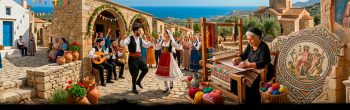
Traditional dance competitions in Cyprus are not performances staged for spectacle alone. They are structured moments where history, regional identity, and communal memory are actively tested and refined. Across village squares, coastal towns, and formal festival stages, dancers are judged not only on technique but on how faithfully they carry movements shaped by centuries of Cypriot life. What emerges is not nostalgia, but discipline. Not a postcard version of tradition, but a living standard that Cyprus expects its dancers to meet. More Than Dance: Why Competition Matters in Cyprus In Cyprus, dance has never been separate from daily life. For generations, it accompanied weddings, harvests, religious festivals, and seasonal gatherings. Competition emerged naturally from this environment, not as rivalry for its own sake, but as a way of recognising skill, confidence, and social standing. wordpress-com Modern competitions continue that older logic. They exist to ensure that dances are not diluted by convenience or modern taste. Judges evaluate how well performers understand structure, rhythm, posture, and cultural intent. Winning matters, of course, but correctness matters more. To dance well in Cyprus is to show that you know where the movement comes from and why it exists. A Shared Language with Regional Accents Cypriot folk dance operates on two levels at once. There is an island-wide vocabulary of steps and formations that…

Read more
Category: Geological Cyprus Geological Cyprus
Troodos Mineral Springs

Troodos Mineral Springs

Deep in the Troodos Mountains, sulfur-rich waters rise from ancient rock, just as they have for thousands of years. These mineral springs have drawn healers, pilgrims, and travelers since antiquity. The most famous flows in Kalopanayiotis village, where thermal waters meet the Setrachos River beside a centuries-old Venetian bridge. shutterstock-com Mineral springs produce water containing dissolved substances that alter its taste and give it therapeutic value. Salts, sulfur compounds, and gases dissolve into the water during its underground passage. The springs in Cyprus are particularly rich in sulfur, with additional minerals including magnesium and calcium. Water temperature at these springs…

Read more
Troodos Ophiolite Cyprus

Troodos Ophiolite Cyprus

If you ever want to surprise someone in Cyprus, do not take them to a museum. Take them to Troodos. As you drive up from any direction you will first pass citrus groves, almond orchards and vineyards. Then pine appears. The air cools. The road winds higher. Somewhere above the clouds you stop, step out of the car and pick up a stone. Michal Klajban And you are holding a piece of the Earth that once lay kilometres beneath a vanished ocean. This is not a poetic exaggeration. Troodos is one of the very few places on the planet where…

Read more
Rugged Coastlines of Cyprus

Rugged Coastlines of Cyprus

The rugged coastlines of Cyprus display dramatic geological contrasts where limestone cliffs plunge into turquoise Mediterranean waters, creating landscapes that combine raw natural beauty with mythological significance. The island's 648-kilometer coastline features two primary wild areas, the Akamas Peninsula in the northwest and Cape Greco in the southeast, both protected under the Natura 2000 European network. Shutterstock-com These areas showcase calcitic sandstones formed during glacial periods over the last 100,000 years, raised marine terraces representing ancient coastlines lifted by Cyprus's gradual tectonic uplift, and deep gorges carved through limestone bedrock by erosion. The Akamas covers 230 square kilometers with elevations…

Read more
Madari Peak

Madari Peak

Madari Peak rises to 1,613 metres in the eastern Troodos Mountains, crowned by a fire lookout tower that watches over one of Cyprus's most popular hiking destinations. Madari forms part of Mount Adelfoi in the vast Adelfoi Forest, a protected area of dense pine, cedar, and oak trees covering over 120 square kilometres. thepalmiers-com The peak sits between the Nicosia and Limassol districts, accessible from villages like Kyperounta, Spilia, and Chandria that cluster on the lower slopes. Unlike Mount Olympus, which attracts visitors mainly for its summit status, Madari draws hikers for its dramatic rock formations, exceptional viewpoints, and network…

Read more

Beyond the Obvious

Learn stories and themes that define Cyprus.
British Police Stations

British Police Stations

British Police Stations and Administrative Offices in Cyprus represent the architectural and institutional backbone of colonial rule, embodying the empire's strategies for maintaining order, surveillance, and administrative dominance over the island from 1878 to 1960. Constructed during the British administration, these structures blended Victorian functionality with local adaptations, serving as symbols of imperial authority while facilitating the enforcement of laws, collection of intelligence, and governance of a diverse population. Key examples include the Larnaca Police Headquarters, district administrative buildings in Limassol and Famagusta, and central offices in Nicosia, which housed colonial bureaucrats and police forces. These edifices not only projected power through their imposing designs but also became sites of resistance during the Cyprus Emergency, where they were targeted by nationalists seeking independence. Today, many survive as museums, government offices, or repurposed spaces, reminding Cypriots of a era marked by control and contestation, and highlighting the island's transition from colony to republic amid ongoing debates on heritage and identity. dom-com A Network of Colonial Control British Police Stations and Administrative Offices formed an extensive network across Cyprus, strategically placed in urban centers and rural districts to ensure surveillance and swift response to unrest. In Nicosia, the colonial secretariat and government house anchored the administrative hub, while police stations in Larnaca, Limassol, Paphos, and Famagusta extended control to coastal and inland…

Read more
Khirokitia Figurines: Stone Ancestors at Home

Khirokitia Figurines: Stone Ancestors at Home

The stone figurines of Khirokitia are among Cyprus’s earliest human representations, carved over 9,000 years ago within one of the island’s first permanent farming settlements. Found in domestic and burial contexts, they were not decoration but durable objects that helped households maintain identity, lineage, and a living relationship with ancestors buried beneath the home. This article explains why the figures are intentionally abstract, why hard stone was chosen despite the labour, and what their placement reveals about memory and belonging at the dawn of settled life in Cyprus. Khirokitia Above the Maroni River The Neolithic settlement of Khirokitia lies on a steep hillside above the Maroni River in southern Cyprus. Occupied during the Aceramic Neolithic period, it represents the island’s first permanent agricultural society. Life here was organised around circular stone houses, shared courtyards, and a tightly knit social structure built on extended families. dtcox-com In this context, figurines were not decorative objects or isolated artworks. They were part of daily life, ritual practice, and memory. Their meaning comes not from how they look alone, but from where they were found and how they were used. Small Figures, Heavy Meaning More than two dozen anthropomorphic figurines have been recovered from Khirokitia, an unusually high number for a Neolithic site. Most are small, abstract, and deliberately simplified. Bodies are reduced to…

Read more
Cyprus Honey

Cyprus Honey

Honey in Cyprus is not simply a food product. It reflects landscape, climate, and survival shaped over centuries. Produced mainly in mountain and rural areas, Cypriot honey carries the character of wild thyme, pine forests, citrus groves, and seasonal movement across the island. Long before sugar became common, honey served as the primary sweetener, a form of medicine, and a symbol of hospitality. Its role has never disappeared. Instead, it has evolved alongside changing lifestyles and technologies. thegreekvibe-com An Island That Shapes Its Honey Cyprus’s geography plays a decisive role in how honey is produced. Two mountain ranges, varied elevations, and sharply contrasting microclimates allow flowering to unfold in stages rather than all at once. Coastal plains warm early in the year, while foothills and high mountain slopes bloom later, extending the foraging season for bees. This vertical landscape makes beekeeping in Cyprus inherently mobile. Apiaries are often moved throughout the year, following blossoms from lowland citrus groves to the thyme-covered slopes of the Troodos Mountains. Honey here is shaped as much by movement as by place, with each harvest reflecting a specific altitude, season, and environment. The Native Bee and Local Resilience At the heart of Cypriot honey production is a native honeybee adapted to the island's demanding conditions. This bee has developed endurance in heat, wind, and drought…

Read more