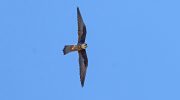
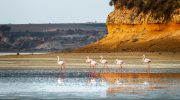
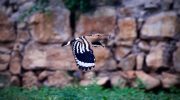
The Famagusta district hosts several seasonal salt lakes and wetlands that transform dramatically between summer and winter. Paralimni Lake, a natural seasonal wetland in the Famagusta district, is one of the few remaining wetlands of its kind in Cyprus.
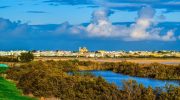
This shallow water body covers approximately 350 hectares and represents the largest natural inland lake on the island. North of the city of Famagusta Glapsides Salt Lake, a smaller coastal salt lake favored by migrating birds. These wetlands share common geological origins and ecological functions despite their different locations within the district.
Ancient Seas and Modern Salt Lakes
The formation of Cyprus’s salt lakes connects to both recent geological history and ancient Mediterranean events. Around 5.96 to 5.33 million years ago, the Mediterranean Sea underwent the Messinian Salinity Crisis when the Strait of Gibraltar closed, cutting off water from the Atlantic. The entire Mediterranean basin experienced extreme evaporation, depositing thick layers of salt and gypsum across the seafloor. When the strait reopened, seawater flooded back and covered these deposits.
Cyprus’s current salt lakes formed much more recently through different processes. Paralimni Lake is a slightly brackish, shallow temporary water body with an average depth of 15 centimeters during the wet period. The lake occupies a natural depression that collects rainwater runoff during winter months. In 1893 due to excess humidity channels were opened for the rainwater to escape which led to the drying up of the biggest part of the lake. These drainage efforts reduced the lake’s size but did not eliminate it entirely.
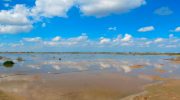
The lakes function as terminal basins where water enters through rainfall and runoff but exits only through evaporation. During summer, high temperatures and low precipitation cause complete drying, leaving behind salt deposits. Winter rains refill the basins, creating temporary wetland conditions that persist from November through March. This seasonal cycle concentrates dissolved minerals, creating the saline and brackish conditions that define these lakes.
Glapsides Lake near Famagusta city formed similarly in a coastal depression. Its proximity to the Mediterranean and connection to ancient harbor areas suggests it may once have been part of a lagoon system. Sediment deposition gradually isolated these water bodies from direct marine connection while maintaining their saline character through evaporation cycles.
Distinctive Features of Each Wetland
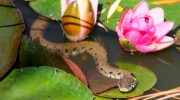
Paralimni Lake is home to the rare endemic sub-species of Grass Snake Natrix natrix cypriaca. Scientists believed this snake extinct in the 1960s until its rediscovery in 1994 at Paralimni Lake. The shallow waters support dense vegetation during wet months, creating habitat for both aquatic and terrestrial species.
The lake floor consists of fine sediments mixed with salt deposits. During dry months, the exposed surface shows characteristic mud cracks and crystalline salt formations. The surrounding flora reflects the region’s semi-arid conditions, with native scrub and halophytic plants adapted to saline soils. These salt-tolerant plants colonize the lake margins and can withstand both flooding and drought conditions.
Glapsides Lake, smaller than Paralimni, occupies a depression within Famagusta city limits. The small lake Glapsides in Famagusta is a favorite stopover for tens of thousands of flamingos during their migration between November and March. The lake’s accessibility and urban location make it particularly convenient for birdwatchers and photographers.
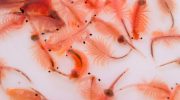
Both lakes support communities of brine shrimp, tiny crustaceans that thrive in saline waters. These organisms form the primary food source for migrating birds. Dark red algae grow in the salt lakes, providing the base of the food chain that sustains the shrimp populations.
Remarkable Details About These Ecosystems
It is estimated that the number of Greater Flamingos may reach up to 20,000 individuals, depending on conditions. These pink birds arrive from breeding grounds in Turkey, Syria, northern Italy, Sardinia, and Iran, seeking milder winter conditions. The flamingos feed on algae, crustaceans, and mollusks found in the shallow saline waters.
The pink hue of flamingos’ feathers comes from their diet, as brine shrimp and algae are rich in carotenoids that create that rich pink pigmentation. Juvenile flamingos start with brown-grey plumage and gradually develop their characteristic pink color over two to four years. The birds can reach 120 to 145 centimeters in height, making them the largest flamingos in the world.
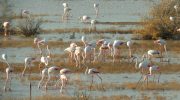
Recent census data reveals concerning trends. The latest figures from 2025 show that there were 242 flamingos in the lakes of Famagusta, 1,065 in the Larnaca salt lakes, 95 in Oroklini, and 1,062 in Paralimni lake. These numbers represent significant declines from historical populations, raising conservation concerns.
At least 186 species of birds have been recorded at Paralimni Lake, including the striking Greater Flamingo. Black-winged stilts, spur-winged lapwings, and Kentish plovers breed in these wetlands. The seasonal nature of the lakes creates crucial habitat during migration periods when birds need feeding and resting areas.
The lakes sometimes cause operational challenges. Flamingos near Larnaca’s salt lake occasionally create hazards for aircraft at the nearby international airport due to their size and flocking behavior. Conservation efforts must balance wildlife protection with human safety concerns.
Why These Wetlands Matter Today
Paralimni Lake was identified as an Important Bird and Biodiversity Area in 2004 and gained legal protection status by being declared a Natura 2000 site in 2009. This European designation recognizes the lake’s international importance for biodiversity conservation. Cyprus has only seven or eight natural wetlands of significant size, making each one ecologically crucial.
The wetlands provide flood control benefits by storing excess rainwater during winter storms. The porous lake beds allow water to infiltrate and recharge underground aquifers. These hydrological functions become increasingly important as Cyprus faces water scarcity challenges.
Economically, the lakes attract birdwatchers, nature photographers, and ecotourists. The spectacle of thousands of flamingos transforms these modest wetlands into major attractions. This tourism generates income for local communities while raising awareness about conservation needs.
Scientifically, the lakes serve as natural laboratories for studying wetland ecology, bird migration, and climate adaptation. Researchers monitor water chemistry, biodiversity, and bird populations to track environmental changes. The presence of endemic species adds research value and conservation priority.
Culturally, the town of Paralimni takes its name from the lake, translating to “by the lake” in Greek. This connection between community and landscape spans centuries. The lakes represent continuity with the past and connections to traditional practices like salt harvesting.
Experiencing the Flamingos and Wetlands
The best times to view flamingos are early morning and sunset when soft light reduces crowds. Visitors should bring binoculars or telephoto lenses between 300 and 600 millimeters to observe birds from appropriate distances. Windbreakers and closed shoes help with comfort, as shorelines can be muddy and windy.
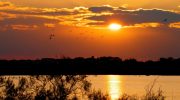
Paralimni Lake sits just west of Paralimni town, accessible from main roads connecting to the tourist areas of Ayia Napa and Protaras. No formal facilities exist at the lake, though observation is possible from road pull-offs. The lack of infrastructure reflects both the site’s degraded condition and missed opportunities for proper management.
Glapsides Lake lies within Famagusta city limits, approximately four kilometers north along the road to Salamis. An open field near the lake provides parking for observers. The lake’s urban location offers convenience but also exposes it to development pressures.
Ethical observation requires maintaining distance from birds, avoiding drones, and refraining from feeding wildlife. Wading out into the salt lake to get closer to the flamingos is prohibited as this is highly damaging for the very sensitive birds. Human disturbance causes birds to expend energy fleeing rather than feeding, potentially affecting their survival.
Peak flamingo viewing occurs from December to February when populations reach their highest numbers. Early arrivals appear in late November after the first substantial rains fill the lakes. Some individuals linger into March or even April if conditions remain favorable. Weather conditions after rainfall can make access difficult as roads around the lakes may flood or become muddy.
The Value of Protecting Wetland Heritage
The Famagusta district’s salt lakes demonstrate how seasonal wetlands sustain remarkable biodiversity despite harsh conditions. These modest water bodies support endemic reptiles, attract thousands of migrating birds, and provide essential ecosystem services. Their existence depends on natural cycles of flooding and drying that concentrate minerals and create specialized habitats.
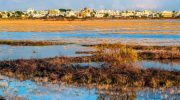
Current threats from development, pollution, and water mismanagement jeopardize these ecosystems. The contrast between their legal protection status and actual degradation reveals gaps between conservation policy and implementation. Effective protection requires addressing land ownership conflicts, enforcing environmental regulations, and involving local communities in stewardship.
The flamingos serve as ambassadors for these wetlands, drawing attention to places that might otherwise be overlooked. Their annual arrival reminds observers that Cyprus sits along major migration routes connecting three continents. The birds link distant breeding grounds to these small Cypriot lakes, emphasizing global connections and shared conservation responsibilities.
For Cyprus, preserving these wetlands means maintaining biological diversity, protecting water resources, and honoring cultural heritage. The lakes represent rare natural features on an island heavily developed for tourism and agriculture. Their survival requires balancing human needs with ecological integrity, a challenge that will define their future and the broader relationship between Cypriots and their environment.