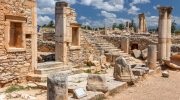
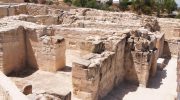
Cyprus stands at a cultural, linguistic, and historic crossroads between Europe and Asia. Situated at the crossroads of Europe, Asia, and Africa, the island has been shaped by Greeks, Romans, Byzantines, Venetians, Ottomans, and the British. This strategic location has resulted in Cyprus being contested and occupied by several empires throughout history, including the Assyrians, Egyptians, Persians, and many others.
As early as 370 BC, the island was inhabited and considered to be the crossroads between the east and west. The eastern Mediterranean island of Cyprus has long been a cultural thoroughfare. It was the starting, stopping, and midway hot spot for many ancient seafaring cultures including the Myceneans, the Minoans, the Phoenicians, the Greeks, and the Romans.
The Bronze Age Trading Hub
Cyprus experienced significant social and economic transformations during the Late Bronze Age, roughly from 1700 to 1100 BC. The island became more connected to the wider Mediterranean world driven by the trade in copper extracted from the Troodos Mountains, which stimulated the development of urbanized settlements across the island. At this time Cyprus was ruled by kings who corresponded with the leaders of other Mediterranean states like the pharaohs of the New Kingdom of Egypt, as documented in the Amarna letters.
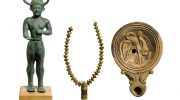
The first recorded name of a Cypriot king is Kushmeshusha, as appears on letters sent to Ugarit in the 13th century BC. Emerging elite identities were shaped through foreign goods, trade, and local production of copper. Enkomi likely served as a central hub for copper production and trade, impacting regional dynamics throughout the eastern Mediterranean.
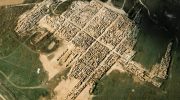
Owing to its rich natural resources, particularly copper, and strategic position at the crossroads of Europe, Africa, and Asia, the island was subsequently contested and occupied by several empires. The island’s copper deposits were so important that they gave copper its very name through the Latin word cuprum, meaning metal from Cyprus. Cyprus has been a copper producer since the Bronze Age more than 4,000 years ago.
Waves of Greek Settlement
At the end of the Bronze Age, the island experienced two waves of Greek settlement. The first wave consisted of Mycenaean Greek traders who started visiting Cyprus around 1400 BC. A major wave of Greek settlement is believed to have taken place following the Late Bronze Age collapse of Mycenaean Greece from 1100 to 1050 BC, with the island’s predominantly Greek character emerging during this period.

This Greek influence became foundational to Cypriot identity despite subsequent occupations by various powers. The Greek language, Orthodox Christianity, and Hellenic cultural traditions took root during these early centuries and persisted through millennia of foreign rule.
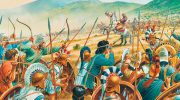
Even under Persian, Roman, Byzantine, Crusader, Venetian, Ottoman, and British occupation, Greek Cypriot communities maintained linguistic and religious continuity.
Byzantine Cultural Flourishing
After the fall of the Western Roman Empire in 476 AD, Cyprus became part of the Byzantine Empire where it would remain for several centuries. Under Byzantine rule, Cyprus continued to be an important center of Christianity and a base for trade in the eastern Mediterranean. The island experienced a cultural renaissance, with the construction of many Byzantine churches and monasteries, some of which still exist today including Kykkos Monastery and St. Nicholas of the Roof Church.

The Troodos region contains one of the largest groups of churches and monasteries of the former Byzantine Empire. Ten monuments from this area earned UNESCO World Heritage designation in 1985. These painted churches bear outstanding testimony to Byzantine civilization during the Comnenian period, with dated inscriptions providing rare chronological evidence for Byzantine painting development.
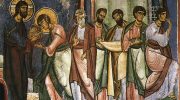
Despite being repeatedly raided by Arabs in the 7th and 8th centuries, Cyprus continued to hold an important position within the Byzantine Empire until the Crusades. Cyprus was cut off from the rest of the Greek-speaking world from the 7th to the 10th centuries AD due to Arab attacks. It was reintegrated into the Byzantine Empire in 962, only to be isolated again in 1191 when it fell to the hands of the Crusaders.
Medieval Fusion Under Foreign Rule
During the medieval period, under the French Lusignan monarchs of Cyprus, an elaborate form of courtly cuisine developed that fused French, Byzantine, and Middle Eastern forms. The Lusignan kings were known for importing Syrian cooks to Cyprus, and it has been suggested that one of the key routes for the importation of Middle Eastern recipes into France and other Western European countries, such as blancmange, was via the Lusignan Kingdom of Cyprus.

These recipes became known in the West as vyands de Chypre, or foods of Cyprus. The food historian William Woys Weaver has identified over one hundred of them in English, French, Italian, and German recipe books of the Middle Ages.

One that became particularly popular across Europe in the medieval and early modern periods was a stew made with chicken or fish called malmonia, which in English became mawmeny.
Ottoman and British Layers
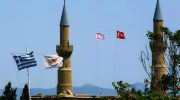
Ottoman rule from 1571 to 1878 introduced mosques, Turkish baths, and caravanserais, blending Eastern architectural flair into Cyprus’s landscape.

The Ottoman period brought significant Turkish Cypriot settlement, creating the island’s bicommunal character that would define its modern political struggles. The millet system gave the Orthodox Church considerable autonomy, strengthening its role as custodian of Greek Cypriot identity.
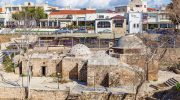
British rule from 1878 to 1960 brought modern governance, education systems, and colonial-style buildings. The British period modernized infrastructure while introducing English as an administrative language and left-hand driving.

British colonial architecture remains visible in major cities, while English continues as a widely spoken second language that facilitates Cyprus’s role as an international business center.
Indigenous Agency in Cultural Exchange
Recent scholarship challenges the prevalent view that Cyprus’s cultural developments resulted primarily from external influences from the Aegean and Near Eastern civilizations. Researchers argue that Cyprus’s strategic role as a crossroads oversimplifies its indigenous agency in cultural exchange. The cultures that developed on Cyprus through time quickly formed unique cultural identities that so often occur on islands when there is a barrier to communication.
Cypriots found their own path as they were shaped by the geology, geography, flora, fauna, and simply Cyprusness of their surroundings. During prehistory the island was influenced by the Pharaohs of Egypt to the south, the Mesopotamian kingdoms to the east, the Hittite empire to the north, and the Minoan and Mycenaean cultures of the west. Yet Cyprus developed distinctive material culture that differs radically from any of these surrounding areas.
The Modern Division’s Impact on Identity
Geographically straddling East and West, Cyprus possesses a hybrid identity, not quite European, not quite Asian. This cultural blend is what makes Cyprus special and beloved by many. However, the 1974 Turkish invasion and subsequent occupation created two separate administrations with diverging identities. Cyprus joined the European Union in 2004 and adopted the euro in 2008, strengthening European orientation. The Turkish Cypriot administration remains internationally unrecognized except by Turkey, maintaining stronger ties to Turkish culture and politics.
Despite division, both communities share Mediterranean lifestyle, hospitality traditions, cuisine, and folk music that transcend political boundaries. The challenge remains how to acknowledge multiple cultural influences while forging common civic identity that respects diversity without privileging one community over another.