Religion and Spiritual Heritage

Religion and Spiritual Heritage

Agoi Saranda Cave Church

Agoi Saranda Cave Church

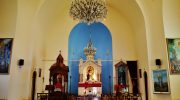
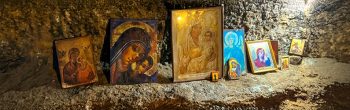
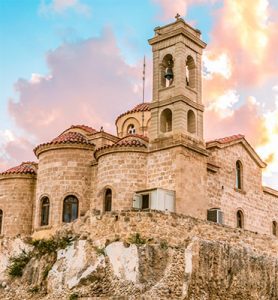
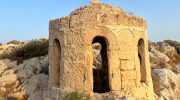
The Agioi Saranta Cave Church stands as a sacred monument within the rugged landscape of Protaras. This sanctuary occupies a natural limestone cavern on Fanou Hill and overlooks the Mediterranean Sea. It represents a rare fusion of geological formation and ecclesiastical architecture. The name translates to the Holy Forty and honors the Forty Martyrs of Sebaste. These Roman soldiers died in the year 320 AD because they refused to renounce their Christian faith. Local tradition links the forty stalactites on the cave ceiling to these forty individuals. Visitors find the entrance marked by a simple white wall and a distinct blue door. A stone dome sits atop the hill to provide a skylight for the interior space. This site offers…

Read more
Cyprus Religion & Everyday Moral Values

Cyprus Religion & Everyday Moral Values

Religion in Cyprus functions less as private ideology and more as a shared moral framework that shapes hospitality, honour, family rituals, and the annual rhythm of life. Orthodox Christianity, Islam, and smaller communities such as Armenians and Maronites developed side by side, turning belief into a social structure that often outlasted shifting rulers and institutions. This article explains how faith became intertwined with identity, how it still guides everyday behaviour, and how modern Cyprus is reshaping religious practice without erasing its moral centre. Faith as Daily Social Order Cyprus has always sat at a crossroads between continents, cultures, and empires. Christianity and Islam did not simply arrive here as belief systems. They became organising principles for society itself. Rather than…

Read more
Saints Feast Days in Cyprus

Saints Feast Days in Cyprus

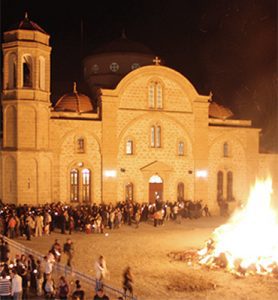
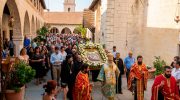
Commemorative days in Cyprus establish the seasonal rhythm of rural life throughout the year, with each community recognizing a historical figure through formal ceremonies and traditional public festivals called panigyria. These events integrate regional customs with large-scale social gatherings, featuring organized walks, artifact displays, communal meals, folk music, and traditional dances that continue until dawn. Unlike various international traditions where individual birthdays are the primary focus, Cypriots emphasize these shared name days with significant social enthusiasm. The regional calendar includes hundreds of these occasions honoring figures from antiquity, the Byzantine era, and more recent local history. Major events like the August 15 commemoration attract thousands to historical landmarks and village squares, while smaller festivals serve to maintain regional identity and…

Read more
Cyprus Village Prayer Traditions

Cyprus Village Prayer Traditions

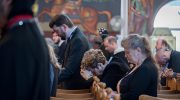
Daily prayer life in traditional Cyprus villages revolved around Orthodox Christian practices that structured time according to liturgical calendars rather than secular schedules. Families maintained home iconostases with oil lamps burning constantly before sacred images, recited morning and evening prayers, blessed meals with the sign of the cross, and observed fasting periods that eliminated meat and dairy for approximately 180 days annually. The village church anchored communal religious life through Sunday Divine Liturgies, daily services during Lent and Holy Week, and feast day celebrations honoring patron saints. These panigyria transformed routine existence into sacred time through extended liturgies, icon processions, communal feasting, folk music, and traditional dances that reinforced religious identity while strengthening social bonds. The Orthodox calendar provided the…

Read more
Chancel Screens Cyprus Carved Art

Chancel Screens Cyprus Carved Art

Early Christian chancel screens in Cyprus were low stone barriers that shaped worship by separating the sanctuary from the nave without fully blocking sight, sound, or movement. Built mainly between the 4th and 7th centuries, they used carved marble or limestone, symbolic motifs, and sometimes curtains to control what the congregation could see and when. This article explains why the screens emerged, how they were constructed and decorated, and what surviving fragments reveal about Cypriot liturgy, trade links, and sacred space design. A Boundary That Stayed Open Early Christian chancel screens were designed to mark a boundary without fully closing it. Positioned between the nave and the sanctuary, they created a sense of separation while allowing sound, light, and movement…

Read more
Panagia Chrysorrogiatissa Monastery

Panagia Chrysorrogiatissa Monastery

Chrysorrogiatissa Monastery is a historic monastic complex located in the Paphos district of Cyprus, near the village of Pano Panagia. It sits at an altitude of approximately 820 meters on the southern slopes of the Troodos foothills, overlooking forested valleys that lead toward the Paphos region. The site is named Panagia Chrysorrogiatissa, a title that translates as “Our Lady of the Golden Pomegranate.” The name reflects symbolic themes found in Byzantine and post-Byzantine religious art and cultural traditions, where the pomegranate often appears as a motif associated with prosperity and abundance. Historical Background The origins of the monastery are traditionally placed in the 12th century, around 1152. According to later narratives, an icon associated with Byzantine artistic tradition was discovered…

Read more
Saint Nicholas Armenian Church

Saint Nicholas Armenian Church

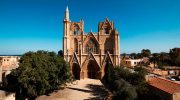
Saint Nicholas Armenian Church, widely known as Notre Dame de Tyre or Our Lady of Tyre, is a medieval Gothic structure located in the old city of Nicosia, in the northern part of Cyprus. Built in the early 14th century between 1308 and 1310, it stands as one of the most important surviving architectural monuments linked to the Armenian presence on the island. The building has undergone multiple transitions in function and ownership over the centuries, reflecting the broader historical changes that shaped Cyprus. Originally established during the Lusignan period, the structure was part of a convent complex associated with religious communities that were active in Cyprus during the medieval era. The architecture reflects the Gothic style introduced to the…

Read more
Hala Sultan Tekke in Larnaca

Hala Sultan Tekke in Larnaca

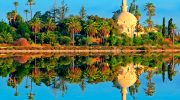
Hala Sultan Tekke is a mosque complex located on the western shore of Larnaca Salt Lake. It was built between 1760 and 1817.  This Ottoman-era monument marks the burial site of Umm Haram, a companion of the Prophet Muhammad who died in Cyprus during the first Arab raids in 647 or 649 AD. The site is considered the third or fourth holiest place in Islam by various sources and remains an important pilgrimage destination for Muslims worldwide. Historical Background According to Islamic tradition, Umm Haram was either the foster sister of Muhammad's mother Amina or the wife of Ubada bin al-Samit, a companion of the Prophet. She accompanied Arab forces under Caliph Muawiyah during their expedition to expand Muslim territory…

Read more
Christian Minority Traditions

Christian Minority Traditions

Cyprus is home to several officially recognized minority communities that form part of its broader religious and cultural landscape. Alongside the Greek Orthodox majority, three long-established minority groups are traditionally identified in official records: Maronites, Armenians, and Latin Catholics. Together, these communities represent a small but historically significant portion of the population, estimated at under five percent in total. The 1960 Constitution of the Republic of Cyprus formally recognized these groups as religious minorities and provided parliamentary representation for each community. This arrangement reflects the island’s multi-layered social structure, shaped by centuries of migration, trade, and political change in the eastern Mediterranean. Each community developed its own linguistic, cultural, and institutional identity while also integrating into wider Cypriot society. Their…

Read more