The Mediterranean monk seal stands as one of the world’s most endangered marine mammals. Scientists estimate that only 815 to 997 individuals remain across the entire species range. The name comes from the characteristic neck folds that resemble a monk’s hooded robe, combined with their solitary and reclusive lifestyle. Cyprus represents a critical area for this species, with approximately 20 to 22 individuals currently present in waters around the island.
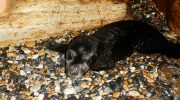
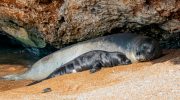
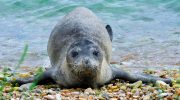
Adult Mediterranean monk seals reach lengths of 2.4 meters and weigh between 240 and 400 kilograms, with males slightly larger than females. They belong to the family Phocidae, making them true seals without external ear flaps. Their dark brown or grey coat features a lighter patch on the belly, particularly visible in males. Newborn pups measure about 80 to 100 centimeters at birth and weigh 15 to 18 kilograms, covered in woolly black or dark brown fur with a distinctive white or yellow belly patch.
From Beaches to Caves
Historical records and ancient texts document Mediterranean monk seals throughout the Mediterranean Sea, Black Sea, and along the northwestern coast of Africa. The species appeared frequently in ancient Greek civilization, depicted on coins dating to 500 BC and mentioned in writings by Aristotle, Homer, and Plutarch. For millennia, these seals hauled out on open beaches to rest and give birth.
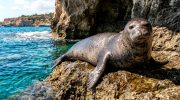
The 20th century brought dramatic changes. Human population growth, coastal development, and tourism forced the seals to abandon their traditional beach habitats. They retreated to remote sea caves with underwater entrances, locations that provide protection from human disturbance but also create new dangers. When storms surge into these caves, newborn pups face significant mortality risk from flooding.
Cyprus witnessed this decline firsthand. The first systematic documentation of monk seals as part of Cyprus’s native fauna appeared in 1959. Numbers declined steadily through the following decades, and the species appeared functionally extinct around the island by the end of the 20th century. The last confirmed reproductive activity before recent times occurred decades ago.
Physical Abilities and Daily Life
Mediterranean monk seals demonstrate remarkable swimming and diving capabilities. They can dive to depths exceeding 250 meters and maneuver effectively enough to evade sharks. Their bodies evolved for marine life, with short broad flippers and a streamlined fusiform shape that allows efficient movement through water.
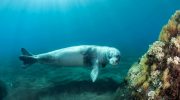
These seals are diurnal, active during daylight hours. They spend their time foraging in shallow coastal waters, though they can hunt at much greater depths when needed. The diet consists primarily of bony fish including eels, sardines, tuna, flatfish, and mullets. Cephalopods such as octopuses form another major food source. Seals hunt in wide-open spaces where they can use their speed effectively, and they possess the strength to move rocks aside when searching for prey hiding beneath.
On land, monk seals are largely solitary. In water, small colonies of up to 20 individuals may form, though these gatherings remain uncommon. The seals communicate through high-pitched vocalizations, particularly when alerting others to danger. They do not migrate long distances, instead maintaining relatively small home ranges.
Return to Cyprus
A monitoring program established in 2009 by the Department of Fisheries and Marine Research began documenting an increase in seal sightings around Cyprus. Between 2009 and 2018, researchers recorded growing numbers of observations and confirmed the birth of several pups, indicating permanent presence rather than occasional visitors.
Surveys covered 370 kilometers of coastline and identified 17 suitable shelters for the seals. Seven of these shelters met requirements for pupping, while ten were suitable only for resting. Camera traps installed at 13 shelters recorded 342,000 images over 4,120 trap days, confirming seal presence at multiple locations through direct observations and indirect evidence like scats and tracks.

The three areas with highest sighting numbers were Paphos and Akamas with 166 sightings, Limassol with 118 sightings, and the Kavo Greko to Kavo Pyla region with 68 sightings. Notable observations included ten monk seals spotted at Governor’s Beach in Limassol on August 13, 2015, and a mother with pup observed around Paphos Harbor in early 2018.
In the Turkish-occupied part of Cyprus, camera trap monitoring from 2016 to 2019 documented regular breeding activity. Researchers identified seven individual seals including three pups at monitored caves. One adult female gave birth to two pups in consecutive years, demonstrating sustained reproductive activity.
Threats and Protection Measures
The Mediterranean monk seal faces multiple serious threats. Coastal development continues to degrade and destroy critical habitat. Tourism activities and boat traffic disturb seals in their remaining refuges. Pollution from various sources contaminates waters and affects prey availability. Fisheries pose direct threats through accidental entanglement in nets and competition for fish stocks. Some fishermen deliberately kill seals, viewing them as competitors.
The species exhibits extreme sensitivity to human disturbance. Pregnant females are particularly vulnerable and may abort when disturbed. This sensitivity forced the shift from beach habitats to remote caves, but even these refuges face increasing human intrusion from recreational diving and cave exploration.
Cyprus provides legal protection under multiple frameworks. The species received protection under fisheries regulations in 1971. The Lara-Toxeftra protected area, established in 1989, forms part of the Natura 2000 network designated in 2011. Five Natura 2000 Specially Protected Areas now exist for marine conservation in Cyprus, benefiting monk seals.
International cooperation strengthens conservation efforts. The Hellenic Society for the Study and Protection of the Monk Seal operates programs in collaboration with the University of Exeter’s Marine Turtle Research Group. These programs share expertise across the Mediterranean, improving monitoring techniques and conservation strategies.
Seals in Cypriot Waters Today
The improving status of Mediterranean monk seals around Cyprus reflects broader recovery trends across parts of their range. In June 2023, the IUCN reclassified the species from Critically Endangered to Endangered, then to Vulnerable, acknowledging population increases and discovery of previously undocumented breeding areas.
This recovery remains fragile and depends on continued protection. Cyprus’s commitment to monitoring and habitat conservation contributes to regional efforts that could secure the species’ future. The Department of Fisheries and Marine Research maintains ongoing surveillance programs and works to reduce human impacts on critical seal habitats.

Public awareness has increased substantially. Most Cypriots now recognize monk seals as protected species deserving conservation. Educational programs bring students and community members to learn about marine conservation. These efforts build support for protective measures and help reduce accidental disturbance.
Encountering Monk Seals Responsibly
Monk seals occasionally appear in harbors, along coastal areas, and near popular beaches. These sightings create excitement but require responsible behavior from observers. The most important rule is maintaining distance. Never approach a seal, particularly in water. Seals that feel threatened may abandon critical habitat, including caves where pups shelter.
Boaters should reduce speed near rocky coastlines and cave areas where seals rest. Divers and snorkelers must avoid entering caves with underwater entrances, as these likely serve as seal refuges. Photography should occur from appropriate distances without pursuit or harassment.
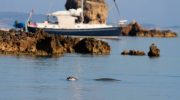
Anyone encountering a monk seal should report the sighting to the Department of Fisheries and Marine Research. These reports contribute valuable data to monitoring programs. Include the date, time, location, and any photographs if available. Do not share specific cave locations publicly, as this information could lead to disturbance.
If you find an injured, sick, or dead seal, contact authorities immediately. Do not attempt to handle the animal. Marine mammal strandings provide important information about population health and threats.
A Conservation Success Story
The return of breeding Mediterranean monk seals to Cyprus represents meaningful conservation progress. From apparent functional extinction at the end of the 20th century to confirmed regular breeding today demonstrates that dedicated protection can reverse population declines. Cyprus’s role in this recovery carries regional significance, as every individual and every successful pup contributes to the survival of one of Earth’s rarest mammals.
The species serves as an indicator of overall marine ecosystem health, requiring clean waters, healthy fish populations, and undisturbed coastal habitat. By protecting monk seals, Cyprus safeguards broader marine biodiversity. These ancient mariners connect modern Cyprus to natural heritage stretching back millennia, maintaining living links to the seas that shaped Mediterranean civilization.