Geological Cyprus

Geological Cyprus

Copper Identity of Cyprus

Copper Identity of Cyprus

The island of Cyprus owes more than just its prosperity to copper. The very name of this Mediterranean nation comes from the ancient Greek word Kúpros, which scholars believe connects to the metal that defined its economy for over 4,000 years. The English word "copper" itself derives from the Latin phrase aes cyprium, meaning "metal of Cyprus." This linguistic connection reveals a fundamental truth: Cyprus and copper are so deeply intertwined that ancient civilizations could not think of one without the other. From the fourth millennium BC to the Roman Empire and beyond, copper mining transformed Cyprus from a small island into a major economic power in the ancient world. The Ancient Discovery That Changed Everything Copper production on Cyprus…

Read more
Vertical Cyprus: Where the Island Rises and Reveals Itself

Vertical Cyprus: Where the Island Rises and Reveals Itself

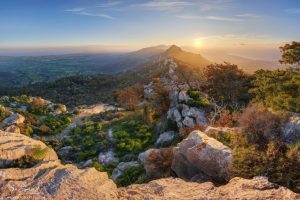
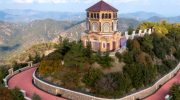
Most visitors meet Cyprus at sea level, through beaches and coastal towns. But the island's character is shaped just as much by what rises behind it. From volcanic peaks and forested ridges to monastery balconies and fire lookout stations, Cyprus's high ground offers a different kind of understanding. These elevated viewpoints are not simply scenic stops. They explain how the island was formed, how people survived, and how geography quietly directed history, belief, and daily life. This is Cyprus seen vertically, where altitude changes perspective. An island lifted from the sea Cyprus’s mountainous backbone exists because the island itself was pushed upward from the ancient Tethys Ocean. The Troodos Mountains are one of the world’s most complete examples of exposed…

Read more
Almyras Mudstones

Almyras Mudstones

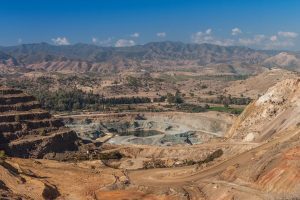
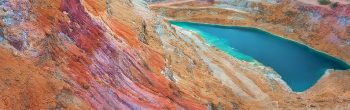
Almyras mudstone is a clay-rich badlands landscape in central Cyprus where ancient marine sediments, lifted from the Tethys Ocean, are exposed in sharply eroded hills and gullies. Its colours, microfossils, and altered volcanic ash make the area one of the island’s clearest geological records, and the same clays later supported early copper-smelting activity at Agia Varvara–Almyras. cyprusalive This article explains how Almyras formed, what the terrain reveals, and how people learned to use the land’s materials for industry. Quick essentials (for skimmers) visitnicosia Image Credit: like.philenews.com Where: Central Cyprus, mainly around Agia Varvara–Almyras, south of Nicosia  What it is: Marine mudstones and clay formations shaped into badlands  Why it matters: Records Cyprus's emergence from the sea and supports early metallurgy…

Read more
Hidden Waterfalls & Springs in Cyprus Mountain Valleys

Hidden Waterfalls & Springs in Cyprus Mountain Valleys

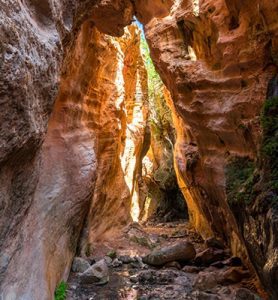
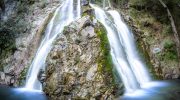
Cyprus contains a surprising network of waterfalls and natural springs hidden within the Troodos mountain range. These water features flow year-round despite the island's reputation as a dry Mediterranean destination. The mountains capture rainfall that would otherwise evaporate in coastal plains, creating conditions where water persists through even the hottest summers. dom-com-cy Most waterfalls cluster between 650 and 1,600 meters elevation where annual precipitation reaches 1,000 millimeters compared to 300 millimeters at sea level. The Troodos region produces 80 percent of Cyprus's surface water, feeding rivers that supply reservoirs and aquifers across the island. These waterfalls and springs formed over millions of years as mountain streams carved through volcanic diabase and limestone rock, creating spectacular cascades surrounded by dense pine…

Read more
Troodos Mountains: Geology Shaped Cyprus

Troodos Mountains: Geology Shaped Cyprus

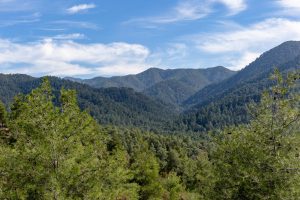
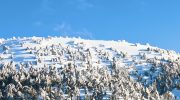
The Troodos Mountains are one of the world’s clearest places to walk through ancient oceanic crust, preserved as an ophiolite and lifted above sea level in the centre of Cyprus. This exposed seafloor sequence helped scientists understand plate tectonics and later shaped Cypriot history by concentrating copper deposits, influencing climate, and supporting mountain settlement and tradition. This article explains how Troodos formed, how to “read” its layers across the landscape, and why the range connects deep geology with everyday life on the island. A Mountain Made from Seafloor At first glance, Troodos looks like a typical Mediterranean highland: pine forests, winding roads, cool air in summer. What lies beneath, however, is extraordinary. The mountains are formed from an ophiolite, a…

Read more
Why Troodos Mountains Are a UNESCO Geopark

Why Troodos Mountains Are a UNESCO Geopark

The Troodos Mountains occupy the central part of Cyprus, covering approximately 1,147 square kilometers or about 15 percent of the island. UNESCO designated Troodos as a Global Geopark in 2015 due to its exceptional geological significance. The mountain range represents an ophiolite, which is an uplifted fragment of oceanic crust and upper mantle that formed 92 million years ago during the Upper Cretaceous period. bigstockphoto.com The highest peak, Mount Olympus, reaches 1,952 meters above sea level. What makes Troodos extraordinary is that the deepest rocks now sit at the highest elevations due to a dome structure created by tectonic forces. Visitors walking through Troodos can literally travel from the Earth's upper mantle to the ancient seafloor within a single day.…

Read more
Cyprus Three Continents Landscape

Cyprus Three Continents Landscape

Cyprus isn't just sitting on the Mediterranean - it's rising from deep inside the Earth itself. The island's mountains, plains, and dramatic coastlines tell a story millions of years in the making, a story written by colliding continents, ancient oceans, and forces powerful enough to lift the ocean floor into the sky. Understanding Cyprus's geography means understanding why civilizations flourished here, why copper made the island famous, and why the landscape itself feels almost mythical. An Island Shaped by Deep Forces Cyprus stands where Europe, Asia, and Africa nearly touch, and this position at the crossroads of three continents isn't just cultural - it's geological. The island's dramatic landscape reflects its location along active tectonic boundaries where massive plates of…

Read more
Pentadaktilos Mountains

Pentadaktilos Mountains

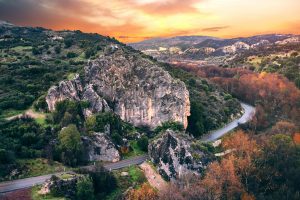
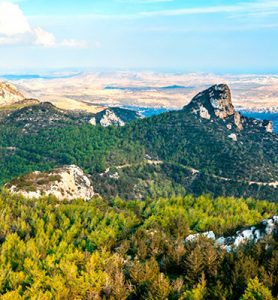
The Pentadaktylos Mountains stretch like a limestone backbone along the northern coast of Cyprus, parallel to the Mediterranean for approximately 160 kilometers. Known also as the Kyrenia Mountains, this narrow ridge rises abruptly from the coastal plain to create one of the island's most dramatic landscapes. The name Pentadaktylos translates to five fingers in Greek, referring to a distinctive peak that resembles an outstretched hand. сommons.wikimedia.org Ancient Limestone from the Mesozoic Era The range consists primarily of hard crystalline limestone with some dolomite and marble formations dating to the Mesozoic period, formed between 250 and 65 million years ago beneath ancient seas. Unlike the volcanic Troodos Mountains in southern Cyprus, this northern range represents sedimentary formations from the Permian to…

Read more
Kyrenia (Pentadaktylos) Mountains

Kyrenia (Pentadaktylos) Mountains

Whether you stand on the observation deck in Troodos near the summit of Mount Olympus on a clear day, walk across the rolling fields of the Mesaoria plain, or simply drive through the streets of Nicosia, your eyes will inevitably be drawn north. Expedia There, a long, jagged ridge cuts across the horizon like a line drawn by a giant hand. In some places it rises so sharply that it feels unreal, as if the land itself has been lifted and frozen mid-motion. At sunrise it glows pale and soft. By midday it hardens into white stone. At dusk it becomes a jagged silhouette, like the ruins of a forgotten kingdom. These are the Kyrenia Mountains, also known as Pentadaktylos.…

Read more