The olive branch tradition in Cyprus connects ancient Mediterranean symbolism with modern political aspirations, appearing most prominently on the national flag adopted at independence in 1960. Two green olive branches crossed beneath the copper-colored island silhouette represent the hope for peace and reconciliation between Greek and Turkish Cypriot communities.

The olive tree itself holds deep cultural significance across Cyprus, with cultivation dating back millennia and the tree appearing in religious ceremonies, folk traditions, and daily life. The symbolism draws from ancient Greek associations where olive branches signified peace, divine favor, and athletic victory, as well as biblical references to Noah’s dove carrying an olive branch after the flood.
Beyond flag representation, olive branches appear in the national coat of arms, where a dove carries one above the year 1960, and in countless cultural expressions that link Cypriot identity to this Mediterranean plant that thrives across the island’s terrain.
Ancient Mediterranean Peace Symbol
The olive branch as peace symbol originated in ancient Greece, where it held sacred connections to the goddess Athena. According to mythology, Athena competed with Poseidon for patronage of Athens. Poseidon struck the Acropolis with his trident, creating a saltwater spring, while Athena planted the first olive tree. The gods judged Athena’s gift superior, granting her the city. This myth established olive trees as divine gifts representing wisdom, prosperity, and peaceful civilization versus violent conquest.
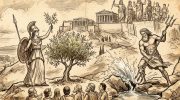
In Greek tradition, a hiketeria was an olive branch held by supplicants approaching persons of power or entering temples to supplicate gods. The branch signaled the bearer’s peaceful intentions and request for divine or human mercy. Olympic victors received olive wreaths as their prizes, transforming the peace symbol into an emblem of athletic achievement. These ancient associations embedded olive branches into Mediterranean cultural consciousness as universal symbols of goodwill.
The biblical story of Noah’s flood reinforced peace symbolism across Christian civilizations. When the dove returned to the ark carrying an olive branch, it signaled God’s mercy and the end of divine wrath against humanity. Early Christians incorporated olive branch imagery into catacomb art, combining the dove from Gospel symbolism with classical peace associations. This fusion of Greek and Jewish traditions created a symbol that transcended specific religions while maintaining consistent meaning.
Olive Cultivation and Economic Importance
Olive cultivation has sustained Cyprus for thousands of years, with trees thriving in the Mediterranean climate and rocky terrain. Traditional varieties adapted to local conditions produce both table olives and oil that forms the foundation of Cypriot cuisine. The trees require minimal water once established, making them ideal for the island’s semi-arid conditions where rainfall concentrates in winter months.
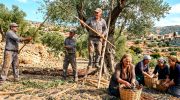
The harvest from October through January traditionally brought families together for communal labor where men shook branches and women gathered fallen fruit. The physical work created social bonds while transmitting agricultural knowledge across generations. Village olive presses processed fruit into oil used for cooking, lighting lamps, and religious purposes. This integration of olive production into economic and spiritual life gave the tree special status beyond its practical utility.
The oil’s religious importance extended to Orthodox sacraments where olive oil serves in baptisms, anointings, and church lamp fuel. The perpetual flames before icons represent eternal prayer and divine presence within sacred spaces. This liturgical use elevated olive trees from agricultural crops to sacred plants with spiritual dimensions that justified their selection as national symbols representing Cyprus’s Orthodox Christian heritage.
The Flag Design and Political Context
When Cyprus gained independence in 1960, constitutional requirements specified the flag must employ neutral symbols avoiding colors or emblems associated with Greece or Turkey. The olive branches satisfied this requirement by representing universal peace rather than ethnic Greek or Turkish identity. Designer İsmet Güney’s incorporation of two crossed branches beneath the island silhouette created visual balance while reinforcing the peace message through duplication.

The constitutional provisions allowing Greek and Turkish flags to fly alongside the Cyprus flag during holidays revealed the fragile nature of bicommunal cooperation. The olive branch symbolism attempted to paper over deep divisions that would erupt into violence within three years of independence. The 1963 intercommunal conflict shattered the peace ideal the flag represented, demonstrating that symbols alone cannot create unity without genuine political compromise.
After the 1974 Turkish invasion partitioned the island, the olive branches gained additional poignancy as symbols of unrealized aspirations. The branches continue representing hope for reunification despite decades of failed negotiations and hardened positions on both sides. The gap between symbolic representation and lived reality makes the olive branches simultaneously signs of hope and reminders of failure.
Olive Branches in the Coat of Arms
The national coat of arms features a dove carrying an olive branch above the year 1960, enclosed in a copper-colored shield surrounded by olive wreaths. This design reinforces the flag’s peace message through Christian dove symbolism combined with classical olive associations. The 1960 date announces independence as the moment when Cypriots took control of their destiny, creating optimistic vision that subsequent events have complicated.
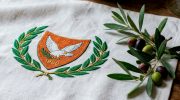
The arms appear on official documents, government buildings, and ceremonial contexts where they represent state authority and national identity. The olive elements link governmental power to peace aspirations, suggesting that Cyprus’s political institutions exist to serve reconciliation goals. This idealistic framing contrasts with practical governance realities where ethnic politics dominate and genuine bicommunal cooperation remains elusive.
The Turkish Cypriot authorities adopted modified arms removing 1960 and adding 1983 above the shield with Turkish star and crescent symbols. This alteration demonstrates how shared symbols fractured along with political unity, with each side claiming rightful succession to independence ideals while rejecting the other’s legitimacy. The competing coat of arms visualize the division that olive branches were supposed to prevent.
Contemporary Cultural Expressions
The olive branch appears in cultural contexts beyond official symbols, representing Cypriot identity in art, literature, and commercial branding. Tourism materials emphasize olive groves and traditional oil production as authentic Cyprus experiences. Restaurants feature olive-based cuisine, and handicraft shops sell olive wood carvings that transform the symbolic plant into tangible souvenirs.

Educational programs teach children about olive cultivation, oil production, and the symbolic meanings embedded in national symbols. School trips to olive presses and harvest participation transmit practical knowledge while reinforcing cultural identity linked to this Mediterranean plant. The combination of agricultural education and symbolic instruction creates multilayered understanding where olive branches represent both literal crops and abstract peace ideals.