High above the limestone cliffs of Episkopi, something enormous drifts on invisible columns of warm air – barely moving a feather, tracing wide, unhurried circles. The Griffon Vulture is one of the heaviest flying birds in Europe and one of the most ecologically vital.
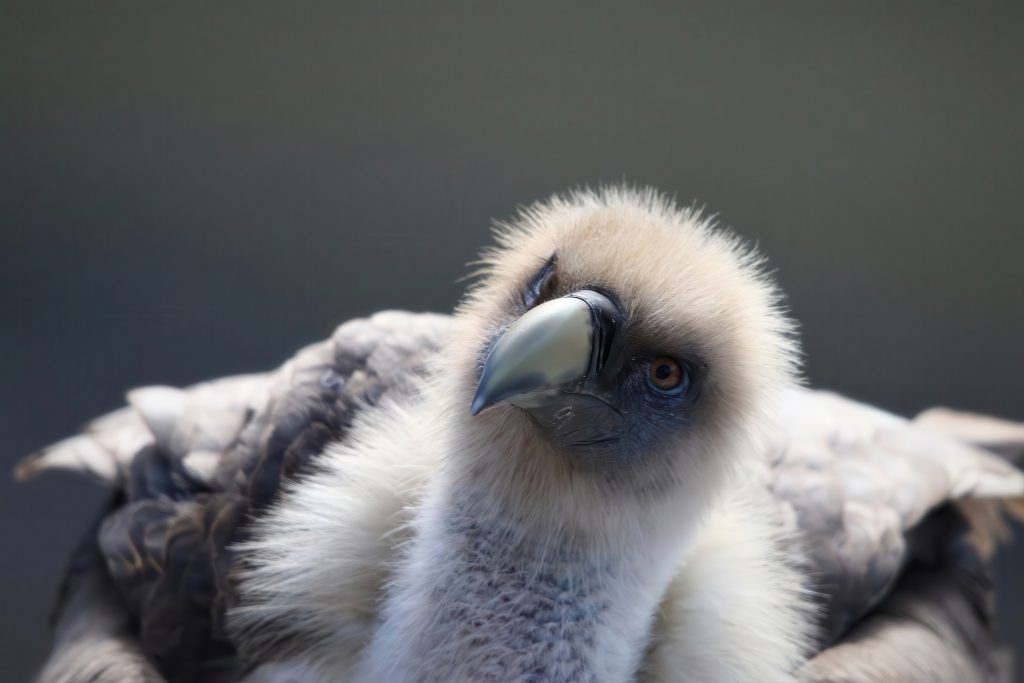
In Cyprus, it came within a handful of individuals of disappearing forever. It has not disappeared yet – and why it matters goes far beyond its astonishing size.
What It Is
An Eagle’s Cousin, Built for Patience:
- 2.8 m Maximum wingspan
- 10 kg Maximum body weight
- 41 yrs Recorded maximum lifespan
- 1.43× Resting energy used while soaring
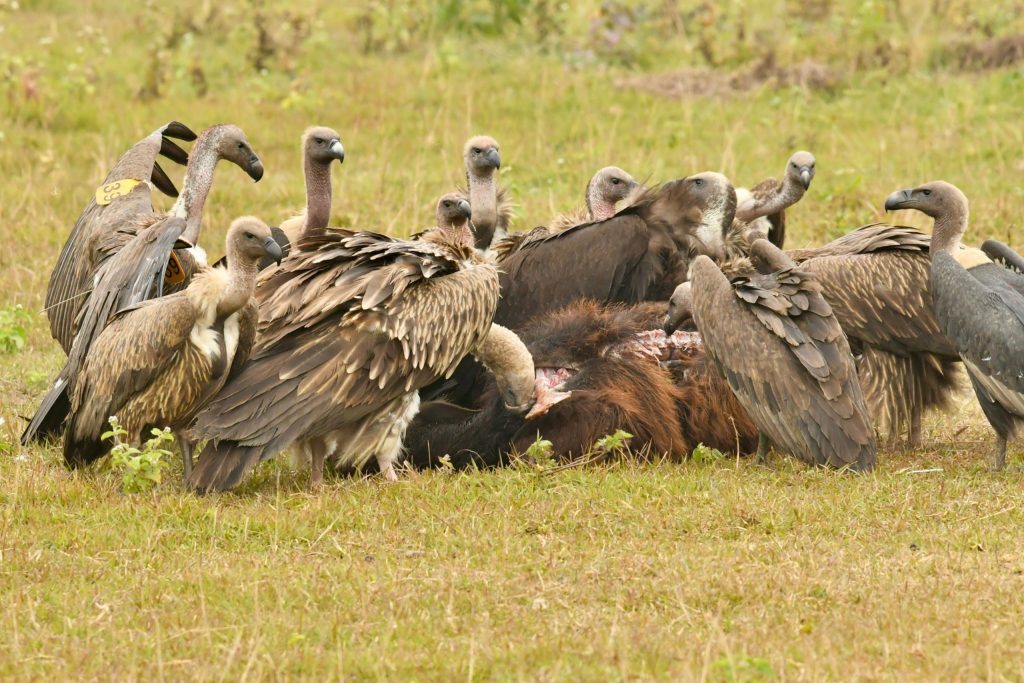
The Griffon Vulture belongs to the family Accipitridae – the same family as eagles, hawks, and kites – but has evolved a radically different strategy: soaring rather than hunting, scavenging rather than killing. Its genus Gyps contains eight Old World species. Its closest former neighbour in Cyprus was the Cinereous Vulture (Aegypius monachus), which went locally extinct here by 1960 – a warning that went unheeded. Old World and New World vultures look nearly identical but share no recent common ancestor – a textbook case of convergent evolution: nature finding the same answer twice, independently.
The Bird That Ancient Civilisations Called Divine
The Griffon Vulture was inescapable across the ancient Mediterranean – and those civilisations paid attention. In Egypt, the goddess Nekhbet, protector of the Pharaohs, was depicted as a vulture; the bird appeared on royal headdresses alongside the cobra as a symbol of renewal and death’s necessary role. In Greece, it was regarded as a servant of the gods. Plutarch records that Romulus was declared founder of Rome after sighting more vultures than his brother Remus.
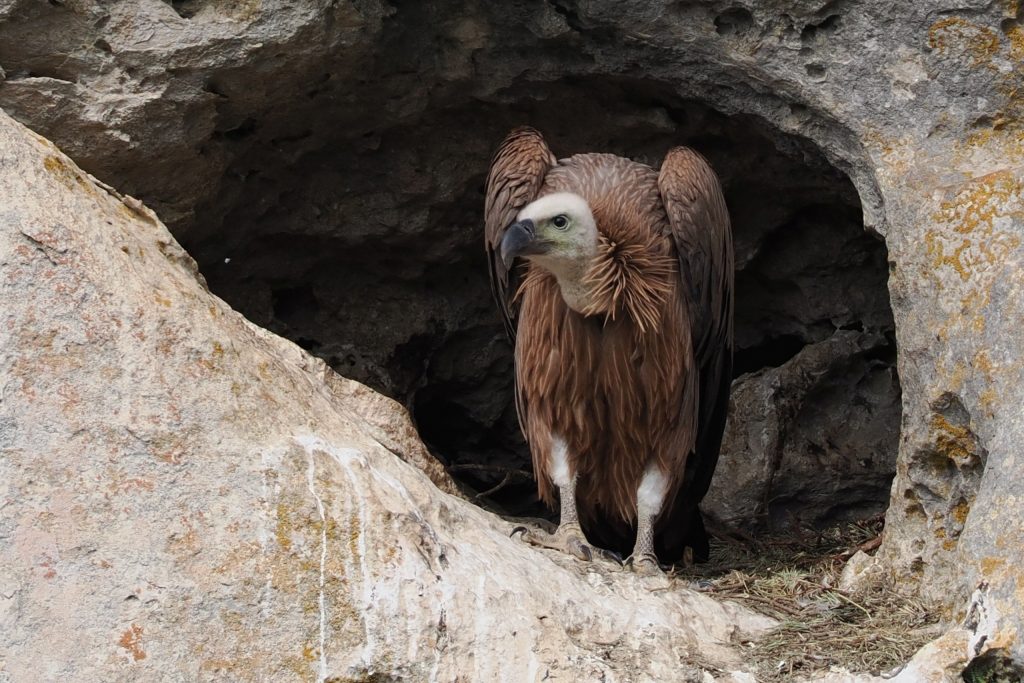
The Hebrew word nesher – often mistranslated as “eagle” in European Bibles – almost certainly refers to this species, well known throughout the ancient Near East. In Cyprus, historical accounts describe nesting colonies at no fewer than fifteen sites, and feeding flocks on the fields so dense they were “likened to flocks of sheep.”
“Feeding flocks across the fields of Cyprus were once so dense they were likened to flocks of sheep drifting across the hillsides.”
Tawny Gold, Bare Skin, and Wings Like Barn Doors
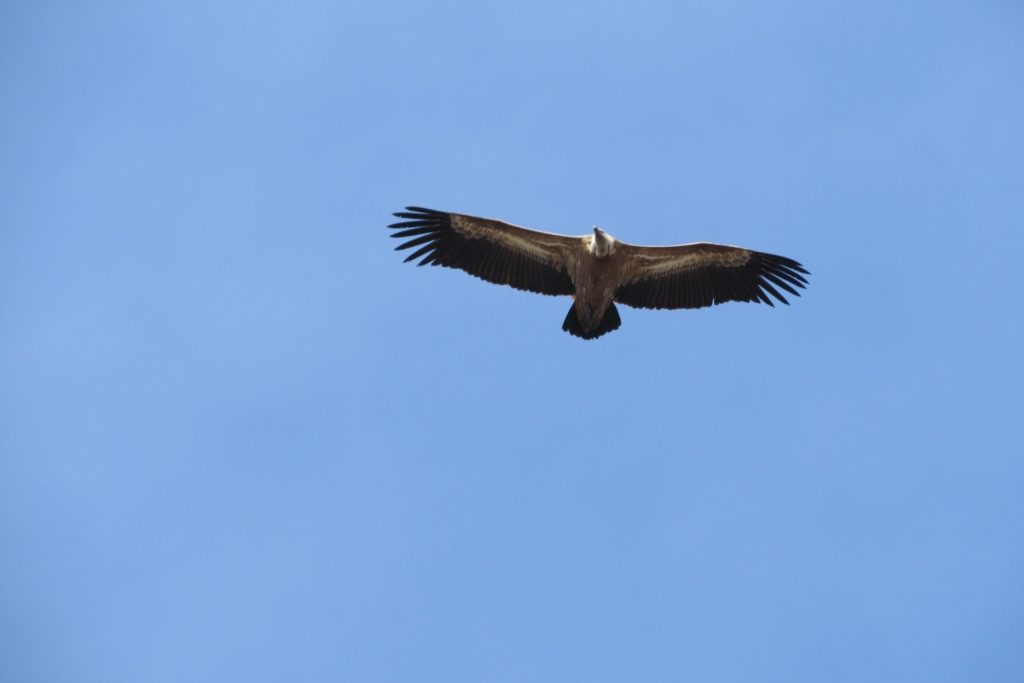
Adults measure 93–122 cm. Body plumage is warm tawny-buff; flight feathers are dark brown; head and neck are bare or thinly down-covered – hygiene adapted for reaching inside carcasses. A pale fluffy ruff rings the neck base. In flight, wings are held in a shallow V (dihedral), giving a buoyant sailing quality requiring almost no flapping.
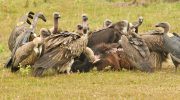
A vulture’s stomach acid is corrosive enough to neutralise anthrax, botulinum toxin, and cholera – pathogens lethal to most animals. One bird can consume several kilograms in minutes; a flock strips a carcass to bone in under two hours. Highly social: nest in cliff colonies; when one bird descends to food, others observe from distance and follow – communication entirely visual, no calls required.
Things Worth Remembering
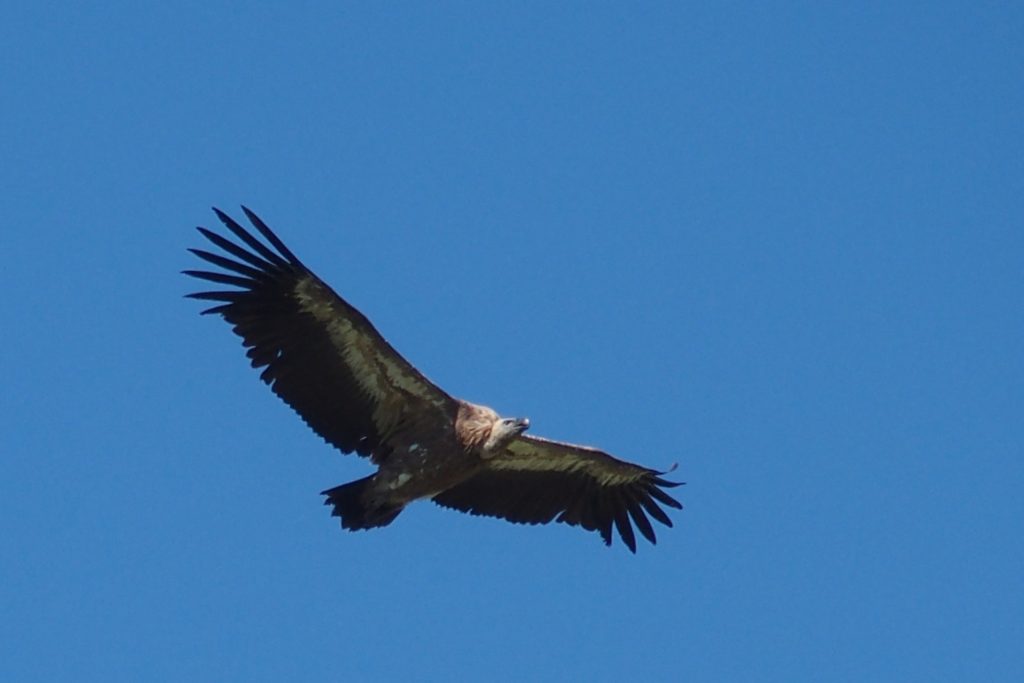
- Living thermostat: By adjusting posture, a vulture more than doubles exposed bare skin area, precisely regulating body temperature – no sweat glands needed.
- One egg, full commitment: A single egg per year, incubated 52–57 days by both parents. The chick remains dependent for 4–5 months – exceptional parental investment.
- Sacred to multiple faiths: Griffon Vultures play an active role in Tibetan Buddhist sky burials and Zoroastrian Towers of Silence – honoured as sacred messengers between worlds.
- Convergent evolution: Old World and New World vultures look nearly identical yet share no recent ancestor. Nature evolved the same body plan twice, on separate continents.
- Vultures are relatively silent as they lack a syrinx so they can only hiss, growl, and snarl.
- To keep cool, vultures urinate on their legs and feet; this also kills bacteria or parasites and helps to keep the birds healthy.
Remove the Vulture, Lose the System
When vulture populations collapsed by over 95% across South Asia in the 1990s (due to diclofenac in livestock), feral dogs exploded in number, rabies surged, and human deaths rose sharply. India’s estimated loss: $34 billion in healthcare and livestock costs. The Griffon Vulture is not scenery. It is infrastructure.
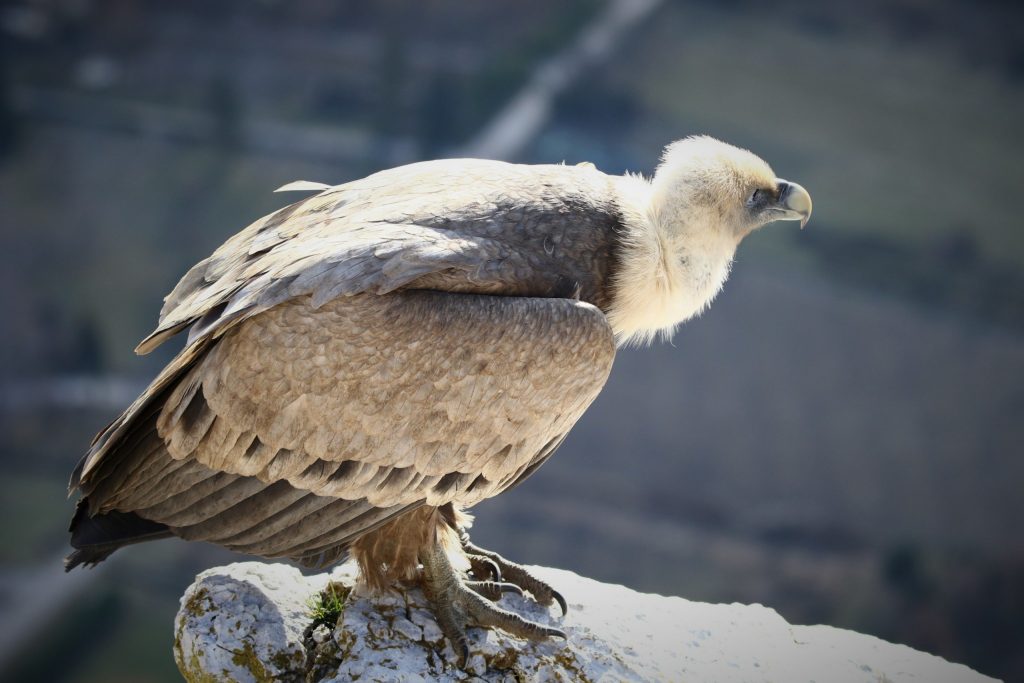
In Cyprus, where extensive livestock farming and road-killed animals once sustained large colonies, the bird’s absence is still felt. The name “Griffon” echoes the mythological griffin – half eagle, half lion, guardian of treasure. The real Griffon guards something far more valuable: the sanitary baseline of the Mediterranean ecosystem.
Conservation Status – Critically Endangered in Cyprus
From Fifteen Colonies to Eight Birds – and Back
- 1950s Hundreds of birds; at least 15 nesting colonies across the island.
- 1960 Cinereous Vulture goes locally extinct – first victim of poison baits and habitat change.
- 2000s Griffon Vulture collapses to fewer than 15 individuals. Cause: illegal poison baits, loss of open-air livestock carcasses, shooting.
- 2014 22 birds transferred from Crete. Population briefly rises to ~30.
- 2015 Mass poisoning incident. Population collapses again.
- 2022 EU LIFE with Vultures project launches (BirdLife Cyprus, Game & Fauna Service, Terra Cypria, Vulture Conservation Foundation). A second major poisoning incident kills more birds.
- 2022–25 58 Griffon Vultures transported from Spain – home to the world’s largest population – and released in Cyprus.
- 2025 Population reaches ~43 individuals. First nesting attempt in four years recorded in Paphos Forest. Egg did not hatch; full breeding expected from 2026.
- Every individual is monitored daily by satellite tracker. Power line collisions and illegal poison baits remain the primary threats. Each death in a population this small is a measurable, documented setback.
Where to Scan the Sky
Episkopi Cliffs, Limassol – Core habitat of the current colony. Best from mid-morning when thermals develop. Binoculars essential.
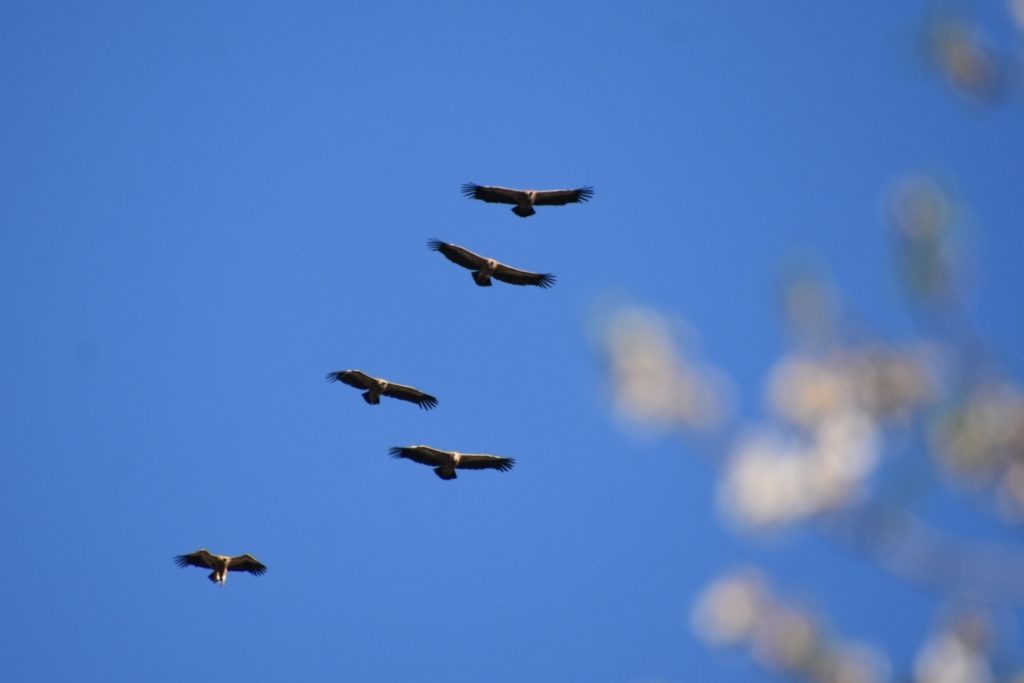
Paphos Forest – Important foraging and new nesting habitat. Walking trails offer overhead sightings on warm, still mornings.
Akamas Peninsula – Former colony site; dramatic coastal cliffs. Coastal boat trips offer cliff-face views from below.
Best timing: 9 am–1 pm, spring or autumn. No thermals on cold or rainy days – no sightings.
Critical:
Do not approach cliff nest sites or fly drones near feeding birds. With ~43 individuals alive, every disturbance is a conservation event.
The Griffon Vulture has soared over Cyprus since before human memory – recognised by Egyptian priests, Greek philosophers, and biblical writers. Its near-disappearance is a precise record of what happens when a landscape stops valuing its own ecological foundations. Its slow return is equally precise: international cooperation, daily satellite monitoring, legal enforcement, and a community changing its habits.
When you next see that vast, pale shape turning above a Limassol cliff, you are watching something genuinely rare – rebuilt from almost nothing, doing exactly what it has always done. Keeping the sky clean. Keeping the land alive.