About Us

Our website is the product of a passionate team deeply devoted to Cyprus and its rich history. Empowered by Sergey Matsotskiy and headed by Michael Dubilet, our project was made possible by specialists – historians, oceanologists, geologists, and writers – dedicated to uncovering and sharing the island’s lesser-known treasures. Among our creative team are: Kostantin Solovyov, Vasily Papkovskiy, Konstantinos Panayi and many others.

Explore our top stories and discover ideas worth your time.
Cyprus City Kingdoms

Cyprus City Kingdoms

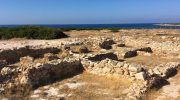
For over 3,000 years, Cyprus was home to powerful independent city-kingdoms that controlled trade routes, mined copper, and blended Greek, Phoenician, and local cultures into something uniquely Cypriot. These ancient cities left behind spectacular ruins - theaters still hosting performances, mosaic-floored villas, and temple foundations - that tell the story of a small island that punched far above its weight in the ancient world. A Patchwork of Powerful Cities Unlike many ancient lands ruled by a single king or empire, Cyprus developed as a collection of independent city-kingdoms. Each coastal city controlled its surrounding territory, built its own temples and palaces, minted its own coins, and conducted its own diplomacy with the great powers of Egypt, Persia, and Greece. worldhistory-org At its height during the Iron Age (around 1000-300 BC), Cyprus had about a dozen of these city-kingdoms. Names like Kourion, Kition, Salamis, and Paphos appeared in ancient texts and on diplomatic correspondence. Some were founded by Greek colonists, others by Phoenician traders, but all developed distinctly Cypriot identities that blended Eastern and Western influences in architecture, religion, and daily life. From Bronze Age Towns to Iron Age Kingdoms Cyprus's city-kingdoms emerged from earlier Bronze Age settlements that had grown wealthy from copper mining and Mediterranean trade. By 1600-1050 BC, the island had become a crucial hub connecting the civilizations…

Read more
Limassol Lefkosia Fault Zones

Limassol Lefkosia Fault Zones

The Limassol-Lefkosia region contains several major fault systems, with the Southern Troodos Transform Fault Zone being the most significant. This fault zone runs along the southern margin of the Troodos ophiolite, the massive block of ocean floor rock that forms the central mountains of Cyprus. The fault is at least 5 kilometers wide in some places and trends east to west across the island. mail-com Transform faults are places where two tectonic plates slide horizontally past each other rather than colliding or pulling apart. The Southern Troodos Transform Fault formed around 90 million years ago on the ocean floor when Cyprus was still underwater. The fault separated two spreading ridges where new ocean crust was being created, much like the San Andreas Fault in California separates two plates today. Historical Background About 90 million years ago, during the Late Cretaceous period, Cyprus didn't exist as an island. Instead, the rocks that now form the Troodos Mountains were part of the Neotethys Ocean seafloor. At underwater spreading ridges, hot magma rose from deep in the Earth and created new ocean crust. This process happened in a region above a subduction zone where one tectonic plate was diving beneath another. researchgate-net The transform fault developed perpendicular to these spreading ridges and allowed different sections of ocean floor to move past each other.…

Read more
Polis–Chrysochous Coast

Polis–Chrysochous Coast

The Polis-Chrysochous coast represents one of Cyprus's most ecologically valuable marine environments. Stretching along the northwestern shore of the island around Chrysochous Bay, this protected area encompasses the waters from the Akamas Peninsula to the villages of Pomos and Pachyammos. The sea surrounding the area is considered a hot spot for its marine biodiversity on a global scale, and an important and fertile habitat or refuge for many living organisms. The coastal waters support extensive Posidonia oceanica seagrass meadows, vital breeding grounds for endangered sea turtles, and populations of critically threatened Mediterranean monk seals. The region gained protected status through designation as part of the Natura 2000 network, recognizing its exceptional ecological significance. The combination of pristine beaches, rocky reefs, and underwater caves creates diverse habitats that sustain an extraordinary variety of marine life from microscopic organisms to visiting cetaceans. Historical Context The Chrysochous Bay region has witnessed human interaction with the sea for thousands of years. The town was built on the foundations of ancient Marion, one of the ten ancient city kingdoms of Cyprus. Ancient Marion flourished from the 5th century BC through Roman times, with fishing providing essential protein and trade goods for the population. Traditional fishing methods remained relatively sustainable through the Byzantine, Lusignan, and Ottoman periods. The 20th century brought dramatic changes. Modern fishing equipment…

Read more