All Articles

12 Abandoned Places Of Cyprus

12 Abandoned Places Of Cyprus

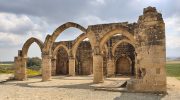
Cyprus is an island that carries its history on the surface. You do not need to dig for it. Drive inland from Limassol, wind up into the Troodos range, or cut across to the occupied north, and you will find places that stopped in time without warning. A church sealed off by barbed wire. An asbestos mine the size of a small mountain. A ranch with its fences still standing and no one inside.  A luna park that closed before most visitors were born. These are not obscure footnotes to Cypriot history. They are physical evidence of the forces that shaped this island across the 20th century, political division, industrial collapse, economic migration, and the kind of quiet neglect that…

Read more
14 Abandoned Villages of Cyprus

14 Abandoned Villages of Cyprus

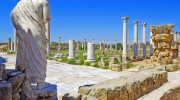
Cyprus is one of the most historically layered islands in the Mediterranean. Underneath the resort towns and the beach clubs and the well-worn tourist trails, there is another Cyprus entirely. It shows up in the form of stone houses with no roofs, churchyards with no congregation, and village squares where the only regular visitors are photographers and the occasional goat.  The abandoned villages of Cyprus number in the dozens, scattered across every district on the island. Some were emptied by war. Some by flood. Some by the slow, quiet pull of better economic prospects in the cities. This guide covers 16 of them, what they were, why they emptied, and what you will actually find if you make the drive…

Read more
The Eastern Mosquitofish In Cyprus 

The Eastern Mosquitofish In Cyprus 

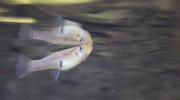
There is a small, unremarkable fish lurking in almost every pond, ditch, irrigation channel, and wetland across Cyprus. Most people walk right past it without a second glance. It arrived decades ago on a very deliberate mission: to save human lives by devouring the larvae of malaria-carrying mosquitoes. In that narrow sense, it succeeded. But in almost every other way, this finger-length visitor from North America has become one of the island's most consequential ecological accidents – and understanding its story means understanding something surprising about the price of good intentions.  Small Body, Big Appetite  The Eastern Mosquitofish – known scientifically as Gambusia holbrooki – is a tiny freshwater fish rarely exceeding four or five centimetres in length. Females are slightly larger than males, and both are plain in appearance: silvery-grey with semi-transparent…

Read more
Common Octopus Of Cyprus

Common Octopus Of Cyprus

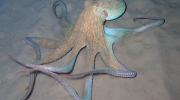
Lurking beneath the crystalline waters of Cyprus, pressed into a crevice no bigger than a fist and wrapped in perfect camouflage, lives one of the most intelligent animals on the planet. It has no bones, three hearts, and blood that runs blue – and yet it may just outsmart you. A Mollusc Unlike Any Other The common octopus – known in Cyprus by its Greek name χταπόδι (chtapódi) – belongs to an ancient and remarkable group of animals called cephalopods. The word comes from Greek: kephalé (head) and pous (foot), because in these extraordinary creatures, the foot of the animal has evolved directly into arms growing from around the head. Alongside squid, cuttlefish, and the nautilus, cephalopods represent one of nature's most successful evolutionary experiments –…

Read more
Pelagic Fisheries in Cyprus

Pelagic Fisheries in Cyprus

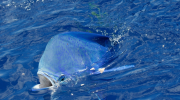
Out beyond Cyprus’s rocky shores and clear blue shallows lies a very different world – the open Mediterranean. Here, in deeper waters where the seabed disappears into blue infinity, live some of the most powerful and fast-moving fish in the sea. These are the pelagic species, and they have shaped Cypriot fishing culture for centuries. But who are these ocean travellers, and how are they fished today in Cyprus? Life Without a Seafloor Pelagic fisheries focus on fish that live in the open water column, away from the seabed. Unlike reef or bottom-dwelling species, these fish migrate over vast distances and often travel in large schools or as solitary hunters. In Cyprus, pelagic fishing is both a commercial industry and…

Read more
The Swordfish in Cyprus

The Swordfish in Cyprus

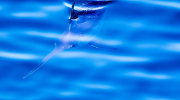
Somewhere in the deep blue waters off the coast of Cyprus, beyond the reach of sunlight, a creature moves that ancient mariners feared, fishermen revered, and philosophers wrote about with genuine wonder. It is the swordfish – one of the ocean's most dramatic animals, and a species that has a very particular relationship with the seas around this island. What makes that relationship so remarkable is not just the history, but the science. Cyprus, it turns out, sits at the very heart of one of the swordfish's most critical places on Earth.  The Last of Its Kind – in More Ways Than One  The swordfish, known in Greek and Cypriot as xifías (ξιφίας), is one of the ocean's largest and most powerful predatory fish. It belongs to a group called…

Read more
Scorpions of Cyprus

Scorpions of Cyprus

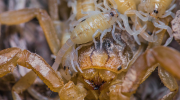
Lift a stone on a warm Cypriot evening – on a sun-baked hillside in Troodos, along a dry riverbed in Paphos, or among the pine roots of the Kyrenia mountains – and you may find yourself staring at one of the island's most ancient residents. Eight legs, two grasping claws, a tail arched overhead like a question mark. A scorpion. It hasn't moved. It doesn't need to. It has been doing this for four hundred and thirty million years, and it knows perfectly well who should be afraid of whom. Lords of the Stone and Shadow Scorpions belong to the class Arachnida – the same grand family as spiders, mites, and ticks. But the scorpion stands apart. With its unmistakable…

Read more
The Purple Sea Urchin

The Purple Sea Urchin

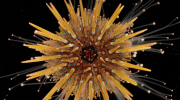
Walk along the rocky shores of Cyprus and look carefully into a clear tidal pool. Hidden among the stones, you may notice a dark purple sphere covered in long spines. This is the Purple Sea Urchin, one of the most familiar and important marine animals of the Mediterranean Sea.  Although it looks like a simple ball of spines, this remarkable creature belongs to an ancient group of animals that has been shaping marine ecosystems for hundreds of millions of years.  More Than Just a Sea Creature  The Purple Sea Urchin (Paracentrotus lividus) is a marine invertebrate belonging to the echinoderms, the same group that includes sea stars, brittle stars, and sea cucumbers.  Unlike fish, sea urchins have no backbone. Instead, they possess a…

Read more
Widow and False Widow Spiders of Cyprus

Widow and False Widow Spiders of Cyprus

Most people have heard of the infamous Black Widow spider, but few realise that Cyprus is home to an entire family of its close relatives. Hidden beneath stones, among dry grasses, inside old walls and even around our homes live a remarkable group of spiders known as the widow and false widow spiders. While one species deserves respect for its medically significant venom, the others are harmless or only mildly venomous, quietly helping to control insect populations across the island. Meet the Widow Family Widow and false widow spiders belong to the subfamily Latrodectinae, a branch of the cobweb spider family (Theridiidae). These spiders are famous for building messy, three-dimensional webs instead of the familiar circular orb webs. Cyprus hosts…

Read more