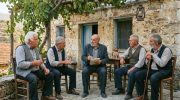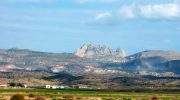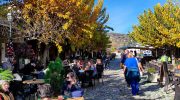
Community spaces in Cyprus function as the invisible framework that holds daily life in place. The kafeneion with its backgammon players, the plateia shaded by ancient trees, the municipal park where families gather on Sunday afternoons. These are not monuments or attractions. They are the places where neighbors meet, where conversations happen, where children play while parents talk.
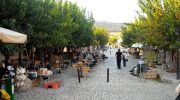
Cyprus measures its social life not in grand gestures but in these small, repeated gatherings. A village square might see the same faces every morning for decades. A coffee shop operates as an unofficial town hall. A public park becomes the setting for birthdays, first dates, and quiet evenings. Understanding Cyprus means understanding these spaces.
- The Kafeneion: More Than Just Coffee
- Village Squares: The Democratic Stage
- Kennedy Square: Modern Civic Life in Paphos
- Eleftheria Square: Architecture Meets Identity
- Parks: Green Lungs and Family Territory
- Playgrounds: Modern Additions to Community Life
- Coffee Culture: Traditional Meets Contemporary
- Seasonal Rhythms and Community Gatherings
- Seafront Promenades and Coastal Walks
- City Malls As A Family Entertainment
- Maintaining Social Fabric in Modern Cyprus
The Kafeneion: More Than Just Coffee
Traditionally, nearly all coffee shops in rural Cyprus were located in and around the main village square, and they, along with other notable businesses, often created a hub of activity. The kafeneion emerged during Ottoman times when coffee became central to social life. Men gathered to drink coffee, play backgammon, discuss politics, and share news. This pattern persisted for centuries.

According to ‘A survey of rural life in Cyprus,’ which was published by the British Government in 1930, the average amount of money spent by most Cypriots at their local coffee shop was around 10% of their annual income. This figure reveals how integral these establishments were to daily existence. Coffee shops became so popular that men sometimes had to queue for seats. Villages responded by opening more establishments, though each aligned itself with specific football teams, sports clubs, or political movements.
The ritual of preparing Cyprus coffee remains unchanged. The kafetzis uses a tzisves, a small long-handled metal pan, and places it on the outzaki, a traditional machine filled with heated sand. The coffee boils and forms kaimaki, a creamy froth that rises from the sides until it reaches the center. Served in a small cup with a glass of water, the coffee arrives on a tin tray.
Village Squares: The Democratic Stage
In traditional societies like villages and provincial communities, plateies are the central places for feasts, celebrations, events and meetings. The plateia, or town square, functions as the physical center of community life. Every village has one. Most feature benches under trees, space for gatherings, and proximity to the church and local businesses.
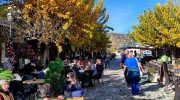
The village square serves as a natural gathering point and offers fantastic, accessible views, and visitor can often find benches strategically placed to maximize the view. These squares accommodate both planned events and spontaneous encounters. Carnival parades pass through. Easter celebrations fill them with lights and music. Political rallies claim them as natural venues. Between these occasions, daily routines unfold. Retirees occupy benches to argue about football. Children ride scooters across flat stones. Families meet for evening walks.
The design rarely changes. Simple pavement, shade from established trees, proximity to essential services. Function matters more than form. A plateia works because people use it, not because architects planned elaborate features.
Kennedy Square: Modern Civic Life in Paphos
In the morning, it’s a calm spot where locals grab coffee or browse the nearby shops and bookstores. At midday, workers spill out of nearby offices and banks for lunch breaks under the trees. In the evening, families, teenagers, and tourists fill the space. Kennedy Square in Paphos demonstrates how traditional public space adapts to contemporary needs.
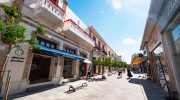
For much of the 20th century, Kennedy Square was where farmers came to settle land disputes, traders came to get licenses, and young couples took their wedding portraits. The square served as the civic front porch of Paphos. By the late 1990s, it had faded into relative obscurity as tourist development shifted toward the coast.
The Paphos 2017 European Capital of Culture initiative triggered comprehensive redesign. The central space was opened up and paved with limestone tiles. The result balances old and new. Neoclassical buildings frame one side while modern cafes occupy another. Alleyways lead to historic neighborhoods filled with stone houses and tiny churches.
Eleftheria Square: Architecture Meets Identity
Just a few hundred meters north of Eleftheria Square is Ledra Street, where a pedestrian crossing links the Republic of Cyprus with the self-declared Turkish Republic of Northern Cyprus. In this context, Eleftheria Square’s name, “Freedom,” resonates deeply. Before its radical redesign, Eleftheria Square was little more than a traffic crossroads built over the ancient moat surrounding Nicosia’s Venetian walls.
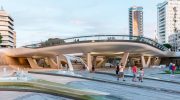
Establishing Eleftheria Square as the city’s primary gathering space, Zaha Hadid Architects’ design creates new connections intended to unite a divided capital. The design, completed in 2021 after six years of construction, transformed previously inaccessible areas of the moat into civic plazas, gardens, and palm-lined promenades. The moat became a green belt around the city.
The square is usually the focus of various profile activities in the capital, including advertising promotions, political rallies and meetings such as the first meeting of the Occupy Buffer Zone movement on October 15, 2011, and sporting events. Protests, national celebrations, and youth gatherings now gravitate to this space. People reclaim space, identity, and voice here.
Parks: Green Lungs and Family Territory
In Cyprus, until today there are ten National Forest Parks with an area of 15,627.22 hectares. These parks serve as recreational spaces and environmental preservation zones. Athalassa National Forest Park, located on the southeast edge of Nicosia, offers pedestrian paths, bicycle routes, sports grounds, and playgrounds. An environmental information center provides educational programs. The park includes bird watching opportunities at Athalassa Dam.
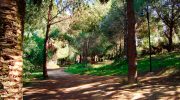
The park has bike paths for sports enthusiasts, walking paths, playgrounds and picnic areas. Municipal parks in cities like Larnaca and Limassol function as neighborhood centers. Larnaca Municipal Park serves as the main entertainment center in the heart of the city, within walking distance of schools and summer camps. The park accommodates skateboarding, rollerblading, and cycling.
The centrepiece of the park is the cosy Café Gardiano and the covered semicircular pavilion where birthday parties, small concerts and exhibitions are often held. These parks blend recreation with social infrastructure. Families celebrate birthdays. Amateur musicians perform in amphitheaters. Sports enthusiasts use designated areas.
Playgrounds: Modern Additions to Community Life
As a result, it has turned out that the majority of the modern playgrounds are to be found in Limassol, although it has to be admitted that other towns on the island can boast good playgrounds. Cyprus has invested significantly in playground infrastructure over recent years. Modern playgrounds feature diverse equipment, safety surfaces, and age-appropriate zones.
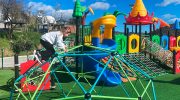
The children’s playground in Latchi offers several play areas for different ages with slides, swings, houses, a ship, and a climbing wall. Special surfaces prevent injuries while children play. Sports simulators and football pitches occupy adjacent areas, all located next to the sea. Paphos recently opened a large complex combining a playground, botanical garden, skate park, football pitch, tennis court, basketball court, and climbing wall.
These facilities reflect changing expectations about public space. Previous generations made do with basic equipment. Current standards demand variety, safety features, and integration with broader recreational infrastructure. The investment signals recognition that quality public space matters for family life.
Coffee Culture: Traditional Meets Contemporary
Coffee houses, known as kafeneio, have played a pivotal role in shaping the coffee culture in Cyprus. These traditional establishments aren’t just places to enjoy a cup of coffee, but also serve as meeting points for friends, neighbors, and even politicians. Cyprus maintains both traditional kafeneia and modern specialty cafes. This dual system accommodates different preferences and occasions.
Earlier this year, Nicosia was ranked as the fifth-best city for coffee lovers in Europe, according to a survey by Ubuy, an online shopping website. The ranking considered weather, number of cafes, and average coffee prices. Independent cafes inside the old town walls often provide better value than international chains while maintaining distinctive character.
The shift toward specialty coffee shops introduces trained baristas, quality beans, and innovative brewing methods. These establishments attract younger crowds and remote workers. Yet traditional kafeneia persist, serving regulars who have occupied the same seats for decades. Both models coexist without direct competition. They serve different functions within the social landscape.
Seasonal Rhythms and Community Gatherings
Community spaces shift function with the calendar. Summer brings outdoor concerts to park amphitheaters. Easter transforms squares with decorations and religious processions. Carnival season fills streets with costumed parades. Christmas markets occupy public areas. These seasonal transformations demonstrate how the same physical space serves multiple community needs.
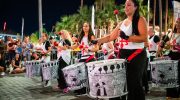
Village festivals center on the plateia. Wine festivals, flower celebrations, and religious observances all require public gathering space. The infrastructure remains simple but adequate. Temporary stages, vendor stalls, and seating arrangements transform ordinary squares into festival grounds. After events conclude, spaces return to daily routines without requiring permanent modification.
This flexibility matters in small communities with limited resources. A square that hosts a religious procession on Sunday accommodates a farmers market on Wednesday and children playing football on Thursday evening. Single-purpose spaces would strain municipal budgets and fragment community life.
Seafront Promenades and Coastal Walks
Limassol’s Molos Seaside Park stands as one of the most compelling examples of seafront public space in Cyprus. Stretching along the coastline, it offers pedestrian walkways, cycling paths, open lawns, and waterfront seating that draw residents across all age groups. Families gather here in the early evenings. Joggers and cyclists claim the paths at dawn. Elderly couples occupy the benches overlooking the sea. The promenade functions less as a destination and more as a daily habit.
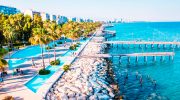
Similar seafront promenades exist in Larnaca, Paphos, and Protaras, each carrying its own character shaped by the surrounding neighborhood. These spaces require no entry fee and no prior arrangement. A walk along the coast becomes a natural extension of community life, where chance encounters happen as easily as they do in any village square. The sea itself acts as a shared backdrop that draws people out of their homes and into public view.
City Malls As A Family Entertainment
Shopping malls in Cyprus have grown into something beyond retail. My Mall in Limassol, Mall of Cyprus in Nicosia, and Kings Avenue Mall in Paphos each attract families not only for shopping but for the broader experience they provide. Food courts bring extended families together for weekend lunches. Cinema screens offer shared entertainment across generations. Indoor play areas keep children occupied while parents browse or rest.
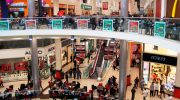
These spaces thrive particularly during summer months when outdoor heat drives people indoors, and during winter when rain limits access to parks and squares. Seasonal markets, exhibitions, and promotional events take over central atrium spaces. School holiday programs fill activity zones. Malls have absorbed some of the social function that once belonged exclusively to public squares, adapting the same logic of a shared, accessible gathering point to a climate-controlled environment.
Maintaining Social Fabric in Modern Cyprus
In today’s fast-paced modern world, traditional Cypriot coffee shops continue to serve as essential social hubs, and they still provide a welcome space for people to come together, fostering a sense of community and belonging. Community spaces face pressure from changing lifestyles. Digital communication reduces need for physical gathering. Urban sprawl disperses populations. Shopping malls and private venues compete for social time.
Yet these traditional spaces persist. Village squares still fill each evening. Kafeneia maintain steady clientele. Parks attract families on weekends. The persistence suggests these spaces fulfill needs that alternatives cannot replicate. Face-to-face interaction, chance encounters, and shared physical presence create social bonds that digital platforms cannot duplicate.
Municipalities invest in maintaining and upgrading community spaces. New playgrounds appear. Squares receive redesign. Parks add facilities. This investment acknowledges that public space remains essential infrastructure despite technological change. The quality of community life depends partly on the availability and quality of places where people can gather.