History and Archaeology

History and Archaeology

Leventis Gallery Cyprus Art Heritage

Leventis Gallery Cyprus Art Heritage

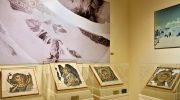
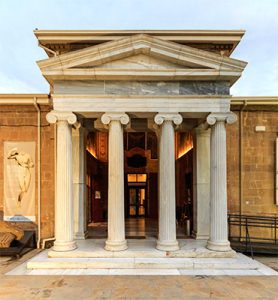
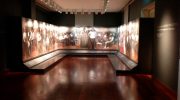
The Leventis Gallery is an art gallery in Nicosia, Cyprus. Opened in 2014, it houses a collection of over 800 paintings from Cypriot, Greek, and European artists. The institution operates under the A. G. Leventis Foundation and represents the fulfillment of a vision conceived more than fifty years earlier. The building sits a few steps from Nicosia's old city center and was designed by Feilden Clegg Bradley Studios through an international architectural competition launched by RIBA Competitions. The architects created a modern cultural center embodying the personality of the family collection while contributing to urban regeneration. The building was conceived as a monolithic stone sculpture cut away to create courtyards, terraces, and roof gardens. The gallery features minimized energy use,…

Read more
Souskiou Cemeteries, Cyprus

Souskiou Cemeteries, Cyprus

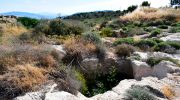
The Souskiou cemeteries represent one of the most important archaeological discoveries in Cyprus, shedding light on burial practices and social organization from nearly 5,000 years ago. These sites, located in southwestern Cyprus near the village of Souskiou, revealed elaborate rock-cut tombs filled with grave goods that challenge previous assumptions about prehistoric life on the island. The Souskiou complex consists of four separate cemetery areas and a settlement, all dating to the Chalcolithic period around 3000 BC. The most extensively studied cemetery, known as Souskiou-Vathyrkakas Cemetery 1, sits along the southern edge of a ravine, directly opposite the contemporary settlement on the other side of a stream. This deliberate separation of the living from the dead marked a significant departure from…

Read more
Famagusta Canbulat Museum

Famagusta Canbulat Museum

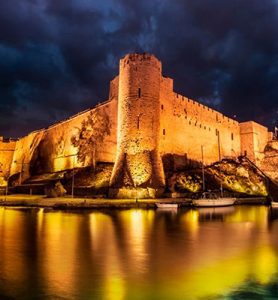
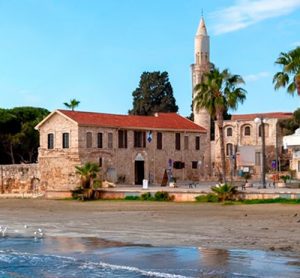
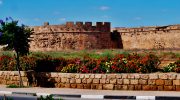
The Canbulat Museum sits within the Arsenal Bastion, a fortified structure that forms part of the massive Venetian walls surrounding old Famagusta. The bastion was first opened as a museum in 1968, then underwent renovation and reopened in 2008. The museum occupies a site that witnessed one of the most decisive moments in Cypriot history. The building dates back to the Venetian period and houses a tomb made of cut stone surrounded by iron railings. Visitors enter through the southern section of the fortress walls, adjacent to the Canbulat Pasha Gate. The location holds both historical and spiritual significance for many Turkish Cypriots, who regard it as a pilgrimage site honoring Ottoman military courage. Historical Background The Ottoman conquest of…

Read more
Marion and Tamassos

Marion and Tamassos

Funerary reliefs in ancient Cyprus were public status tools, not private grief markers, and Marion and Tamassos developed two distinct ways of making rank visible in stone. Marion favoured framed relief panels and inscriptions that anchored individuals within families, while Tamassos emphasised tomb architecture, guardians, and scale to project continuity and authority. This article compares how imagery, materials, and writing systems shaped remembrance in both kingdoms, and what those choices still reveal about power and belief on the island. Two Kingdoms, Two Worlds Although Marion and Tamassos existed on the same island, their landscapes shaped very different societies. Marion, located on the northwestern coast near modern Polis Chrysochous, was outward-facing. Its wealth depended on maritime trade and access to copper…

Read more
Kantou-Koufovounos

Kantou-Koufovounos

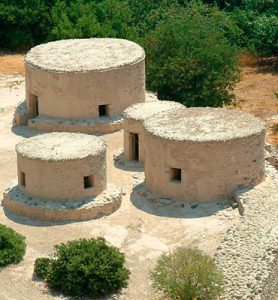
High on a hill near the Kouris River in the Limassol district of Cyprus sits Kantou Koufovounos, one of the island’s most significant Late Neolithic settlements. This archaeological site has quietly rewritten our understanding of life on Cyprus between 4,400 and 3,900 BC. Unlike the dramatic clifftop fortresses or coastal harbors that often capture imaginations, Kantou-Koufovounos was simply a community where people lived, worked, raised families, and built a society that lasted longer than many of its contemporary neighbors. The site takes its name from Koufovounos Hill, where it rests approximately 20 to 50 centimeters below the modern ground surface. This shallow depth speaks to how close we still are to these ancient inhabitants. The settlement sits on the western…

Read more
Timeless Stone Columns Over Cyprus Blue Waters

Timeless Stone Columns Over Cyprus Blue Waters

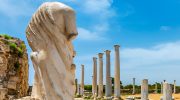
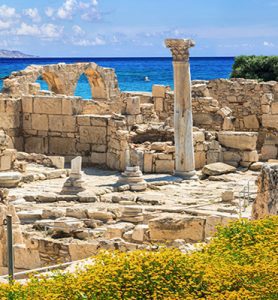
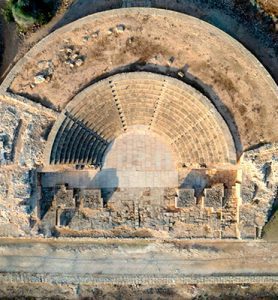
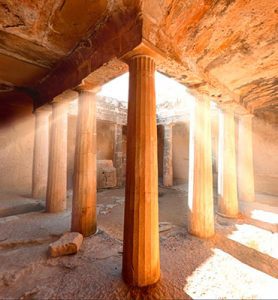
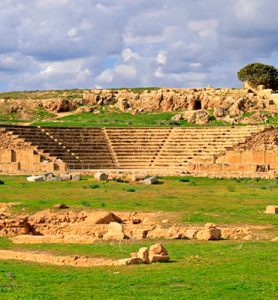
Cyprus coastal monuments showcase classical architecture where ancient stone columns rise against Mediterranean horizons, creating dramatic vistas that combine archaeological significance with natural beauty. The most impressive examples include the Greco-Roman theatre at Kourion perched on coastal cliffs 70 meters above sea level, the Sanctuary of Apollo Hylates with its partially restored temple columns, and the Tombs of the Kings in Paphos featuring underground burial chambers decorated with Doric pillars. These structures date primarily from Hellenistic and Roman periods between the 4th century BC and 4th century AD, when Cyprus prospered under successive empires. The architectural elements follow classical Greek orders with refinements from Roman building techniques, creating monuments that have withstood earthquakes, invasions, and two millennia of Mediterranean weather.…

Read more
Cyprus Island Identity as a Cultural Crossroads

Cyprus Island Identity as a Cultural Crossroads

Cyprus stands at a cultural, linguistic, and historic crossroads between Europe and Asia. Situated at the crossroads of Europe, Asia, and Africa, the island has been shaped by Greeks, Romans, Byzantines, Venetians, Ottomans, and the British. This strategic location has resulted in Cyprus being contested and occupied by several empires throughout history, including the Assyrians, Egyptians, Persians, and many others. As early as 370 BC, the island was inhabited and considered to be the crossroads between the east and west. The eastern Mediterranean island of Cyprus has long been a cultural thoroughfare. It was the starting, stopping, and midway hot spot for many ancient seafaring cultures including the Myceneans, the Minoans, the Phoenicians, the Greeks, and the Romans. The Bronze…

Read more
Cyprus Identity Shaped by Resilience and Survival

Cyprus Identity Shaped by Resilience and Survival

Cyprus stands at the crossroads of three continents, creating an identity forged through centuries of conquest and adaptation. The Mediterranean island has witnessed rule by Egyptians, Phoenicians, Greeks, Romans, Byzantines, Ottomans, and British forces. Each civilization left cultural marks while the native population absorbed and transformed these influences. Today, Cyprus maintains distinct traditions despite modern pressures. The island's geographic position made it strategically valuable, attracting empires seeking control of eastern Mediterranean trade routes. This constant cycle of foreign rule created a population skilled at cultural preservation under external pressure. Cypriots developed resilience as a survival mechanism, maintaining core traditions while adapting to successive rulers. The ability to endure without surrendering identity became central to the Cypriot character. Ancient Foundations Built…

Read more
Panagia Kanakaria Monastery Cyprus

Panagia Kanakaria Monastery Cyprus

Panagia Kanakaria Church is an early Byzantine-era religious structure located in the village of Lythrangomi on the Karpas Peninsula in northeastern Cyprus. The site is widely recognized as one of the most important surviving examples of early Byzantine ecclesiastical architecture and decorative art on the island. Constructed originally in the 5th or 6th century AD, the church reflects the early development of basilica-style architecture in Cyprus during the Byzantine period. It was built within a settlement that was connected to nearby ancient urban and rural communities, some of which date back to the Hellenistic and Roman eras. Historical Background The earliest phase of the structure is believed to date to the 5th century AD, when a simple wooden-roofed basilica was…

Read more