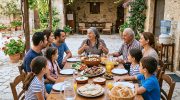
In Cyprus, tradition functions as social infrastructure, carrying obligation, honour, and belonging through daily behaviour rather than occasional ceremony. Family authority, naming practices, land attachment, ritual calendars, food knowledge, and hospitality keep continuity active across Greek Cypriot, Turkish Cypriot, Maronite, and Armenian communities, even as modern life changes the setting. This article explains how those inherited expectations work in practice, why they persist, and what they still provide when institutions, borders, and routines shift.

- Duty Over Nostalgia
- Honour as Everyday Restraint
- Families as Intergenerational Units
- Names as living memory
- Land Held for Belonging
- Life events as communal affirmations
- Time Measured by Ritual Cycles
- Food as inherited knowledge
- Craft as continuity made visible
- Hospitality as a moral obligation
- Modern Formats, Same Core Logic
- What Tradition Still Provides
Duty Over Nostalgia
In many cultures, tradition is preserved because it feels comforting or symbolic. In Cyprus, it is preserved because it is expected.
Cultural practices function as moral anchors that connect individuals to family lineage and collective memory. This applies across communities, including Greek Cypriot, Turkish Cypriot, Maronite, and Armenian populations. Customs are not treated as optional expressions of identity but as inherited obligations. To abandon them is often perceived not as personal freedom, but as a rupture in continuity.
This outlook explains why traditions persist even when daily life modernises. They are not maintained out of romantic attachment to the past, but out of responsibility to those who came before and those yet to come.
Honour as Everyday Restraint
At the core of this continuity lie ethical concepts that quietly govern behaviour.

In Greek Cypriot communities, this is expressed through philotimo, a word that blends honour, dignity, generosity, and moral duty. It shapes how people act within families and neighbourhoods, placing communal responsibility above individual convenience. Upholding tradition becomes a measure of character rather than taste.
In Turkish Cypriot life, a parallel role is played by namus, closely tied to family honour and moral integrity. Individual actions are seen as reflections of lineage, meaning that behaviour is never fully personal. Respectability, modesty, and loyalty are understood as collective assets that must be protected.
Though expressed differently, these values serve the same purpose. They bind people to inherited expectations and reinforce the idea that tradition is something one carries, not something one performs.
Families as Intergenerational Units
Cypriot society is organised around the family, not the individual.

Households function as intergenerational units where identity, security, and responsibility overlap. Elders occupy positions of authority rather than symbolic respect. Their opinions shape decisions ranging from childcare to property matters, and caregiving is understood as a duty rather than a burden.
This structure ensures that knowledge is transmitted through lived experience. Recipes, rituals, and social norms are absorbed by proximity, not instruction. The result is continuity that feels natural rather than taught.
In this context, independence does not mean separation from family. It means learning how to carry the family forward.
Names as living memory
One of the most visible ways this sense of inheritance appears in everyday life is through naming traditions, which operate less as preference and more as obligation.
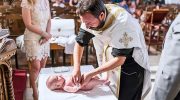
Children are commonly named after grandparents according to long-established sequences, ensuring that names, like stories, remain in circulation rather than fading into the past. In smaller communities, repetition is so common that nicknames become necessary, creating layers of identity that link individuals across generations.
Naming also carries spiritual weight. Name days connected to saints are often celebrated more prominently than birthdays, reinforcing the idea that identity is tied not only to family but to religious time and collective remembrance. Through names, ancestors remain present, spoken daily, and remembered without ceremony.
Land Held for Belonging
Property in Cyprus is rarely understood as simple ownership. It is viewed as a physical extension of family memory.

Land, homes, and even small plots carry emotional and symbolic weight, serving as anchors that tie generations to specific places. Inheritance practices, both traditional and legal, reflect the expectation that property remains within the family line whenever possible.
This deep attachment helps explain why displacement and division have left lasting marks on Cypriot identity. Losing land represents not just economic loss, but a break in continuity. Holding onto property, even when impractical, often becomes an act of preservation rather than profit.
Life events as communal affirmations
Major life events in Cyprus are rarely private experiences. They function as communal affirmations of belonging and continuity.
Births, initiations, marriages, and deaths involve extended networks of relatives, neighbours, and godparents, each playing a role in reinforcing social bonds. Participation matters as much as ritual. Being present is a way of acknowledging responsibility to the collective.

Weddings, in particular, are structured around shared investment. Monetary gifts are not transactional gestures, but expressions of communal support, ensuring that the next household begins life anchored in collective care rather than isolation.
Time Measured by Ritual Cycles
The passage of time in Cyprus is shaped less by calendars and schedules than by ritual cycles.
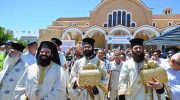
Religious holidays, fasting periods, saint days, and village festivals structure the year, creating predictable moments of gathering and remembrance. These occasions are not simply celebratory. They renew social bonds and return individuals to shared time and shared space.
Across Christian and Muslim communities alike, these rhythms regulate daily life, influencing what people eat, when they gather, and how they interact. Tradition is not inserted into time. It defines it.
Food as inherited knowledge
Cuisine offers one of the clearest examples of how tradition is carried through practice rather than documentation.

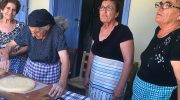
Many recipes are never written down. They are learned through observation, repetition, and memory, passed from one set of hands to another. Measurements are intuitive, techniques embodied, and cooking becomes a form of transmission rather than instruction.
Religious fasting periods further reinforce this connection. Seasonal dishes tied to sacred calendars ensure that food remains linked to remembrance and restraint, not just preference or convenience.
Craft as continuity made visible
Traditional crafts in Cyprus serve as visible records of how communities once sustained themselves.
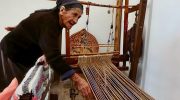
Lace-making, pottery, weaving, and basketry developed from necessity, shaped by local resources and collective labour. Patterns and techniques encoded practical knowledge alongside cultural identity, passed through generations without formal schooling.
Today, preservation efforts focus not only on finished objects but on the skills themselves. What is being protected is not nostalgia, but continuity of knowledge.
Hospitality as a moral obligation
Hospitality in Cyprus is governed by philoxenia, the moral obligation to care for the stranger.
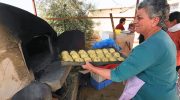
Offering coffee, food, or shelter is not considered a courtesy. It is a responsibility rooted in ancient belief and reinforced through daily practice. Declining hospitality repeatedly may be interpreted as social distance rather than personal preference.
This ethic shapes social interaction across communities, explaining why visitors often feel personally welcomed rather than simply accommodated. Hospitality is not performance. It is a duty.
Modern Formats, Same Core Logic
Modernisation has changed how traditions are expressed, but not why they persist.

Urban living, migration, and global connectivity have altered settings and formats. Rituals now unfold in banquet halls rather than courtyards, and younger generations balance inherited expectations with contemporary realities. Yet the underlying values remain intact.
Tradition adapts without dissolving. Form changes, continuity remains.
What Tradition Still Provides
Tradition in Cyprus endures because it functions as social infrastructure.

It provides stability amid political division, displacement, and rapid change. It offers belonging that does not depend on institutions or borders. By treating tradition as an inherited responsibility rather than an optional identity, Cypriot society maintains coherence across generations.
This perspective explains why Cyprus feels deeply rooted even as modern life accelerates around it. The past is not something left behind. It is something still being carried.