IUCN Conservation Status: Vulnerable (VU) Mediterranean Assessment. Somewhere off the rocky reefs of Cyprus, in water clear enough to see thirty metres down, something large and silver moves through the shadows. It does not hurry. It has no reason to.
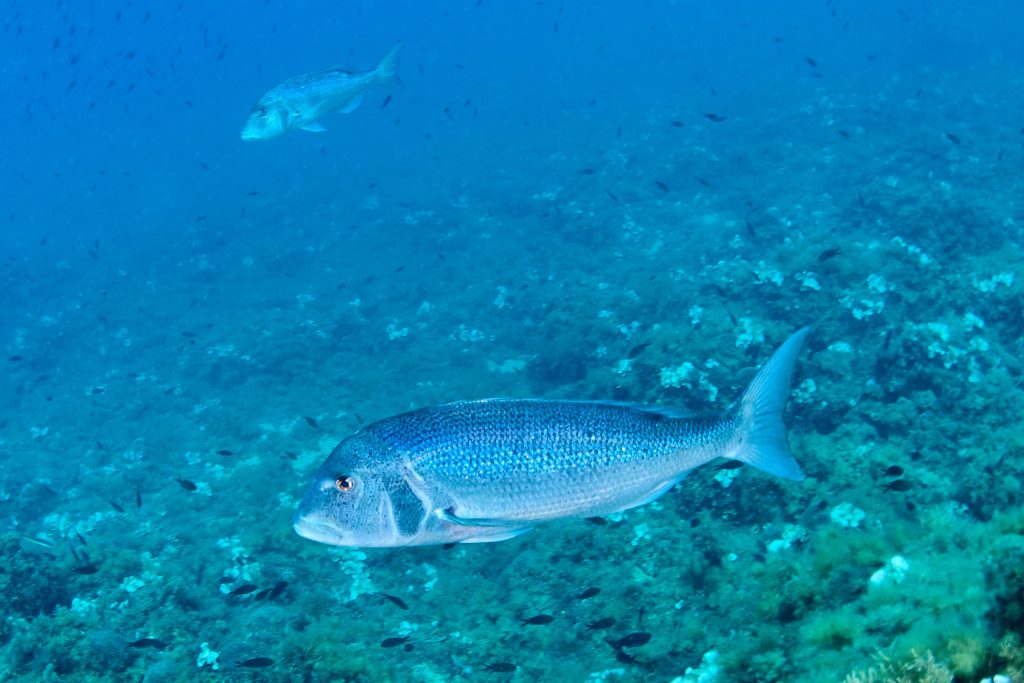
This is the Common Dentex – the apex predator of the Mediterranean shallows – and in these ancient waters it has ruled for millions of years. Few fish inspire as much respect among divers and fishermen alike, and fewer still are as elusive as this one. If you happen to glimpse it, consider yourself fortunate.
The Toothed Monarch
The Common Dentex (Dentex dentex) is a large, powerfully built sea fish found throughout the Mediterranean Sea and parts of the north-eastern Atlantic. It belongs to the family Sparidae – the seabreams – a group that includes some of the most familiar and beloved food fish of the Mediterranean world, from the humble Bogue to the prized Gilthead Sea Bream. Within this family, the Dentex stands apart as one of the most formidable hunters: fast, intelligent, and equipped with a set of large canine-like teeth that inspired its very name.
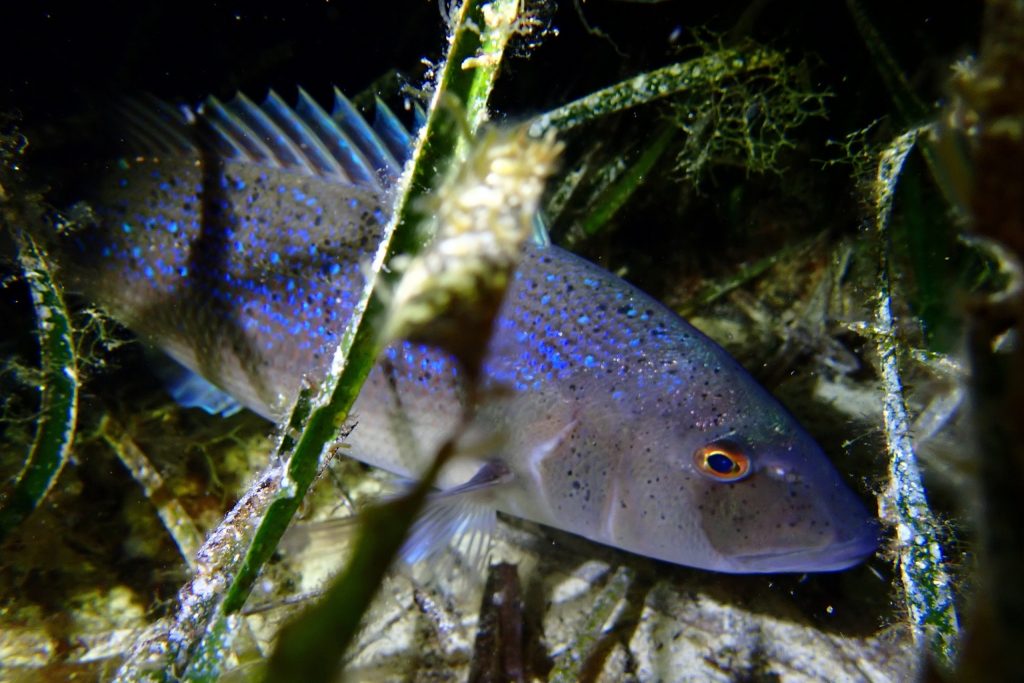
In Greek it is known as the Συναγρίδα (Synagrida), and in Cyprus it carries the same name with great reverence. Whether you are a diver exploring underwater capes, a fisherman working the deep longlines, or simply a seafood lover at a harbour taverna, the Dentex is a name that commands attention.
Max Length 100cm Max Weight 14.3kg Max Depth 200m Lifespan 20+yrs
Common Dentex Dentex dentex
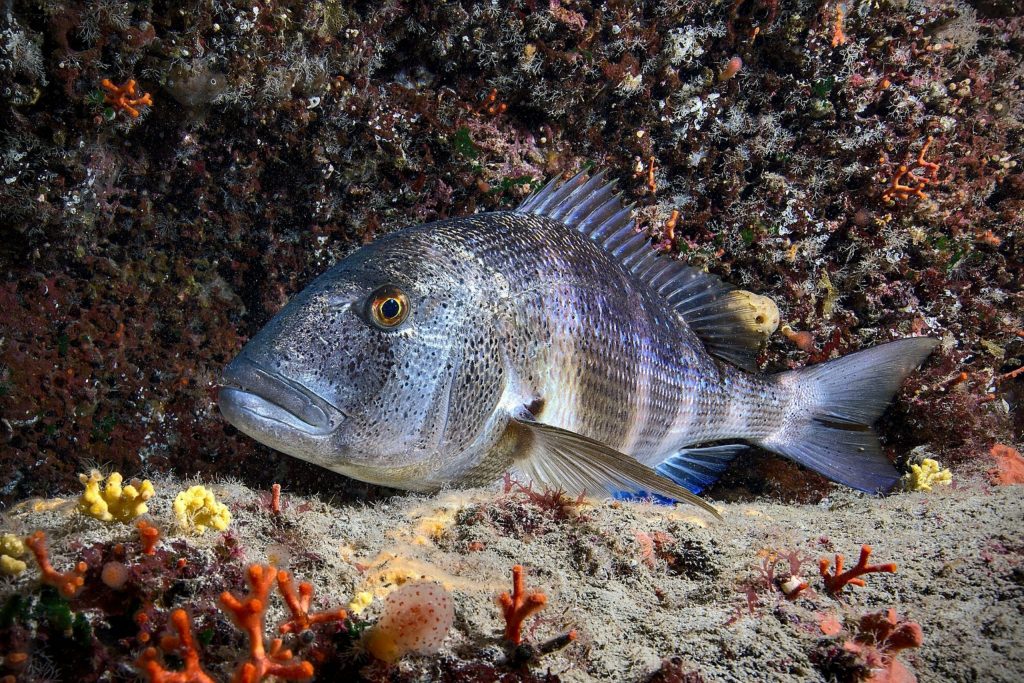
Dentex dentex in its natural rocky reef habitat © Jean-Paul Cassez – iNaturalist
Known Since the Age of Aristotle
The Dentex is no newcomer to human consciousness. The ancient Greeks were well aware of this fish, and the philosopher Aristotle himself mentioned it in his zoological writings more than two thousand years ago, noting that the fish he called the sinodon – widely identified as the Dentex – was a carnivore that fed upon squid. For a man who catalogued the entire known animal kingdom of the Aegean, singling out this fish was no small tribute.
The Romans shared the Greek enthusiasm for fine seafood, and the Mediterranean’s top predators were prized on the banqueting table of the wealthy. Mosaics found in Pompeii depict the marine life of the Roman Mediterranean with extraordinary accuracy – sea bream, sea bass, moray eel, octopus, and the family to which the Dentex belongs are all lovingly rendered in stone. The fish’s importance in ancient life was not merely gastronomic: it was a symbol of abundance, of the sea’s generosity to those who lived along its shores.
“The sinodon is carnivorous and eats squid…” – Aristotle, Historia Animalium, c. 350 BC
The scientific name Dentex dentex was formally given by Carl Linnaeus in 1758, in the tenth edition of his Systema Naturae – the founding document of modern biology. The genus Dentex was later formally proposed by the French zoologist Georges Cuvier in 1814. The name comes directly from Latin: dens, dentis – meaning tooth. In a satisfying scientific tradition known as tautonymy, the species repeats its genus name, as if to leave no doubt whatsoever about what makes this creature special. Fossil specimens of the genus have been found from the Middle Miocene, roughly 15 million years ago, in what is now Hungary and Ukraine – evidence of an ancient, wide-ranging lineage long before the Mediterranean took its present form.
Silver, Swift & Built to Hunt
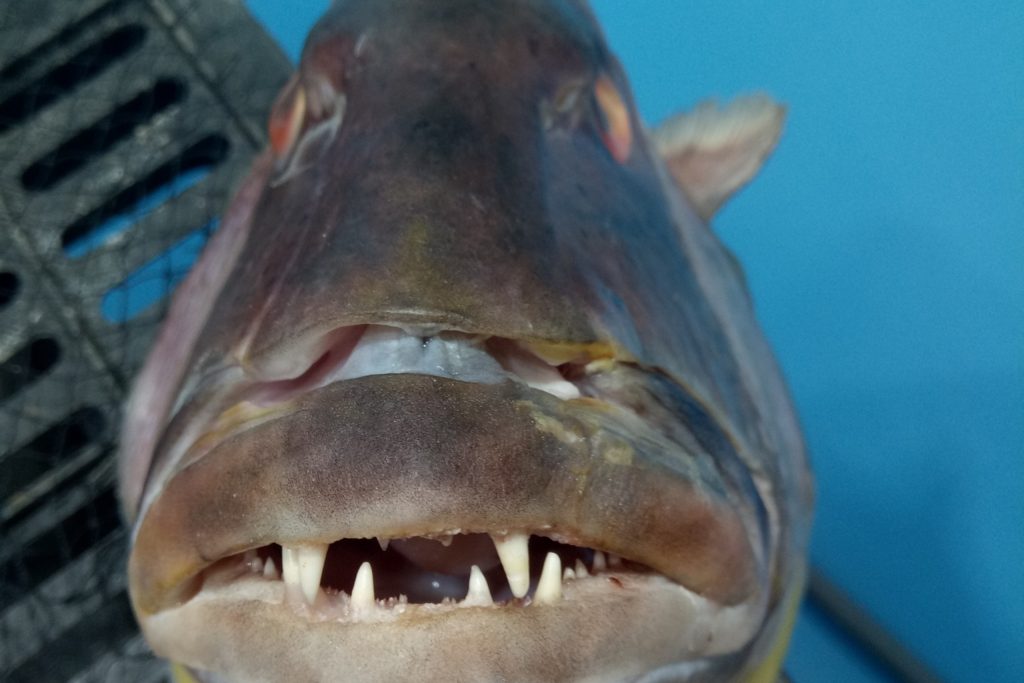
At first glance, the Common Dentex has the classic form of a large Mediterranean bream: a deep, oval, laterally compressed body, built for power rather than speed alone. But look more carefully and the differences emerge. The head is large and slightly convex in profile, the eyes are relatively small, and the forehead sweeps down to a mouth positioned low on the face – a mouth that opens to reveal the defining feature of this fish: four to six enlarged, fang-like canine teeth in the front of each jaw, clearly visible even when the fish is at rest.
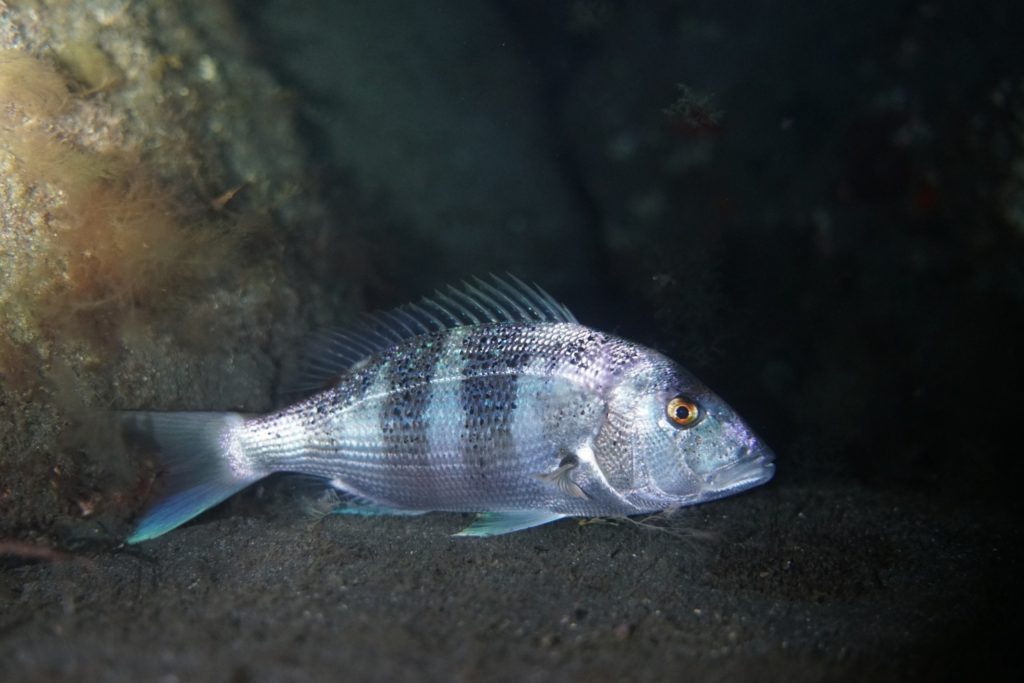
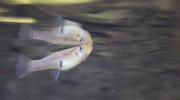
Dentex dentex close up
Adult specimen showing characteristic silver-blue colouring
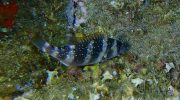
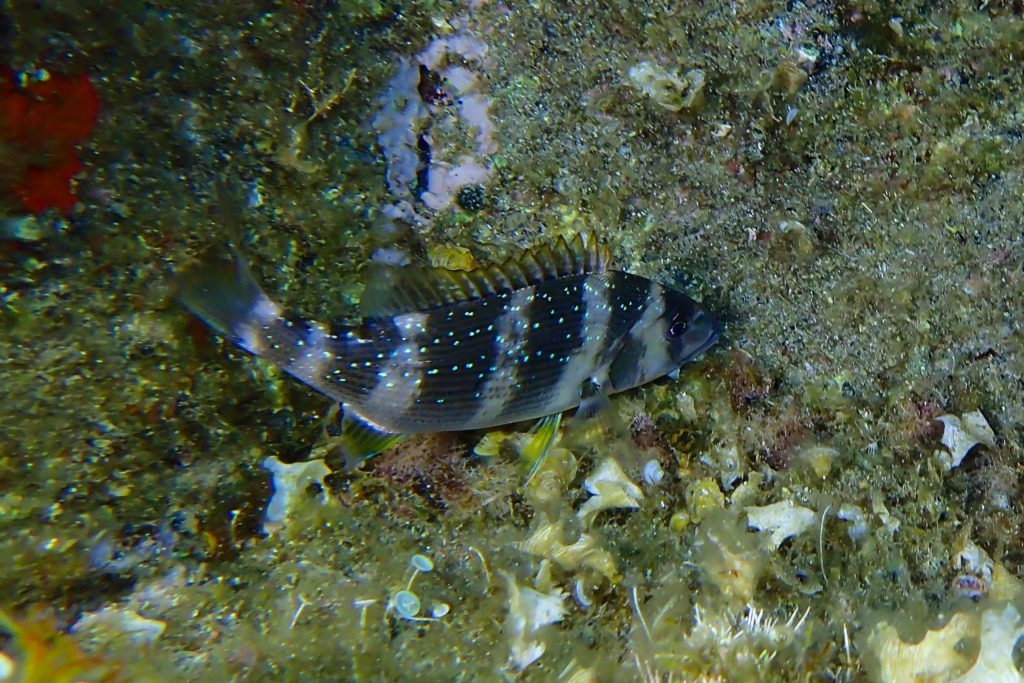
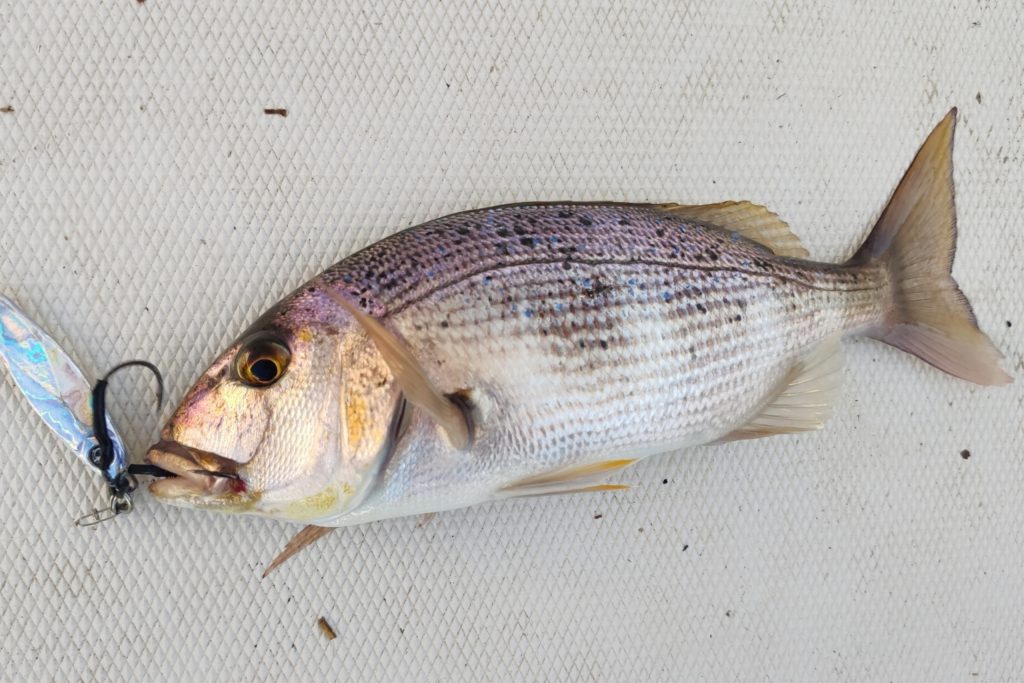
Dentex dentex juvenile
Younger individuals show spotted patterns that fade with age
The colouring shifts beautifully with age. Juveniles are greyish with black spots scattered across the back and upper flanks – a useful camouflage among rocks and algae. As the fish matures, the spots gradually fade and the body takes on a silvery-pink flush with metallic reflections. The oldest and largest individuals become a pale, steely blue-grey – magnificent, almost ghostly, creatures that move through deep water like animated ingots of silver.
A typical adult Dentex in Cypriot waters measures around 40–60 cm and weighs one to five kilograms. But the species can reach a full metre in length and over fourteen kilograms – a fish of that size is an extraordinary sight, and will live in the memory of any diver lucky enough to cross its path. It inhabits rocky and mixed rocky-sandy seabeds, typically at depths of 15 to 80 metres, though it has been recorded as deep as 200 metres. It is a solitary predator for most of the year, patrolling its territory with a quiet, unhurried authority.
Things Worth Knowing About the Dentex
- Its name literally means “teeth.” The word Dentex comes from the Latin dens (tooth), and the species name doubles it – Dentex dentex – as if science itself wanted to make absolutely sure you didn’t miss the fangs.
- Some individuals are hermaphrodites. The species is primarily gonochoric (separate sexes), but some younger fish may be hermaphroditic – a fascinating reminder that in the sea, the rules of biology are far more flexible than on land.
- It is considered one of the hardest fish to spear in the Mediterranean. Experienced spearfishers describe the Dentex as cautious, intelligent, and supremely aware of its surroundings. It typically approaches a diver only once – and if it senses anything wrong, it vanishes instantly into the deep.
- Juvenile Dentex shelter in Posidonia meadows. Young fish use the famous Neptune Grass seagrass beds – a protected habitat in the Mediterranean – as nursery grounds. This connection means that the health of Cypriot seagrass is directly linked to the future of the Dentex.
- Spawning turns the loner into a socialite. For most of the year the Dentex is resolutely solitary. But in spring, something changes: adults gather in loose groups near the coast for two to three weeks of spawning activity – one of the few moments when this proud solitary predator seeks company.
- Its genome has been sequenced. Cypriot and Greek researchers have published linkage maps and genomic analyses of the Dentex, making it part of modern Mediterranean aquaculture research. The same scientific community studying the fish’s genes is also working to farm it sustainably.
Predator at the Top of the Pyramid
Within the Sparidae family, the Dentex occupies an unusual position. Most seabreams are omnivores or benthic feeders, content to graze on invertebrates and algae. The Dentex is something different – a true apex predator of the coastal zone. It hunts small fish such as bogue, horse mackerel, and garfish, as well as cephalopods like squid and octopus, and hard-shelled prey including molluscs and crustaceans. Those large canine teeth are not decorative; they are designed for gripping struggling prey and crushing shells.
This high-trophic position makes the Dentex what scientists call a “keystone” or “indicator” species – its presence, abundance, and condition reflect the overall health of the ecosystem around it. When the Dentex thrives, the reef food web is functioning well. When it disappears, it is often among the first signs that something has gone wrong. Research across the Mediterranean has consistently shown that Dentex numbers recover noticeably inside Marine Protected Areas (MPAs), demonstrating that the species is capable of bouncing back – but only when given sufficient protection from fishing pressure.
The FAO (Food and Agriculture Organization of the United Nations) tracks Dentex catches across the Mediterranean. Landings increased dramatically through the 1970s and 1980s, then fell sharply – by as much as 30–37% in the Mediterranean and a devastating 70% off West Africa. The IUCN assessed the global population in 2009 and classified the species as Vulnerable, estimating an overall decline of more than 30% across three generations (roughly 36 years). It remains the only species in the Sparidae family to carry this designation in the Mediterranean.
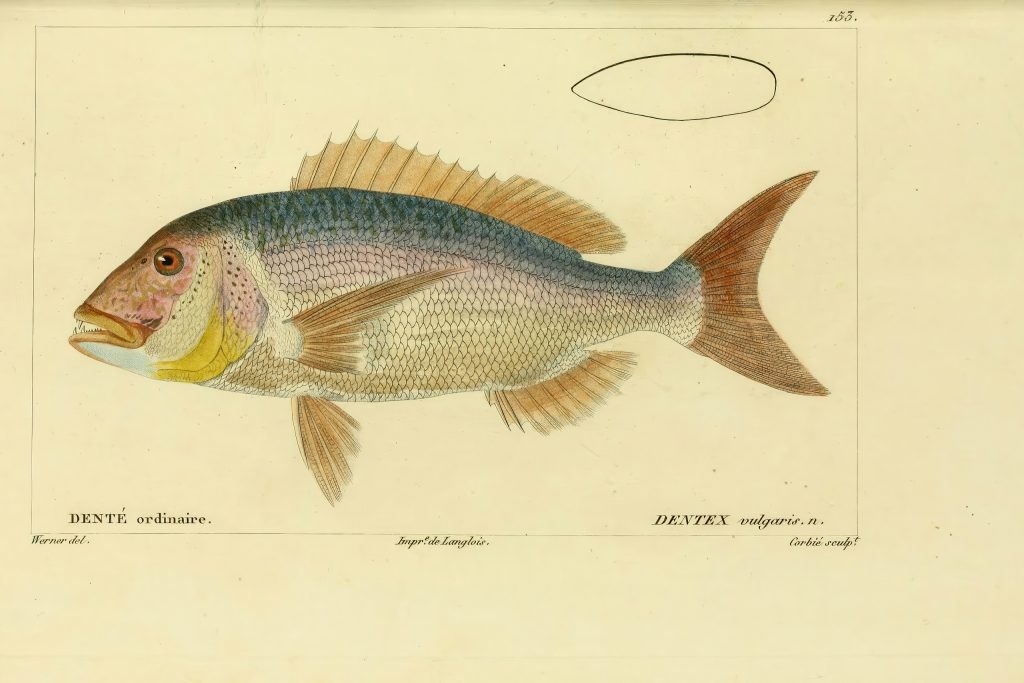
Dentex in Histoire naturelle des poissons /Paris :Chez F. G. Levrault,1828-1849
A Fish Between Plate & Protection
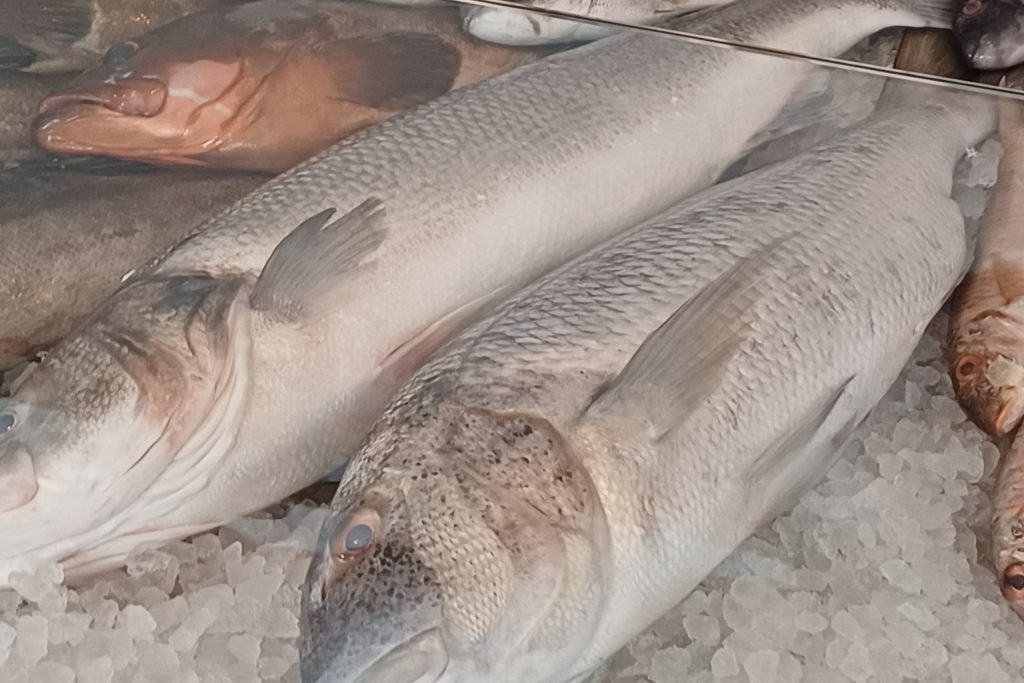
In Cyprus today, the Common Dentex holds a dual significance that captures the island’s complicated relationship with the sea. On one hand, it remains one of the most prized and expensive fish in any harbour market or seaside taverna. A whole Dentex, grilled over charcoal with lemon and olive oil, is considered a serious delicacy – the kind of meal ordered for special occasions, not a Tuesday night. Its white, firm, flavourful flesh is exceptional, and restaurateurs across Limassol, Paphos, Larnaca, and Ayia Napa pay premium prices for it.
On the other hand, wild Dentex is increasingly scarce in Cypriot waters, particularly close to shore. The fish’s slow growth, long lifespan, and late maturity (sexual maturity is reached at two to four years, at around 35–40 cm) make it inherently vulnerable to overfishing. Once a population is depleted, recovery takes many years – and in a sea as heavily fished as the Eastern Mediterranean, those years of recovery are rarely afforded.
There is genuine hope, however. The Cypriot Department of Fisheries and Marine Research has implemented size limits and seasonal regulations. Internationally, researchers – including those from Cyprus and Greece – are actively working on the aquaculture potential of the Dentex, with the goal of producing farmed specimens to reduce pressure on wild stocks. Aquaculture companies in Croatia and Greece have already begun farming Dentex, branding it as the “King of the Sea.” If these efforts succeed, the Dentex may become the sea bass or sea bream of the next generation – a premium farmed fish that takes pressure off the fragile wild population.
The Dentex is the only species in its entire family – the Sparidae – to be classified as Vulnerable in the Mediterranean. It is a warning written in silver scales.
Where & How to Encounter the Dentex
Best Sites
Rocky reefs around Cape Greco, the Akamas Peninsula, and the underwater capes near Paphos. Areas with mixed rock-and-sand habitat at 20–60m depth.
Best Season
Late spring to early autumn (May–September), when the Dentex moves into shallower water as temperatures rise. During spawning in April–May, small groups may be encountered near the coast.
The Experience
Seeing a large adult Dentex underwater is a genuinely thrilling experience – a flash of blue-silver in the clear water, the fish appearing, pausing to assess you with its small, intelligent eyes, and then departing with a few unhurried strokes of its tail. It almost always approaches just once. Do not chase it.
For Anglers
Dentex fishing peaks from spring through summer. Bottom longlines and jigging from a boat over rocky ground are the most effective methods. Squid and cuttlefish are the preferred baits. A fishing licence is required for spearfishing. Always respect minimum size limits (30 cm minimum, though 45 cm+ is recommended to allow reproduction).
At the Table
Ask for Synagrida at any Cypriot fish taverna. If it is on the menu and in season, order it. Baked whole in the oven with capers, tomatoes, and white wine, or simply grilled – this is the sea at its finest.
Distribution
Observed throughout Cypriot coastal waters on iNaturalist – search Dentex dentex on inaturalist.org for current sighting records around the island.
The Dentex is, in a very real sense, the living measure of the health of the Cypriot sea. When it is present and plentiful, the reef ecosystem is working. When it vanishes, something has been lost that cannot be easily replaced. To know this fish – to understand what it is, where it came from, and what it needs – is to understand something deeper about the waters that have sustained this island for ten thousand years. Cyprus has always been shaped by the sea. And in the depth and clarity of those waters, where a large silver fish pauses to study you before sliding away into the blue, you can feel exactly why.