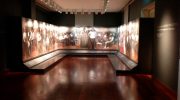
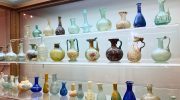
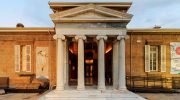
The Limassol Archaeological Museum houses a rich collection spanning 9,000 years of human civilization in southern Cyprus. Founded in 1948 and originally housed in Limassol Castle, the museum moved to its current purpose-built structure in 1975. The building consists of two long rooms joined together by two transversal spaces, covering 3,000 square meters. The exhibits focus on discoveries from the Limassol district, particularly from the ancient kingdoms of Kourion and Amathous.
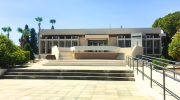
Unlike the Cyprus Museum in Nicosia, which displays material from across the entire island, this regional facility concentrates on southern coastal culture and trade. The collection includes pottery, jewelry, sculptures, tools, and everyday objects that provide insight into how ancient Cypriots lived in this fertile and strategic region. Entry is free, making the museum accessible to all visitors.
- Historical Background
- Amathous and Its Egyptian Influences
- Mycenaean Connections Prove Greek Settlement
- Three Rooms Trace Southern History
- Lord Kitchener's Sundial in the Garden
- A Museum Rebuilt Under Difficult Conditions
- Preparing Visitors for Archaeological Sites
- Why This Collection Defines Southern Cyprus
Historical Background
The museum displays remains of pygmy elephants and pygmy hippopotamus found at the Pre-Neolithic site of Akrotiri Aetokremnos, the earliest known site in Cyprus. These extinct animals lived on the island before humans arrived, providing evidence of Cyprus’s unique ecosystem during the Ice Age. The pygmy species evolved smaller body sizes due to island isolation, a common evolutionary pattern. Tools and pottery from the Aceramic Neolithic I period through the Late Bronze Age demonstrate how early settlers developed agriculture and craft technologies.
Objects excavated from Chillourokampos in Parekklisia, Sotira, and Erimi Pampoula show continuous habitation from 8000 BC onward. The progression from simple stone tools to sophisticated pottery reveals technological advancement over thousands of years. These early artifacts establish that southern Cyprus supported permanent settlements long before the rise of city kingdoms.
Amathous and Its Egyptian Influences
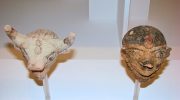
The museum houses significant material from the ancient kingdom of Amathous and its surrounding settlements and sanctuaries. Amathous was one of Cyprus’s original four kingdoms and remained important from the Iron Age through the Roman period. A group of terracotta figurines demonstrates local artistic traditions influenced by eastern Mediterranean styles.
A Hathor freestanding pillar shows direct Egyptian religious influence, as Hathor was an Egyptian goddess of love and music. The limestone statue of the Egyptian god Bes stands as one of the museum’s most important pieces, indicating strong cultural exchange with Egypt. Bes was a protective deity associated with childbirth, humor, and dance who became popular across the Mediterranean. These Egyptian objects were not imports but locally produced items showing that Cypriot artisans adopted foreign iconography. The eastern influences on local artistic activity demonstrate Amathous’s role in Mediterranean trade networks and cultural exchange.
Mycenaean Connections Prove Greek Settlement
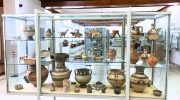
Imported Mycenaean vessels displayed alongside locally produced pottery document the arrival of Greek settlers from the Aegean. From the Late Bronze Age onward, commercial contacts and establishment of settlers from the Aegean contributed to close connections between Cyprus and the Greek world. The Mycenaean pottery includes jugs, bowls, and other vessels that represent imports or locally made copies of Greek styles.
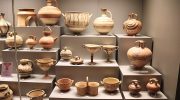
These artifacts provide physical evidence for the Hellenization of Cyprus that began around 1200 BC when Mycenaean Greeks fled collapsing kingdoms on the mainland. The Greek language, culture, and religious practices that came to dominate Cyprus trace their origins to this Bronze Age migration. The museum’s Mycenaean collection connects southern Cyprus directly to broader Greek civilization while showing how local traditions merged with imported ones to create distinct Cypriot Greek culture.
Three Rooms Trace Southern History
Room One contains Neolithic tools and pottery excavated at Kourion, Amathous, and Limassol itself. The mind-boggling display covers a huge time span from 3000 BC to 1300 AD, demonstrating continuous occupation and cultural evolution.
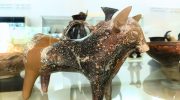
Room Two holds artifacts from the Greco-Roman era including a stunning bronze bull and delicate figurines that showcase artistic achievement under Classical and Roman rule. The bronze bull represents either a votive offering to a deity or a decorative element from a sanctuary.
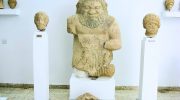
Room Three contains some of the most important finds from the local area, including the statues of Egyptian god Bes and goddess Artemis unearthed at Amathous. The Artemis statue demonstrates how Greek religious iconography merged with local traditions. A collection of coins provides glimpses into economic history and the changing political control of the region. The chronological organization helps visitors understand how southern Cyprus developed from prehistoric settlements through Hellenistic kingdoms to Roman provincial status.
Lord Kitchener’s Sundial in the Garden
Outside the museum in the pleasant garden stands a sundial that once belonged to Lord Kitchener, the famous British military commander who served in Cyprus early in his career. Kitchener arrived in Cyprus in 1878 when Britain assumed administration of the island under the Cyprus Convention with the Ottoman Empire.
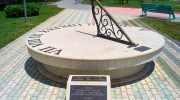
He conducted the first modern survey of Cyprus, creating detailed maps that remained in use for decades. The sundial represents this period of British involvement in Cyprus archaeology and administration. Its presence in the museum garden creates a tangible link between Cyprus’s ancient past and more recent colonial history. The garden itself provides a peaceful space for reflection between viewing exhibits, with benches and shade trees.
A Museum Rebuilt Under Difficult Conditions
During the conflicts of 1964, the museum remained closed as it was handed over to the National Guard. Construction activities for the new modern museum began in 1972, but the 1974 Turkish invasion created extremely difficult circumstances. The new exhibition opened in March 1975 despite the chaos of war, mass displacement, and the division of Cyprus. The fact that the museum reopened so quickly after the invasion demonstrates the importance Cypriots placed on preserving their archaeological heritage even during national crisis.
The building’s brutalist style architecture from the 1960s reflects the era of construction. While not architecturally distinguished, the functional design provides good display space with proper climate control. Air conditioning protects artifacts and makes visits comfortable during hot summer months. The museum received updates over the decades but maintains its original layout and organizational principle.
Preparing Visitors for Archaeological Sites
The museum serves as essential preparation for visiting nearby archaeological sites including Ancient Kourion and Amathous. Seeing artifacts in context with explanations helps visitors understand what they will encounter at the ruins. The museum displays pottery, sculptures, and architectural elements from these sites, showing what temples, houses, and public buildings contained. Many visitors follow a recommended sequence of museum first, then archaeological sites, finding that the museum visit deepens appreciation of the ruins.
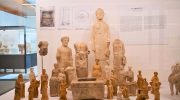
The Kourion finds are now primarily at the Kourion Archaeological Museum in Episkopi, but the Limassol museum retains important Amathous material. The museum’s location in central Limassol near the municipal park makes it easily accessible from hotels and the seafront. Most visitors spend 30 to 45 minutes exploring the three rooms, though those with deeper interest in archaeology can extend visits to an hour or more.
Why This Collection Defines Southern Cyprus
The Limassol Archaeological Museum demonstrates that southern Cyprus developed distinct character from other regions of the island. The strong Egyptian influences visible in religious artifacts show how geography shaped cultural development, with southern ports maintaining close ties to Egypt and the eastern Mediterranean. The Mycenaean pottery documents the Greek colonization that fundamentally changed Cyprus’s linguistic and cultural identity.
The museum preserves evidence of the kingdoms of Kourion and Amathous, two of the most powerful city-states on ancient Cyprus. These kingdoms competed and cooperated with each other while participating in broader Mediterranean trade networks. The collection shows that prosperity came from agriculture in the fertile coastal plains combined with maritime commerce.
For understanding modern Limassol’s identity as Cyprus’s second city and main port, the museum provides essential historical context stretching back millennia.