Explore Cyprus with Our Interactive Map

Explore our top stories and discover ideas worth your time.

Haunted Mills and Ruins Across Cyprus

Haunted Mills and Ruins Across Cyprus

Cyprus holds a collection of abandoned places that attract visitors interested in supernatural tales and historical mysteries. These locations range from ghost towns frozen in time to mountain hotels shrouded in dark legends and villages deserted by their residents. The island's troubled 20th century history, particularly the 1974 division, created numerous abandoned settlements that locals and visitors now associate with paranormal activity. These sites blend documented historical events with folklore, creating spaces where reality and supernatural stories overlap. Historical Context The modern haunted landscape of Cyprus emerged primarily from two sources. The 1974 Turkish invasion created instant ghost towns when residents fled their homes. Varosha in Famagusta represents the most dramatic example, a once glamorous resort sealed off by military forces and left untouched for decades. The invasion displaced hundreds of thousands of people, leaving behind dozens of villages that remain empty today. Earlier events also contributed to abandoned sites. The intercommunal violence of the 1960s forced Turkish and Greek Cypriots to abandon mixed villages. Mining closures in the 1930s and natural disasters like earthquakes created additional deserted settlements. Each abandonment brought its own set of stories about what happened and what might remain. Features of Cyprus most notorious haunted locations Varosha stands as Cyprus most famous ghost town. Before 1974, this Famagusta district attracted celebrities like Elizabeth Taylor and…

Read more
Mesaoria Plain, Cyprus

Mesaoria Plain, Cyprus

The Mesaoria Plain stretches 96 kilometres across central Cyprus between two mountain ranges. Mesaoria, meaning "between the mountains" in Greek, is a broad central plain that extends from Morphou Bay in the west to Famagusta Bay in the east. The Troodos Mountains rise to the south, while the Kyrenia Range forms a wall to the north. The plain covers approximately 1,000 square kilometres with elevations ranging from 100 metres on average up to 325 metres at its highest points. Nicosia, the capital of Cyprus, sits roughly in the centre of the plain along the Pedieos River. This positioning reflects centuries of strategic thinking, as the location provided access to both coasts. The plain contains dozens of villages and several major towns, making it the most densely populated region on the island despite its harsh summer climate and winter-dependent water supply. Historical Background Twenty million years ago, Cyprus existed as two separate islands corresponding to what would become the Kyrenia and Troodos mountain ranges. Approximately one million years ago, tectonic forces pushed up the land between these islands, creating the Mesaoria Plain and joining them into the single landmass known today as Cyprus. The Mediterranean Sea covered and exposed the plain multiple times as sea levels changed, but it has remained in its current form since the end of the Pleistocene…

Read more
Sanctuary of the Great Mother (Avdimou)

Sanctuary of the Great Mother (Avdimou)

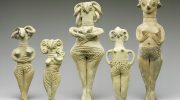
A cult site dedicated to the prehistoric fertility goddess, showing the continuity of worship from pagan fertility rites to later religious forms. The Sanctuary of the Great Mother in Avdimou represents a timeless spiritual hub in Cyprus, where ancient veneration of a fertility goddess evolved into Christian devotion to the Virgin Mary. Located in the rural village of Prastio Avdimou near the south coast, this site embodies the island's layered religious history, blending prehistoric fertility cults with Byzantine and medieval Christian practices. It highlights Cyprus's role as a crossroads of civilizations, where pagan rites centered on life, birth, and renewal transitioned seamlessly into the worship of Panagia, the "All-Holy" mother figure, fostering a enduring tradition of pilgrimage and miracle-seeking that persists today. A Cult Site of Continuity The Sanctuary of the Great Mother, embodied in the Church of Panagia Diakinousa in Prastio Avdimou, stands as a testament to Cyprus's spiritual evolution, nestled in a serene valley amid olive groves and rolling hills. This site, spanning less than a hectare but rich in symbolic depth, draws from prehistoric roots where fertility goddesses were honored for their power over life and nature. In ancient times, Cypriots revered a "Great Goddess" depicted in cruciform statues symbolizing childbirth, with hundreds of artifacts dating to 3000-2500 BC found across the island. The Avdimou area, with…

Read more