Temples and sanctuaries

Ayia Irini Sanctuary 

Ayia Irini Sanctuary 

Nestled near the northwestern coast of Cyprus, close to Morphou Bay, stands one of the Mediterranean's most important archaeological discoveries.  talanews-blogspot Ayia Irini was a sacred sanctuary that served the people of ancient Cyprus for over a thousand years, from 1200 B.C. until around 500 B.C. The site became famous after excavations revealed thousands of terracotta statues left as offerings to the gods.   wikipedia Today, it remains a testament to how people in ancient Cyprus expressed their religious beliefs through art and ritual. The sanctuary's discovery transformed our understanding of Cypriot religion and culture during the Iron Age, making it one of the most studied sacred sites of the ancient Mediterranean. From Bronze Age Shrine to Iron Age Center of…

Read more
Sacred Groves of Ancient Cyprus

Sacred Groves of Ancient Cyprus

In ancient Mediterranean belief systems, the natural world was not viewed as separate from the divine but as one of its primary expressions. Mountains, springs, caves, and especially groves of trees were often regarded as places where divine presence could be felt most directly. In Cyprus, this understanding took a distinctive form through the preservation and veneration of sacred groves. These spaces were not heavily built environments but living landscapes set apart from ordinary use. They represented an early form of ecological sacredness, where nature itself functioned as a sanctuary and the boundary between human and divine realms was marked by respect rather than construction. gidnakipre-ru Sacred groves on the island reflect a worldview in which divinity resided in the…

Read more
Sanctuary of Opaon Melanthios

Sanctuary of Opaon Melanthios

A rural shrine dedicated to a local healing deity (Melanthios), illustrating the existence of indigenous Cypriot gods worshipped alongside the Greek pantheon. google-com The Sanctuary of Opaon Melanthios stands as a profound example of Cyprus's religious syncretism, where an indigenous deity associated with shepherds and rural healing was venerated in harmony with Greek gods like Pan and Apollo. Situated on the 'Petros Anthropos' hill north of Amargeti in the Paphos district, this rural shrine highlights the island's unique spiritual landscape, blending local Cypriot traditions with Hellenistic influences. As a healing deity, Opaon Melanthios, whose name translates to "Dark Shepherd", was invoked for protection over flocks, health, and fertility, reflecting the agrarian society's reliance on divine intervention for well-being and prosperity.…

Read more
Temple of Aphrodite at Amathus

Temple of Aphrodite at Amathus

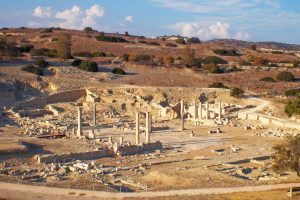
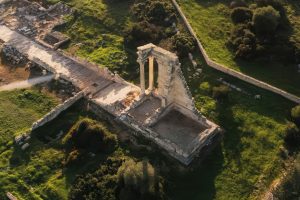
Located on the acropolis of Amathus, this sanctuary was a major rival to Paphos and featured two giant stone vases symbolizing the city's wealth. The Temple of Aphrodite at Amathus stands as an enduring symbol of Cyprus's ancient religious landscape, where devotion to the goddess of love and fertility rivaled the famed sanctuary at Paphos, drawing pilgrims from across the Mediterranean. Perched on the acropolis of the ancient city-kingdom of Amathus, near modern Limassol, this site blended indigenous Cypriot traditions with Phoenician, Greek, and Roman influences, reflecting the island's role as a cultural melting pot. Dedicated to Aphrodite, often syncretized with the earlier Astarte, the temple highlighted Amathus's prosperity through monumental features like two colossal stone vases, each weighing around…

Read more
Temple of Astarte-Aphrodite at Tamassos

Temple of Astarte-Aphrodite at Tamassos

The Temple of Astarte-Aphrodite at Tamassos was a sacred site where different religious traditions met and blended. It reflects the merging of the Phoenician goddess Astarte with the Cypriot form of Aphrodite, showing how Cyprus functioned as a crossroads of belief in the ancient Mediterranean. The sanctuary reveals how cultures interacted not only through trade and politics, but also through shared and evolving religious ideas. A Sanctuary in the Heart of Cyprus Tamassos lay inland, near rich copper resources and important trade routes. Though far from the coast, it was deeply connected to the wider Mediterranean world. The presence of a sanctuary dedicated to Astarte-Aphrodite reflects these connections and the movement of people, goods, and beliefs across the island. facebook-com…

Read more
Temple of Zeus Salaminios

Temple of Zeus Salaminios

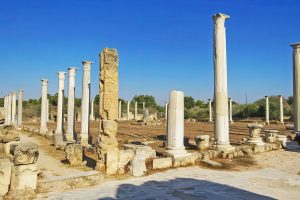
The Temple of Zeus Salaminios was one of the most important religious monuments of ancient Salamis. Dedicated to Zeus as the supreme god of the Olympian pantheon, it symbolised the city’s Greek identity, political authority, and connection to divine protection. dreamstime-com Through this temple, Salamis expressed its place within the wider Greek world while affirming its own power and prestige. A Temple at the Heart of Salamis The Temple of Zeus Salaminios stood within the great city of Salamis on the eastern coast of Cyprus. As one of the island’s largest and wealthiest cities, Salamis required a religious centre that matched its status. vici-org The choice of Zeus was deliberate. As ruler of gods and men, Zeus represented order, authority,…

Read more
Myrtou Pigadhes Sanctuary

Myrtou Pigadhes Sanctuary

A Late Bronze Age sanctuary featuring a rare monumental altar with "horns of consecration," establishing a clear religious link between Cyprus and Minoan Crete. blogspot-com The Myrtou-Pigadhes Sanctuary represents a pivotal archaeological site in Cyprus, illuminating the island's religious practices during the Late Bronze Age and its cultural exchanges with the Aegean world. Located in the northwest region near the village of Myrtou, this sanctuary dates primarily to the 16th to 11th centuries BC and is renowned for its monumental stepped altar adorned with "horns of consecration," a distinctive Minoan symbol that underscores direct influences from Cretan religious traditions. As a rural cult center, it served local communities for rituals involving offerings, animal sacrifices, and possibly fertility or solar worship,…

Read more
Sanctuary of Apollo Hylates

Sanctuary of Apollo Hylates

The Sanctuary of Apollo Hylates was one of the most important religious centres in ancient Cyprus, set within the wooded landscape near Kourion. Dedicated to Apollo in his role as protector of forests and nature, it combined Greek religious traditions with older local beliefs and attracted pilgrims for centuries. The sanctuary reveals how religion, nature, and daily life were closely connected in the ancient world. cyprusalive-com A Sacred Place in the Forest The Sanctuary of Apollo Hylates lies west of ancient Kourion, surrounded by gentle hills and woodland. Unlike urban temples built into city centres, this sanctuary was deliberately placed in nature, reflecting the character of the god worshipped there. limassoltourism-com Apollo Hylates was not the sun god or musician…

Read more
Sanctuary of the Great Mother (Avdimou)

Sanctuary of the Great Mother (Avdimou)

A cult site dedicated to the prehistoric fertility goddess, showing the continuity of worship from pagan fertility rites to later religious forms. facebook-com The Sanctuary of the Great Mother in Avdimou represents a timeless spiritual hub in Cyprus, where ancient veneration of a fertility goddess evolved into Christian devotion to the Virgin Mary. Located in the rural village of Prastio Avdimou near the south coast, this site embodies the island's layered religious history, blending prehistoric fertility cults with Byzantine and medieval Christian practices. It highlights Cyprus's role as a crossroads of civilizations, where pagan rites centered on life, birth, and renewal transitioned seamlessly into the worship of Panagia, the "All-Holy" mother figure, fostering a enduring tradition of pilgrimage and miracle-seeking…

Read more