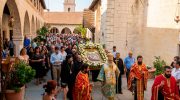
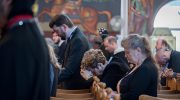
Religion in Cyprus functions less as private ideology and more as a shared moral framework that shapes hospitality, honour, family rituals, and the annual rhythm of life. Orthodox Christianity, Islam, and smaller communities such as Armenians and Maronites developed side by side, turning belief into a social structure that often outlasted shifting rulers and institutions.
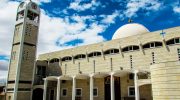
This article explains how faith became intertwined with identity, how it still guides everyday behaviour, and how modern Cyprus is reshaping religious practice without erasing its moral centre.
- Faith as Daily Social Order
- Identity Marked by Belonging
- The Long Roots of Cypriot Christianity
- Islam Shaped Northern Communities
- Armenians and Maronites, Deep Roots
- Hospitality as a Moral Obligation
- Honour, Reputation, and Moral Self-Regulation
- Sacred Time and the Rhythm of Daily Life
- Faith Practised at Home
- Living Sacred Landscapes
- A Society in Transition
- What Still Holds the Centre
Faith as Daily Social Order
Cyprus has always sat at a crossroads between continents, cultures, and empires. Christianity and Islam did not simply arrive here as belief systems. They became organising principles for society itself.
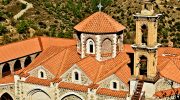
Rather than existing as private convictions, religious traditions in Cyprus historically governed education, law, community leadership, and moral behaviour. Faith helped explain the world, but it also regulated it. In villages, especially, religious authority often filled the role that distant state institutions could not, shaping everyday decisions through shared expectations rather than formal enforcement.
This deep integration explains why religion in Cyprus feels less ideological and more practical. It answers not only questions of belief, but questions of belonging.
Identity Marked by Belonging
In Cyprus, religious affiliation has long functioned as a marker of communal identity. For centuries, being Greek Cypriot meant being Orthodox Christian, while being Turkish Cypriot meant being Muslim. These associations were reinforced not just culturally, but constitutionally.
This did not mean that every individual was devout. Rather, religion served as a shared language of identity. To belong was to participate, at least symbolically, in the rituals, calendars, and moral expectations of one’s community.
As a result, religious identity in Cyprus often operates even where personal belief is weak. People may rarely attend services, yet still baptise children, observe feast days, and follow religious etiquette because these acts affirm continuity with family and community.
The Long Roots of Cypriot Christianity
Christianity reached Cyprus early, arriving in the first century through the Apostles Paul and Barnabas. This early foundation allowed the Church of Cyprus to develop an unusual level of independence, becoming one of the world’s oldest autocephalous churches.
That independence mattered. It allowed the Church to survive centuries of foreign rule, from Byzantines and Crusaders to Venetians and Ottomans. Even when political power shifted, the Church remained the primary guardian of Greek Cypriot culture, language, and collective memory.

Over time, religious leadership became political leadership. This relationship culminated in the twentieth century, when Archbishop Makarios III served simultaneously as religious head and the first President of the Republic of Cyprus. A few examples illustrate more clearly how faith and governance became inseparable on the island.
Islam Shaped Northern Communities
Islam entered Cyprus primarily after the Ottoman conquest in the sixteenth century. Mosques, religious endowments, and Islamic legal traditions reshaped parts of the island, particularly in the north.
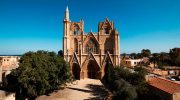
Yet Cypriot Islam developed its own character. It blended formal Sunni practices with local customs and Sufi traditions, producing a religious culture that was often more pragmatic than doctrinal. Muslim and Christian communities frequently lived in close proximity, sharing land, labour, and daily routines even while maintaining separate religious identities.
This coexistence did not erase boundaries, but it fostered a lived familiarity that shaped Cypriot social behaviour for generations.
Armenians and Maronites, Deep Roots
Beyond the two dominant traditions, Cyprus is also home to ancient Armenian and Maronite Christian communities. Though smaller in number, both have been present on the island for centuries and remain constitutionally recognised.
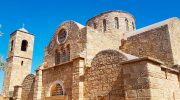
Armenians arrived in successive waves, particularly during periods of upheaval in the eastern Mediterranean. Their monasteries, schools, and churches became anchors of cultural survival. Maronites, arriving from the Levant, established villages and preserved a distinctive Arabic dialect found nowhere else.
These communities remind visitors that Cyprus has never been religiously uniform. Its identity was shaped through layering rather than replacement.
Hospitality as a Moral Obligation
One of the most visible ways religion continues to shape everyday life in Cyprus is through hospitality. Known locally as philoxenia, this value frames generosity not as social courtesy, but as moral responsibility.
Offering food to a guest, insisting they stay longer than planned, or inviting a stranger to share a meal are actions rooted in ethical expectation rather than personal preference. Historically, welcoming the stranger was understood as a religious act, one that reflected both spiritual virtue and personal honour. Hospitality was not optional, and declining to extend it carried social consequences.
Even in modern settings, this moral weight persists. A host is judged not by what they can afford, but by what they are willing to offer.
Honour, Reputation, and Moral Self-Regulation
Closely tied to hospitality is the concept of philotimo, a deeply ingrained sense of honour and moral responsibility. Rather than functioning as a written code, it operates internally, guiding behaviour through conscience and social awareness.
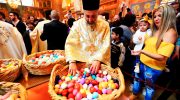
In traditional village life, reputation acted as a powerful form of self-regulation. An individual’s actions reflected on their family, their lineage, and their standing within the community. Religious observance, generosity, and restraint were not only expressions of belief but safeguards of collective dignity.
While contemporary life has softened these pressures, the underlying mindset remains influential. Many Cypriots still describe ethical behaviour in terms of “what is right” rather than what is legally required, revealing how moral judgment continues to be shaped by inherited values.
Sacred Time and the Rhythm of Daily Life
Religious calendars continue to influence how time is experienced across the island. Easter, patron saint feast days, Ramadan, and fasting periods subtly reorganise routines, social expectations, and even commercial activity.

Village festivals, known as panigyria, demonstrate this rhythm clearly. They begin with religious observance, often involving liturgy or procession, and gradually transition into communal celebration. Food, music, and reunion follow worship, reinforcing the connection between spiritual life and social belonging.
Rather than pulling people away from daily life, religion structures it, marking time in ways that blend reflection with celebration.
Faith Practised at Home
Religion in Cyprus is not confined to formal worship spaces. It is practised quietly within the home, woven into life’s milestones and everyday habits.
Children are often named after grandparents or saints, linking identity across generations. Name days frequently hold more emotional significance than birthdays, serving as annual reminders of continuity and belonging. Baptisms, circumcision ceremonies, and blessings mark life transitions with ritual and collective recognition.
Even cuisine reflects belief. Fasting periods shape traditional recipes, producing rich vegetarian dishes rooted in discipline rather than restriction. Food becomes a way of practising faith without needing explanation or instruction.
Living Sacred Landscapes
Churches, monasteries, mosques, and shrines across Cyprus are not preserved as relics of the past. Many remain active centres of community life, where spiritual practice continues alongside daily routine.
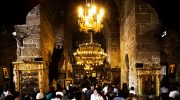
Mountain monasteries attract pilgrims seeking reflection, while neighbourhood mosques and churches anchor local identity. Visitors often approach these spaces as historical attractions, unaware that they remain part of a living moral geography governed by etiquette, silence, and respect.
These places still function because belief has not vanished. It has simply become quieter.
A Society in Transition
Like many societies, Cyprus is changing. Urbanisation, education, and global cultural influence have altered how people relate to organised religion. Institutional authority is questioned more openly, and belief has become increasingly personal.
Yet this shift does not represent disappearance. Instead, religion has adapted, continuing to shape values as cultural inheritance rather than strict doctrine. Even when faith is flexible, the moral framework it establishes remains influential. Religion in Cyprus has not declined. It has evolved.
What Still Holds the Centre
Religion continues to matter in Cyprus because it provides a shared moral language. It explains why generosity is expected, why family loyalty remains powerful, and why history is felt rather than remembered.
For visitors, recognising this moral framework helps make sense of everyday interactions. For residents, it offers continuity in a rapidly changing world.
Cyprus is not defined by faith alone, but its moral centre was shaped by religion. That foundation remains, quietly supporting social life long after empires, borders, and political systems have shifted.