Christianity in Cyprus

The Soli Basilica Frescoes

The Soli Basilica Frescoes

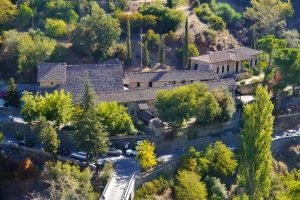
The Soli Episcopal Basilica preserves rare fragments of early Christian wall painting from a period when church imagery in Cyprus was still being invented rather than standardised. Painted above the site’s famous mosaics, the fresco remains show Roman decorative habits being adapted into a new visual language for worship, before later Byzantine rules became fixed. This article explains Soli’s rise as an ecclesiastical centre, what the surviving plaster fragments suggest about the original interior, and why the basilica’s destruction ended up preserving an important artistic transition. Trade, Farmland, Copper, Harbour Ancient Soli, also known as Soloi, occupied a strategic position near fertile farmland, copper-rich foothills, and a natural harbour. This combination sustained the city for centuries, from its legendary foundation…

Read more
Saint Paul and Barnabas

Saint Paul and Barnabas

In 45 or 46 AD, two travelers arrived on the eastern coast of Cyprus at the port city of Salamis. Their names were Paul and Barnabas, accompanied by a younger assistant named John Mark. Historians and biblical scholars associate this journey with the early expansion of Christianity beyond Palestine, and Cyprus became one of the first regions where these teachings reached wider Mediterranean communities. The island later developed into an important center of early Christian administration and Byzantine religious culture. Barnabas was originally from Cyprus, born in Salamis to a Jewish family traditionally associated with the tribe of Levi. Historical religious texts identify his original name as Joseph, while the name Barnabas was later adopted within the early Christian community…

Read more
Religious Life in Cyprus

Religious Life in Cyprus

Religious life in Cyprus centers on Orthodox Christianity, which defines cultural identity for approximately 90 percent of Greek Cypriots even among those who rarely attend services. The Church of Cyprus holds autocephalous status, meaning it governs itself independently while remaining in communion with other Orthodox churches worldwide. This independence, granted at the Council of Ephesus in 431 AD, has survived centuries of foreign occupation including Frankish Crusaders, Venetian merchants, Ottoman Turks, and British colonizers. The church functioned not just as religious institution but as guardian of Greek language, culture, and national identity during periods when political sovereignty was impossible. Orthodox practice structures daily life through home iconostases with burning oil lamps, morning and evening prayers, feast day celebrations, and approximately…

Read more
Byzantine Frescoes & Iconography

Byzantine Frescoes & Iconography

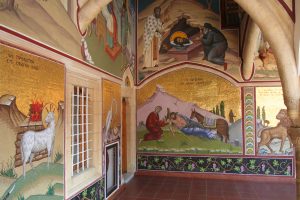
The Troodos Mountains of Cyprus contain one of the most significant collections of medieval mural painting in the Eastern Mediterranean. Ten churches and monastic buildings, all listed as UNESCO World Heritage Sites, preserve a continuous tradition of wall painting that spans from the 11th to the 16th centuries. These mountain structures are valued not only for their artistic content but also for their exceptional state of preservation. Their remote location helped protect them from destruction during periods of coastal instability and repeated invasions in earlier centuries. In addition, the characteristic steep-pitched wooden roofs—added to many structures over time—helped shield interior wall surfaces from heavy snowfall and seasonal rainfall. The result is a rare survival of complete interior decorative programs, where…

Read more
Cyprus Holy Site Pilgrimages

Cyprus Holy Site Pilgrimages

Cyprus has been a destination for pilgrimage and cultural travel for more than 1,700 years. The island holds a distinctive place in Mediterranean history due to its early adoption of Christianity during the Roman period and its later development into an important center of Byzantine religious administration and art. Across the island, dozens of monasteries, churches, and heritage sites are distributed from coastal cities to mountainous regions. These locations preserve artifacts, architectural structures, icons, and long-standing traditions that reflect the development of religious life in Cyprus from late antiquity through the Byzantine and post-Byzantine periods. Visitors from different regions, including Eastern Europe and the Mediterranean, have historically traveled to these sites for cultural interest, historical study, and religious observance. Religious…

Read more
Bishop Epiphanius of Salamis

Bishop Epiphanius of Salamis

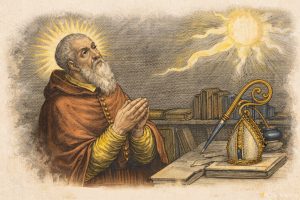
Epiphanius of Salamis remains one of the most influential scholarly figures associated with late antiquity and the religious history of Cyprus. Born between 310 and 320 AD near Eleutheropolis in Palestine, he came from a Jewish background before later joining the early Christian movement during his youth. Historical tradition connects this transition to an encounter with a monk named Lucian, whose charitable actions reportedly left a strong impression on the young Epiphanius. This experience encouraged him to pursue religious education and monastic study, eventually leading him toward a career that would place him among the most recognized intellectual and ecclesiastical leaders of the fourth century. Following his conversion, Epiphanius traveled to Egypt and entered a monastic community associated with Hilarion…

Read more
Saint Neophytos Cave Monastery

Saint Neophytos Cave Monastery

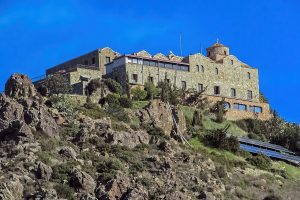
Saint Neophytos Monastery is one of the most historically significant monastic sites in Cyprus. Located on a hillside near the village of Tala, the monastery is closely connected to the life and writings of Neophytos, a medieval Cypriot monk, writer, and chronicler who spent much of his life in isolation inside a rock-cut cave. Born in 1134 in the mountain village of Kato Drys near Lefkara, Neophytos came from a farming family and was one of eight children. He later became known for his extensive writings on politics, society, natural disasters, and life in medieval Cyprus. Although he chose a secluded lifestyle, his manuscripts became some of the most valuable historical sources from the Byzantine and early Frankish periods on…

Read more
Saint Lazarus of Larnaca

Saint Lazarus of Larnaca

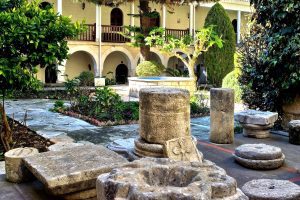
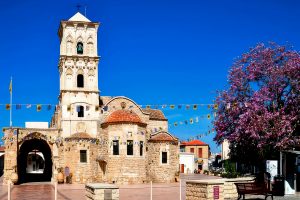
Lazarus of Bethany remains one of the most recognized figures connected to early Christian literature, largely because of the New Testament narrative associated with him. While many people know the story connected to his reported restoration to life, far fewer are familiar with the traditions that later linked him to Cyprus and the city of Larnaca. Over time, these accounts became deeply embedded in the island’s religious heritage, architecture, and local identity. According to Eastern Orthodox traditions and Byzantine-era accounts, Lazarus later traveled to Cyprus, where he reportedly settled in ancient Kition, modern-day Larnaca. Historical narratives connected him to the early development of Christian communities on the island, and his name eventually became associated with one of the most important…

Read more
The History of Christianity in Cyprus

The History of Christianity in Cyprus

Cyprus became one of the very first Christian lands in the world, converting to the faith within just a few years of Christ's death. The island's story of Christianity stretches back nearly 2,000 years, filled with apostles, saints, emperors, and devotional art that still survives today. An Ancient Christian Heritage Christianity didn't slowly trickle into Cyprus — it arrived with explosive speed in the hands of the apostles themselves. Around 45 AD, St. Paul and St. Barnabas landed on the island and began preaching, converting Cyprus's Roman governor and establishing what would become one of the oldest Christian communities in the world. Today, the Greek Orthodox Church remains central to Cypriot identity. Ancient monasteries cling to mountain peaks, Byzantine frescoes…

Read more