Churches and Monasteries

Agoi Saranda Cave Church

Agoi Saranda Cave Church

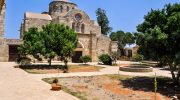
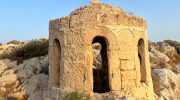
The Agioi Saranta Cave Church stands as a sacred monument within the rugged landscape of Protaras. This sanctuary occupies a natural limestone cavern on Fanou Hill and overlooks the Mediterranean Sea. It represents a rare fusion of geological formation and ecclesiastical architecture. The name translates to the Holy Forty and honors the Forty Martyrs of Sebaste. These Roman soldiers died in the year 320 AD because they refused to renounce their Christian faith. Local tradition links the forty stalactites on the cave ceiling to these forty individuals. Visitors find the entrance marked by a simple white wall and a distinct blue door. A stone dome sits atop the hill to provide a skylight for the interior space. This site offers…

Read more
Panagia Chrysorrogiatissa Monastery

Panagia Chrysorrogiatissa Monastery

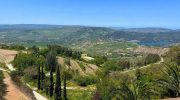
Chrysorrogiatissa Monastery is a historic monastic complex located in the Paphos district of Cyprus, near the village of Pano Panagia. It sits at an altitude of approximately 820 meters on the southern slopes of the Troodos foothills, overlooking forested valleys that lead toward the Paphos region. The site is named Panagia Chrysorrogiatissa, a title that translates as “Our Lady of the Golden Pomegranate.” The name reflects symbolic themes found in Byzantine and post-Byzantine religious art and cultural traditions, where the pomegranate often appears as a motif associated with prosperity and abundance. Historical Background The origins of the monastery are traditionally placed in the 12th century, around 1152. According to later narratives, an icon associated with Byzantine artistic tradition was discovered…

Read more
Saint Nicholas Armenian Church

Saint Nicholas Armenian Church

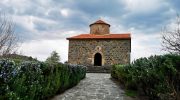
Saint Nicholas Armenian Church, widely known as Notre Dame de Tyre or Our Lady of Tyre, is a medieval Gothic structure located in the old city of Nicosia, in the northern part of Cyprus. Built in the early 14th century between 1308 and 1310, it stands as one of the most important surviving architectural monuments linked to the Armenian presence on the island. The building has undergone multiple transitions in function and ownership over the centuries, reflecting the broader historical changes that shaped Cyprus. Originally established during the Lusignan period, the structure was part of a convent complex associated with religious communities that were active in Cyprus during the medieval era. The architecture reflects the Gothic style introduced to the…

Read more
Spiritual Strongholds in the Mountains

Spiritual Strongholds in the Mountains

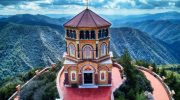
Hidden in Cyprus's mountains and tucked into remote valleys are stone fortresses of faith that have survived earthquakes, invasions, and centuries of political upheaval. These monasteries aren't just beautiful religious buildings - they're living institutions that have functioned as schools, hospitals, libraries, agricultural estates, and refuges for over 1,500 years. Stepping inside their thick walls, breathing the incense-filled air, it’s easy to understand how these places became anchors of Cypriot identity, preserving language, faith, and culture through the island's most turbulent chapters. Where Prayer Meets Survival Cypriot monasteries are enclosed religious communities built around prayer, solitude, and service. Unlike ordinary churches that serve local congregations, monasteries house monks or nuns living according to strict spiritual disciplines - following daily rhythms…

Read more
Stavros tou Agiasmati

Stavros tou Agiasmati

Stavros tou Agiasmati, near Platanistasa in the eastern Troodos, is one of Cyprus's most complete late-medieval painted churches, with frescoes dated to 1494 covering the interior and parts of the exterior. Its steep timber roof and sheltered mountain setting protected the paintings, so the church still reads as a coherent visual program rather than scattered fragments. This article explains how the Holy Cross dedication shaped the imagery, why the painter Philippos Goul matters, and what makes Agiasmati’s Last Judgment and village-facing messages unusually powerful. A Painted Church Near Platanistasa Stavros tou Agiasmati stands a few kilometres outside the village of Platanistasa, surrounded by forested slopes and mountain air that feels deliberately removed from the coast. Its location was not accidental.…

Read more
Archangel Michael Frescoes Pedoulas

Archangel Michael Frescoes Pedoulas

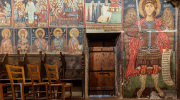
The Church of Archangel Michael in Pedoulas holds one of Cyprus’s most complete late-medieval fresco cycles, painted in 1474 and signed by the artist Minas. Inside a small timber-roofed mountain church, the images link theology to everyday life, while subtle details, including Western armour in key scenes, reflect the pressures of Latin rule on Orthodox communities. This article explains how the church was built for the Troodos climate, how the fresco program is structured to be “read,” and why its art remains a rare record of identity, patronage, and survival. A Church Built for Snow and Silence Pedoulas sits in the Marathasa Valley at an elevation of around 1,100 meters, a landscape shaped by cold winters, heavy snowfall, and isolation…

Read more
Woodcarving for Ecclesiastical Use

Woodcarving for Ecclesiastical Use

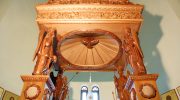
Woodcarving for Ecclesiastical Use in ancient and medieval Cyprus involved highly detailed work on icon screens, pulpits, and church furnishings, where technical mastery met spiritual symbolism to create sacred objects. Craftsmen used local woods like cypress or olive to carve intricate designs that conveyed theological meanings, from crosses for salvation to vines for eternal life. This tradition not only enhanced worship spaces but also preserved cultural narratives, making it a vital part of the island's religious heritage. A Sacred Craft of Wood and Faith Woodcarving for ecclesiastical purposes in Cyprus represents a profound intersection of artistry and spirituality, where everyday materials were transformed into symbols of divine presence. Focused on elements like iconostases (screens separating nave from sanctuary), pulpits for…

Read more
Saint Barnabas Gospels

Saint Barnabas Gospels

The “Saint Barnabas Gospels” refer to a tradition that helped secure the Church of Cyprus’s independence after a late fifth-century discovery near Salamis, where a Gospel of Matthew was said to rest on Saint Barnabas’s chest. Presented to Emperor Zeno, the manuscript functioned as proof of apostolic origin and was used to confirm Cyprus’s autocephaly in a jurisdictional dispute. This article explains the discovery story, why the original book matters even though it is lost, and how later Cypriot Gospel manuscripts carried the same claim through art, script, and ritual display. A Fifth-Century Power Dispute In the late fifth century, Cyprus stood at the centre of a quiet but serious dispute. Powerful church authorities on the mainland sought control over…

Read more
Pelendri Church

Pelendri Church

The Church of Timios Stavros in Pelendri is a layered Troodos interior built and repainted between the 12th and 16th centuries, preserving multiple fresco phases within a single working church. Dated inscriptions, shifting styles, and later aisle additions make the building a readable archive of rural devotion, local patronage, and Lusignan-era overlap rather than a single “perfect” moment. This article explains how the structure expanded, how the fresco programs differ by period, and why the church remains one of Cyprus’s clearest examples of belief accumulating without erasing what came before. A Church Shaped by Reuse Pelendri lies high in the Pitsilia region, surrounded by steep slopes and dense forest, far from the coastal cities that usually dominate Cyprus's medieval history.…

Read more