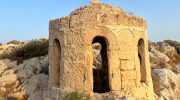
Saint Nicholas Armenian Church, widely known as Notre Dame de Tyre or Our Lady of Tyre, is a medieval Gothic structure located in the old city of Nicosia, in the northern part of Cyprus. Built in the early 14th century between 1308 and 1310, it stands as one of the most important surviving architectural monuments linked to the Armenian presence on the island. The building has undergone multiple transitions in function and ownership over the centuries, reflecting the broader historical changes that shaped Cyprus.
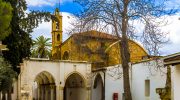
Originally established during the Lusignan period, the structure was part of a convent complex associated with religious communities that were active in Cyprus during the medieval era. The architecture reflects the Gothic style introduced to the island through Western European influence, particularly during the period of Frankish rule. Over time, the site became closely connected with the Armenian community, which gradually assumed responsibility for its maintenance and use.
Historical Background
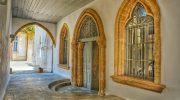
The origins of the church are linked to a 13th century convent established in Nicosia during a period of significant cultural interaction in Cyprus. After the destruction of earlier structures due to seismic activity, the present building was constructed in the early 14th century under Lusignan rule. Its design follows the architectural conventions of Gothic construction, featuring pointed arches, ribbed vaults, and a structured stone layout typical of the period.
During the Ottoman era beginning in the late 16th century, the site was allocated to the Armenian community, marking a new phase in its history. From this point onward, it became an important center for communal life, serving not only as a place of gathering but also as the focal point for education and cultural organization. Over the following centuries, the surrounding area developed into a dense urban neighborhood shaped by Armenian institutions and residential buildings.
The structure remained in active use until the mid 20th century, when political tensions and conflict in Cyprus led to significant demographic changes. By the early 1960s, the Armenian population of the area was displaced, and the building was gradually abandoned.
Educational and Cultural Development
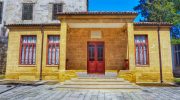
In 1920, descendants of Artin Melikian restored the church and built the Melikian Elementary School on the grounds. This school provided education to Armenian children in their native language while also teaching Greek and English. In 1938, Dikran Ouzounian established a second elementary school, the Ouzounian School, expanding educational opportunities for the growing community. A kindergarten called Shoushanian, originally built in 1902, served the youngest children.
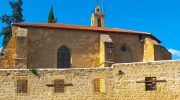
The church complex became a comprehensive community center. Opposite the church to the west stood the Nicosia premises of the Armenian General Benevolent Union, an international Armenian charity organization. To the south was the Armenian Club, providing social and recreational facilities. Nearby stood the offices of the Armenian Youth Movement Association. This concentration of Armenian institutions in one neighborhood created a vibrant cultural enclave within Nicosia.
Architectural Features
The church is a notable example of Gothic architecture in Cyprus, with a square nave and a semi octagonal apse forming its basic layout. The interior is defined by ribbed vaulting supported by thick stone walls and structural arches that distribute weight evenly across the building. This design allowed for relatively tall interior spaces compared to earlier medieval structures on the island.
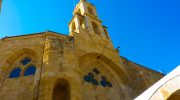
The exterior is more restrained in decoration, reflecting the architectural priorities of the period. A bell tower added in the 19th century rises above the main structure and provides a vertical focal point within the surrounding urban landscape. The combination of medieval Gothic elements and later additions illustrates the long architectural evolution of the building.
Inside the complex, remnants of earlier burial markers remain embedded in the floor, offering insight into the individuals and families associated with the site over time. These features contribute to the building’s historical depth and archaeological significance.
Educational and Community Development
During the 20th century, the area surrounding the church became a central hub for education and community life. Several schools were established nearby, including institutions that provided instruction in multiple languages. These schools played an important role in maintaining cultural continuity and supporting educational development within the community.
In addition to educational facilities, the neighborhood included social and organizational buildings such as community halls and association offices. These institutions created a concentrated urban district where cultural, educational, and social activities were closely interconnected. The church functioned as the architectural anchor of this broader network.
A memorial structure was also established within the complex in the early 20th century, serving as a place of remembrance for historical events affecting the community. This monument became an important focal point for annual gatherings and public commemorations.
Later History and Abandonment
Following the events of the early 1960s, the site was no longer actively used by its original community. The building experienced decades of limited maintenance and gradual deterioration. Environmental exposure and lack of regular upkeep contributed to structural wear, while the surrounding urban landscape also changed significantly over time.
Restoration efforts began in the early 21st century, focusing on stabilizing the structure and preserving its Gothic architectural elements. These efforts aimed to protect the building as a cultural and historical monument rather than restore it to continuous functional use. Today, the site serves primarily as a preserved heritage structure and cultural landmark.
The New Cathedral and Community Continuity
After the abandonment of the original site, a new place of worship was established in the southern part of Nicosia. Constructed in the late 20th century, this new building follows traditional Armenian architectural design, featuring a central dome and symmetrical layout. It continues to serve as the primary active center for the community’s religious and cultural life.
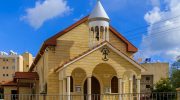
Alongside the cathedral, additional institutions such as schools and administrative buildings were developed to support community needs. These newer structures maintain continuity with earlier traditions while adapting to modern urban conditions. Memorials dedicated to historical events were also established within the new complex, replacing those lost in the original district.
Cultural and Historical Significance
Saint Nicholas Armenian Church represents a layered example of Cypriot urban history, where different architectural traditions, communities, and administrative periods overlap within a single structure. Its Gothic design reflects medieval European influence, while its later use illustrates the island’s shifting demographic and political landscape.
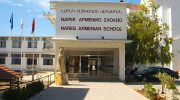
The surrounding neighborhood once functioned as a compact cultural district, combining residential, educational, and institutional functions in close proximity. Although many of these elements no longer exist in their original form, their historical footprint remains visible through surviving buildings and archival records.
Today, the church stands as a preserved monument within a divided urban landscape, reflecting centuries of architectural development and community transformation in Nicosia.