Vavla is a small mountain village situated in the Larnaca district of Cyprus, approximately 38 kilometers west of Larnaca city and 450 meters above sea level. The village lies in the foothills of the Troodos mountains, positioned between the major cities of Larnaca, Limassol, and Nicosia, each within 25 to 40 minutes by car.
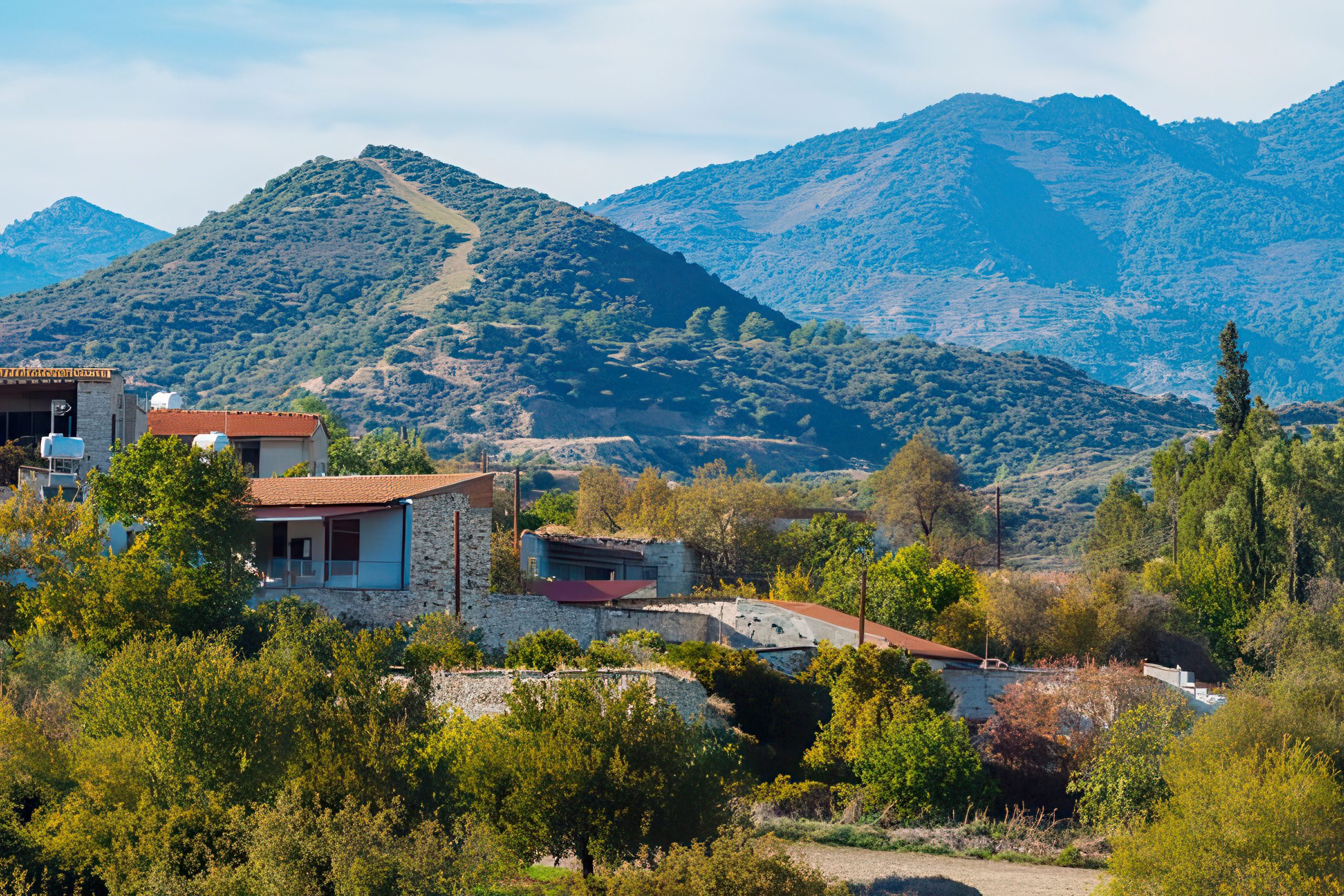
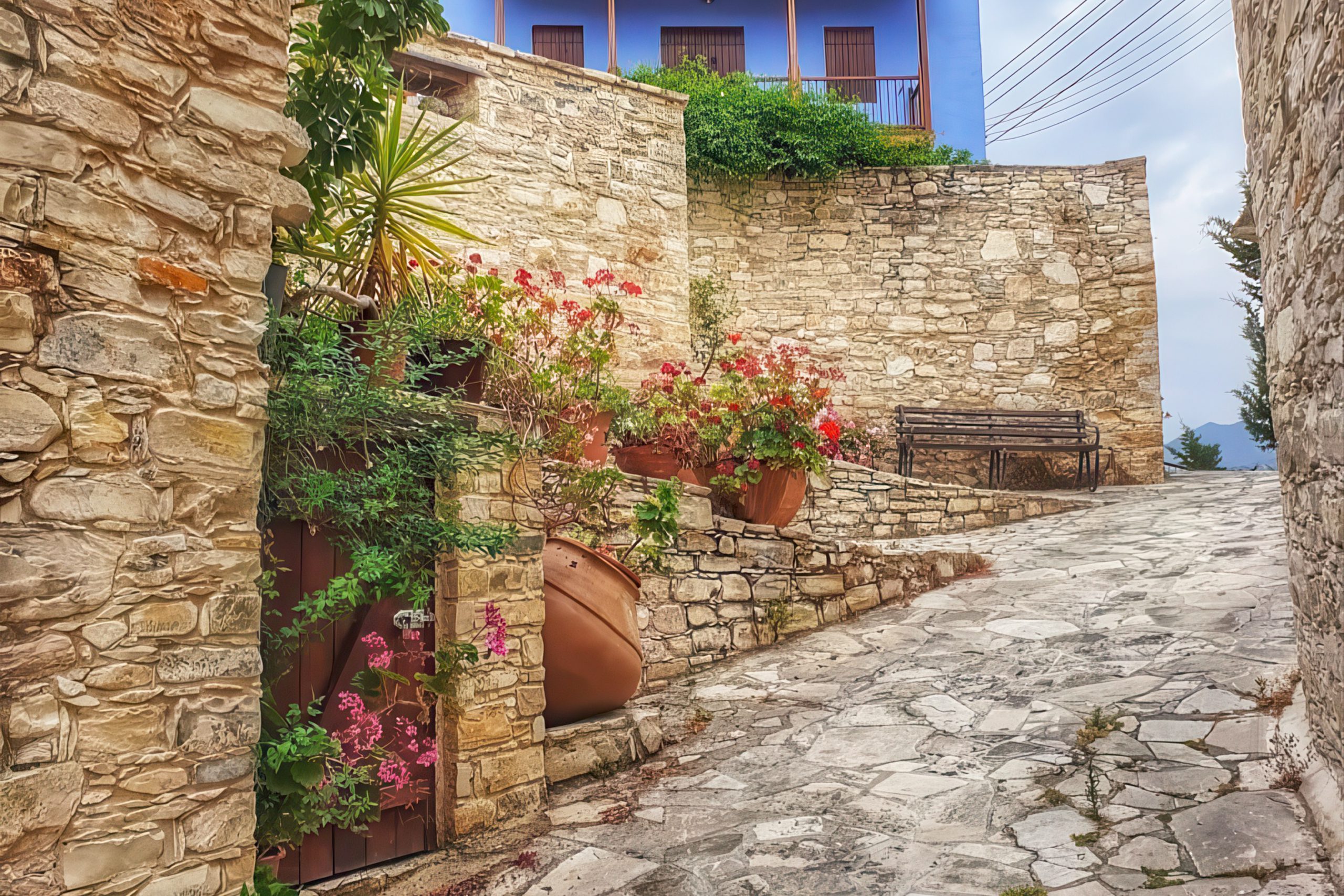
With fewer than 100 permanent residents, Vavla has been officially declared a Preserved Village by the Cyprus authorities due to its traditional white stone architecture built from local Lefkara limestone.
The village stands on the geological boundary between Lefkara limestone formations and the volcanic earth of Troodos, creating a unique microclimate that supports rich vegetation, including three rare species and 18 endemic plant varieties.
Historical Origins
The exact founding date of Vavla remains unknown, though archaeological evidence confirms human settlement in the area since ancient times. The village appears on a French map from 1367 as “Vala” or “Vaules” and on another from 1423 as “Vaula.” Two competing theories explain the village name. One suggests it derives from a feudal lord named De Vavyla who controlled the area including Vavla, Kato Drys, and Lefkara during the Lusignan period in the 14th century. The alternative theory claims the name comes from a plant that grew along the Nile River banks in Egypt, which village residents brought to Cyprus. This plant produced soft wood suitable for shipbuilding and resin used as adhesive for wooden ships.
Village residents participated in significant historical events. Men from Vavla fought in the Balkan Wars of 1912 to 1913, with one documented participant being Achilleas Michailidis. Others served in both World Wars. During the EOKA liberation struggle from 1955 to 1959, several Vavla residents joined the organization, and the village hosted other fighters passing through. Today, Vavla maintains a museum dedicated to these fighters, displaying personal belongings of the EOKA member known as Parides, along with agricultural tools from the previous century that village farmers once used.
Traditional Village Character and Architecture
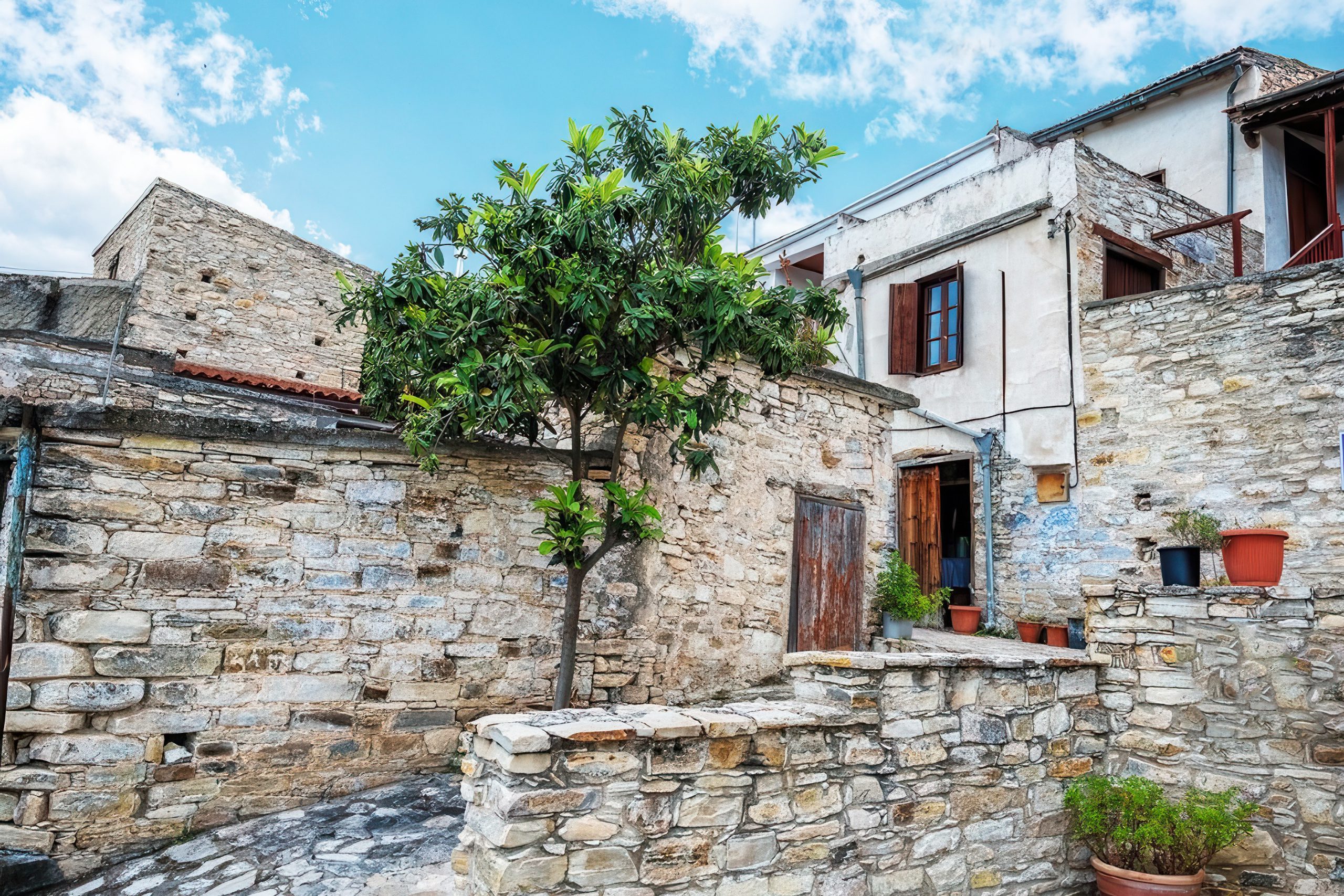
The village center features homes built entirely from white Lefkara stone, creating perfect harmony with the natural environment. The Community Council and Town Planning Authority actively encourage both current and new residents to use traditional stone for construction or renovation projects, maintaining the village’s authentic character. Unlike many Cyprus villages that turn brown and parched in summer, the hills around Vavla remain remarkably green throughout the year. Jasmine covers many buildings, and geraniums grow abundantly. The narrow cobblestone lanes wind between two-storey stone houses, many featuring traditional covered patios and courtyards.
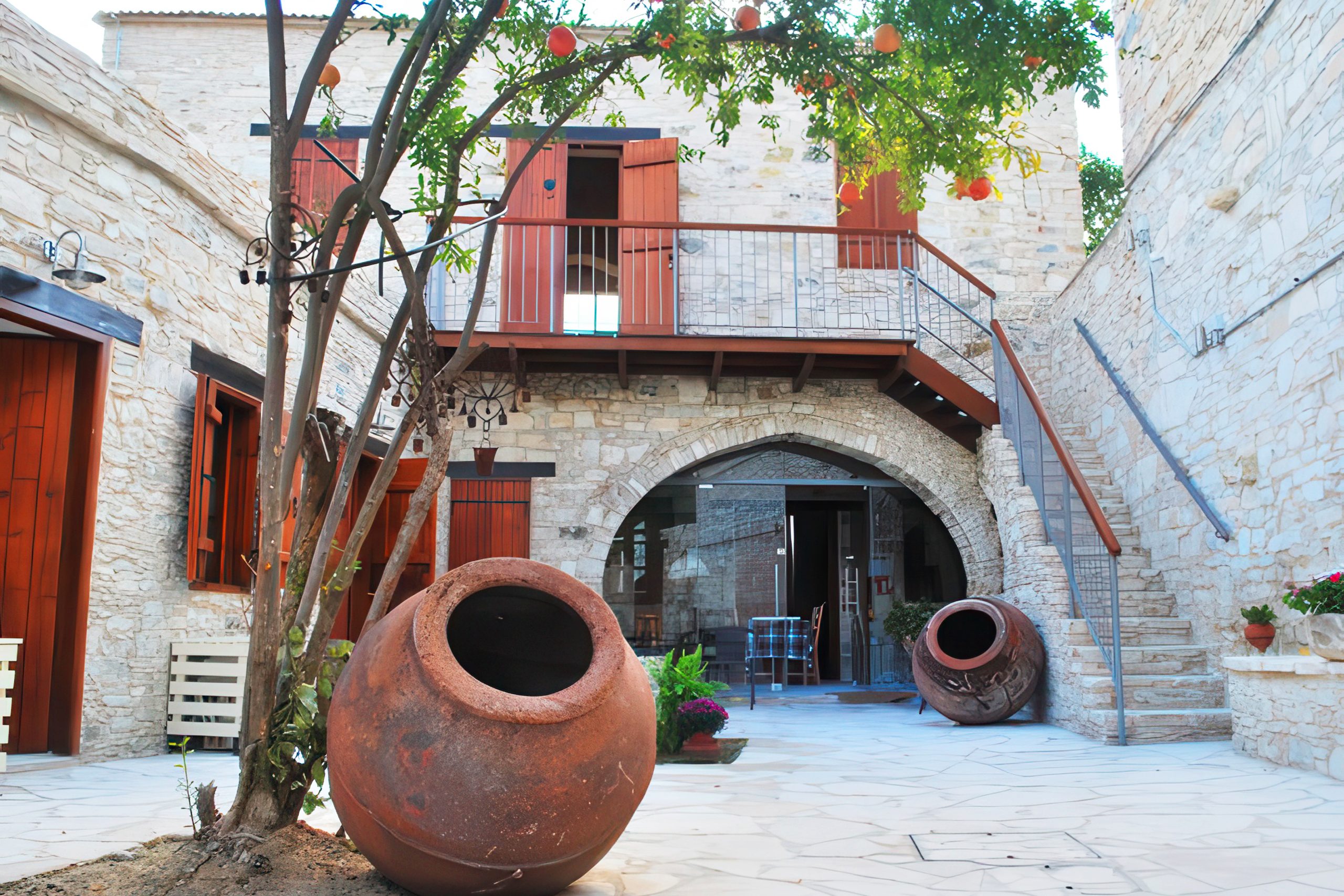
Traditional Cypriot village houses in Vavla were built in the long style around private courtyards. These homes typically included four stone kamaras (arches), three traditional ovens for baking, and original water wells excavated in the ground. Many houses preserved rooms called “Kellari” that remained naturally cool year-round, perfect for storing food, wine, and olive oil. Large handmade clay vessels called “Pitharia” (amphoras) lined these storage rooms. Another structure called the “Stavlos” housed chickens and served as the place to collect fresh eggs.
Notable Crafts and Economic Activities
Agriculture dominated village life until the 1950s. Olive oil and carob production provided the main income, while farming supplied additional revenue. Women in Vavla practiced Lefkaritiko embroidery, a traditional lace-making technique that dates to at least the 14th century.
This craft gave significant supplementary income to households. Lefkaritiko embroidery combines indigenous Cypriot craft with influences from Venetian courtiers who ruled Cyprus from 1489, along with ancient Greek and Byzantine geometric patterns. The technique involves four basic elements: hemstitch, cut work, satin stitch fillings, and needlepoint edgings. UNESCO inscribed Lefkaritiko lace-making on the Representative List of Intangible Cultural Heritage in 2009.
After 1955 to 1960, agriculture ceased to be profitable, leading young people to leave for cities to pursue education and better employment. Many emigrated to the United Kingdom, United States, and Australia. This population outflow caused significant village decline. However, beekeeping emerged as the primary modern occupation. The hills and valleys surrounding Vavla are covered in thyme and wildflowers, producing exceptional honey sold throughout Cyprus under the “Vavla” brand name. The area’s almond groves also contribute to local production. Recent years have seen newcomers establishing businesses making up to 50 different flavors of jams and fruit chutneys.
Cultural and Religious Sites
Two churches serve the village. The church of Agios Georgios stands to the north, while the church of Archangelos Michail sits to the south. Both structures maintain traditional architectural features. However, the most significant religious building near Vavla is the Convent of Agios Minas, located two kilometers east along the road to Kato Drys. This 15th-century monastery represents one of the largest operating convents in Cyprus. The first written documentation of its existence dates to 1562. A monk named Vassilios Barsky visited in November 1737 and described the annual feast of Saint Minas, where many people gathered from surrounding areas seeking healing through the miraculous icon of the saint.
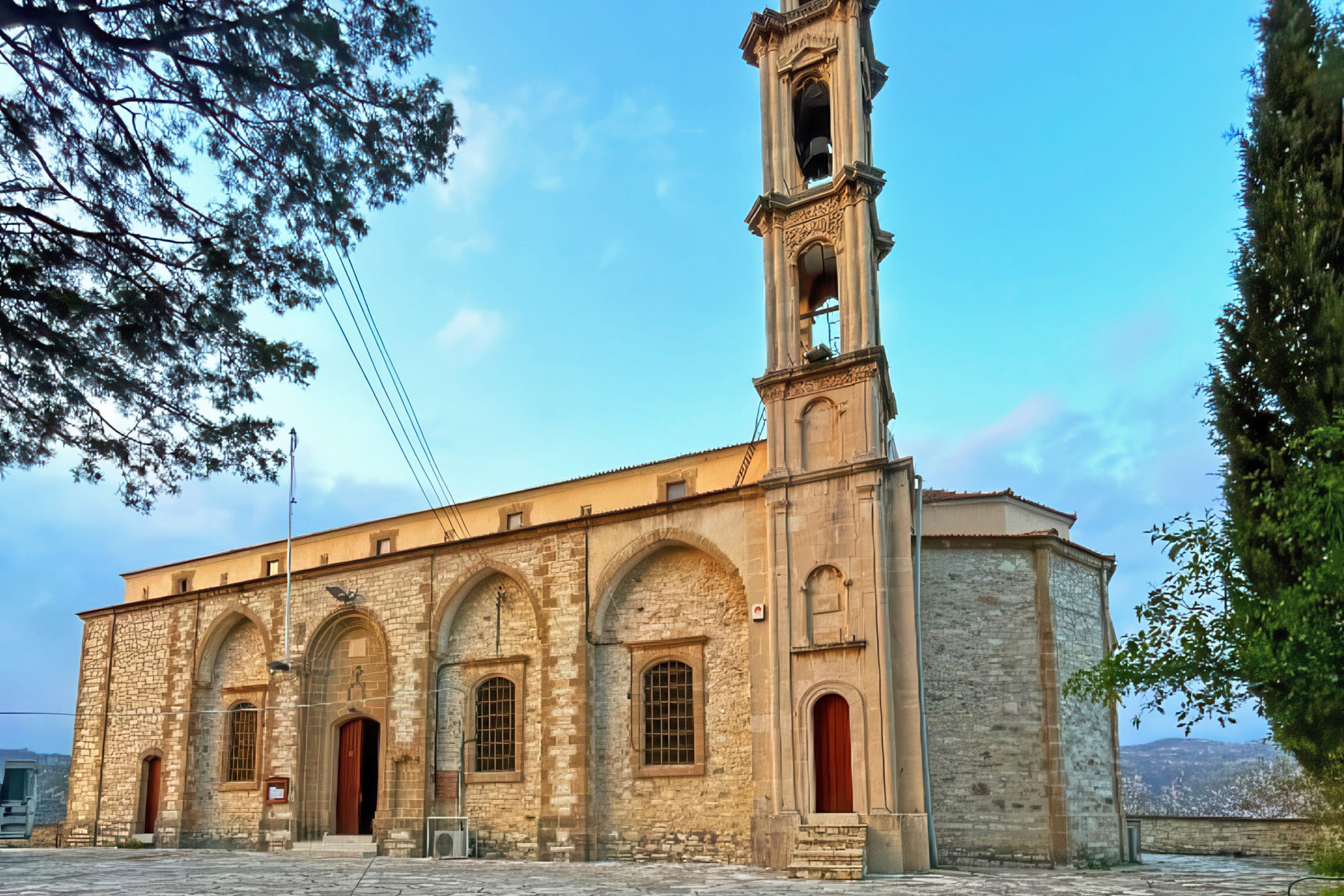
The convent architecture combines Byzantine and Gothic styles, featuring a pointed vault with traverse ribs and side porticos. The complex includes a church, cloisters, and other monastic buildings. Large paintings of Agios Georgios and Agios Minas from 1757 adorn the north and south walls. The monastery was rebuilt in 1754 and decorated with wood-carved icons. After periods of abandonment, the monastery converted to a female monastery in 1965 when nuns from the monastery of Agios Georgios of Alamanos moved in. The nuns practice icon painting and produce traditional Cyprus sweets, fruit preserves, and herbs, which visitors can purchase. The monastery celebrates its feast day on November 11th.
Modern Village Life and Community
Despite its small permanent population of around 40 residents, approximately 70 others own homes in Vavla and stay mainly on weekends. The “Friends of Vavla” organization holds village feasts every six months, bringing together old friends and family to celebrate the past year and strengthen community bonds. These gatherings feature traditional Cypriot food including pork souvlakia, koupepia (stuffed vine leaves), pourgouri pilafi (bulgur wheat), fried chicken, makaronia tou fournou (pasta casserole), and bourekia (pastry filled with anari cheese, cinnamon, and sugar). Traditional coffee follows the meal.
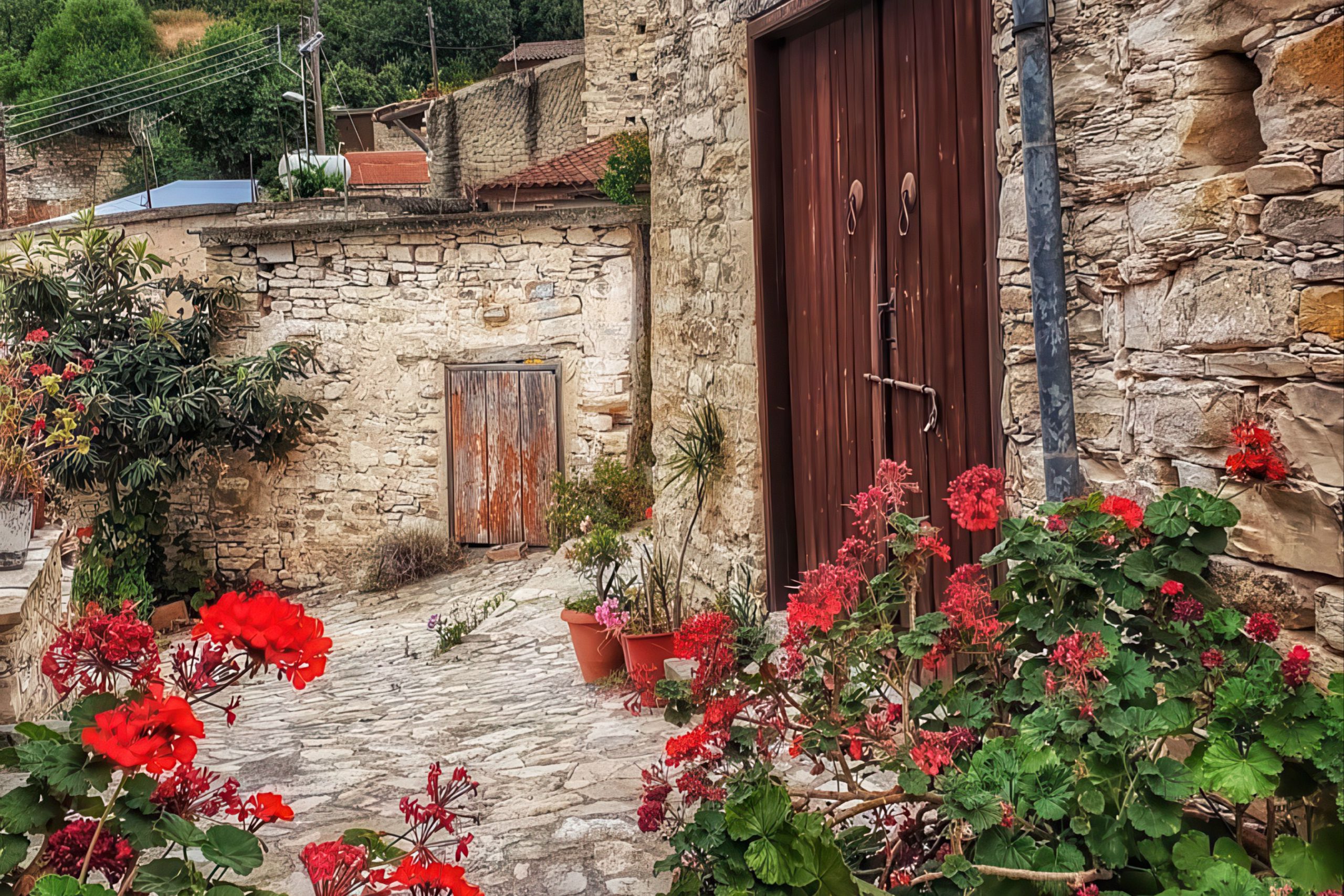
The sounds of renovation work, hammers, saws, and the smell of fresh paint regularly fill the air as the village undergoes gradual rejuvenation. The Community Council supports anyone interested in establishing residence in the village. Vavla forms part of Wine Route Number 7, which passes through the mountainous terrain between Larnaca and Nicosia. The village location offers convenient access to nearby Lefkara, famous for its lace-making tradition, just 10 kilometers away. The village also sits close to the ancient city of Kition, where archaeological remains reveal Cyprus’s classical civilization.
Visiting Vavla Today
The village offers several agrotourism accommodations where visitors can experience authentic rural Cypriot life. Traditional stone houses have been renovated to modern standards while maintaining their historic character. Gardens at these properties often feature grape vines, lemon trees, fig trees, apricots, and artichokes that guests can harvest depending on the season. A recreation area with parking sits near stone steps in roughly the village center. An information stand with a map of local places of interest helps visitors navigate.
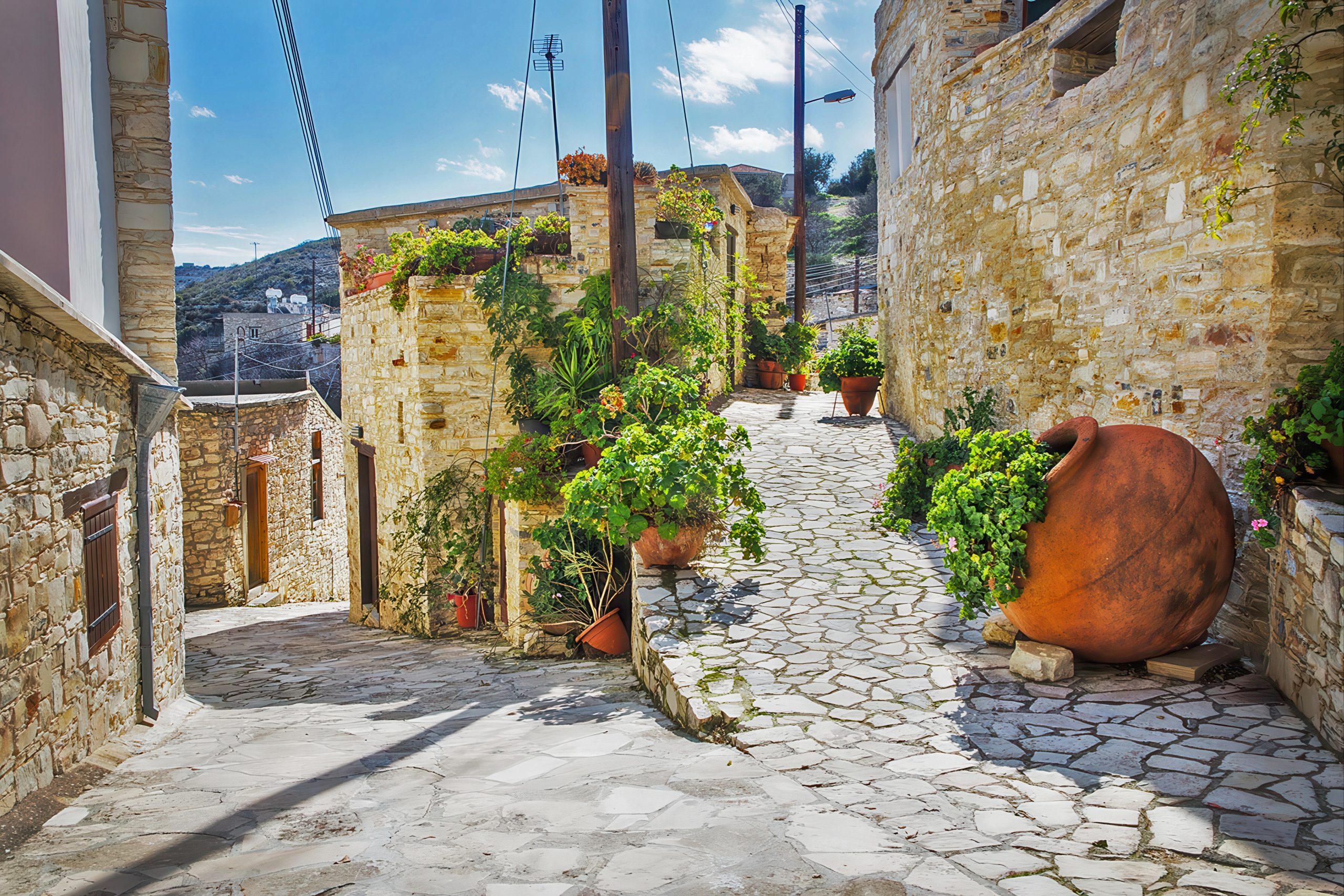
The peaceful atmosphere makes Vavla ideal for those seeking quiet countryside experiences away from urban centers. The green hillsides, fragrant with wild herbs, provide excellent conditions for hiking and cycling. Nature trails lead through the surrounding area where visitors might spot rare plant species. The village’s elevation provides cooler temperatures compared to coastal areas, particularly welcome during summer months. Modest dress is required when visiting religious sites, particularly the Agios Minas Convent.
A Village Preserving Cypriot Heritage
Vavla represents an important example of traditional Cypriot village life that has managed to survive despite modern challenges. The village preserves architectural traditions through its stone buildings, maintains ancient crafts like Lefkaritiko embroidery in nearby communities, and continues agricultural practices adapted to the mountain environment. The combination of historical significance, natural beauty, religious heritage, and community commitment makes Vavla valuable for understanding rural Cyprus culture. For visitors interested in experiencing authentic village traditions, sampling locally produced honey and preserves, exploring Byzantine religious sites, or simply enjoying mountain tranquility, Vavla offers a genuine connection to Cyprus’s rural past and present.