Early Christian chancel screens in Cyprus were low stone barriers that shaped worship by separating the sanctuary from the nave without fully blocking sight, sound, or movement. Built mainly between the 4th and 7th centuries, they used carved marble or limestone, symbolic motifs, and sometimes curtains to control what the congregation could see and when. This article explains why the screens emerged, how they were constructed and decorated, and what surviving fragments reveal about Cypriot liturgy, trade links, and sacred space design.
A Boundary That Stayed Open
Early Christian chancel screens were designed to mark a boundary without fully closing it. Positioned between the nave and the sanctuary, they created a sense of separation while allowing sound, light, and movement to pass through. The congregation could glimpse the altar and follow the actions of the clergy, yet the space beyond the screen remained symbolically distinct.
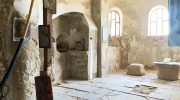
This balance was deliberate. The screen established the sanctuary as sacred ground while reinforcing participation rather than exclusion. It was a threshold, not a barrier, and it defined the rhythm of worship in Cypriot basilicas.
Why Cyprus Needed Sacred Limits
The rise of chancel screens coincided with a period of prosperity and institutional consolidation on the island. After Christianity was legalised in the early 4th century, Cyprus saw extensive church construction, particularly in coastal cities linked to Mediterranean trade routes. Copper exports, agricultural wealth, and access to imported stone allowed basilicas to be built on a monumental scale.
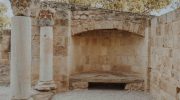
At the same time, the Church in Cyprus secured autocephaly, giving it a degree of independence from Constantinople. This status encouraged the development of local liturgical arrangements, including distinctive uses of space within churches. Chancel screens became central to this architectural language.
Stone as a Medium of Meaning
Most Cypriot chancel screens were carved from imported marble, particularly from the quarries of Proconnesus in the Sea of Marmara. The decision to use marble was not merely practical. It signalled prestige, permanence, and connection to the wider Byzantine world.
Local limestone also played a role, especially in rural churches, but marble dominated the major basilicas. The material allowed for fine carving, openwork designs, and subtle surface effects that interacted with light during services.
The stone itself carried meaning. Durable and visually striking, it reinforced the idea that the sacred order of the church was stable, enduring, and set apart from everyday life.
Form and Structure
A typical chancel screen consisted of several distinct elements working together. A low stone base supported vertical posts, between which carved slabs were slotted. Above these rested a horizontal beam, or epistyle, completing the frame.
Some slabs were solid, bearing relief decoration, while others were pierced with openwork patterns. These perforated screens softened the visual boundary, creating a shifting interplay of light and shadow that changed with the time of day and the movement of candles during services. Curtains were often hung across the central opening, drawn aside during key moments of the liturgy to reveal the altar more fully.
The overall height remained deliberately modest. Screens were tall enough to establish separation, yet restrained enough to preserve a sense of visual and spiritual continuity between clergy and congregation.
Symbols Instead of Stories
The decorative language of Cypriot chancel screens relied on symbolism rather than narrative depiction. Artisans avoided figural scenes and instead carved motifs that condensed complex theological ideas into familiar visual forms.
Crosses appeared frequently, sometimes enclosed within circles or wreaths that suggested triumph over death and the promise of eternal life. Vines and clusters of grapes referenced both the Eucharist and the idea of spiritual sustenance, while birds such as peacocks evoked resurrection and incorruptibility. Geometric interlace, repeating without a clear beginning or end, conveyed order, continuity, and the presence of divine harmony.

These symbols required no explanation. Even worshippers unable to read could recognise their meanings through repeated exposure within the ritual setting of the church.
Kourion’s More Complex Layouts
While chancel screens across Cyprus shared a common purpose, their execution varied according to region and context. In major urban centres such as Salamis and Paphos, marble screens display refined carving and careful proportions, reflecting strong connections to imperial workshops and long-distance trade networks.
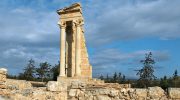
At Kourion, archaeological remains reveal more complex arrangements, combining solid and openwork slabs with richly decorated interiors that included mosaics, columns, and marble furnishings. In Amathus, Christian symbols were inserted into spaces long associated with earlier religious practices, creating a layered architectural landscape where new meanings were built directly upon older sacred ground.
These regional differences demonstrate how a shared architectural form could adapt to local histories without losing its essential function.
How Worship Was Shaped by the Screen
The presence of the chancel screen fundamentally structured the experience of worship. Sound travelled through carved openings, allowing chants and prayers to reach the congregation without visual exposure to every ritual action. Incense drifted beyond the sanctuary, reinforcing sensory connection while preserving symbolic distance.
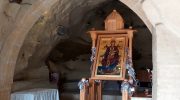
Visibility was intentionally partial. Worshippers were invited to listen, anticipate, and reflect rather than observe continuously. This controlled access reinforced the discipline of the sacred mysteries, where only certain moments permitted full visual engagement with the altar. Processions moved through and around the screen, turning it into an active participant in the choreography of worship rather than a passive divider.
Amathus, Old Ground, New Meaning
Today, many Cypriot chancel screens survive only in fragments. Earthquakes, later rebuilding phases, and the reuse of stone led to slabs being broken, relocated, or incorporated into floors and walls of later structures. In some cases, decorative panels were reused as paving stones or masonry, their symbolic carvings worn down by centuries of foot traffic.
Modern understanding of these screens depends on careful archaeological recovery and reinterpretation. Despite their fragmentary condition, surviving pieces provide rare insight into Early Christian liturgical space, especially since Cyprus avoided some of the large-scale destruction associated with later periods of iconoclasm elsewhere in the Byzantine world.
What These Screens Still Explain
Chancel screens offer a window into how early Christian communities in Cyprus understood space, ritual, and belief. They demonstrate that architecture was not neutral, but intentionally shaped religious experience by guiding movement, attention, and participation.
For modern visitors, these carved stones are more than architectural remnants. They mark a moment when Cyprus stood at the intersection of empire, faith, and craftsmanship, using stone not only to divide space, but to express the boundary between the human and the divine in a way that was felt as much as it was seen.