All Articles

Kourion Theatre

Kourion Theatre

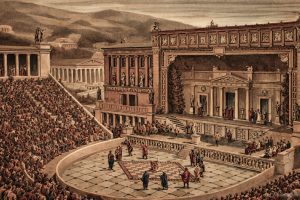
The Theatre of Kourion is one of the most impressive ancient theatres in Cyprus. It was built in the Late Hellenistic period and later enlarged under Roman rule. The theatre shows how important performances and public gatherings were in ancient times. Its location on a cliff overlooking the Mediterranean Sea highlights both careful city planning and an appreciation for natural beauty. The theatre could hold up to 3,500 spectators and was used for plays and other public events for many centuries. The History of Kourion and Its Theatre Kourion was one of the most important city-kingdoms in ancient Cyprus. Tradition says it was founded by Greeks from Argos in the Peloponnese in the 13th century BCE, during the Mycenaean expansion.…

Read more
Copper-Rich Troodos Mountains

Copper-Rich Troodos Mountains

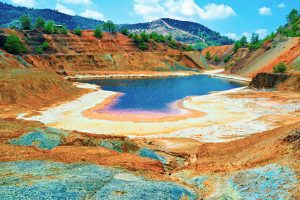
The copper-rich mountains of Cyprus, particularly the Troodos range, were seen by ancient inhabitants as divine gifts from the gods, providing not just vital metal for tools and trade but also spiritual protection and prosperity. These peaks, laced with reddish ore veins, blended natural bounty with sacred myths, making mining a reverent act and turning the island into a Bronze Age powerhouse. Exploring their story reveals how earth, faith, and human ingenuity intertwined to shape Cyprus's enduring legacy. A Sacred Backbone of the Island Step into the heart of Cyprus, and you'll find the Troodos Mountains rising like ancient guardians, their slopes cloaked in pine forests and dotted with villages that seem frozen in time. These aren't just any hills…

Read more
Cyprus Eastern Mediterranean Crossroads

Cyprus Eastern Mediterranean Crossroads

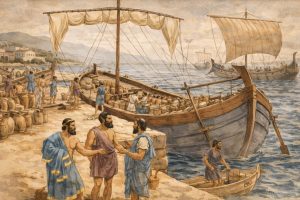
Cyprus sits quietly at sea, but its position has never been passive. For thousands of years, the island has stood close to the main maritime routes linking Europe, the Middle East, and North Africa. Empires did not value Cyprus for its size or population, but for its ability to observe, connect, and influence movement across the eastern Mediterranean. To understand Cyprus is to understand the sea around it, because the island’s history, economy, and regional role have always been shaped by passing ships and shared horizons. Where Geography Turns into Influence A strategic maritime position is not about domination; it is about proximity. Cyprus lies near the natural crossroads of the eastern Mediterranean, where east–west and north–south sea routes converge.…

Read more
Saint Neophytos Cave Monastery

Saint Neophytos Cave Monastery

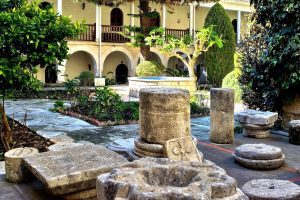
Saint Neophytos Monastery is one of the most historically significant monastic sites in Cyprus. Located on a hillside near the village of Tala, the monastery is closely connected to the life and writings of Neophytos, a medieval Cypriot monk, writer, and chronicler who spent much of his life in isolation inside a rock-cut cave. Born in 1134 in the mountain village of Kato Drys near Lefkara, Neophytos came from a farming family and was one of eight children. He later became known for his extensive writings on politics, society, natural disasters, and life in medieval Cyprus. Although he chose a secluded lifestyle, his manuscripts became some of the most valuable historical sources from the Byzantine and early Frankish periods on…

Read more
Cyprus Salt Lakes Nature Reserve

Cyprus Salt Lakes Nature Reserve

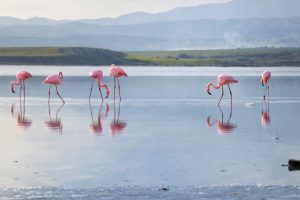
Cyprus is home to two major salt lake systems that serve as crucial stops for thousands of birds during their migration between Europe and Africa. The Larnaca Salt Lake complex lies near the island's southeastern coast, while the Akrotiri Salt Lake sits southwest of Limassol. Both wetlands hold international ecological significance and attract up to 20,000 flamingos each winter, along with dozens of other bird species. The Larnaca Salt Lake Complex The Larnaca Salt Lake consists of four interconnected salt lakes covering 1,761 hectares southwest of Larnaca town. The largest lake is called Aliki, followed by Orphani, Soros, and the smallest, Airport Lake. The Airport Lake was separated from Orphani when Larnaca International Airport's runway was built, cutting it off…

Read more
Saint Lazarus of Larnaca

Saint Lazarus of Larnaca

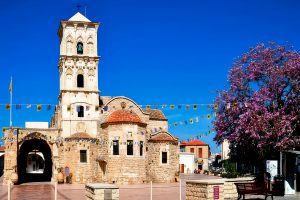
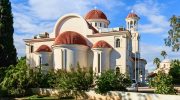
Lazarus of Bethany remains one of the most recognized figures connected to early Christian literature, largely because of the New Testament narrative associated with him. While many people know the story connected to his reported restoration to life, far fewer are familiar with the traditions that later linked him to Cyprus and the city of Larnaca. Over time, these accounts became deeply embedded in the island’s religious heritage, architecture, and local identity. According to Eastern Orthodox traditions and Byzantine-era accounts, Lazarus later traveled to Cyprus, where he reportedly settled in ancient Kition, modern-day Larnaca. Historical narratives connected him to the early development of Christian communities on the island, and his name eventually became associated with one of the most important…

Read more
Reshef Warrior Protector

Reshef Warrior Protector

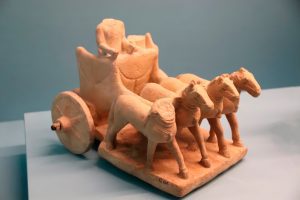
Reshef was a prominent deity in the ancient eastern Mediterranean, especially in regions such as Syria, Phoenicia, and the Levant. He was primarily associated with protection, warfare, and sometimes with plague or healing, reflecting a divine role that combined destructive and safeguarding powers. Unlike deities who represented abstract forces, Reshef was closely tied to the realities of conflict, defense, and communal survival. His worship reached Cyprus through networks of trade and migration, illustrating the island’s position as a meeting point between eastern and Aegean religious traditions. In Near Eastern belief systems, Reshef embodied the paradox of a deity who could both bring harm and prevent it. He was invoked to ward off danger, especially during times of conflict or epidemic…

Read more
Saint Barnabas Monastery

Saint Barnabas Monastery

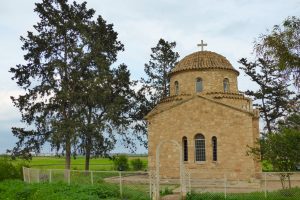
Saint Barnabas Monastery is a historical monastic complex located near the ancient city of Salamis, close to modern-day Tuzla in Cyprus. The site is associated with early Roman-era history and later Byzantine and Ottoman-period developments, and today functions primarily as a museum and archaeological landmark reflecting the island’s layered cultural heritage. The monastery stands within a landscape that includes the ruins of Salamis, one of the most important ancient urban centers of Cyprus. This proximity gives the site additional archaeological significance, as it connects monastic history with earlier Greco-Roman urban settlement patterns. Historical Background The site is traditionally linked to Barnabas, a historical figure associated with the early spread of new religious movements in the eastern Mediterranean during the 1st…

Read more
Phaneromeni Necropolis Larnaca

Phaneromeni Necropolis Larnaca

Beneath the streets and churches of modern Larnaca lies a network of ancient tombs that gave the city its name. The Phaneromeni necropolis represents a vast burial ground used for over 1,500 years, from the Late Bronze Age through the Phoenician and Hellenistic periods, preserving layers of history beneath one of Cyprus's oldest continuously inhabited cities. The name Larnaca comes from the ancient Greek word larnax, meaning sarcophagus or stone coffin. This etymology directly reflects the thousands of tombs and burial chests discovered throughout the city. An American consul in the late 19th century claimed to have explored more than 3,000 tombs in the Larnaca area, and archaeological work continues to uncover more burial sites with each new construction project.…

Read more