All Articles

Panigyria Village Festivals

Panigyria Village Festivals

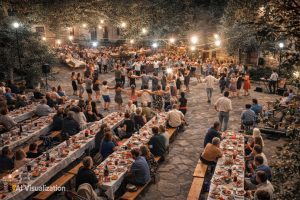
In Cyprus, a panigyri is not simply a festival marked on a calendar. It is a moment when a village gathers itself fully, reconnecting faith, memory, and everyday life into a shared experience. Held in honor of a patron saint, panigyria transforms religious observance into a living social ritual, where prayer flows naturally into food, music, dance, and reunion. These evenings are not for spectacle or tourism. They exist because the community expects them to exist, and because participation itself keeps them alive. To arrive at a panigyri is to step into a rhythm that has been repeated for generations. The setting may vary from village to village, shaped by geography and custom, but the feeling remains familiar. It is…

Read more
Panagia Angeloktisti Church

Panagia Angeloktisti Church

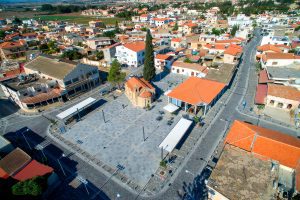
Panagia Angeloktisti Church stands in the village of Kiti, roughly 12 kilometers southwest of Larnaca. The church dates to the 11th century and was built over the ruins of a 5th century early Christian basilica. The name Angeloktisti translates to "Built by Angels" in Greek. The original apse of the basilica survived along with one of the finest pieces of Byzantine art on the island, a rare 6th century mosaic of the Virgin Mary and Child between the Archangels Michael and Gabriel. This stone church preserves multiple layers of Cyprus's religious history, from early Christian times through Byzantine and Frankish periods. The building serves as an active place of worship while housing artistic treasures that connect directly to the Byzantine…

Read more
Cyprus Wine Museum Erimi

Cyprus Wine Museum Erimi

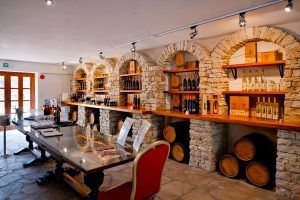
The Cyprus Wine Museum sits at the most important historical crossroads in Cyprus. The location connects the road between ancient Kourion and Kolossi Castle, the old Limassol to Paphos route, and the roads leading to the wine villages in the Troodos Mountains. Erimi village itself has produced wine for over 5,500 years. The prehistoric settlement of Sotira lies nearby, where archaeologists discovered the oldest grape seed remains on the island. Kolossi Castle stands just a short distance away, the medieval headquarters of the Knights Hospitaller who gave Commandaria wine its name. Historical Background Composer Anastasia Guy founded the museum in 2004 after years of planning. The building belonged to her family for generations and originally functioned as a traditional Cypriot…

Read more
Cyprus Police Museum (Nicosia)

Cyprus Police Museum (Nicosia)

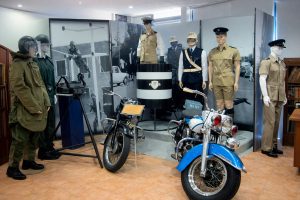
The Cyprus Police Museum chronicles law enforcement history in Cyprus from British colonial times through independence to the present day. The British Chief of Police, W.C.C. King, founded the museum in 1933 during the colonial period. The museum documented criminal methods and police responses during a period when Cyprus was transitioning from traditional village life to a more modern urban society. The facility displays uniforms, weapons, equipment, police vehicles, and documents that trace the development of policing on the island. The museum also houses important materials from World War II and the 1955 to 1959 National Liberation Struggle against British rule. Evolution to a Historical Institution Over decades, the museum's scope expanded beyond purely criminal matters. While crime-related exhibits remain…

Read more
Cyprus Postal Museum

Cyprus Postal Museum

The Cyprus Postal Museum houses the island's complete postal history through stamps, postmarks, and philatelic materials that document communication systems from the 15th century to today. The museum opened in 1981 and occupies the ground floor of a two-story mansion located within Nicosia's Venetian walls. The building sits in the Laiki Geitonia area at 3B Agiou Savva Street, near the historic churches of Trypiotis and Agios Savvas. The location places visitors in the heart of the old city, where postal services have connected Cyprus to the wider world for centuries. Historical Background The museum was established specifically to preserve and display the extensive collection of the Cyprus Post Office. Materials trace postal communications back to the Venetian period of the…

Read more
Akamas Peninsula Microclimate

Akamas Peninsula Microclimate

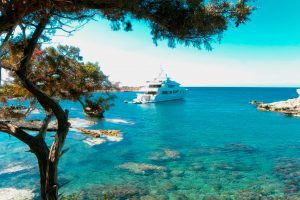
Akamas Peninsula Microclimate is defined by a unique blend of coastal and upland conditions, fostering rare ecological niches with exceptional biodiversity on Cyprus's northwest tip. This microclimate combines Mediterranean seaside warmth with cooler, moister hill zones, creating diverse habitats from sandy beaches to rocky gorges. It supports over 600 plant species and unique wildlife, making Akamas a natural treasure that highlights how small-scale climate variations can drive ecological richness on an island. A Distinctive Blend of Coast and Upland The Akamas Peninsula's microclimate arises from its geography - a rugged 230-square-kilometer area where low coastal plains meet uplands rising to 600 meters at peaks like Smigies. Coastal zones experience typical Mediterranean patterns: hot summers (30-35°C) with sea breezes keeping humidity…

Read more
Cyprus Railway Museum

Cyprus Railway Museum

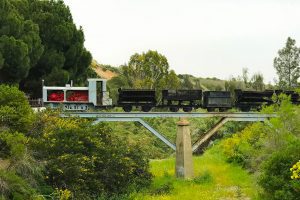
The museum occupies the original Evrychou railway station, a sandstone building constructed in 1906 in the foothills of the Troodos Mountains. The station operated as the western terminus of the Cyprus Government Railway from June 14, 1915, until December 31, 1931, when the final five miles of the railway were abandoned due to financial losses. After the railway closed completely in 1951, the building served various purposes, first as a health center and later as a forest workers' dormitory. EOKA fighters damaged and burned the building during their campaign against British rule, as the railway represented colonial infrastructure. The Department of Antiquities restored the station between 2003 and 2012, with new tracks laid in 2010 to 2012 in a Y-shape…

Read more
Salamis Necropolis Royal Tombs

Salamis Necropolis Royal Tombs

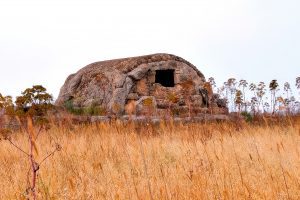
The necropolis consists of two distinct burial areas that reflect ancient social hierarchy. The Royal Tombs, sometimes called the Tombs of the Kings, hold nine massive built chamber tombs where nobility and wealthy elites were buried with spectacular ceremony. These tombs feature long dromos passages, monumental entrances called propylaea, and burial chambers constructed from enormous limestone blocks. About 400 meters away sits the Cellarka cemetery, a network of over 100 smaller rock-cut chamber tombs carved directly into hard limestone. These served the general population of Salamis from the 7th through the 4th centuries BCE. The name Cellarka comes from the Greek word for cells, describing how closely the tombs cluster together. Historical Background According to Greek legend, Teucer founded Salamis…

Read more
Archbishop Palace Nicosia

Archbishop Palace Nicosia

The Archbishop's Palace in Nicosia serves as the official headquarters of the Orthodox Church of Cyprus and the residence of the Archbishop. The Archbishop's Palace functions as both the administrative center of the Cypriot Orthodox Church and a major cultural complex. The building houses the offices of the archdiocese, the residence of the Archbishop of Nova Justiniana and All Cyprus, the Byzantine Museum with over 200 icons spanning 1,000 years, the Library of the Archbishopric, and an art gallery displaying European paintings from the 15th to 19th centuries. The palace stands adjacent to the Old Archbishop's Palace, which now contains the Folk Art Museum and the EOKA Struggle Museum. The complex represents the enduring power and influence of the Orthodox…

Read more