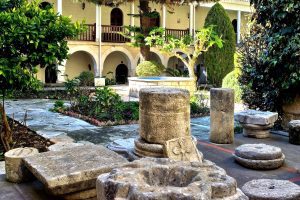
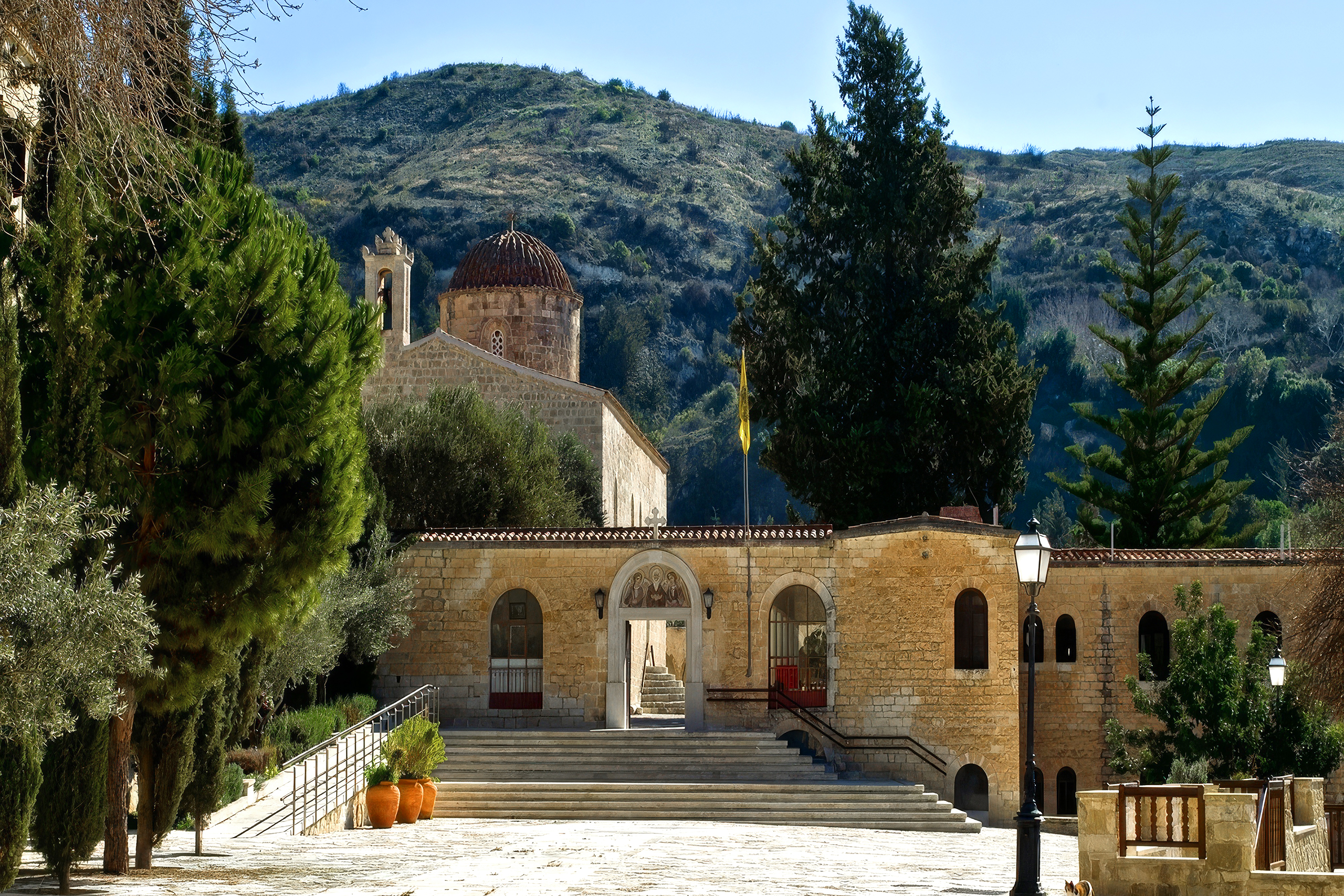
Saint Neophytos Monastery is one of the most historically significant monastic sites in Cyprus. Located on a hillside near the village of Tala, the monastery is closely connected to the life and writings of Neophytos, a medieval Cypriot monk, writer, and chronicler who spent much of his life in isolation inside a rock-cut cave.
Born in 1134 in the mountain village of Kato Drys near Lefkara, Neophytos came from a farming family and was one of eight children. He later became known for his extensive writings on politics, society, natural disasters, and life in medieval Cyprus. Although he chose a secluded lifestyle, his manuscripts became some of the most valuable historical sources from the Byzantine and early Frankish periods on the island.
Historical Background
Neophytos grew up in modest conditions and reportedly learned to read and write only after entering monastic life. Historical accounts state that when his family arranged a marriage for him, he left home and joined the Monastery of Saint John Chrysostomos in northern Cyprus. There, he worked as an assistant sacristan while continuing his studies.
Despite living in a monastery, Neophytos preferred isolation and repeatedly sought permission to live as a hermit. In 1158, he traveled to Jerusalem and visited monasteries and historical sites in the region before returning to Cyprus.
After attempting to travel to Mount Latmos in Asia Minor, where hermits were known to live, he was reportedly detained at the port of Paphos and lost the money intended for the journey. Unable to continue, he remained in Cyprus and eventually discovered a small cave on a steep hillside near Tala in June 1159. That cave became the center of his life and later the foundation of the monastery complex.
Building a Life Inside Rock
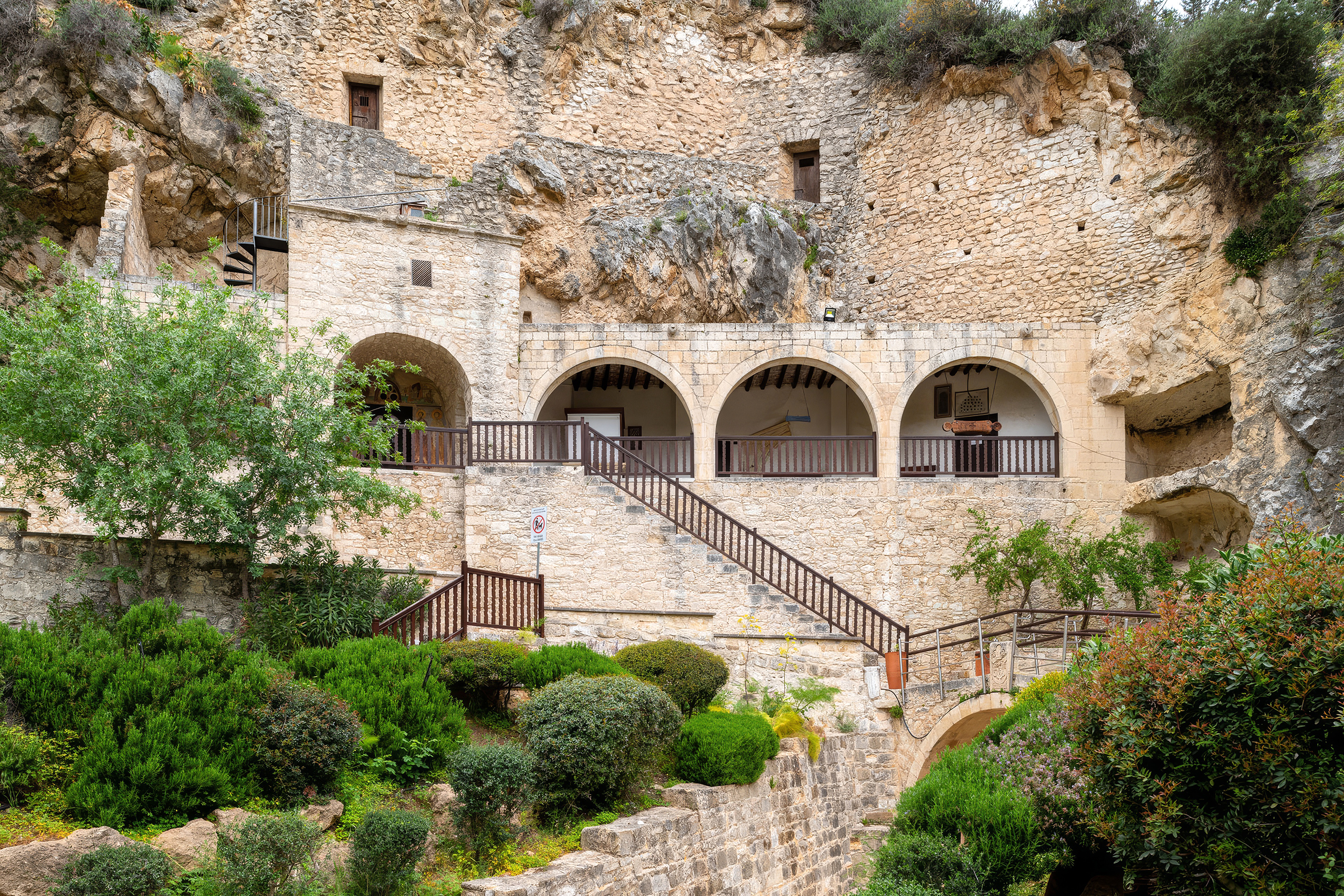
When Neophytos first occupied the cave, it was a small natural opening in the hillside. Over time, he expanded it by carving separate chambers directly into the rock. These included a living area, a chapel dedicated to the Holy Cross, and an additional prayer space. He also carved a tomb for himself inside the cave decades before his death.
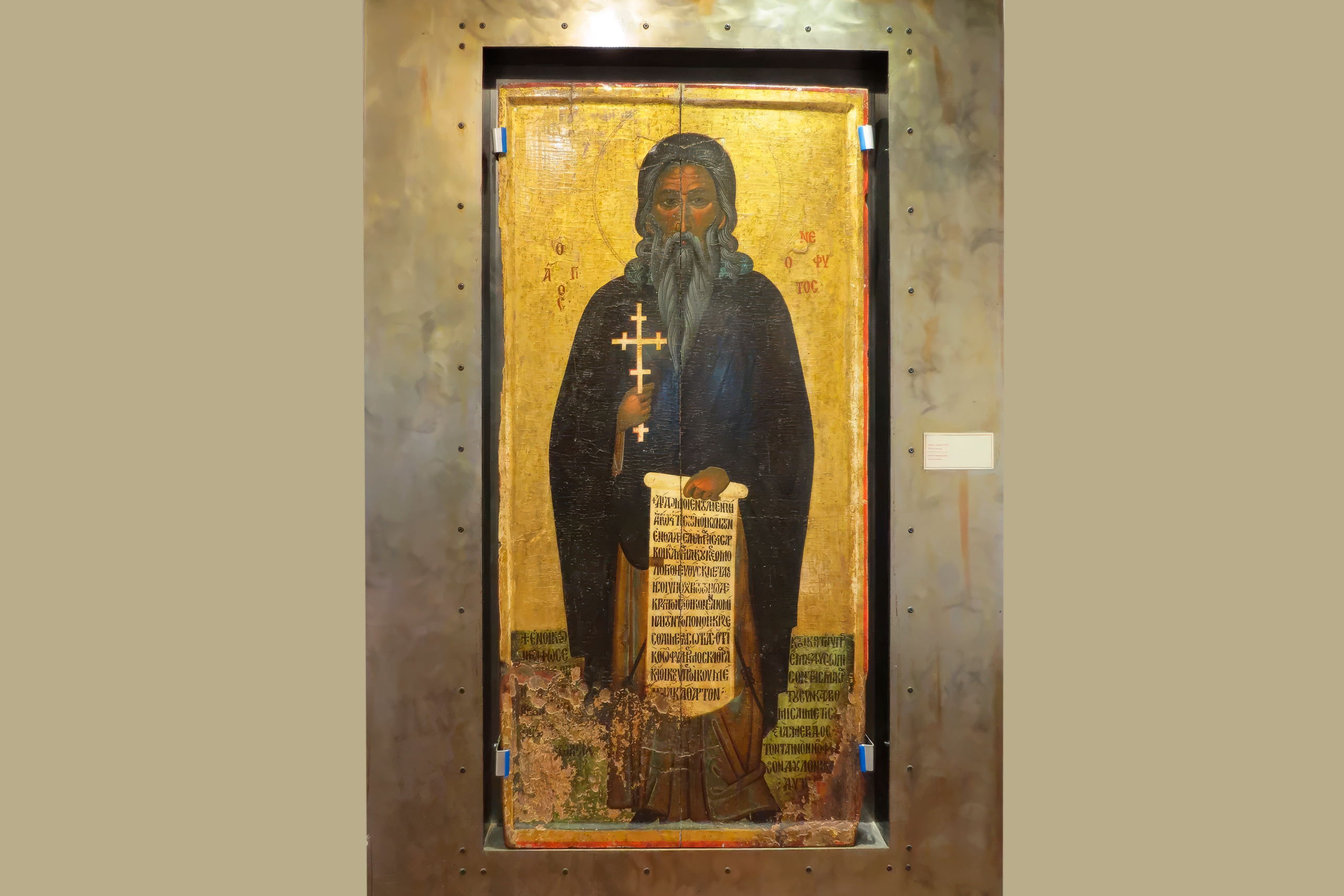
For approximately eleven years, Neophytos lived in near-complete isolation. Eventually, local residents learned about his presence and began visiting the cave, bringing food and supplies. By 1170, his reputation had spread widely enough that Basil Kinnamos, the Bishop of Paphos, visited him personally and later instructed him to accept disciples. A small monastic community gradually formed around the cave complex.
Notable Historical Details
Several details connected to Neophytos and the monastery stand out in the historical record. In 1183, after more than two decades in the cave, Neophytos commissioned a painter from Constantinople named Theodore Apsevdis to decorate the walls with frescoes.
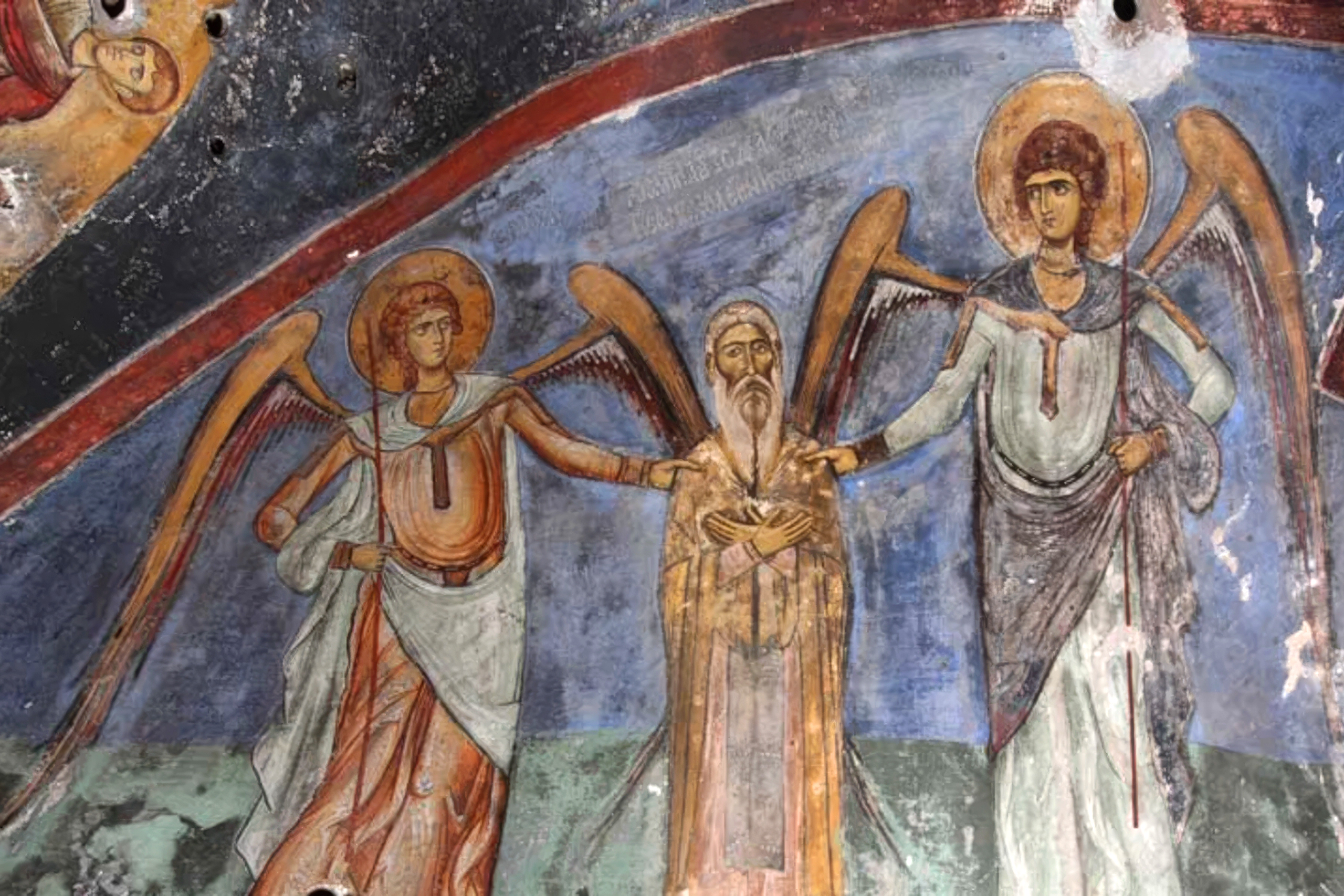
Apsevdis left an inscription confirming the date of the work, making him one of the few Byzantine painters whose identity is historically documented. The frescoes remain among the finest surviving examples of 12th-century Byzantine art in Cyprus. Expensive materials such as lapis lazuli, gold leaf, and silver leaf were used in the paintings.
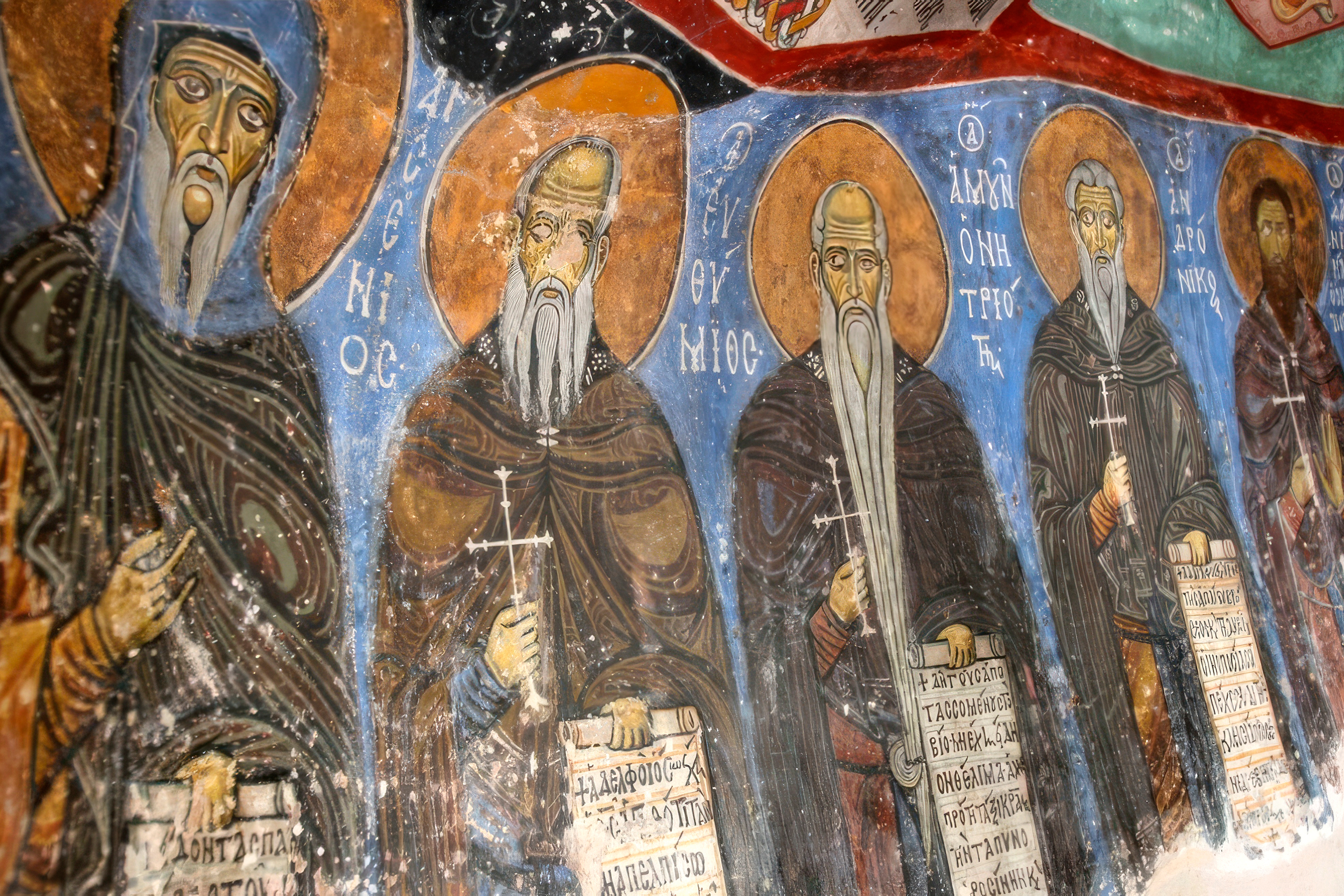
Neophytos himself appears in two frescoes, including one depicting him between the archangels Michael and Gabriel, an uncommon composition in Byzantine art. As the number of visitors increased, Neophytos created a second cave above the original one in 1197. He called this upper chamber the New Zion. From there, he supervised the monastery while maintaining a degree of separation from the growing community.
His written regulations for the monastery, known as the Typiki Diathiki, specified that the community should remain small, with no more than 15 to 18 monks residing there at one time. Local folklore also developed around his tomb. One traditional saying in Cypriot Greek refers to the grave supposedly fitting anyone placed inside it, becoming a metaphor for people who adapt themselves too easily to others.
The Writer From the Cave
Neophytos produced at least 16 written works during his lifetime, nine of which survive today in libraries across Europe. These texts include theological commentary, biographies of historical religious figures, monastic regulations, and autobiographical writings.
One of his most historically important works is the chronicle On the Calamities That Befell Cyprus, written in 1196. The text provides one of the few surviving Greek-language accounts of the conquest of Cyprus by Richard I of England in 1191.
Unlike many Western European accounts written in Latin or French, Neophytos described the economic hardship, political instability, and suffering experienced by ordinary Cypriots during periods of foreign rule. He criticized both Byzantine and later Latin rulers, presenting a perspective rarely preserved in medieval Cypriot history.
The Monastery After Neophytos
Neophytos died around 1214 at approximately 80 years of age and was buried in the tomb he had prepared inside the cave complex. The monastic community continued after his death, although historical records from the following centuries remain limited.
In 1503, another monk named Neophytos financed a large-scale restoration of the wall paintings. During the early 16th century, the monastery’s large three-aisled basilica was constructed. Many of its original frescoes were later damaged or destroyed between 1585 and 1611.
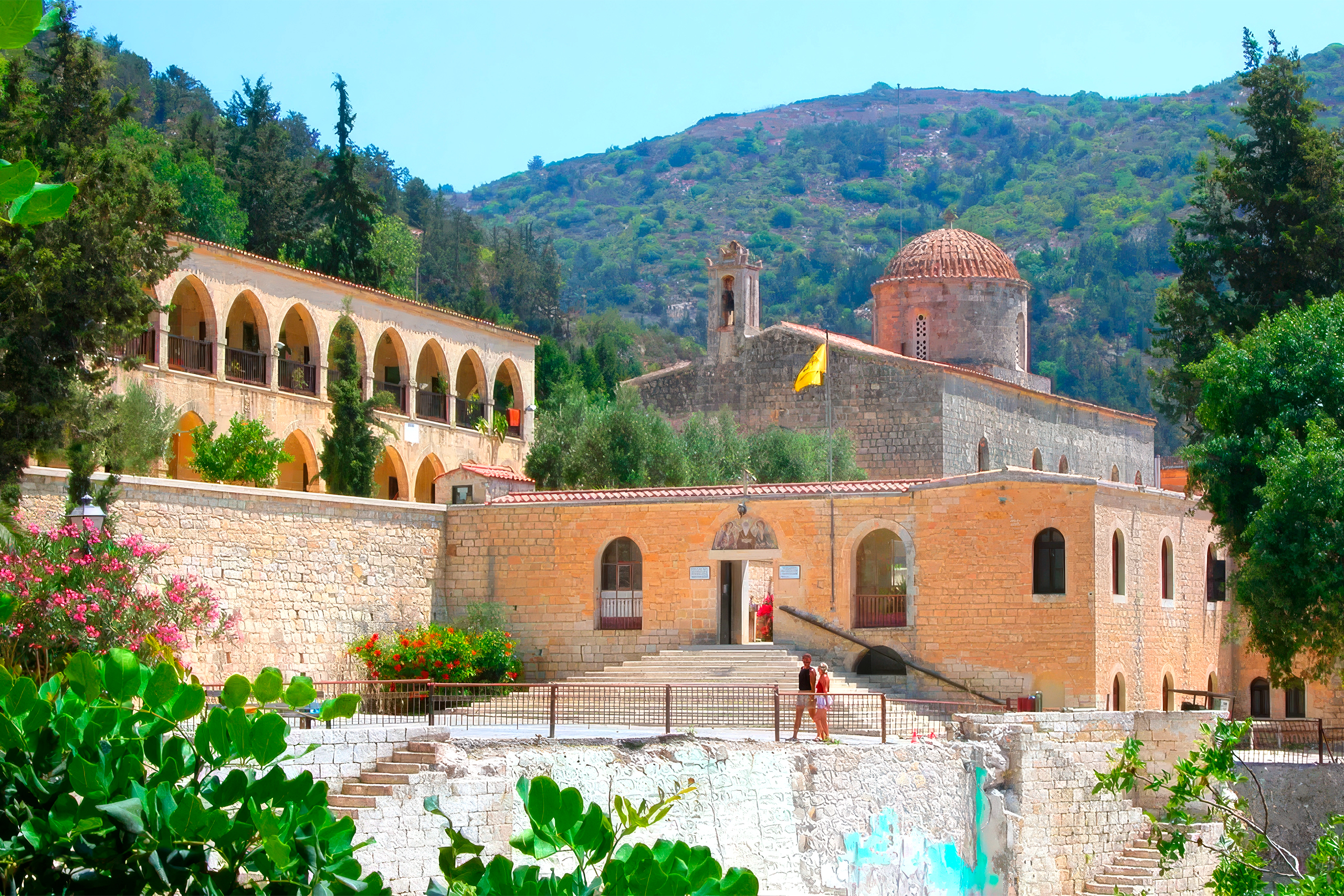
In 1631, the monastery received official recognition from the Patriarchate of Constantinople, granting it precedence among monasteries in Cyprus. During the 18th century, the remains associated with Neophytos were transferred from the cave to the main church, where they remain preserved today. The monastery continues to function as an active monastic community while also serving as an important historical and cultural landmark.
A Visit Worth Making
The monastery is located around 10 kilometers from Paphos and can be reached by road through the hills near Tala village. The surrounding landscape includes forested slopes, gardens, and scenic walking areas overlooking the coastline.
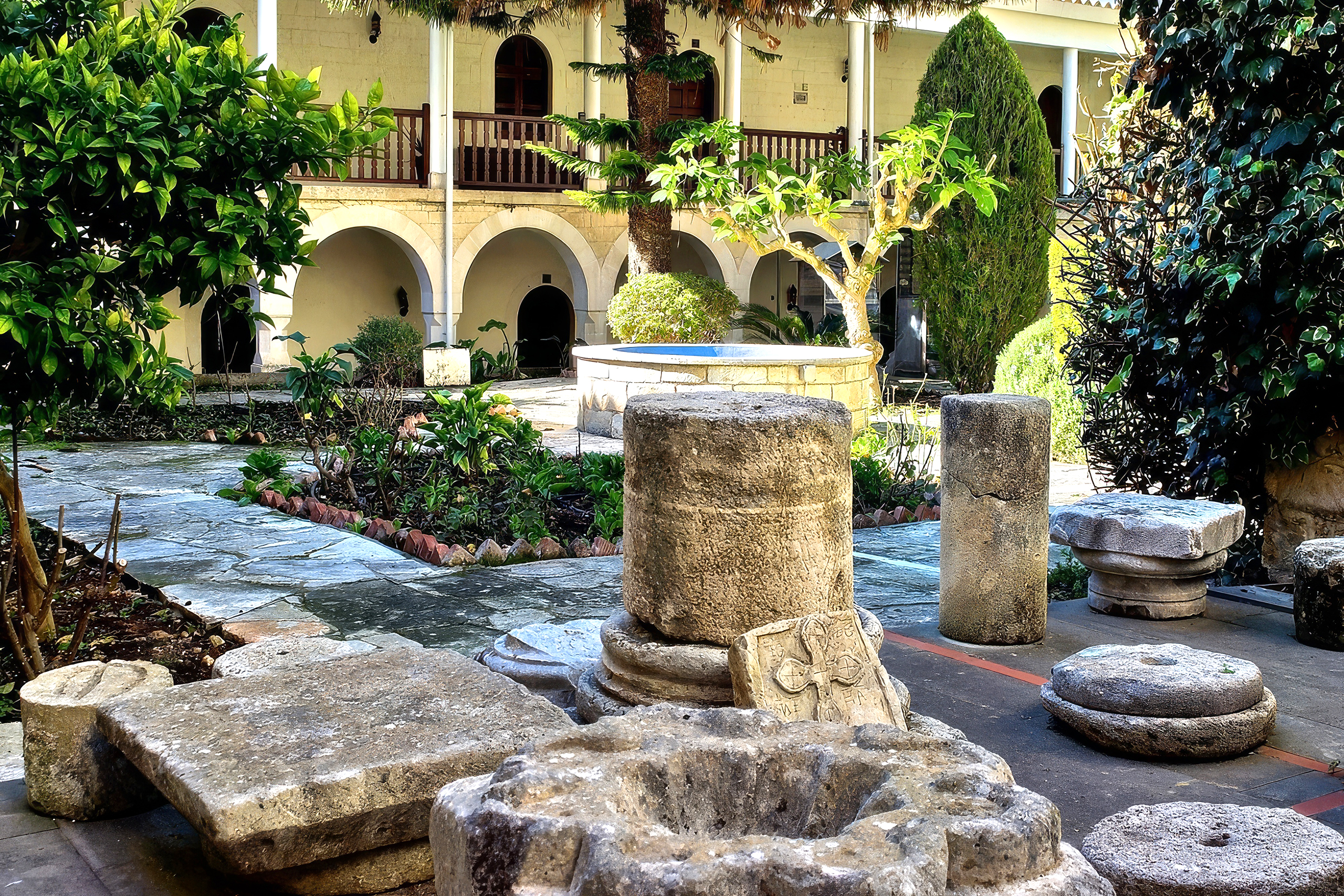
Parking is available near the entrance for both private vehicles and buses. The main monastery grounds are wheelchair accessible, although the Enkleistra cave complex and museum contain steep steps that limit accessibility. Entry to the monastery grounds is generally free, while a small admission fee usually applies for access to the museum and cave areas. Opening hours vary seasonally, with separate schedules for summer and winter months.
Photography is permitted outdoors but restricted inside the caves, church, and museum in order to protect fragile frescoes and historical artwork from light exposure. Informational leaflets are available in multiple languages, and visitors can access audio tours explaining the site’s historical background. The museum contains manuscripts, icons, and historical artifacts connected to the monastery’s long history and the broader development of Byzantine culture in Cyprus. The surrounding valley and mountain setting continue to attract visitors interested in history, architecture, art, and cultural tourism.
Historical and Cultural Legacy
Saint Neophytos Monastery remains one of the most important examples of medieval monastic architecture and Byzantine art in Cyprus. The rock-cut caves created by Neophytos preserve valuable frescoes, inscriptions, and architectural features dating back to the 12th century.
The writings of Neophytos also provide rare firsthand insight into political conditions, foreign rule, and everyday life in medieval Cyprus. His chronicles remain important resources for historians studying the Byzantine and Crusader periods in the eastern Mediterranean.
Today, the monastery functions both as a living monastic site and as a major cultural heritage destination. Its combination of historical manuscripts, Byzantine artwork, cave architecture, and mountain scenery makes it one of the most distinctive historical landmarks in Cyprus.