Lazarus of Bethany remains one of the most recognized figures connected to early Christian literature, largely because of the New Testament narrative associated with him. While many people know the story connected to his reported restoration to life, far fewer are familiar with the traditions that later linked him to Cyprus and the city of Larnaca. Over time, these accounts became deeply embedded in the island’s religious heritage, architecture, and local identity.
According to Eastern Orthodox traditions and Byzantine-era accounts, Lazarus later traveled to Cyprus, where he reportedly settled in ancient Kition, modern-day Larnaca. Historical narratives connected him to the early development of Christian communities on the island, and his name eventually became associated with one of the most important Byzantine churches in Cyprus.
Historical Background
In religious literature, Lazarus is identified as a close associate of Jesus from Bethany. Biblical narratives describe a significant event where Lazarus was restored to life, an account that created considerable social and political tension in Jerusalem at the time. Historical interpretations suggest that this event forced Lazarus to leave Judea to seek safety elsewhere, eventually leading him to the shores of Cyprus.
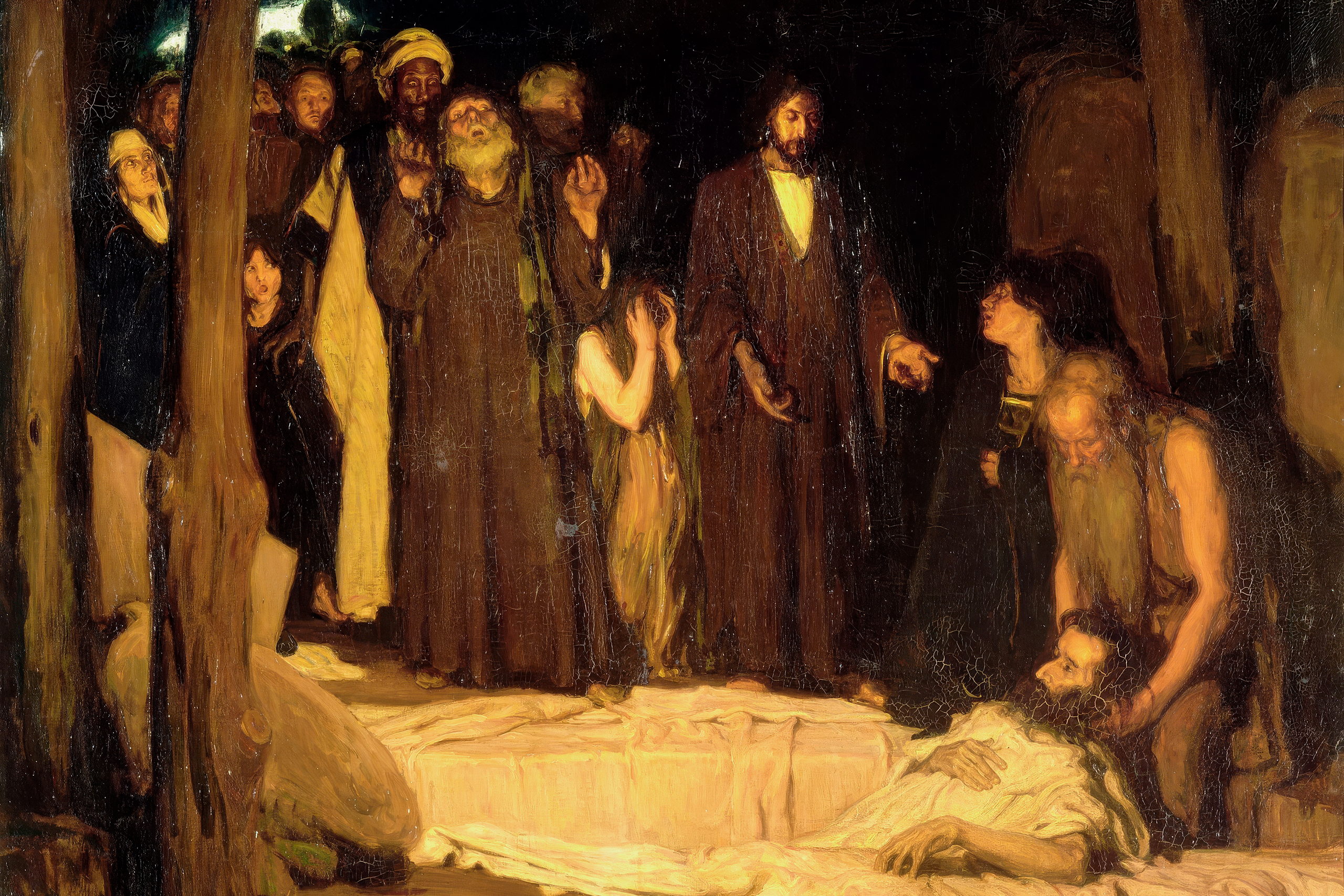
According to Eastern Orthodox tradition, Lazarus and his siblings fled Judea to avoid this danger. The Western tradition tells a different version of events, where the three were placed in a boat without sails or oars and drifted to the coast of Provence in France. The Eastern tradition, however, places Lazarus on Cyprus. He arrived at the city of Kition, which is present-day Larnaca, and settled there. When the Apostles Paul and Barnabas visited Cyprus, they ordained him as the first Bishop of Kition. This made Lazarus one of the earliest bishops in all of Christianity.
What Tradition Says About His Years on Cyprus
“Historical records from the Byzantine era suggest that Lazarus spent approximately 30 years in Larnaca. During this period, he is credited with serving as the first Bishop of Kition, appointed during the travels of Paul and Barnabas. This era marked the beginning of Cyprus’s transition into a significant center for early Christian thought and administration in the Mediterranean.”
One tradition says that the Virgin Mary herself visited Lazarus on Cyprus, accompanied by John the Evangelist. According to this account, she brought him his bishop’s vestments, which she had woven with her own hands. Another tradition holds that Lazarus invited the Virgin Mary to the island, and that a storm blew her ship off course to Mount Athos in Greece before she eventually reached Cyprus. Whether or not these stories are historically accurate, they tell us how central Lazarus was to the early Christian identity of the island.
Facts That Stand Out
Several details about Lazarus and his connection to Larnaca are worth noting. After his death, Lazarus was buried in Larnaca, but the exact location of his tomb was lost during the period of Arab rule, which began in 649 AD. It was not until 890 that a marble sarcophagus was found bearing the inscription: “Lazarus, four days dead, friend of Christ.”
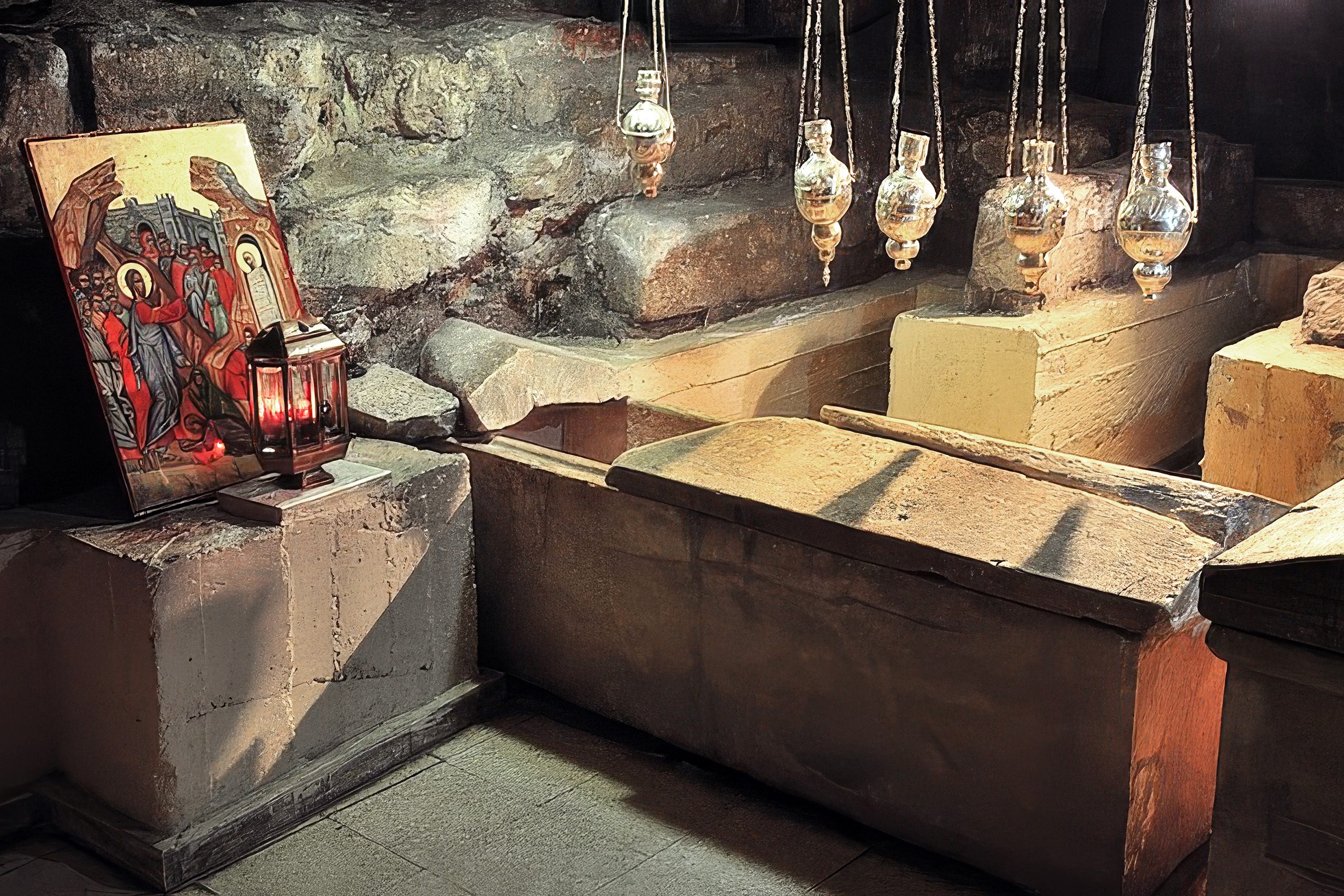
In 898, the Byzantine Emperor Leo VI had the remains transferred to Constantinople. In return, he ordered the construction of a church over the tomb site. That church still stands today. After the Fourth Crusade sacked Constantinople in 1204, the relics were taken to Marseille, where they were eventually lost. However, in November 1972, during renovation work at the church in Larnaca, a marble sarcophagus was discovered under the altar containing human remains. These were identified as part of the saint’s relics, which means not everything had been moved to Constantinople after all. In 2012, the Church of Cyprus gave a portion of these relics to the Russian Orthodox Church, and they were brought to a monastery in Moscow.
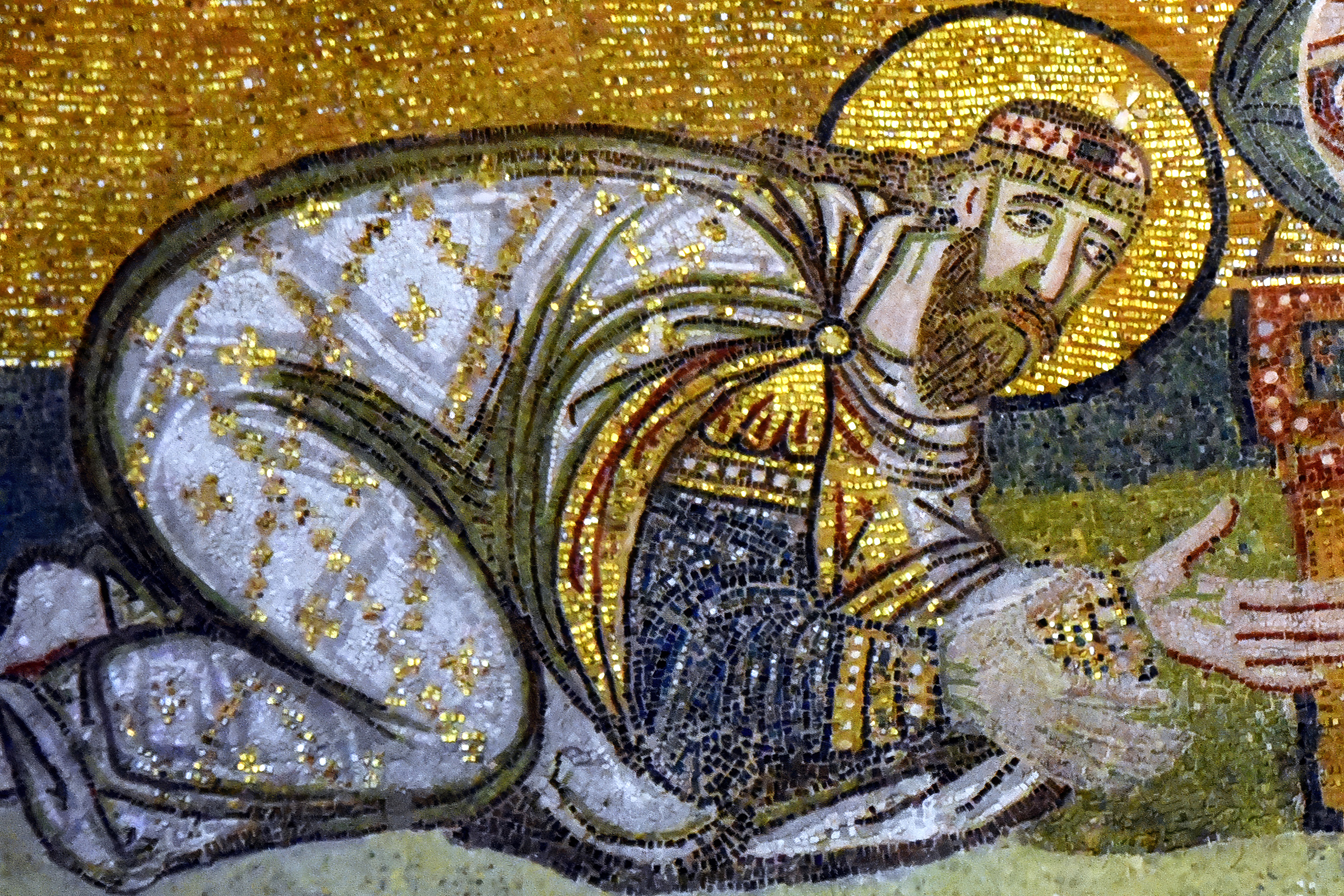
One unusual detail recorded in Orthodox sources is that Lazarus reportedly never smiled during his 30 years on Cyprus, troubled by what he had seen of the afterlife during his four days in the tomb. There is only one recorded exception: he once saw a man stealing a clay pot and smiled, saying, “the clay steals the clay.”
The Church and What It Holds
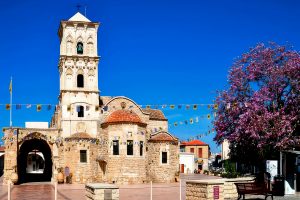
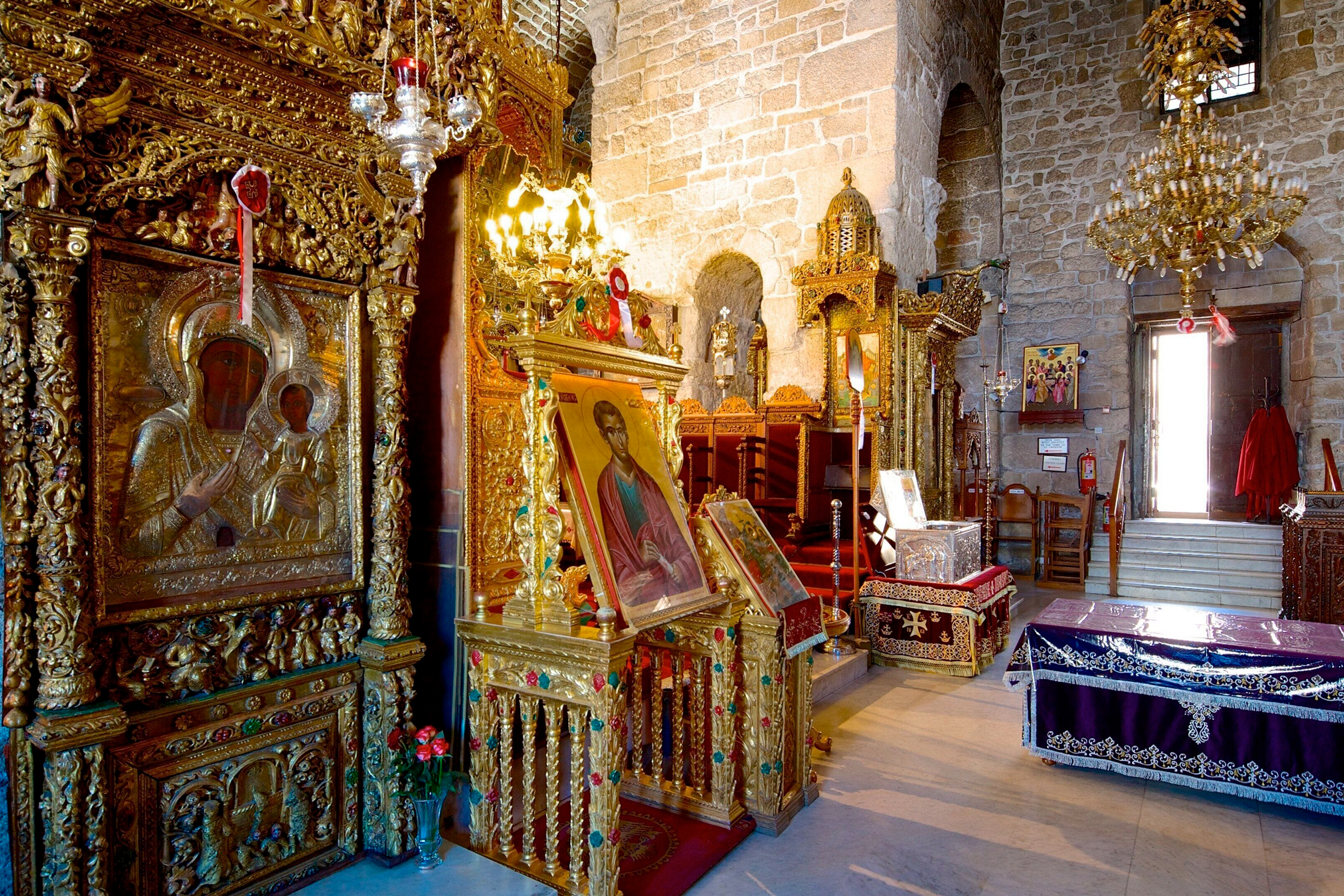
The Church of Saint Lazarus was built by Emperor Leo VI in the late 9th century, directly over the site where the tomb was found. It is one of only three surviving Byzantine churches on the island. The building measures 31.5 by 14.5 metres and is constructed from limestone blocks about one metre thick. Originally it had three domes, but these were destroyed in the early years of Ottoman rule after 1571, when the church was converted into a mosque. In 1589, the Ottomans sold it back to the Orthodox Church, and for the next two centuries it served both Orthodox and Catholic congregations. The porch still carries traces of inscriptions in Greek, Latin, and French from that period.
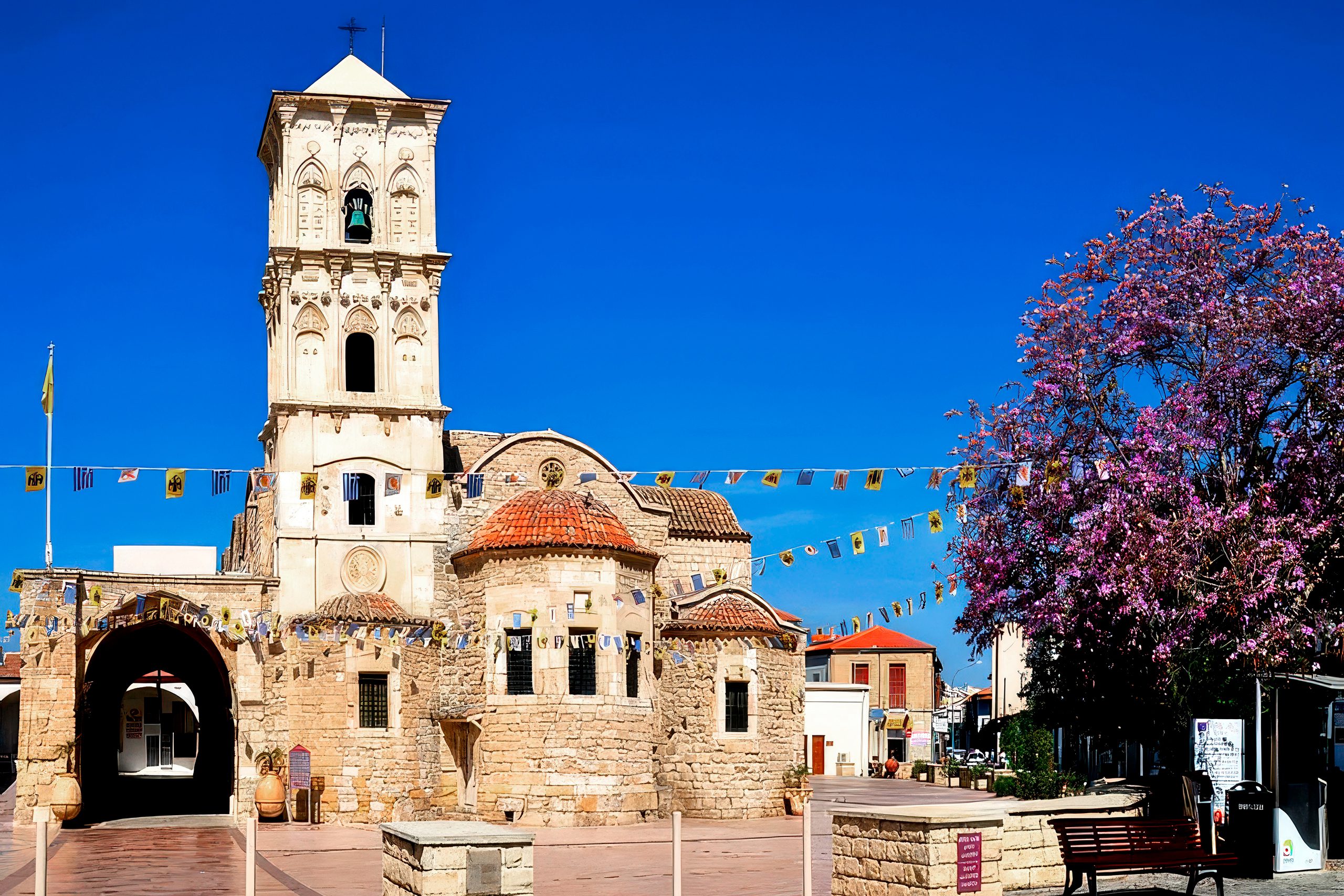
The most striking feature inside the church is the iconostasis, a carved wooden screen that separates the nave from the sanctuary. It was carved between 1773 and 1782 by a craftsman named Chatzisavvas Taliadorou, and was covered in gold between 1793 and 1797. It remains one of the finest examples of baroque woodcarving in Cyprus. The bell tower was rebuilt in 1857 in a Latinate style, after Ottoman authorities allowed Cypriot churches to have bell towers again.
Lazarus and the Salt Lake
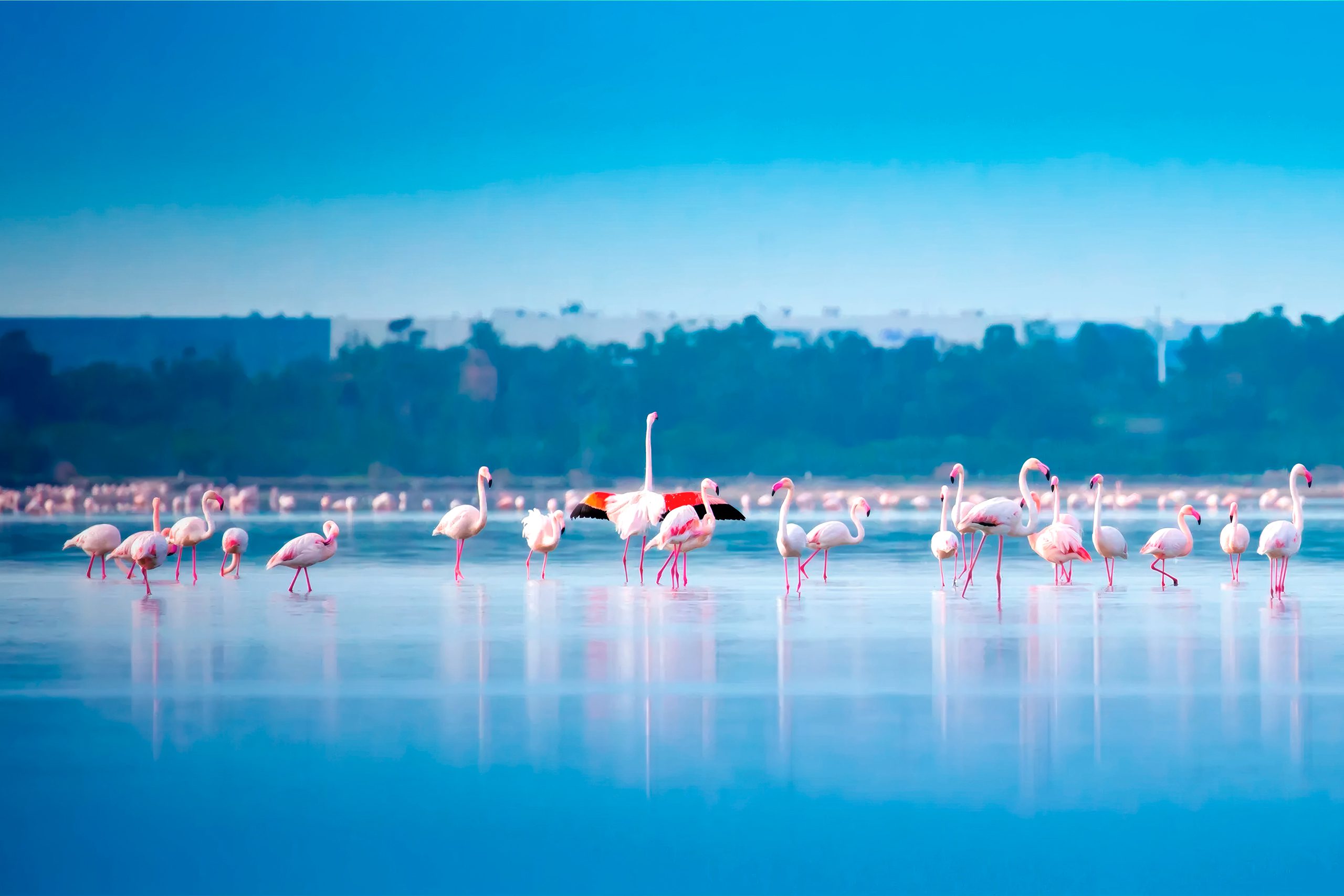
One of the more unusual legends tied to Saint Lazarus concerns the Larnaca Salt Lake, a network of four lakes just outside the city. A well-known local folk tale links Lazarus to the formation of the Larnaca Salt Lake. One version of the legend suggests the lake was formed following a dispute over a vineyard, while another views the salt resource as a historical benefit attributed to his presence. Geologically, the lake’s salinity is due to seawater seepage, but these stories illustrate how deeply the figure of Lazarus is woven into the local folklore and geography.
Lazarus Saturday and the Living Tradition
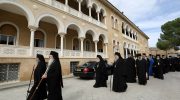
Every year, eight days before Orthodox Easter, Larnaca holds a procession in honor of Saint Lazarus. The icon of the saint is carried through the streets of the city, accompanied by priests, dignitaries, and thousands of residents. This tradition is unique to Larnaca and has continued for centuries.
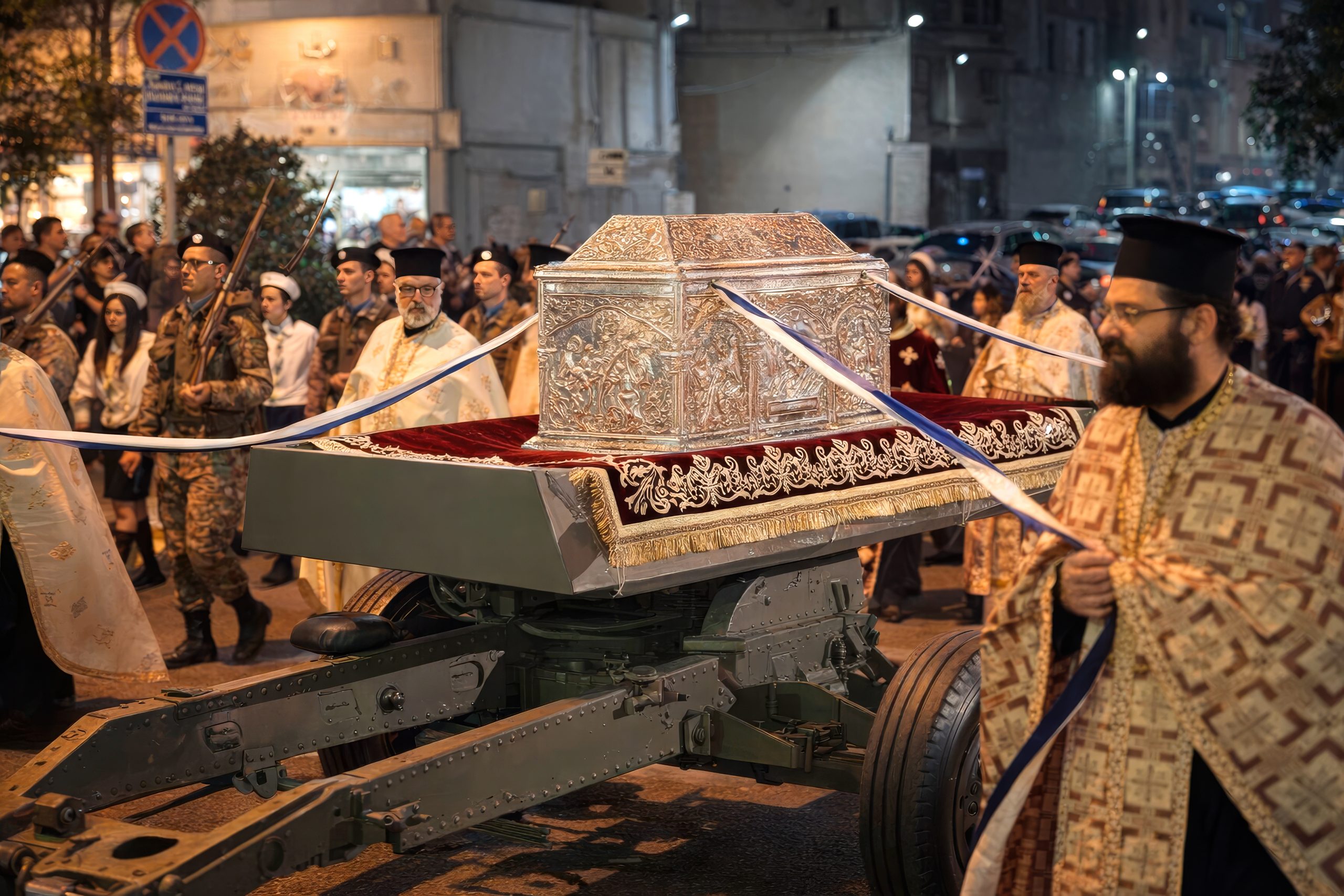
In older versions of the custom, a young boy was chosen to play the role of Lazarus. He would be laid on a flower-covered rug, decorated with wreaths of daisies and poppies, and when the gospel was read aloud, he would stand up to represent the resurrection. The people would then sprinkle him with rose petals and distribute kolyva, which is boiled wheat, a food associated with remembrance of the dead in Orthodox tradition.
A Visit Worth Making
The historic landmark building is free to enter and open year round. It sits in its own square in the center of Larnaca, making it easy to find. The Byzantine Museum, located right next to the structure, holds medieval art, records, and artifacts connected to this figure and to the administrative history of the area. Both can be visited in a single morning.
Why Lazarus Still Matters to Cyprus
“This narrative remains a notable element in the cultural history of Larnaca. The city’s name itself is derived from the Greek word for ‘sarcophagus’ or ‘tomb’ (larnax), highlighting the historical importance of the 9th-century burial site discovered there. This chronicle connects Cyprus to the broader geopolitical and administrative shifts of the early Mediterranean, and the enduring architecture of this ancient stone monument serves as a primary landmark of the city’s medieval past.”