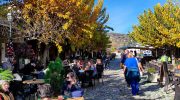
Traditionally, mukhtars, alongside village priests, oversaw local disputes and liaised with state officials, in a role akin to tribal elders. The position of mukhtar was introduced by the Turks, who had held Cyprus since 1570. The term mukhtar, derived from the Arabic word meaning “chosen” or “selected,” referred to the head of a village or neighborhood who served as the liaison between residents and higher levels of government.
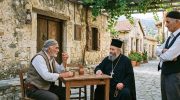
This Ottoman administrative system formalized authority structures that had existed informally in Cyprus villages for centuries, creating an official role for community leadership that persisted through British rule, independence, and into the modern era.
How Mukhtars Were Selected and Qualified
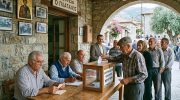
At first mukhtars were appointed from above by Ottoman authorities, but later residents were allowed to choose the headman and his assistants for a year. At the same time, the religious affiliation of a group of residents was certainly taken into account. Under British colonial rule, the role became more regulated, with set criteria for selection, including an age range of 25 to 60. Mukhtars had to be literate, wealthy enough to host visiting officials, and free of serious criminal convictions.
All religious leaders, teachers, doctors or anyone who is a Government employee or member of any Municipal or Administrative Council in Cyprus cannot be elected as a Mukhtari or Aza. The mukhtar usually had the assistance of two to four villager elders known as Azades or Azas. These assistants helped with administrative tasks and provided counsel on community matters.
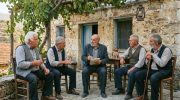
Usually the most respected and honorable member of the community is chosen for the role. This is usually an elderly person whom everyone trusts. In one remarkable case, after the end of British rule, an Englishman was elected to the position of Mukhtari in one of the small villages. After working for many years as a pilot for Cypriot airlines, he retired and bought a house in a small village. He became so imbued with local culture that he began to take an active part in the social life and improvement of the village, earning him the trust and respect of his fellow villagers who unanimously elected him as their Mukhtari.
During the EOKA uprising, many mukhtars resigned in protest after the British sought to further limit local communities’ say in their selection. Following independence in 1960, the role was reinstated, but community councils were introduced to curtail their powers in the name of democratization. Mukhtars were appointed from above until 1979, when the first government elections were held, after which the self-government body was renamed the Village Council, and since 1999, the Community Council.
The Traditional Duties and Responsibilities
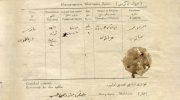
The duties of the mouchtaris of those times included the organization of education, religion, medicine, as well as full control of the tax system, law and order and the infrastructure of the area. Some of his duties included managing postal services, roads, keeping public order, signing petitions, issuing licenses and certificates, certifying photos for passports, assisting with the collection of taxes, reporting serious crimes or accidents and keeping records of births and deaths.
From this moment on in 1960, the mukhtars no longer keep records of the civil status of the population including marital status, information about children, and religious affiliation. The mukhtar’s duties included registering life events such as births, marriages, and deaths, and notarizing documents. The mukhtar was, among other things, responsible for collecting taxes and ensuring that law and order was prevailing in his village.

Today mukhtars and village councils also deal with environmental and construction issues. Mukhtar Christodoula Leonidou said that she is very concerned about the ecology of her area and from time to time, not unsuccessfully, raises this issue in the office of the mayor of the city. The mukhtaris also acts as an intermediary between his community and the municipality and the state, playing an important public role and representing the interests of his community at the regional level.
His responsibilities include organizing public meetings to discuss all the pressing problems and demands of local residents, petitioning the authorities to improve the infrastructure of the neighborhood and the life of the community such as repairing roads, improving parks and public spaces, and improving transport and public services, helping residents to access social services and benefits, and helping to organize holidays and festivals in their community.
How Mukhtars Functioned in Daily Life
The emblem was given to the appointed Mukhtar by the British authorities to place on his home door, to be visible to anyone who requested his services. When another Muhtar was elected after one year, he returned it in order to be given to the new appointed village leader. There is only one chair in the open-air office waiting room. There are no queues here, but you will not visit the mukhtar without making an appointment.
These are, as a rule, very responsible elderly kyrioi and kyries who enjoy enviable authority in their neighborhoods. Our mouchtaris can be contacted with any questions, the local residents proudly say. The work is in full swing even in the festive week of August when many organizations in Cyprus go on a long vacation during the celebrations of the Assumption of the Most Theotokos which takes place on August 15.

Mukhtars charge a small symbolic fee of 5 to 10 euros for their services. Prices for mukhtaris’ services are usually low and are reported upon delivery of services. We have to take payment because we work on enthusiasm without salaries, Mouchtaris Christodoula Leonidou said. Muktars are elected every 5 years and as it is not a full time post, they are expected to have alternative full time employment.
The Changing Role in Modern Cyprus

Today in Cyprus, a mukhtaris, or as it is now called in Greek kinotarchis meaning community leader, is not only a community leader but also a municipal official who acts as a notary. By the time the restructuring took effect in July 2024, the role of mukhtar had in many cases been reduced to that of a municipal employee handling notary duties. They do not receive a fixed monthly salary. Any income they earn comes from document certification, based on a fee list used by notary publics.
Critics have long charged that the role of mukhtars, sometimes derisively called local lords, is outdated. They have been accused of wielding excessive influence over real estate and other financial matters in their communities. Some reportedly earned up to 1,000 euros per month from minor services that are expected to become obsolete with digitalization. Their appointments have also been linked to political party deals.
In larger communities, many mukhtars were re-elected as deputy mayors, while in smaller villages they either continued in their role or were renamed as deputy mayors due to a lack of competitors. Nonetheless, in smaller, depopulated or remote villages in the Paphos district, a number of diligent mukhtars still perform functions (Community Council of Kathikas) other than that of notary, overseeing essential practicalities. These included repairing water pipes, securing state funds for stray cat neutering, arranging sanitation services, maintaining historical monuments, assisting elderly residents, and organizing social events.
The Enduring Role of Mukhtars in Cypriot Society
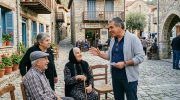
Knowing the mentality and way of life of the Cypriots, it is easy to say that the mukhtaris fit perfectly into the modern reality of the island. Cypriots value social ties and prefer to make important decisions together. They find it easier to delegate all problems and issues to the headman than to act on their own. The locals believe that strong communities are the key to stability and prosperity. Therefore, as they did hundreds of years ago, the mukhtaris continue to play an important role in the lives of Cypriots, helping to communicate their needs and wishes to the local authorities and improving the quality of life for the whole community.