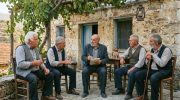
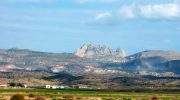
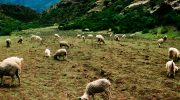
Cyprus agricultural landscape combines traditional shepherding practices with distinctive stone architecture that has defined rural life for centuries. Grazing land occupies approximately 16,369 hectares, representing 4.95% of the total land area in the Turkish-occupied part of Cyprus. These pastures support sheep and goat herding that dates back to the Neolithic period around 8000 BC, making Cyprus one of the earliest locations for domesticated livestock management.
Stone houses built from locally quarried limestone stand as physical monuments to village life and family continuity. The thick walls, small windows, and vaulted ceilings reflect adaptations to Mediterranean climate while using materials readily available from surrounding terrain. These structures remain intimately connected to the agricultural economy they supported for generations.
Shepherding Methods Adapted to Island Terrain
Traditional Cypriot sheep and goat herding operates on small to medium scales with short-range mobility. From October through June during rainy seasons, herds relied on wild plants in scrublands, hilly areas, and fallow land. In predominantly mountainous regions, especially around Lemesos and Pafos districts, goats continued year-round grazing. This pattern demonstrated remarkable adaptation to landscape variations and climate cycles.
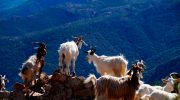
British colonial law in 1913 excluded goats from extensive upland forest areas to protect tree regeneration. Only tethered goats received permission in those zones. This restriction fundamentally altered traditional grazing patterns and concentrated herds in lowland areas. The law remained in effect for over a century, shaping modern livestock distribution.

Modern management primarily uses zero-grazing principles with total confinement for dairy production. Animals remain housed except for restricted grazing periods of 2-3 hours daily in most areas. Hand milking gave way to mechanized bucket systems powered by electricity. This intensification increased productivity but reduced the mobile shepherding lifestyle once central to rural communities.
Stone Architecture Reflected Family Needs
Traditional Cypriot houses used stone, wood, and plinth (flat brick) inherited from Roman and Byzantine architectural traditions. Locally quarried limestone formed exterior walls exceeding half a meter thickness. These massive walls provided insulation from summer heat and winter cold while creating structural strength for supporting roofs. The stone typically came from nearby quarries, making construction materials readily accessible.
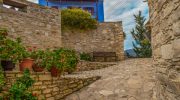
Roofs consisted of reed and olive wood, with wealthier families occasionally using oak planks. The construction required no preliminary architectural plans but always met practical family needs across multiple generations. Houses expanded organically as families grew, adding rooms and spaces as circumstances demanded.

Two main room types dominated traditional layouts. The dikhoro served as the main living space, consisting of double rooms separated by arches or arcades. The makrinari functioned as a dining room. Some houses followed elongated single-room designs called makrynari, while others featured twin rooms divided by vaulted walls that supported roof structures.
Courtyard Life Created Social Spaces
High stone fences and locked gates isolated houses from uninvited visitors and passing strangers. This privacy-focused design meant facades and courtyards remained hidden from casual onlookers. The architecture prioritized family seclusion over public display, creating distinct boundaries between private and communal life.

The iliakos provided crucial semi-open space where roofs extended 2-3 meters forward, supported by wooden beams or stone arches. This covered area protected residents from sun and rain while serving as the main social space. Hosts received guests here, offering coffee and sweets. Neighbors gathered for handicrafts while discussing village news. The warm climate and limited indoor space made these outdoor rooms essential for daily activities.
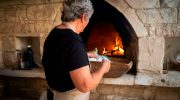
One end of the iliakos typically contained the mairko, a cooking and dishwashing area. Traditional Cypriot ovens here baked bread, kleftiko, and other oven-cooked foods. Stone-paved floors with flower beds created pleasant working environments. The courtyard (avli) handled various agricultural tasks and food preparation activities separate from the iliakos social functions.
Livestock Products Drove Rural Economy
Livestock farming contributed 45.7% of total agricultural output in Northern Cyprus by 2017, becoming a major economic driver. About 60% of the population lived in rural areas with agriculture-dependent livelihoods. Holdings remained almost universally privately owned, with medium enterprises and small-scale farmers managing animals alongside crop production.
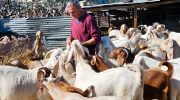
The Cyprus Fat-tailed sheep produced milk, coarse wool, and meat, typically appearing white with brown head markings. Damascus goats (also called Nubian goats) featured characteristically long ears that cooled blood during hot weather, acting as natural air conditioners. The longer the ear, the purer the breed according to local standards. Large arched Roman noses and wide-set eyes with rectangular pupils provided wide-angle vision necessary for detecting predators.

Dairy products, particularly hellim cheese (halloumi), represented sought-after food items requiring substantial milk volumes. Neighbors pooled milk to ensure decent quantities for cheese production. Processing involved moderate heating until curdling occurred, then draining in muslin. The cheese could be consumed fresh or dried for later use in traditional culinary preparations.
Village Architecture Centered on Community
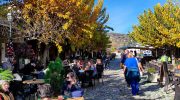
Village layouts featured a central church or mosque (sometimes both in mixed communities) surrounded by taverns and coffee shops around small squares. Narrow streets, earthen or stone-paved, radiated outward to connect houses with each other and with surrounding agricultural fields and vineyards. This centralized pattern facilitated community interaction while maintaining efficient access to farmland.
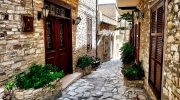
Villages like Fikardou, Kakopetria, and Pano Panagia preserved original atmospheric qualities despite modernization pressures. The oldest house in Fikardou dates approximately 500 years. These settlements demonstrate how traditional building methods created durable structures lasting centuries with proper maintenance.
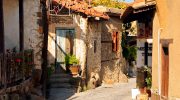
Stone staircases, small windows, and thick walls characterized the island’s historical architecture. Wooden beamed ceilings, fireplaces, and decorated interiors reflected individual family craftsmanship and resources. Some houses featured carved wooden balconies, though many lacked external ornamentation entirely.
Modernization Changed Traditional Practices
Rapid modernization from the 1970s onward brought significant changes to husbandry practices. About 95% of Europe’s shepherds disappeared since 1945 as younger generations pursued urban opportunities. Farmers now average 63 years old across Europe, indicating severe succession problems. Traditional knowledge and animal breeds risk extinction without conscious preservation efforts.
The traditional Cypriot sheep and goat herding system was well-adapted to local environment, climate, and cultural contexts. However, globalization created economic constraints that made traditional small-scale operations increasingly difficult to maintain financially. Modern market demands and industrial competition undercut traditional producers who lacked economies of scale.
Government initiatives now support rural preservation. The Housing Incentive Scheme for Mountainous, Remote and Disadvantaged Areas helps maintain traditional character in highland communities. Many abandoned family houses received thorough renovation, converting them into licensed tourist accommodations that generate income while preserving architectural heritage.
Stone Houses Attract Contemporary Interest
Restoration projects breathe new life into abandoned village properties. Cyprus Villages, established in 1987, pioneered efforts to revive rural communities by renovating traditional houses in Tochni, Kalavasos, and Psematismenos. These one and two-bedroom apartments maintain rustic character while providing modern comfort including self-catering facilities and air conditioning.
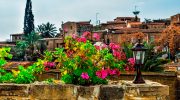
The enduring charm stems from sustainability, as natural stone and clay create eco-friendly designs. Cultural richness permeates every architectural element, from arches to embroidered textiles. Thick walls ensure natural cooling and peaceful atmospheres. Each house carries unique history, making no two properties identical experiences.
Visitors increasingly seek authentic accommodation in rural environments rather than beach resorts. Staying in traditional stone houses offers genuine connection to village life and island heritage. International buyers recognize that properties reflecting Cyprus’s architectural identity provide experiences rooted in culture and belonging beyond simple real estate investment.