Imagine brushing past a glossy-leaved tree beside a sparkling Cypriot stream – the air instantly fills with a warm, spicy, almost resinous perfume that lingers on your fingers for hours. This is the bay laurel, standing quietly yet majestically among the island’s wild places, its leaves whispering stories of gods, victors and everyday Cypriot kitchens.
A Fragrant Evergreen of the Laurel Family
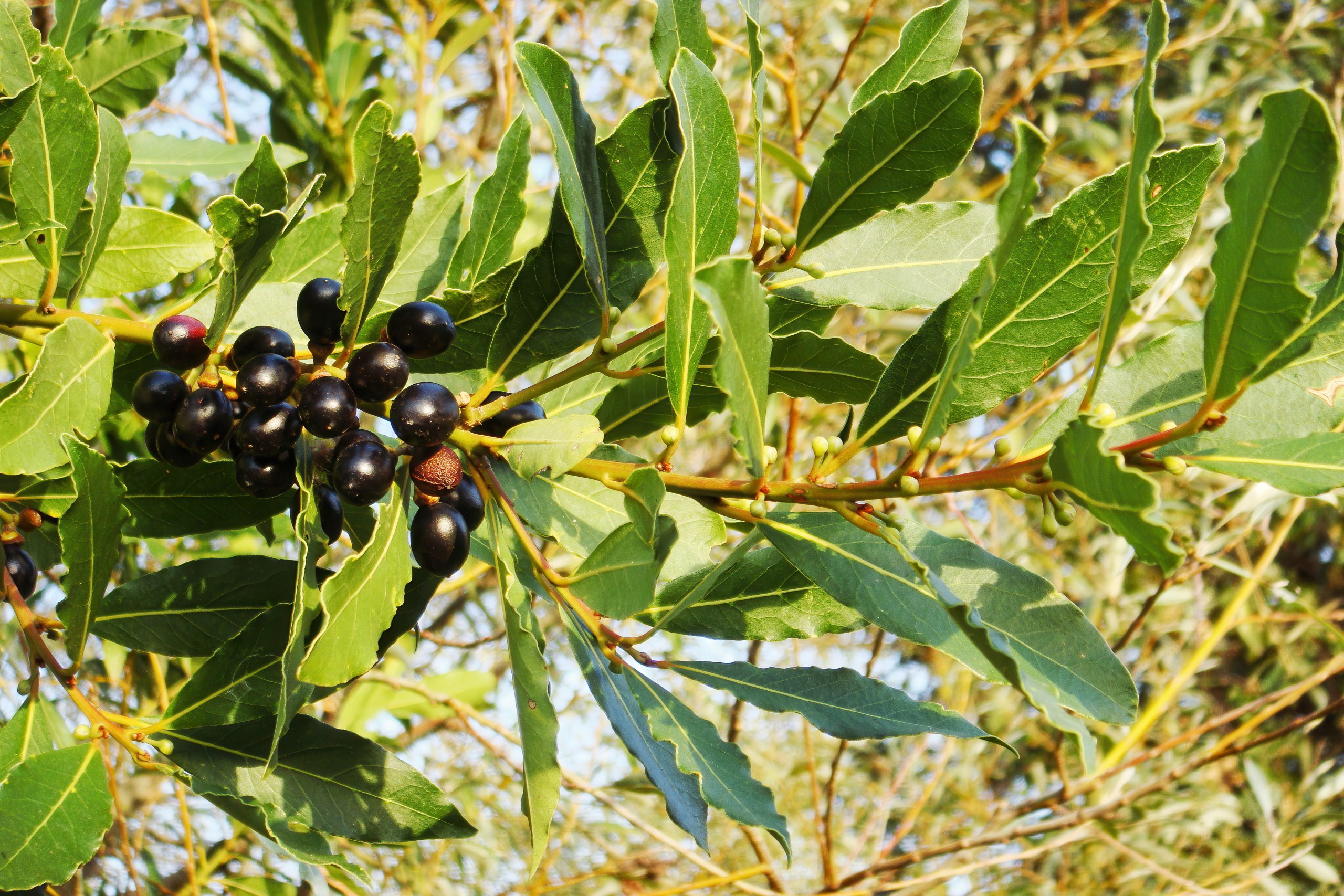
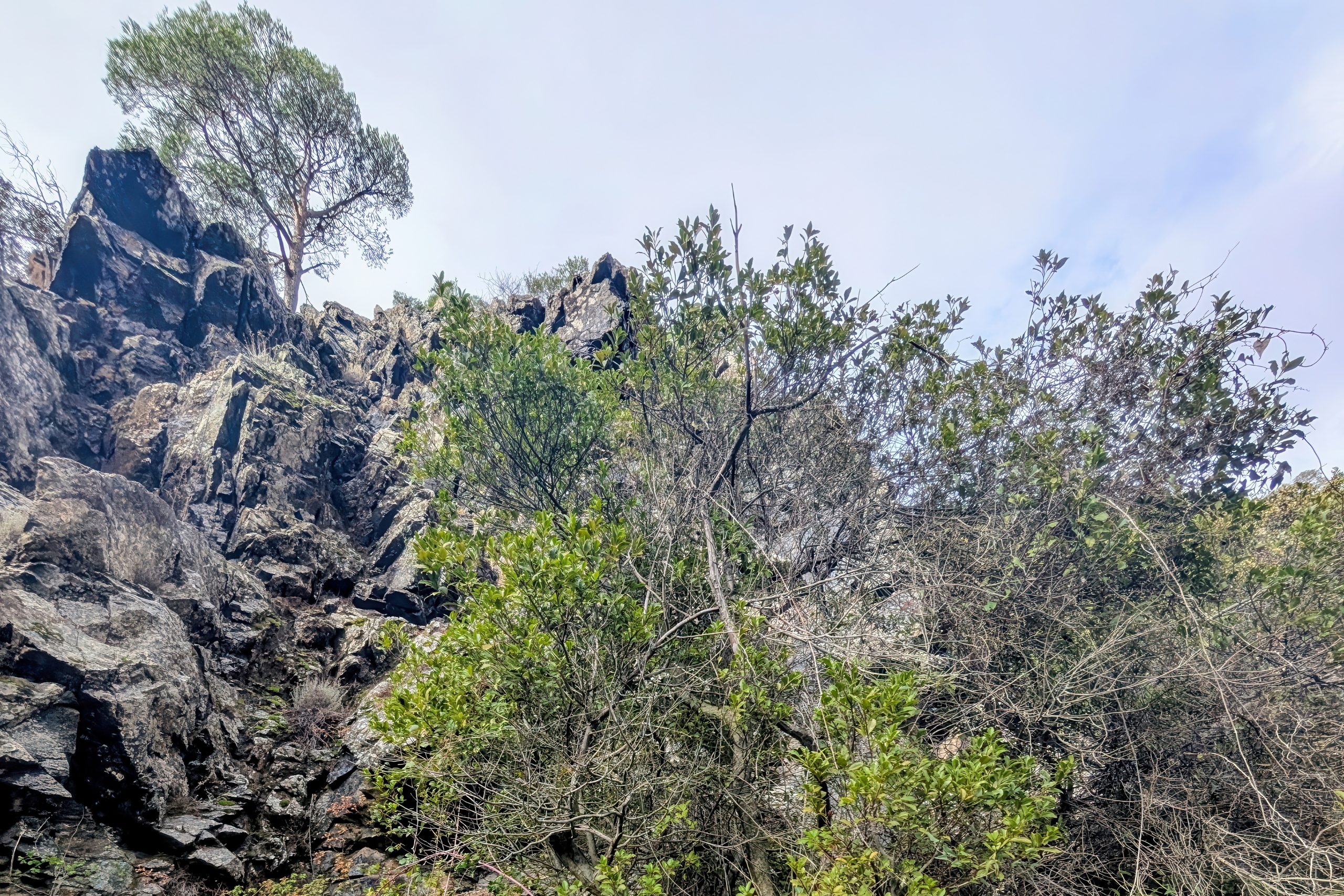
Laurus nobilis, the true bay laurel or sweet bay, belongs to the Lauraceae family – a small but aromatic group that also includes cinnamon and camphor. In Cyprus it grows as an evergreen tree or large shrub, often reaching 8–15 metres in sheltered spots, though it stays more shrub-like when exposed to wind or grazing.
From Apollo’s Wreath to Cypriot Streams
The bay laurel has been part of Mediterranean life since antiquity. In Cyprus it was already well known when Unger and Kotschy explored the island in 1862 – they recorded it as frequent around Limassol and noted its presence among myrtle, olive and other maquis trees. Even earlier, the great physician Dioscorides (1st century AD) described its leaves and berries in detail, recommending them for digestion, inflammation and as a warming oil. In Greek mythology the tree is sacred to Apollo: when the nymph Daphne fled his advances she was transformed into a laurel, which the god then claimed as his own. Victorious athletes, poets and emperors wore laurel wreaths – hence “poet laureate” and “baccalaureate”. On our island the tree has always grown wild in moist places, helping bind stream banks and offering shade and scent for millennia.
Glossy Leaves, Tiny Flowers, Dark Berries
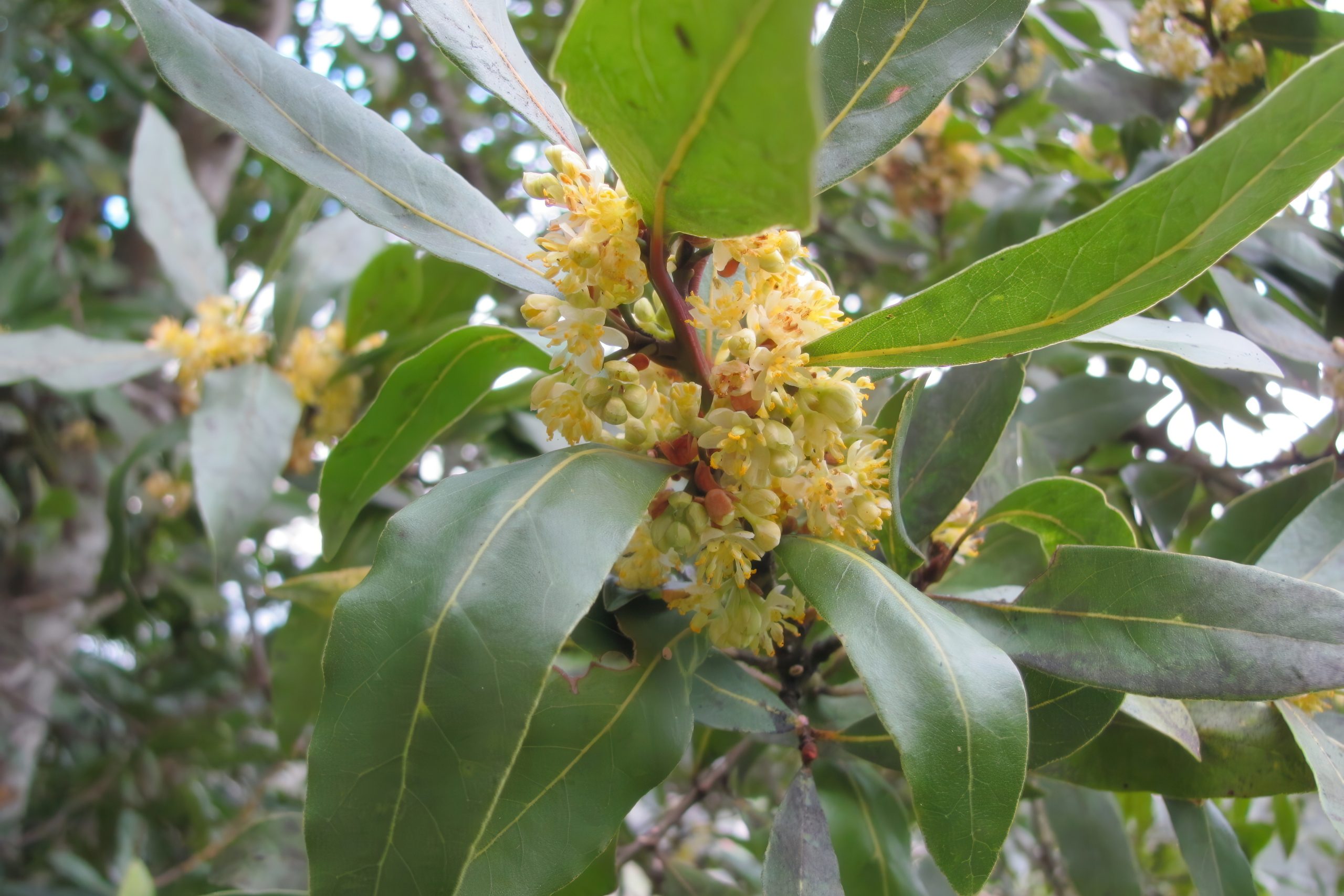
The leaves are the star – thick, leathery, lance-shaped and a deep, shining green with wavy edges and a prominent midrib. Crush one and the unmistakable bay aroma rises instantly. In early spring the tree produces clusters of small, pale yellowish-green flowers that are inconspicuous but sweetly scented. By autumn these become oval berries that ripen from green to glossy black – much loved by birds, which spread the seeds along watercourses. The whole plant is perfectly adapted to the Mediterranean: drought-tolerant once established, yet happiest where underground moisture is reliable.
Fun Facts to Share with Friends
- In Cyprus it is simply called Δάφνη (Dáfni) – the very same word used by the ancient Greeks, meaning “laurel” and directly linked to the myth of Daphne.
- The dried leaves are the world-famous “bay leaves” that flavour countless Cypriot dishes – stews, soups, grilled meats and even the traditional Easter soup avgolemono.
- A single leaf rubbed on the skin was once used as a natural insect repellent, and laurel oil (laurinum) was a favourite Roman massage oil.
- The black berries, though bitter when raw, were once used to flavour sausages and even made into a warming liqueur in some Mediterranean traditions.
- IUCN Red List status: Least Concern – still widespread and secure across Cyprus from sea level to about 1,200 m.
Deeper Roots in Nature and Tradition
Botanically, Laurus nobilis is a key species of Cypriot riparian woodland and moist maquis. As noted in modern forest surveys, it grows alongside plane trees, alder and oleander along streams and in shaded gullies, helping prevent erosion and creating cool, fragrant micro-habitats for birds and insects. Its leaves contain essential oils rich in cineole and eugenol – the very compounds that give the plant its culinary and medicinal punch. In early Cypriot forest reports it was recognised for both its beauty and its practical value in stabilising wetter soils.
Living Link to Today’s Cyprus
Today the bay laurel remains a living thread in Cypriot life. You will see it in village gardens, monastery courtyards and every good cook’s kitchen. Its presence in the wild reminds us of the island’s ancient connection to Greek mythology and to the practical wisdom of our ancestors who foraged and cooked with what the land freely gave. In modern times it symbolises peace and achievement – laurel wreaths are still placed on monuments and awarded at graduations. Most recently, its remarkable drought tolerance and deep roots have led to it being chosen for reforestation efforts in the LIFE-AgrOassis project, where it is planted in hedgerows and degraded areas to combat desertification, restore soil health and build climate resilience across Cyprus.
Experiencing the Bay Laurel for Yourself
The loveliest way to meet Δάφνη is along any stream-side trail where moisture lingers. Try the Akamas Peninsula paths near the Avakas Gorge, the riparian walks in the Troodos foothills (e.g., around Platres or Kakopetria), or the shaded lanes of the Paphos Forest buffer zone. In spring inhale the flowers; in any season crush a leaf gently between your fingers – the scent is unforgettable. No special equipment needed – just comfortable shoes and perhaps a small bag to collect a few fallen leaves for your own kitchen (always gather responsibly). Local nature groups and the Cyprus Tourism Organisation frequently include laurel stops on guided botanical or cultural walks.
Why the Bay Laurel Matters
In a world that sometimes forgets its roots, Laurus nobilis quietly reminds us of Cyprus’s deep heritage – from the myth of Daphne and Apollo to the everyday fragrance in a grandmother’s soup pot and the forward-looking planting of the LIFE-AgrOassis project. It links the ancient past recorded by Dioscorides and Unger & Kotschy with the living landscape we walk today. Its glossy leaves and spicy scent are gifts that have sweetened, healed and crowned Cypriot life for thousands of years. Next time you catch that unmistakable aroma beside a stream or in a simmering pot, pause and smile – this noble tree is still here, still giving, still part of the magic that makes Cyprus so special.