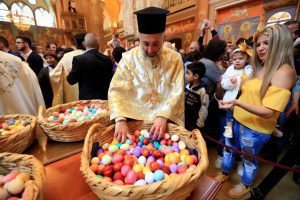
The spring season in Cyprus brings one of the most important annual cultural periods, marking a nationwide break in routine and a time of shared community observance. Known locally as Pascha, this period follows the Julian calendar and is widely recognized as a major social and cultural transition point in the year. Across the island, villages and cities organize a sequence of evening gatherings, public walks, symbolic night events, and large family meals that bring people together from near and far.
The celebrations combine medieval Byzantine-era customs with local Cypriot practices that have evolved over centuries. A defining feature of this period is the midnight gathering in town squares and village courtyards, where bells ring and fireworks illuminate the sky. Families reunite around traditional meals that include roasted meats, handmade pastries, and seasonal specialties. For many residents, this season represents a moment of cultural continuity, reinforcing identity, family ties, and shared heritage rooted in centuries of island history.
- The 40 Days of Seasonal Preparation
- Seasonal Preparation and Community Practices
- The Final Week of Observances
- Midnight Celebration and Public Gathering
- Easter Sunday Family Feasts
- Bonfires and Village Gatherings
- Experiencing the Season as a Visitor
- The Enduring Meaning of the Spring Festival Season
The 40 Days of Seasonal Preparation
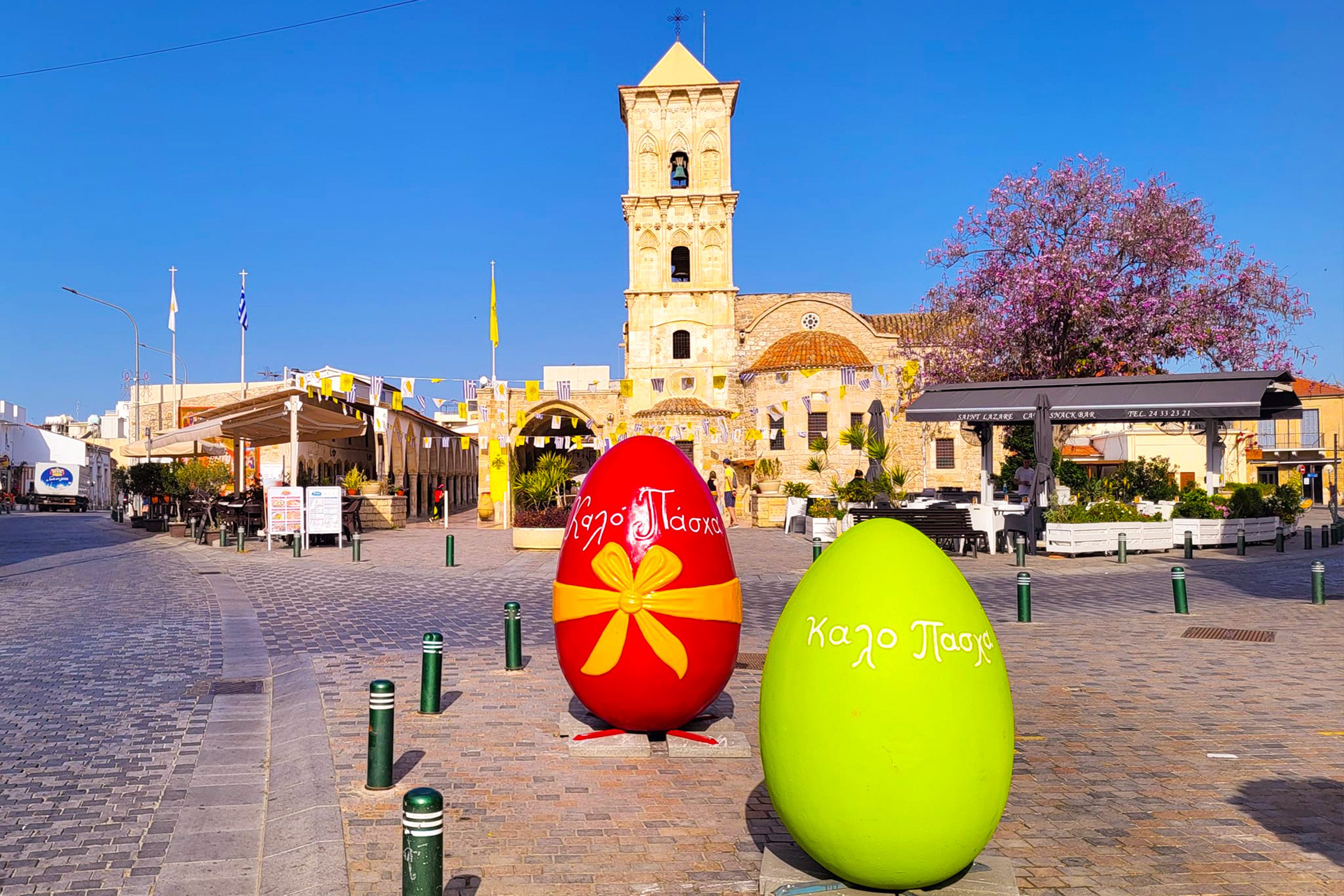
The lead-up to Easter in Cyprus begins with Clean Monday, locally called Kathara Deftera, marking the start of a 40-day period of preparation. This day signals a shift from carnival festivities into a quieter and more reflective lifestyle. Many Cypriots spend Clean Monday outdoors in countryside areas, flying kites and sharing simple meals such as olives, legumes, flatbreads, tahini, and seafood-based dishes.
This period emphasizes simplicity in daily living, with dietary restrictions traditionally observed in varying degrees depending on family and personal practice. Over time, modern lifestyles have influenced how strictly these customs are followed, with many families focusing more intensely on the final week of preparation rather than the entire 40 days.
The gradual buildup toward the main festival period also explains the abundance of preserved dairy products and eggs used in spring cooking traditions, as households prepare for the large-scale meals that follow the fasting period.
Seasonal Preparation and Community Practices
As the weeks progress, households begin preparing for the main celebration period. Cleaning homes, organizing family gatherings, and planning communal meals become common activities across villages. This preparation reflects a broader cultural emphasis on renewal, order, and hospitality.
By the time the final week arrives, known locally as Holy Week, communities shift into a structured schedule of evening gatherings and daytime preparations. Each day carries its own traditional associations, often reflected in cooking practices, village meetings, and church-centered events that bring residents together.
One of the most well-known culinary traditions during this period is the preparation of flaounes, a regional pastry made with cheese, aromatic herbs, and spices. Families often work together for hours or even days to prepare large batches, preserving recipes that have been passed down through generations. The process itself becomes a social activity, reinforcing family bonds and shared culinary heritage.
The Final Week of Observances
The final week before the main celebration period is marked by structured community events and evening gatherings across villages. One notable tradition involves symbolic acts of service and humility performed in selected communities, alongside extended food preparation rituals that take place in family kitchens.
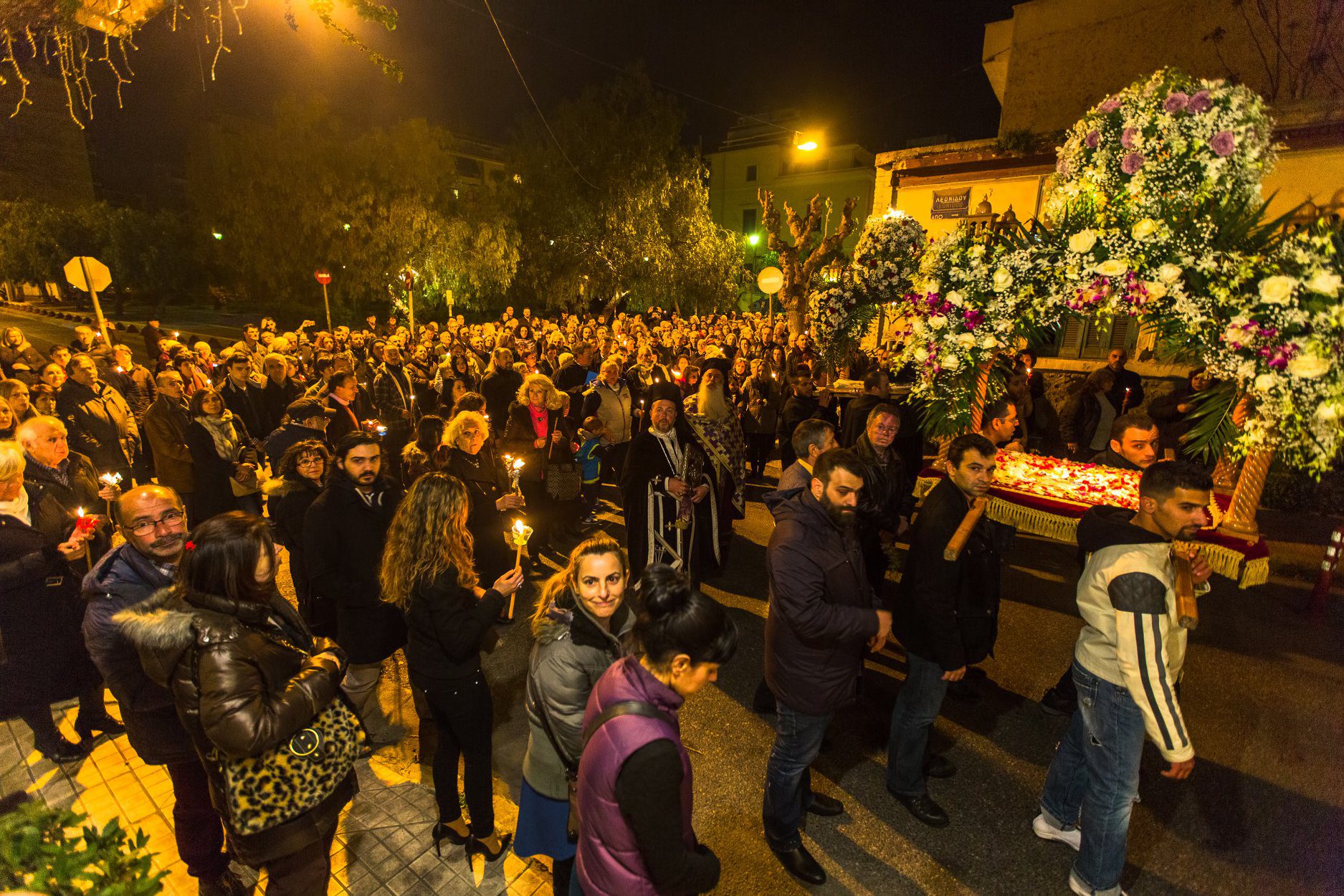
During this time, villages also observe quiet evenings filled with candle-lit gatherings and reflective community events. Streets and homes are often prepared for increased activity as families return from cities or abroad to participate in annual reunions.
A particularly important day in this week is dedicated to extensive food preparation. Families focus on traditional dishes that require long hours of cooking and coordination. These meals often represent a key part of Cyprus’s intangible culinary heritage, combining local ingredients with recipes preserved over centuries.
Midnight Celebration and Public Gathering
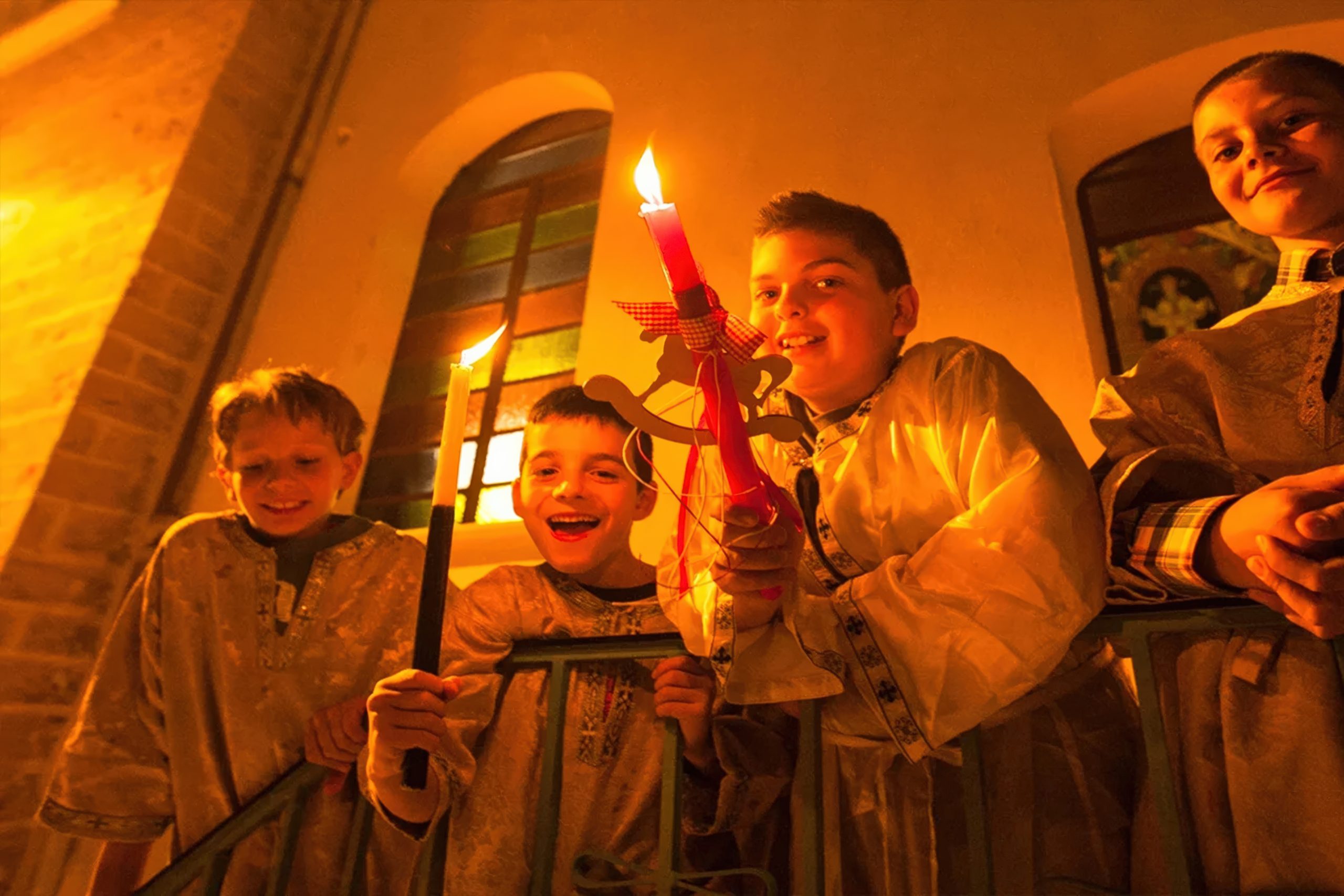
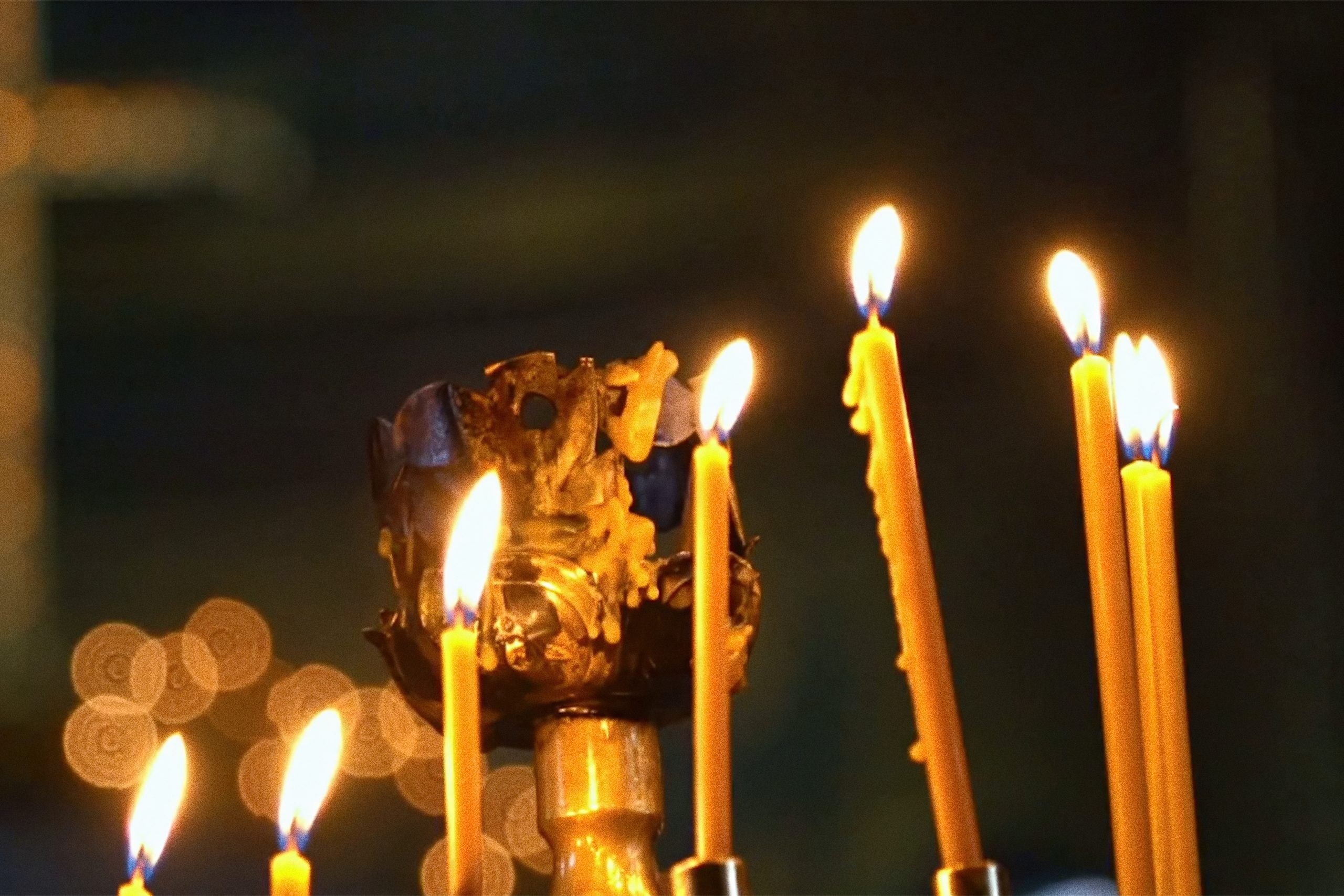
The highlight of the Easter period occurs at midnight on the final night of Holy Saturday. Throughout the evening, people gather outside churches and in central squares holding unlit candles. As midnight approaches, the atmosphere becomes increasingly focused, with anticipation building across villages and cities.
At the exact moment of midnight, a coordinated public moment takes place involving a traditional spoken phrase and a collective response from the gathered crowd. Immediately afterward, a central flame is shared among participants, and candlelight spreads rapidly through the assembly. Bells ring simultaneously, and fireworks light the sky, marking a dramatic shift from quiet reflection to public celebration.
Families carefully carry the flame back to their homes, where it is used in a symbolic marking above the entrance. This act is traditionally believed to represent protection and renewal for the household throughout the year.
Following the midnight events, many families return home for a late-night meal that marks the end of the long preparation period. A traditional soup made with lamb and herbs is commonly served, symbolizing the transition from fasting to celebration and the use of every part of locally sourced ingredients.
Easter Sunday Family Feasts
Easter Sunday is widely regarded as the most important family gathering day of the entire season. Across Cyprus, households prepare large outdoor meals centered around slowly roasted lamb cooked over charcoal. The preparation process can take several hours and requires careful attention to ensure even cooking.
In rural villages and countryside homes, the lamb is often marinated in local wine, herbs, garlic, and citrus ingredients. The aroma of roasting meat fills neighborhoods, and families gather in courtyards, gardens, and village squares to share food and conversation.
Side dishes include baked pasta casseroles, stuffed vegetables, fresh salads, and seasonal greens. Local wines and traditional sweet beverages are commonly served, reflecting the abundance and hospitality associated with this time of year.
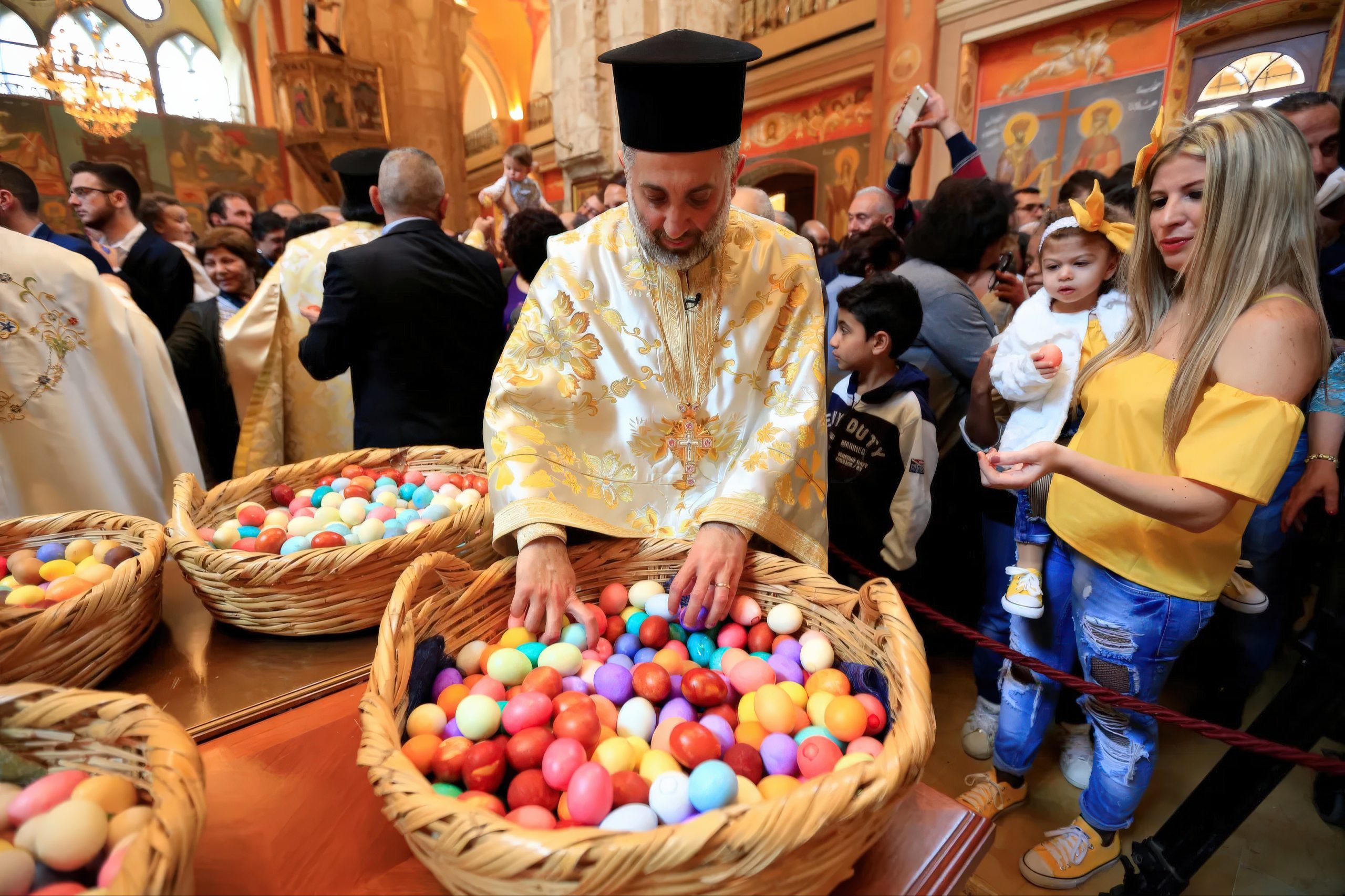
A popular activity during the meal is a friendly egg-tapping game, where participants test the strength of dyed eggs against one another. This lighthearted tradition adds entertainment for all ages and is often a highlight of the communal table.
Bonfires and Village Gatherings
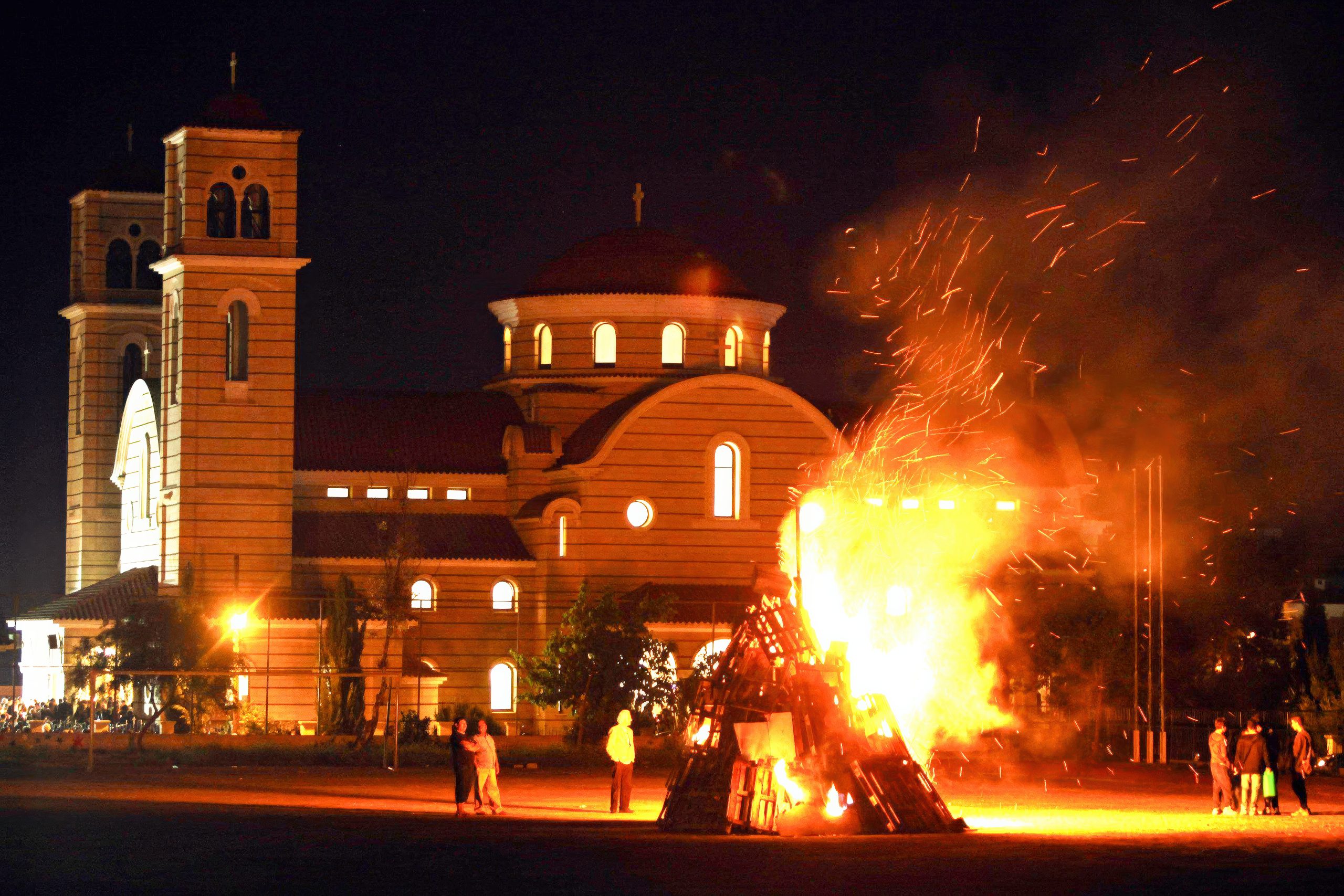
In many mountain villages, large bonfires are built in open spaces during the late evening hours. These fires serve as focal points for music, dancing, and community gatherings. Groups of young people and families gather around the flames, sharing songs and traditional dances that continue late into the night.
In some areas, symbolic figures are burned as part of traditional storytelling customs representing seasonal transitions and cultural narratives. These events vary from village to village, reflecting local interpretations and long-standing customs passed through generations.
Coastal towns also host organized public celebrations with music performances and food stalls, attracting both residents and visitors. These gatherings extend the festive atmosphere beyond villages into urban centers.
Experiencing the Season as a Visitor
Visitors to Cyprus during this spring period can observe many of the public celebrations and participate respectfully in cultural events. Modest dress is expected when entering religious or formal community spaces, and quiet behavior is encouraged during organized gatherings.
Midnight events in villages and towns offer one of the most visually striking experiences, with candlelight, fireworks, and communal gatherings creating a unique atmosphere. Visitors are welcome to join public celebrations, taste traditional foods, and observe local customs.
Village festivals provide opportunities to experience music, dance, and culinary traditions firsthand. Many communities welcome guests with hospitality, reflecting a strong cultural tradition of openness and sharing.
The Enduring Meaning of the Spring Festival Season
The Easter period in Cyprus represents far more than a single holiday. It functions as a broad seasonal tradition that combines family reunions, culinary heritage, public celebration, and community identity. Across generations, these practices have shaped how villages and towns mark the transition from winter to spring.
For many residents, the season offers an annual opportunity to reconnect with family roots, preserve traditional recipes, and participate in shared cultural rhythms. For others, it serves as a period of rest, reflection, and social gathering.
Despite changes in modern life, the traditions associated with this season continue to evolve while maintaining strong ties to historical customs. The combination of food, music, family gatherings, and symbolic midnight events ensures that the spring celebration period remains one of the most significant cultural moments in Cyprus each year.