All Articles

Religious Life in Cyprus

Religious Life in Cyprus

Religious life in Cyprus centers on Orthodox Christianity, which defines cultural identity for approximately 90 percent of Greek Cypriots even among those who rarely attend services. The Church of Cyprus holds autocephalous status, meaning it governs itself independently while remaining in communion with other Orthodox churches worldwide. This independence, granted at the Council of Ephesus in 431 AD, has survived centuries of foreign occupation including Frankish Crusaders, Venetian merchants, Ottoman Turks, and British colonizers. The church functioned not just as religious institution but as guardian of Greek language, culture, and national identity during periods when political sovereignty was impossible. Orthodox practice structures daily life through home iconostases with burning oil lamps, morning and evening prayers, feast day celebrations, and approximately…

Read more
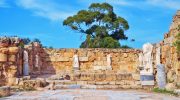
The Gymnasium of Salamis

The Gymnasium of Salamis

The ancient city of Salamis on Cyprus holds some of the Mediterranean's most remarkable Roman architecture. Among its treasures, the Gymnasium stands out as a testament to how Romans blended physical training, social interaction, and luxury bathing into a single sprawling complex. Located on the eastern coast near modern Famagusta, this site offers visitors a direct connection to daily life in Roman Cyprus. The Gymnasium traces its roots to the Hellenistic period, when Greek colonists first established athletic training facilities in Salamis. However, the structure visible today belongs to the 2nd century AD, specifically during the reigns of emperors Trajan and Hadrian. The transformation came after a devastating Jewish revolt in 116 AD that left much of Salamis in ruins.…

Read more
The House of Aion Mosaics

The House of Aion Mosaics

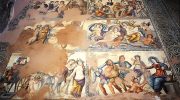
The House of Aion in Kato Paphos preserves a late Roman mosaic program designed to communicate ideas, not just decorate a room, using myth to argue for cosmic order, education, and limits on human ambition. Made in the 4th century AD during the empire’s rapid Christianisation, the floor reads as a coherent statement from a pagan elite defending continuity through refined symbolism rather than confrontation. This article explains where the building sits in ancient Paphos, how the five scenes build one argument, and what the mosaics reveal about power, belief, and artistic change in late antiquity. Paphos, Power, and Maloutena The House of Aion lies in the Maloutena district of ancient Nea Paphos, once the island's administrative and cultural centre…

Read more
Cyprus Green Line Today

Cyprus Green Line Today

The Green Line takes its name from a green chinagraph pencil used by British Major General Peter Young on December 30, 1963. He drew a ceasefire line on a map of Nicosia during a twelve-hour meeting following intercommunal violence between Greek and Turkish Cypriots. That pencil mark became the basis for one of Europe's most visible political divisions. Today the Green Line stretches 180 kilometers from Kato Pyrgos in the west to Paralimni in the east, cutting across the entire island. It varies from just 3.3 meters wide in central Nicosia to 7.4 kilometers wide in rural areas. The buffer zone covers 346 square kilometers, roughly 3.7 percent of Cyprus's total land area. After the Berlin Wall fell in 1989,…

Read more
Home Life in Cyprus – Family and Cultural Bonds

Home Life in Cyprus – Family and Cultural Bonds

Family stands at the center of Cypriot life, shaping everything from daily routines to major life decisions. Multiple generations often live in close proximity and gather regularly for meals and celebrations. The concept of family extends beyond parents and children to include grandparents, aunts, uncles, and cousins who form tight support networks. Home represents more than a dwelling, it serves as the primary social hub where traditions pass between generations and cultural identity remains strong. Historical Roots of Family Structure The importance of family in Cyprus traces back thousands of years through Greek, Roman, and Byzantine civilizations. Ancient Greeks identified themselves first as family members, then by place of origin, and lastly as citizens. This hierarchy persisted through Ottoman rule…

Read more
Airports of Cyprus: Larnaca vs Paphos

Airports of Cyprus: Larnaca vs Paphos

Cyprus operates two international airports that serve as the island's primary gateways for tourism and business travel. Larnaca International Airport handles approximately 70 percent of total passenger traffic, while Paphos International Airport serves the remaining 30 percent. Together, these facilities processed over 13 million passengers in 2025, representing a 12 percent increase from 2024 and significantly exceeding pre-pandemic levels from 2019. Hermes Airports operates both facilities under a concession agreement with the Cyprus government that has been extended until 2033. The company has committed 170 million euros to Phase 2 expansion projects that began in March 2025, with completion expected by 2027. When finished, Larnaca will handle 12.4 million passengers annually while Paphos will accommodate 5 million, bringing combined capacity…

Read more
Pine Forest Villages Cyprus

Pine Forest Villages Cyprus

Pine forest villages in the Troodos Mountains showcase traditional Cypriot architecture where stone houses with wooden balconies cling to mountainsides at elevations between 600 and 1,200 meters. These settlements developed amid orchards, vineyards, and dense pine forests that provide cool escape from coastal summer heat. Kakopetria, Platres, and Pedoulas represent the most prominent examples, with stone-built structures featuring sloping terracotta tile roofs, wooden shutters, and cobbled streets preserved as protected cultural heritage. The architecture responds to mountain conditions including snow, rainfall, and steep terrain uncommon in lowland Cyprus. Kakopetria is cradled between the Kargotis and Garillis rivers, which converge to form the Klarios River, creating lush green environments where water mills once ground grain for village populations. These mountain retreats…

Read more
Adonis in Cyprus – Myth Love and Fertility

Adonis in Cyprus – Myth Love and Fertility

Adonis stands as one of the most compelling figures in Cyprus mythology, a mortal whose extraordinary beauty captured the heart of Aphrodite, goddess of love. The myth of Adonis is a legendary love story that combines tragedy and death on the one hand and the joy of coming back to life on the other. The god of beauty, fertility, and permanent renewal originated in Canaanite and Mesopotamian traditions as Adon before being adopted into Greek mythology. His name derives from the Canaanite word adon, meaning "lord." Cyprus played a very significant role in transferring the myth of Adonis and Astarte from the Canaanite regions to the Greeks and from the latter to the Romans, making the island central to this…

Read more
Cyprus Pine Cedar Forests

Cyprus Pine Cedar Forests

Cyprus forests cover approximately 42% of the island's total area, with 18% classified as high forest and the remaining 20% as other wooded land. These green expanses stretch across mountain ranges, particularly the Troodos Mountains that dominate the western side of the island. Pine and cedar forests create distinctive ecosystems supporting unique endemic species found nowhere else on Earth. The island was almost entirely forested in ancient times, earning its reputation as the green island of the Mediterranean. Historical records describe Cyprus as a major timber exporter and shipbuilding center. Today, forests remain vital to Cyprus's natural heritage, water resource protection, and village economies through timber and non-wood products. Ancient Forest Legacy Shapes Modern Landscape Ancient civilizations harvested Cyprus forests…

Read more