Religious life in Cyprus centers on Orthodox Christianity, which defines cultural identity for approximately 90 percent of Greek Cypriots even among those who rarely attend services. The Church of Cyprus holds autocephalous status, meaning it governs itself independently while remaining in communion with other Orthodox churches worldwide.
This independence, granted at the Council of Ephesus in 431 AD, has survived centuries of foreign occupation including Frankish Crusaders, Venetian merchants, Ottoman Turks, and British colonizers. The church functioned not just as religious institution but as guardian of Greek language, culture, and national identity during periods when political sovereignty was impossible.
Orthodox practice structures daily life through home iconostases with burning oil lamps, morning and evening prayers, feast day celebrations, and approximately 180 annual fasting days. The liturgical calendar organizes social activities, agricultural work, and family gatherings around major celebrations including Easter, the Dormition of the Virgin Mary on August 15, and hundreds of local patron saint festivals called panigyria.
Ancient Christian Foundations on the Island
Christianity reached Cyprus in 45 AD when the Apostle Paul traveled with Barnabas, a native Cypriot, and Mark the Evangelist from Syrian Antioch. They arrived first at Salamis on the eastern coast before crossing westward to Paphos, where they converted Sergius Paulus, the Roman proconsul governing Cyprus.
This conversion made Cyprus the first territory in the world ruled by a Christian official, establishing the island’s early connection to the new faith. Barnabas returned to Cyprus around 50 AD with Mark to continue evangelical work, establishing Christian communities that would grow into important centers.
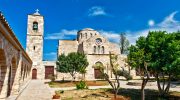
The church initially fell under jurisdiction of the Patriarchate of Antioch until 325 AD. When the Patriarch of Antioch attempted to reassert control in the early fifth century, Cypriot clergy appealed to the Council of Ephesus in 431, which recognized Cyprus’s right to autocephaly based on ancient custom.
The discovery of Saint Barnabas’s tomb in 478 AD, with a copy of Matthew’s Gospel on his chest, provided physical evidence of apostolic foundation that Emperor Zeno used to confirm independence permanently.
The emperor granted the Archbishop three unique privileges still maintained today including signing documents in cinnabar red ink, wearing imperial purple robes, and carrying an imperial scepter instead of standard pastoral staff.
Surviving Foreign Rule and Persecution
The Arab invasions of the seventh century created unstable conditions that forced the Archbishop to flee temporarily to Hellespont, where Emperor Justinian II helped establish a new city called Nova Justiniana.
When Arabs were driven from Cyprus in 698, the Archbishop returned but retained the title Archbishop of Nova Justiniana and All Cyprus still used today. Byzantine control returned fully in 965, allowing the church to flourish until Frankish Crusaders conquered Cyprus in 1191.
The Latin occupation from 1191 to 1571 under Frankish and Venetian rulers brought sustained persecution. Catholic kings reduced Orthodox bishops from 14 to four, forced them from their towns, and placed them under Latin bishops’ authority.
The Archbishop was exiled from Nicosia to Solia near Morphou. Catholic authorities used threats, violence, and torture to force doctrinal concessions, including the notorious case of 13 monks at Kantara Monastery.
Monastery properties were confiscated and Orthodox Christians faced systematic oppression designed to break their resistance to papal authority.
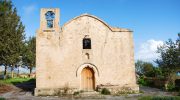
Ottoman conquest in 1571 ironically brought relief, as the Sultan banished Latin hierarchy and recognized the Orthodox Church as legitimate representative of the Greek-speaking population.
The Archbishop became ethnarch, the political and religious leader of the millet system governing non-Muslim communities. This dual role meant the church preserved Greek language and culture while administering justice and collecting taxes for Ottoman authorities.
During the Greek War of Independence in 1821, Ottoman officials executed Archbishop Kyprianos and all bishops on Cyprus along with numerous other clergy and notables, fearing revolutionary sympathies.
British rule from 1878 to 1960 brought more religious freedom but also political tension when church leaders including Archbishop Makarios III advocated for union with Greece.
Daily Orthodox Practice and Home Devotion
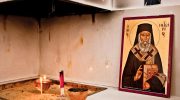
Orthodox families maintain home iconostases, dedicated corners or shelves displaying sacred images of Christ, the Virgin Mary, and patron saints.
Oil lamps burn continuously before these icons, with women typically responsible for maintaining adequate oil supply and replacing wicks. The perpetual flame represents eternal prayer and divine presence within domestic space, transforming ordinary homes into extensions of sacred church architecture.
Morning and evening prayers structure each day, with families gathering before iconostases to recite traditional prayers and make the sign of the cross.
These prayers thank God for protection during sleep and request blessings for the day ahead in mornings, then reverse this pattern in evenings by expressing gratitude for provisions and seeking nighttime protection.
Children learn prayers through repetition before achieving literacy, memorizing texts that connect them to Byzantine traditions. Meal blessings sanctify eating, with families praying and making cross signs over food before consumption.
The Orthodox calendar designates approximately 180 days annually as fasting periods when believers abstain from meat, dairy, eggs, fish with backbones, wine, and olive oil on most designated days.
The four major fasts include Great Lent for 48 days before Easter, Nativity Fast for 40 days before Christmas, Dormition Fast for 15 days before August 15, and Apostles’ Fast with variable length.
Traditional villages observed fasting strictly, with entire communities adopting meatless diets simultaneously. This collective practice created social pressure reinforcing individual compliance while simplifying meal preparation.
Sunday Liturgy and Weekly Community
Sunday morning Divine Liturgy provides weekly gathering that defines village communities. Services begin around 8:00 or 9:00 AM and last two to three hours, with worshippers standing throughout according to Orthodox tradition permitting sitting only for elderly and infirm.
The liturgy combines elaborate rituals including incense burning, icon veneration, scripture readings in Greek, Byzantine chanting, and Eucharist where believers receive consecrated bread and wine representing Christ’s body and blood.
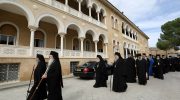
The sensory experience creates immersive worship engaging body and spirit simultaneously. The smell of incense, sight of golden icons illuminated by candlelight, sound of Byzantine chants, taste of communion, and physical sensation of standing for hours combine to mark Sunday as distinct from ordinary weekdays.
Parish priests chant prayers in Greek maintaining linguistic continuity with Byzantine traditions even as conversational Greek has evolved.
After services conclude, villagers gather in central squares for socializing. Men head to coffee shops for Cyprus coffee and backgammon while women return home to prepare Sunday meals, the week’s most elaborate food preparation.
This post-liturgy socializing reinforces community bonds formed through shared worship while creating opportunities for business discussions, marriage arrangements, and conflict resolution through informal conversation rather than formal procedures.
The Church as Keeper of National Identity
Throughout centuries of foreign rule, the Orthodox Church preserved Greek language, culture, and national consciousness when political institutions could not.
During Ottoman period, the church operated schools teaching Greek despite pressure for Turkish-language education. Monasteries maintained libraries preserving Byzantine literature and theological texts.
Bishops coordinated resistance to foreign authority, using church networks to communicate across occupied territories.
This dual role as spiritual and political authority meant church leaders became targets during independence struggles. The execution of Cyprus’s entire hierarchy in 1821 demonstrates Ottoman recognition that church and national identity were inseparable.
British exile of Archbishop Makarios III in 1956 for supporting union with Greece similarly acknowledged the church’s political power.
When independence came in 1960, Makarios became the first president, embodying the continued fusion of religious and political leadership.
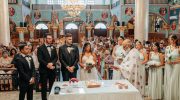
Almost all Greek Cypriots embrace Orthodoxy as element of national belonging even if they do not practice religion regularly. Baptism, weddings, and funerals occur in Orthodox rites regardless of personal piety, demonstrating how religious identity transcends individual belief to function as ethnic marker.
This cultural Orthodoxy means the church remains influential in politics and social policy despite declining attendance at regular services among younger generations.