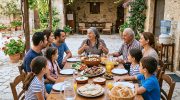
Family stands at the center of Cypriot life, shaping everything from daily routines to major life decisions. Multiple generations often live in close proximity and gather regularly for meals and celebrations.

The concept of family extends beyond parents and children to include grandparents, aunts, uncles, and cousins who form tight support networks. Home represents more than a dwelling, it serves as the primary social hub where traditions pass between generations and cultural identity remains strong.
Historical Roots of Family Structure
The importance of family in Cyprus traces back thousands of years through Greek, Roman, and Byzantine civilizations. Ancient Greeks identified themselves first as family members, then by place of origin, and lastly as citizens.
This hierarchy persisted through Ottoman rule from 1571 to 1878 and British colonial administration until 1960.

During these periods, families provided crucial support when governmental systems proved unreliable. The Orthodox Church strengthened family bonds through baptisms, weddings, and religious festivals that reinforced kinship ties.
How Cypriot Families Live Today
Modern Cypriot homes reflect both traditional values and contemporary needs. Nuclear families form the basic household structure, but children typically live with parents much longer than in Western cultures.
Young adults commonly remain at home throughout their twenties, often until marriage around age 29 for women and 30 for men. This extended co-residence stems partly from high housing costs but also reflects cultural preferences for maintaining close family connections.

Grandparents play crucial roles in daily household life. Many live with or very near their children and grandchildren, providing childcare and maintaining cultural traditions.
The grandmother, called yia-yia, often serves as the family elder whose opinions carry significant weight in family decisions. This multigenerational involvement creates natural knowledge transfer about cooking techniques, religious practices, and social expectations.
Sunday Gatherings Without Exception
Sunday represents sacred family time in Cyprus, with gatherings that require no advance planning because attendance is simply expected.
The older generation prepares substantial midday meals for children and grandchildren who visit without fail. Traditional dishes like moussaka, slow-roasted souvla, or tepsi kebabi typically feature on Sunday tables.
These meals stretch for hours, with multiple courses and frequent pauses for discussion.
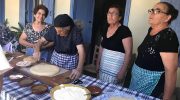
When family members arrive, everyone exchanges kisses and enjoys a long meal together. These gatherings can include dozens of people when extended family joins.
Children learn table manners and social skills through participation, while elderly family members maintain connections that combat isolation. The tradition extends beyond immediate family to include close friends who become adopted family members over time.
Gender Roles in Transition
Traditional gender roles designated men as primary breadwinners and heads of household, while women managed domestic responsibilities.
This patriarchal structure persisted through the 20th century, with visible gender divisions in social activities. Older men still gather at kafeneios to drink coffee and play tavli, while women typically socialize in homes or at church events.
However, contemporary society shows significant evolution. Most women now receive higher education and contribute substantially to household income through professional careers.
Despite this economic participation, women typically maintain responsibility for most household tasks and childcare. Many families hire domestic workers to assist with these duties.
The younger generation demonstrates more egalitarian attitudes, with couples increasingly sharing both financial and domestic responsibilities.
Respect for Elders as Core Value
Age confers authority and respect in Cypriot society, a value instilled from early childhood. Elders are viewed as keepers of wisdom and tradition whose opinions carry significant weight.
Public spaces reflect this respect, with younger people consistently offering seats to elderly passengers on buses. When speaking to older Cypriots, using traditional titles kyrios for men or kyria for women before their name demonstrates proper manners.

Elderly parents typically live with or very near adult children who expect to provide care when parents become infirm. Nursing homes exist but carry social stigma, as families view caring for aging parents as a fundamental obligation.
This expectation creates strong intergenerational bonds while also placing practical burdens on adult children who must balance work, raising their own children, and elder care.
Religious Life and Home Traditions
About 90 percent of Greek Cypriots belong to the Greek Orthodox Church, which maintains close ties to family and state.
Religion shapes home life through regular observance of feast days, fasting periods, and daily prayers. Many homes display icons in prominent locations, and families light candles before these images while saying prayers.
Religious holidays structure the year’s rhythm, with Christmas, Easter, and Assumption Day bringing special meals and family gatherings.
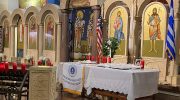
Sunday church attendance provides opportunities for families to worship together and socialize with community members afterward.
Children learn religious traditions through participation in church services and observation of parents’ practices, ensuring continuity of Orthodox Christian culture across generations.
Marriage and Extended Networks
Marriage represents a major milestone in Cypriot family culture. While arranged marriages have largely disappeared, parents still play significant roles in partner selection, and their blessing remains important.
Church weddings far outnumber civil ceremonies, reflecting the Orthodox Church’s strong influence on marriage practices.
Cypriot weddings are famously large affairs with hundreds of guests, including not only immediate family but also distant relatives, friends, neighbors, and business associates.
The tradition of pinning money to the clothes of the dancing bride and groom continues in Turkish Cypriot weddings. These elaborate celebrations demonstrate the couple’s social network and the community’s investment in the new marriage.
Hospitality and Social Customs
The tradition of offering coffee and treats to guests represents one of Cyprus’s most cherished customs. Visitors to Cypriot homes almost always receive refreshments, with hosts considering it disrespectful not to offer hospitality.
Cypriots who have only recently met strangers frequently invite them into homes for drinks or full meals. This hospitality reflects genuine interest rather than superficial friendliness.
Timing customs differ from Northern European norms. Arriving exactly on time for social visits is considered rude, with guests expected to arrive 15 to 30 minutes late.
This allows hosts final preparation time. Conversations in Cypriot homes can seem like furious arguments to outsiders, but loud, animated discussion represents normal communication style rather than actual conflict.
Why Family Bonds Still Define Cyprus
Strong family structures preserve values that modern life often erodes elsewhere. The emphasis on face-to-face interaction and regular family gatherings counters isolation in an increasingly digital world.
These customs also maintain community cohesion across generations and social classes. Unlike entertainment venues that attract specific demographics, family gatherings welcome everyone regardless of age or income.

As Cyprus modernizes rapidly through EU membership and global economic integration, family traditions provide continuity with the past while adapting to contemporary needs.
The culture’s gradual approach to change allows preservation of core values about family loyalty, elder respect, and mutual support while accommodating new realities about gender roles, individual freedom, and multicultural relationships.