All Articles

Green Sea Turtle Conservation Programs in Cyprus

Green Sea Turtle Conservation Programs in Cyprus

The green sea turtle represents one of the Mediterranean's rarest nesting species. In this entire sea, only 300 to 400 female green turtles nest each year, with the vast majority choosing beaches in Cyprus and Turkey. This makes Cyprus critically important for the species' survival in the region. The green turtle earned its name from the green fat stored beneath its shell, a result of its diet that consists almost entirely of seagrass and algae once the turtle reaches adulthood. Green turtles belong to the family Cheloniidae and hold the distinction of being the largest hard-shelled sea turtle species. Adults can reach one meter in length and weigh between 130 and 160 kilograms. Their distinctive heart-shaped shell ranges from olive…

Read more
The Soli Basilica Frescoes

The Soli Basilica Frescoes

The Soli Episcopal Basilica preserves rare fragments of early Christian wall painting from a period when church imagery in Cyprus was still being invented rather than standardised. Painted above the site’s famous mosaics, the fresco remains show Roman decorative habits being adapted into a new visual language for worship, before later Byzantine rules became fixed. This article explains Soli’s rise as an ecclesiastical centre, what the surviving plaster fragments suggest about the original interior, and why the basilica’s destruction ended up preserving an important artistic transition. Trade, Farmland, Copper, Harbour Ancient Soli, also known as Soloi, occupied a strategic position near fertile farmland, copper-rich foothills, and a natural harbour. This combination sustained the city for centuries, from its legendary foundation…

Read more
Cyprus Herbs

Cyprus Herbs

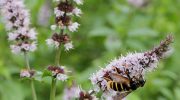
Herbs are the quiet architects of Cypriot cuisine. Oregano, thyme, bay leaves, coriander, and mint appear so regularly in everyday cooking that they are rarely discussed, yet they shape how Cyprus tastes more than any single dish. Growing on rocky hillsides, in village gardens, and in shaded courtyards, these aromatic plants link the island’s landscape to its kitchens and its past to its present. This article explores why herbs thrive in Cyprus, how they are cultivated and used, and why they remain central to the island’s culinary identity. Flavour That Grew from the Land Cypriot cooking did not develop around imported spices or elaborate seasoning systems. Instead, it emerged from what the land could reliably provide. The island’s dry summers,…

Read more
Cyprus Evening Life – Social Activities After Sunset

Cyprus Evening Life – Social Activities After Sunset

Cyprus after dark offers a distinctive social scene that differs greatly from typical European nightlife. Rather than rushing between clubs or bars, Cypriots embrace a slower, more communal approach to evening hours. The island's social life centers on conversation, connection, and shared experiences that stretch late into the night. From traditional coffee shops filled with the click of tavli pieces to seaside promenades where families stroll until midnight, evening activities reflect values of hospitality and togetherness that define Cypriot culture. This relaxed approach to nighttime socializing creates an atmosphere where age, background, and status fade into the background. Historical Context The tradition of evening social activities in Cyprus traces back thousands of years. Ancient Greeks gathered in public spaces after…

Read more
Coffee, Conversation, and Morning Interaction in Cyprus

Coffee, Conversation, and Morning Interaction in Cyprus

Cypriots are quite hardworking, but they tend to do most of their work as early in the morning as possible. The morning coffee break follows this early productivity. After completing their first tasks of the day, people pause for what locals call their coffee moment. Traditional Cypriot coffee arrives in a small cup with a glass of cold water on a tin tray. This gesture symbolizes hospitality and is seen as a way to cleanse the palate before enjoying the rich flavors of the coffee. The water also helps balance the strong taste of this unfiltered brew. The coffee itself is prepared in a small pot called a briki or mbriki. It is traditionally brewed over a gentle heat source,…

Read more
Pyla-Kokkinokremos

Pyla-Kokkinokremos

Pyla-Kokkinokremos stands as one of Cyprus's most remarkable archaeological sites, offering a rare snapshot of life during the final decades of the Bronze Age. This fortified settlement, occupied for barely 50 years around 1200 BC, preserves evidence of a multicultural community that thrived briefly before vanishing from history. The site occupies a rocky plateau rising 50 to 63 meters high, located about 10 kilometers east of ancient Kition (modern Larnaca) on Cyprus's southeast coast. The plateau covers approximately seven hectares and sits roughly 800 meters from the current coastline. This naturally defensible position overlooked Larnaka Bay and connected major Bronze Age centers like Kition and Enkomi. The settlement emerged during the Late Cypriot IIC–IIIA period, established at the end of…

Read more
Protaras Beach

Protaras Beach

Protaras sits on the southeastern coast of Cyprus in the Famagusta District, approximately 70 kilometers from Larnaca International Airport. This coastal resort developed specifically for tourism offers 10 kilometers of coastline along the Mediterranean Sea. The beaches here feature fine golden sand and exceptionally clear waters that earned international recognition. Fig Tree Bay was named Europe's third best beach by TripAdvisor in 2011, though rankings shifted in following years. Unlike the party atmosphere of nearby Ayia Napa, Protaras built its reputation as a quieter alternative better suited to families and domestic Cypriot tourism. Historical Context In ancient times, the area now known as Protaras was home to the old city-state of Leukolla, which had a small, safe harbor where Demetrius…

Read more
Work Culture and Employment Opportunities in Cyprus

Work Culture and Employment Opportunities in Cyprus

The country sits at the crossroads of three continents. This strategic position has shaped its economy into a diverse hub for international business. Cyprus joined the European Union in 2004 and adopted the euro in 2008, which strengthened its position as a business center. The economy grew by 3.6% in 2025, outpacing most eurozone countries. This growth stems from strong performance in tourism, information technology, financial services, and shipping. The island hosts over 1,500 active job listings at any given time, with companies actively seeking both local and international talent. Cyprus offers several practical advantages for workers. The corporate tax rate stands at 12.5%, one of Europe's lowest. English is widely spoken in business settings, particularly in cities like Nicosia…

Read more
Cypriot Syrtos Island Dance

Cypriot Syrtos Island Dance

If there is one dance that captures how Cyprus moves, remembers, and gathers, it is the Syrtos. Performed in an open circle, grounded rather than leaping, it has survived centuries of occupation, division, and social change without losing its core rhythm. The Syrtos is not a performance meant to impress from a distance. It is a shared action, designed to include rather than exclude, where the movement matters less than the connection it creates. To understand the Syrtos is to understand how Cypriots express identity without words. A Dance Built on Contact with the Ground The word Syrtos comes from the ancient Greek verb meaning “to drag” or “to pull,” and the name describes the movement precisely. Feet stay close…

Read more