All Articles

A Crossroads That Accumulated

A Crossroads That Accumulated

Cyprus is best understood as a layered island, where newcomers rarely erased what came before, and daily life absorbed languages, customs, and beliefs over centuries of close contact. Positioned between Europe, the Levant, and Anatolia, it became a crossroads early through trade, then accumulated Roman, Byzantine, Arab, Latin, Venetian, Ottoman, and British influences without turning into any single one of them. This article traces how those layers formed, where coexistence was practical rather than ideal, and why "Cypriot" identity still carries many histories at once. Ten Thousand Years of Settlement Human settlement in Cyprus stretches back more than ten thousand years. Long before empires arrived, early communities established farming villages and ritual spaces that tied life closely to land and…

Read more

Cyprus Identity Heritage Culture

Cyprus Identity Heritage Culture

Cypriot identity is often anchored less in present residence than in a remembered origin, usually a village, a landscape, or a family plot tied to names and stories. Land and place act as evidence of continuity, and after 1974, displacement intensified this logic by turning home into something carried through memory, ritual, and return visits rather than daily access. This article explains how villages, language, minority community anchors, family houses, and diaspora ties keep belonging active across the island and beyond. Land as Memory, Not Just Ground The connection between Cypriots and land stretches back thousands of years. Early communities depended on shared soil for survival, and this dependence shaped how people understood themselves in relation to their surroundings. Land…

Read more
Cyprus Family Social Networks

Cyprus Family Social Networks

In Cyprus, kinship is a social and economic infrastructure, shaping identity, housing, childcare, business decisions, and the way trust is established in everyday life. Extended families often function across multiple homes, keeping resources close through inheritance expectations, shared labour, and rituals that renew obligation and belonging. This article explains how these networks work across communities and the diaspora, why they remain resilient after modernisation and division, and what they still provide when formal systems fall short. Family as the Island’s Social Anchor Cypriot society has long been organised around the household rather than the individual. Historically, survival depended on cooperation between close relatives, particularly in agricultural communities where land, labour, and risk were shared. This produced a culture in which…

Read more
Wildflowers and Vineyards of Cyprus

Wildflowers and Vineyards of Cyprus

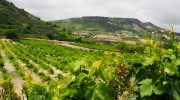
Cyprus is located at the crossroads of the three major flora zones of Europe, Asia, and Africa. This strategic position has produced remarkable botanical diversity, with approximately 1,950 species of flowering plants recorded on the island. About 8 percent of the indigenous plants, totaling 139 endemic species and subspecies, are found nowhere else on Earth. The island's great variety of habitats, attributed to varied microclimate and geology ranging from coastal sand dunes to mountains reaching 1,952 meters, creates the perfect conditions for this exceptional flora. Meanwhile, the wine industry thrives on terraced slopes where vines have grown for thousands of years, producing varieties like Commandaria that trace their origins back over 800 years. When Wildflowers Transform the Landscape The first…

Read more
Cypriot Wine Bottles and Vessels

Cypriot Wine Bottles and Vessels

Cyprus developed a distinct tradition of wine storage and transport vessels over 6,000 years. The island's geographic position between three continents made it a vital Mediterranean trading hub where wine culture flourished. From ancient egg-shaped jars discovered at Erimi dating to 3000 BCE to massive pitharia storage vessels holding up to 2,000 liters, these containers represent far more than simple pottery. Each vessel type served specific purposes in wine production, fermentation, storage, and trade. The containers tell stories of technical innovation, economic networks, and cultural practices that shaped wine civilization across Europe and the Mediterranean. Historical Context Archaeological excavations at Erimi-Bamboula conducted by Porphyrios Dikaios between 1932 and 1935 uncovered egg-shaped jars from the Chalcolithic period around 3900 to 2500…

Read more
Pylon Art & Culture Limassol

Pylon Art & Culture Limassol

Pylon Art & Culture operates as a nonprofit organization dedicated to contemporary art in Limassol, Cyprus. The name comes from the ancient Greek word "pylon," which refers to the monumental gateway to Egyptian temples. This meaning captures the organization's core mission: to serve as an entry point into contemporary art and new ways of experiencing it. The space presents contemporary works across multiple media, from painting and sculpture to photography, video art, and installations. Founded by entrepreneur and art collector Alexandros Diogenous, Pylon emerged from over 30 years of personal engagement with contemporary art. The organization functions on the premise that art and culture form essential cornerstones of human development. Its programs focus on making contemporary art accessible and relevant…

Read more
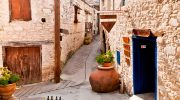
Cyprus Stone Courtyards Architecture

Cyprus Stone Courtyards Architecture

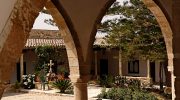
Traditional Cyprus courtyards with stone arches represent the architectural heart of village homes where families conducted daily life away from public view. The avli, as courtyards are called in Greek, functioned as outdoor living rooms enclosed by thick limestone walls exceeding half a meter in depth. Between rooms inside the house, graceful stone archways created a sense of flow and strength while thick wooden beams supported roofs covered with clay tiles. The architecture prioritized both community connection through shared walls with adjacent family compounds and climate adaptation through thermal mass that kept interiors cool in summer and warm in winter. The iliakos, a covered porch created by extending the roof 2 to 3 meters forward on wooden beams or stone…

Read more
Salamis Marble Portraits

Salamis Marble Portraits

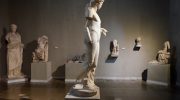
The marble portraits of Roman Salamis turned authority into something citizens met daily, placing emperors, local benefactors, and symbolic figures inside gyms, baths, theatres, and civic halls. Because Cyprus had no native marble, each imported head and statue also signalled access to imperial trade, wealth, and cultural alignment, while local workshops adapted Roman styles through Cypriot hands. This article explains where these portraits stood, how they communicated loyalty and status, and how recutting, earthquakes, and Christian transformation reshaped what survives today. A Roman City Built on Visibility Under Roman rule, Salamis evolved from a Hellenistic centre into a fully Roman metropolis. Its harbour connected Cyprus to trade routes linking Asia Minor, the Levant, and the Aegean, while its public buildings…

Read more
Rare Plants and Animals of Cyprus High-Elevation Zones

Rare Plants and Animals of Cyprus High-Elevation Zones

Cyprus hosts an extraordinary concentration of endemic species in its high-elevation zones, particularly within the Troodos Mountains. At altitudes between 1,000 and 1,952 meters, unique geological conditions combine with Mediterranean climate variations to create habitats found nowhere else on Earth. The island supports 143 endemic plant species, with 47 of these confined exclusively to the Troodos range above 1,000 meters. These mountains function as a natural laboratory where volcanic soils, steep valleys, and climate extremes have shaped remarkable biodiversity over millions of years. The Troodos Mountain Environment Mount Olympus, also called Khionistra, rises to 1,952 meters and represents the highest point in Cyprus. The Troodos range occupies roughly half the island's total area, its core composed of igneous rocks formed…

Read more