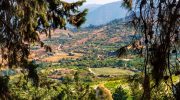
Cyprus is located at the crossroads of the three major flora zones of Europe, Asia, and Africa. This strategic position has produced remarkable botanical diversity, with approximately 1,950 species of flowering plants recorded on the island. About 8 percent of the indigenous plants, totaling 139 endemic species and subspecies, are found nowhere else on Earth.
The island’s great variety of habitats, attributed to varied microclimate and geology ranging from coastal sand dunes to mountains reaching 1,952 meters, creates the perfect conditions for this exceptional flora. Meanwhile, the wine industry thrives on terraced slopes where vines have grown for thousands of years, producing varieties like Commandaria that trace their origins back over 800 years.
When Wildflowers Transform the Landscape
The first orchids bloom in January in Cyprus, and by mid-February, the countryside is already alive with fresh green meadows and almond trees in bloom. Late February to the end of April are the optimum months for seeing Cyprus in full bloom. The flora is very much dependent on how much rain has fallen the previous winter, as the heat of the summer months from April onwards brings an end to wildflowers. You will find hardly any wild flora in May and June.
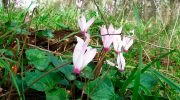
Various woodland species emerge during winter months such as cyclamen, narcissi, crocus, and muscari. The endemic Cyclamen cyprium, unique to Cyprus, is locally abundant in shady, stony places along the south-west coast and in the northern range. From February to April, pink cyclamen sprouts up from rocky foothills and thickets and forms a striking adornment to the Baths of Aphrodite.
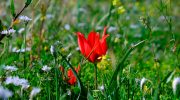
As spring turns into summer and the island heats up, the most colorful spring flowers emerge in full bloom. Asphodels, Calendula, and three varieties of Cistus including Cistus creticus, Cistus parviflorus, and Cistus salviifolius produce varying colors in every direction. Between February and May, you can see ranunculus plants such as the turban buttercup and Persian crowfoot in the foothills of the mountains. They grow in a variety of colors from cream to yellow, deep scarlet, and white flashed with red.
Troodos Mountain Endemic Species
The highest part of Mount Olympos, above 1,500 meters, is covered by snow from January to April. This zone is characterized by sparse growth of Pinus nigra. The ground beneath the pines is covered with a variety of plants, many of which are endemic: Alyssum cypricum, Alyssum troodi, Arabis purpurea, Crocus cyprius, Euphorbia veneris, Nepeta troodi, and Onosma troodi.
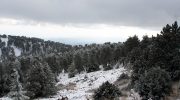
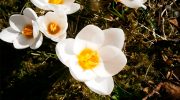
Crocus cyprius are found on the edge of the melting snow. Other endemics such as Arabis purpurea, Euphorbia veneris, and Ranunculus cadmicus subspecies cyprius are also in flower during March and April. By May the lowlands have dried out but the plants of the high Troodos are now coming into flower. In addition to May bloomers, look for Cephalorrhynchus cyprius, Dianthus cyprius subspecies troodi, Hypericum confertum subspecies stenobotrys, and Saponaria cypria in June.
The zone from 0 to 1,500 meters is covered by Pinus brutia with Quercus alnifolia, the endemic oak also called the golden oak because of the color of the underside of the leaves. This zone also hosts Arbutus andrachne, Styrax officinalis, Cistus cretica, and Cistus parviflora. Scattered among the Cistus are scented salvias including Salvia fruticosa and Salvia willeana, the endemic salvia.
Ancient Vineyards in Mountain Villages
The Pitsillia area lies on the eastern slopes of the Troodos mountain range. Picturesque villages cling to the mountainside amid vineyards, orchards of almond and hazelnut trees, and an astonishing array of wildflowers. The need for agricultural land led for many centuries to the clearing of forested areas. Vineyards and orchards replaced pine forests in suitable locations.
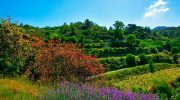
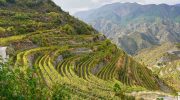
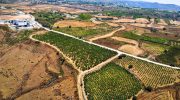
Many vineyards on Cyprus are planted on steep terraces at high altitudes. At lower elevations, 700-meter-high vineyards on Cyprus’s far western side use sea breezes to deliver cool climate wines between 11 and 12.5 percent alcohol by volume. With clear views of the Mediterranean, seas of 65 to 100-year-old bush vines contribute to slower maturation. Vineyard exposure can create remarkable differences even at the same altitude.
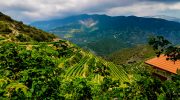
Kyperounda winery planted two Xynisteri vineyards at 1,200 meters. Both 2022 vintages reached 12.5 percent alcohol but produced quite different wines. Their sun-drenched west-facing version offered up primary peach and mineral notes, light florals, a slick full-bodied texture, and long finish. The cooler eastern morning-sun-facing vineyard gave more floral, green herbal, and citrus-driven flavors with considerably more acidity and much finer viscosity.
Indigenous Grape Varieties Worth Knowing
Xynisteri is the main white grape variety of Cyprus, comprising around 30 percent of vineyard plantings. This ancient variety shows age-worthy qualities. Kyperounda Petritis vintages from 2013 and 2004 presented intriguing preserved lemon, zest, beeswax, and toast tertiary development reminiscent of old Clare Valley Riesling.
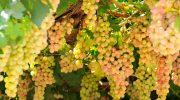
Yiannoudi is an old red variety found in 500-year-old abandoned vineyards alongside Mavro and Xynisteri. An undomesticated wild grape, its female flowers require Xynisteri co-planted to pollinate, though Mavro and Syrah will also work. Interplanting usually alternates every two or three vines. Yiannoudi’s aromatics and flavors tend toward herbal bay leaf and balsamic notes with a mix of savory, roasted red and black fruits.
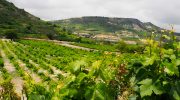
Lefkada is another red needing co-planting with Xynisteri. It is notoriously difficult in the vineyard and late ripening, with stems sometimes remaining green even when fruit ripens. Exceedingly tannic, Lefkada demands light extraction and gentle handling to avoid astringency. Bambakada seems perfect for Nerello Mascalese or Alfrocheiro lovers, offering spirited mixes of red and black fruit characters with silky texture and fine structure.
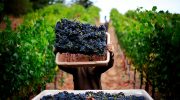
Mavro, the famous old mainstay of Commandaria, produces delightfully straightforward cherry-esque wines that are light-bodied, finely tannined, and refreshingly juicy.
Commandaria, The World’s Oldest Named Wine
Commandaria holds the distinction of being the world’s oldest named wine still in production, with over 800 years of documented history. The Knights of Saint John perfected this sweet amber nectar in the 12th century during their control of Cyprus. The wine is produced from sun-dried grapes, typically Xynisteri and Mavro, grown in designated villages of the Krasochoria wine region.
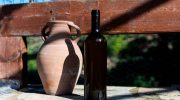
The production method remains traditional. After harvest, grapes are laid out in the sun to concentrate sugars through partial dehydration. This creates intensely sweet must that ferments slowly, resulting in rich dessert wine with complex flavors of dried fruit, nuts, and caramel. The wine ages in old oak barrels using a solera system where younger wines blend with older vintages, maintaining consistency across years.
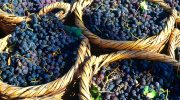
In October and through November the leaves change color in the Troodos and vineyards take on gold and crimson hues against a backdrop of crystal clear sunlight. Toward the end of October, the first ten days of September bring the annual Wine Festival in Limassol, a buoyant period celebrating the grape harvest with free-flowing locally produced wines.