Cyprus developed a distinct tradition of wine storage and transport vessels over 6,000 years. The island’s geographic position between three continents made it a vital Mediterranean trading hub where wine culture flourished. From ancient egg-shaped jars discovered at Erimi dating to 3000 BCE to massive pitharia storage vessels holding up to 2,000 liters, these containers represent far more than simple pottery.
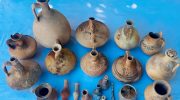
Each vessel type served specific purposes in wine production, fermentation, storage, and trade. The containers tell stories of technical innovation, economic networks, and cultural practices that shaped wine civilization across Europe and the Mediterranean.
Historical Context
Archaeological excavations at Erimi-Bamboula conducted by Porphyrios Dikaios between 1932 and 1935 uncovered egg-shaped jars from the Chalcolithic period around 3900 to 2500 BCE. These jars featured long narrow necks, pointed nipple bases, and no handles. Tests conducted in 2005 analyzed residues from eighteen jar bases, with twelve showing large traces of tartaric acid, a naturally occurring compound found primarily in grapes. This discovery confirmed these vessels were used to intentionally process wine, making them predecessors to later amphora-type wine storage containers.
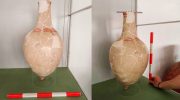
The Bronze Age brought expansion in wine trade. From 3300 to 2000 BCE, organized small-scale commerce developed with Egypt and the Syrian-Palestinian coast. The Canaanite amphora emerged as the earliest commercial vessel type in the Mediterranean, serving as a model for other ceramic containers due to its practical design. From the 17th century BCE onward, Canaanite amphoras appeared in large quantities in Cyprus through wine imports from the East.
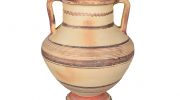
By the 7th century BCE, Cyprus developed its own biconical amphora with a pointed base and raised handles. This distinctly Cypriot type accommodated trade of both oil and wine throughout the eastern Mediterranean. Ship cargo evidence reveals the scale of this commerce. The Ulu Burun shipwreck off Turkey’s southwestern coast carried over 10 tons of Cypriot goods when it sank in the late 14th century BCE. A 1999 shipwreck discovery dating to 2300 BCE held over 2,500 amphoras, demonstrating wine was being traded at least that early.
Distinctive Features of Traditional Wine Containers
Pitharia represent the most iconic traditional Cypriot wine vessels. These enormous terracotta jars were fabricated exclusively by itinerant male potters called pitharades in mountainous villages including Phini, Lazania, Phikardou, Palekhorio, Apliki, and Kornos. The jars ranged considerably in size, with normal large vessels holding 800 liters while exceptional examples could contain up to 2,000 liters.
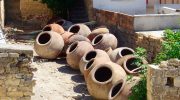
Construction methods remained consistent over centuries. Pitharades collected clay near villages where they received commissions, crushed it into powder, and mixed it with water. They formed vessels by first shaping solid bases, then building walls through coiling techniques. The entire process took approximately fifteen days. Finished jars were fired either in permanent kilns with domed roofs or in newly constructed kilns during three-day firing processes.

After firing while pores remained open, craftspeople applied boiling pitch to internal surfaces, creating watertight seals. Interior walls required regular relining with pine tree resin to maintain impermeability. This sealing method mirrors ancient practices documented from Classical times. The resin imparted distinctive flavors to stored wine, a characteristic that became valued rather than avoided.
Pitharia were typically placed two-thirds underground so wine would maintain constant temperatures year-round. This placement protected contents from temperature fluctuations that could spoil fermentation or aging processes. The partially buried installation also provided stability for these massive vessels.
Surface treatments differed between regional traditions. Jar makers from Lazania in lower foothills embellished their products with wide varieties of symbols, while mountain producers created plainer surfaces with raised bands in relief. Some featured elaborate patterns incised, impressed, or applied to damp clay. Decorative elements included dates, names, and traditional motifs.
Interesting Facts About Cyprus Wine Vessels
The Cyprus Wine Museum at Erimi exhibits Chalcolithic wine jars considered among the oldest evidence of European wine production. Chemical analysis revealed that these 5,500-year-old vessels contained substances consistent with sweet wine, establishing Erimi village as potentially the birthplace of European wine culture. Italian researchers tested residue and discovered high tartaric acid levels indicating wine storage.

The oldest wine name still in production worldwide comes from Cyprus. Commandaria wine traces documented history to 800 BCE when Greek poet Hesiod first wrote about nama, the sweet wine of Cyprus. This makes it not only continuously produced for nearly 3,000 years but also the oldest named wine. UNESCO recognized Commandaria as intangible cultural heritage in December 2025, placing it among the small circle of living wine traditions honored by the organization.

According to the Guinness Book of Records, Commandaria holds the distinction as the world’s oldest continuously produced wine. Its origins reach back approximately 4,000 years, though documentation begins around 800 BCE. The current name dates to the Middle Ages, derived from Old French Commanderie, the term for Knights Hospitaller headquarters at Kolossi Castle and their possessions in the Limassol region.
King Richard the Lionheart conquered Cyprus in 1192 during the Third Crusade and celebrated his wedding to Berengaria at St. George’s Temple in Limassol with local nama wine. He proclaimed it “the wine of kings and the king of wines,” establishing a royal endorsement that enhanced the wine’s reputation across Europe. Shortly after, Richard sold Cyprus to the Knights Templar, who began exporting vin de Commanderie from their feudal estates.
Production Methods Behind Quality Vessels
Traditional pottery villages developed specialized techniques passed through generations. Kornos potters worked entirely by hand using low foot-powered wheels that turned slowly, allowing precise control. They decorated pots with simple carved strips below necks using three methods. Stikti involved pressing comb pieces into spinning pot surfaces, harakti meant dragging combs to create lines, and charagmeni combined pressing and dragging movements.

Phini developed distinctive traditions with women known as mastorisses serving as master potters. These skilled craftswomen maintained ancient methods while working on small pottery wheels just 30 centimeters high. They manually turned wheels while using wooden knives to smooth and shape clay. The process involved creating main bodies, then adding rolled clay sausages to form decorative convex rims at necks.

Raw materials came from local sources. Potters from Kornos obtained clay from areas near Mount Stavrovouni and Mount Xylia. Phini craftspeople used red potter’s clay called phinikoun found in their region. Local clay availability allowed sustainable production without long-distance material transport.
Commandaria production follows strict regulations established in 1990 when it received Protected Designation of Origin status. Grapes must be grown in fourteen designated villages on the southern slopes of Troodos Mountains. These villages correspond roughly to the Knights Templars’ original feudal holdings above Kolossi castle. The PDO rules require unirrigated bush-vine cultivation of white Xynisteri and red Mavro grapes.
Experiencing Cyprus Wine Vessel Heritage
The Cyprus Wine Museum provides comprehensive exposure to traditional wine culture. Located in Erimi village, the facility displays Chalcolithic wine jars, traditional pitharia from Kornos and Phini, and early distillation equipment. The eastern courtyard exhibits stone pits for grape crushing, zivania production apparatus, and large terracotta storage jars. Visitors can witness representations of traditional wine-making processes while learning about evolution from ancient methods to modern techniques.
Kornos village allows direct observation of potters at work. The sound of foot-powered wheels and sight of skilled hands shaping red clay connects visitors to millennia of tradition. Workshops welcome guests to try pottery, providing tactile understanding of required skills. The village produces large wine jugs, milk vessels, flower pots, incense burners, and traditional tziverti cylindrical clay beehives.

The Commandaria Museum in Zoopigi village focuses specifically on the famous wine. Community leader Christakis Nicolaou explains how the island’s rich volcanic soil contributes to distinctive flavor notes. Visitors learn about production regulations, grape varieties, and aging processes. Wine tastings allow direct experience of the amber liquid with its complex bouquet.
The Living Legacy of Wine Vessels
Traditional Cypriot wine bottles and decorative vessels represent unbroken cultural continuity spanning six millennia. From Chalcolithic egg-shaped jars to medieval pitharia and modern Commandaria production, each vessel type reflects technological innovation, economic adaptation, and cultural values. The containers served practical functions while embodying artistic expression and social identity.
Their survival demonstrates how traditional knowledge maintains relevance across changing circumstances. Understanding these vessels means understanding Cyprus itself, an island where ancient practices inform modern production. The wine containers connect geological resources, agricultural traditions, craft expertise, and cultural heritage into coherent narratives of human creativity and resilience.