All Articles

Community Restoration in Cyprus

Community Restoration in Cyprus

Across Cyprus, heritage restoration often begins locally, with villages repairing churches, fountains, houses, and terraces because these places still structure daily life. Community-led projects combine volunteer labour, parish coordination, diaspora funding, and professional guidance to stabilise buildings without turning them into staged monuments. This article explains why communities stepped in, how restoration works in different regions, and what these efforts change socially as well as architecturally. Heritage Kept in Daily Use In Cyprus, heritage is rarely experienced as something distant or abstract. Old churches still host festivals, village fountains still define public squares, and traditional houses continue to anchor family memory even after decades of abandonment. Community-led restoration reflects this intimacy. Instead of treating heritage as a frozen monument, local…

Read more


After Work Cafe Culture and Social Life

After Work Cafe Culture and Social Life

Cyprus café culture represents more than just drinking coffee. It functions as essential social infrastructure where friendships form, information spreads, and communities bond. The traditional kafeneio or coffee shop serves as the focal point of Cypriot life, particularly for men who spend hours daily in these establishments.  Unlike modern cafés designed for quick transactions, the traditional coffee shop encourages lingering through comfortable seating, warm hospitality, and unrushed service. Cypriots drink coffee in the morning, afternoon, and evening, treating each cup as an opportunity for connection rather than caffeine delivery. After long days at work or in the fields, the kafeneio becomes the natural refuge where locals gather to relax, debate, play games, and maintain social bonds that hold villages together.…

Read more
Cost of Living in Cyprus

Cost of Living in Cyprus

Cyprus has become a popular destination for expats, retirees, and digital workers who want Mediterranean sunshine without the high price tag of Western Europe. The island offers a comfortable lifestyle at costs that remain below most EU countries, though prices have been rising steadily in recent years. Understanding what you will actually spend on housing, food, utilities, and daily expenses can help you decide if Cyprus fits your budget. A single person needs between €1,800 and €2,000 per month including rent to live comfortably in Cyprus, while a family of four requires at least €4,500 monthly. These figures account for housing, groceries, utilities, transportation, and basic leisure activities. Your actual expenses will vary based on which city you choose and…

Read more
Cyprus’s Terraced Vineyards

Cyprus’s Terraced Vineyards

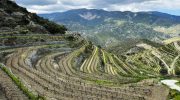
Across the slopes of Cyprus, especially in the Troodos Mountains, vineyards climb in careful steps supported by dry stone walls. These terraces were not built for beauty alone. They were shaped over centuries to manage steep land, scarce water, and intense sun. Today, they form one of the island’s most distinctive cultural landscapes, where wine, village life, and traditional craftsmanship remain visibly connected to the terrain. Cyprus’s terraced vineyards are not a natural feature you simply stumble upon. They are the result of long, patient work, repeated generation after generation. On the southern and western slopes of the Troodos Mountains, hillsides that would otherwise be too steep or fragile for farming have been transformed into narrow, horizontal bands. Each terrace…

Read more
Traditional Food and Meze Events

Traditional Food and Meze Events

Food in Cyprus is rarely just about what is on the plate. It is about time, generosity, and the simple act of being together. One of the clearest expressions of this way of life is the meze, a long, shared dining experience made up of many small dishes that arrive gradually at the table. Traditional food and meze events offer more than a chance to taste local flavors. They reveal how Cypriots understand hospitality, patience, and community, values that have shaped island life for centuries. At its core, meze is not a menu choice. It is an agreement to slow down and share. More Than a Meal, a Social Ritual In practical terms, meze refers to a succession of small…

Read more
The Pygmalion Legend

The Pygmalion Legend

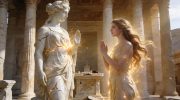
The legend of Pygmalion is one of the most enduring stories of transformation in Greek mythology, and it is closely connected to Cyprus, an island long associated with Aphrodite and the themes of beauty, love, and artistic creation. According to the myth, Pygmalion was a sculptor and, in some traditions, a king of Cyprus who became disillusioned with the behavior of the women around him. Rejecting ordinary human relationships, he devoted himself to his art and carved a statue of a woman so beautiful and perfect that he fell deeply in love with his own creation. This story, set in the sacred landscape of Cyprus, reflects local traditions that linked the island not only to divine beauty but also to…

Read more
The Curse of Myrrha (Smyrna)

The Curse of Myrrha (Smyrna)

The story of Myrrha, also known as Smyrna in some versions, stands among the most tragic narratives in Greek mythology and is deeply connected to the mythological landscape of Cyprus. She is remembered as the daughter of King Kinyras, the legendary ruler associated with sacred kingship and the cult of Aphrodite. Her tale links Cyprus not only to themes of divine love and beauty through Adonis, but also to darker themes of transgression, punishment, and transformation. This myth became an important narrative explaining the origins of Adonis, a figure whose death and rebirth were closely tied to fertility cycles and seasonal renewal in Mediterranean religious tradition. The inclusion of Myrrha in Cypriot mythological heritage reflects the island’s role as a…

Read more
The Ayia Napa Medieval Festival

The Ayia Napa Medieval Festival

For a few days each year, the coastal town of Ayia Napa seems to loosen its grip on the present. Streets soften under banners and colour, music carries through stone courtyards, and spaces normally passed without notice begin to feel deliberate and ceremonial. The Medieval Festival of Famagusta is not designed as a reconstruction frozen in time, nor does it resemble a museum exhibition staged outdoors. Instead, it functions as a living cultural moment, one that uses costume, performance, craft, and architecture to reawaken the Lusignan era and allow Cyprus’s medieval identity to surface in ways that feel social, shared, and immediately accessible. What makes the festival distinctive is how quickly it communicates its intent. Even visitors with little knowledge…

Read more
Spiritual Strongholds in the Mountains

Spiritual Strongholds in the Mountains

Hidden among Cyprus's mountains and remote valleys are monastic complexes that have survived earthquakes, invasions, and centuries of political change. These sites are far more than impressive historic buildings. For over 1,500 years, they have served as centers of education, healthcare, manuscript preservation, agriculture, and community support. Within their stone walls, visitors encounter centuries of Cypriot history, art, architecture, and cultural traditions. These institutions played a major role in preserving language, knowledge, and local customs through some of the island's most challenging periods. Places of Learning and Community Support Cypriot monasteries are self-contained communities traditionally inhabited by monks or nuns who followed structured daily routines involving study, work, and communal activities. Unlike parish churches that primarily served nearby villages, monasteries…

Read more