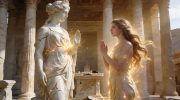
The story of Myrrha, also known as Smyrna in some versions, stands among the most tragic narratives in Greek mythology and is deeply connected to the mythological landscape of Cyprus. She is remembered as the daughter of King Kinyras, the legendary ruler associated with sacred kingship and the cult of Aphrodite. Her tale links Cyprus not only to themes of divine love and beauty through Adonis, but also to darker themes of transgression, punishment, and transformation. This myth became an important narrative explaining the origins of Adonis, a figure whose death and rebirth were closely tied to fertility cycles and seasonal renewal in Mediterranean religious tradition.

The inclusion of Myrrha in Cypriot mythological heritage reflects the island’s role as a cultural bridge between Greek storytelling and local religious identity. Her story, though tragic, serves as a foundation for the later cult of Adonis, whose association with Aphrodite made Cyprus central to his worship. Through Myrrha, themes of suffering, metamorphosis, and regeneration become embedded in the island’s mythic past, shaping its symbolic connection to life cycles and sacred transformation.
The Nature of the Curse
According to myth, Myrrha incurred the wrath of Aphrodite and was cursed with an unnatural desire for her father, King Kinyras. The reasons for the goddess’s anger vary across ancient sources, but often involve a perceived insult or failure to honor Aphrodite properly. The curse reflects a recurring pattern in Greek mythology where divine punishment is both severe and inescapable, emphasizing the power of the gods over human fate. Myrrha’s internal struggle illustrates the destructive force of divinely imposed desire, portraying her not as willingly sinful but as tragically compelled by forces beyond her control.

The narrative highlights the tension between personal innocence and cosmic punishment. Myrrha’s anguish and desperation reveal the human cost of divine retribution, while the secrecy and deception surrounding her actions intensify the tragic dimension of the myth. The story emphasizes that transgression in mythological narratives often arises not from simple moral failure but from the complex interplay between divine will and human vulnerability.
Discovery and Divine Intervention
When King Kinyras eventually discovered the truth of the situation, his reaction was one of horror and rage. In many versions of the myth, he attempts to kill Myrrha, who flees in terror. This moment of crisis represents the collapse of familial order and the breakdown of natural boundaries, reinforcing the severity of the curse. As Myrrha escapes, she prays for deliverance from her unbearable situation, seeking release from both life and death.
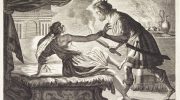
The gods respond by transforming her into a tree, known as the myrrh tree. This transformation marks both punishment and protection. As a tree, Myrrha is removed from human society and from the shame of her actions, yet she continues to exist in a new, altered form.

The transformation reflects a common mythological theme in which metamorphosis serves as a means of resolving unbearable conflict, allowing the individual to escape human suffering while remaining part of the natural world.
The Birth of Adonis
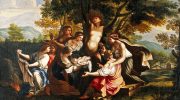
From the trunk of the myrrh tree, Adonis is later born, emerging as a symbol of beauty, fragility, and cyclical life. His unusual birth reinforces the theme of transformation, linking tragedy with renewal. Adonis becomes associated with Aphrodite, who falls in love with him, continuing the chain of events that ties the goddess to themes of desire and loss. His life and death, often understood as a reflection of seasonal cycles, connect the myth of Myrrha to broader fertility traditions in the Mediterranean.
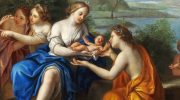
Through Adonis, Myrrha’s suffering gains symbolic meaning beyond personal tragedy. The myth suggests that from destruction and shame can arise new life and sacred significance. This transformation of tragedy into renewal echoes agricultural patterns, where decay leads to growth, reinforcing the connection between myth and natural cycles.
Symbolism of the Myrrh Tree
The myrrh tree itself carries symbolic weight within the story. Myrrh resin, used in ancient ritual, medicine, and burial practices, was associated with purification and mourning. By transforming Myrrha into this tree, the myth embeds her identity into a substance linked to both death and sacred ceremony. The tree weeps resin, often interpreted as symbolic tears, reinforcing the emotional dimension of her story.
This symbolism connects personal suffering to ritual practice. Myrrh, harvested and used in offerings, becomes a material reminder of the myth, integrating narrative memory into religious life. The transformation of Myrrha into a sacred substance underscores the idea that mythological events shape the material and spiritual world alike.
Cypriot Identity and Religious Meaning
The association of Myrrha, Kinyras, and Adonis with Cyprus strengthens the island’s place in Mediterranean mythological geography. These stories situate Cyprus as a land where divine-human interactions produced lasting religious traditions. The birth of Adonis from Myrrha connects Cypriot myth to widespread fertility rites that emphasized death and rebirth as part of the cosmic order.
Myrrha’s story, while tragic, forms an essential prelude to the cult of Adonis, which involved rituals of mourning followed by celebration of renewal. These rites reflected agricultural cycles and human experiences of loss and hope. Through this myth, Cyprus becomes symbolically linked to themes of transformation, resilience, and the continuity of life.
Themes of Punishment and Renewal
The myth of Myrrha illustrates how Greek mythology often intertwines punishment with regeneration. While the curse represents divine retribution, the transformation into a tree and the birth of Adonis introduce elements of renewal. This duality reflects an ancient worldview in which suffering and growth were understood as interconnected aspects of existence.
Rather than presenting a simple moral lesson, the story explores the complexity of fate and divine power. Human beings in myth are subject to forces beyond their control, yet their stories contribute to the unfolding of cosmic patterns. Myrrha’s tragedy becomes part of a larger narrative about life’s cycles and the persistence of sacred meaning.
Legacy in Art and Literature
The tale of Myrrha inspired numerous ancient and later artistic representations, from classical poetry to Renaissance painting. Writers such as Ovid elaborated the story, emphasizing its emotional intensity and symbolic depth. These retellings ensured that the myth remained part of cultural memory, linking Cyprus to enduring themes of transformation and divine justice.
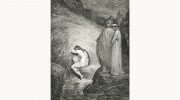
In visual art, Myrrha’s transformation and the birth of Adonis provided dramatic and symbolic subject matter. Through these representations, the myth continued to communicate ideas about human vulnerability, divine power, and the possibility of renewal emerging from despair.
Conclusion!
The Curse of Myrrha stands as one of Greek mythology’s most powerful and tragic stories, linking Cyprus to themes of divine punishment, transformation, and rebirth. Through her metamorphosis into the myrrh tree and the birth of Adonis, personal tragedy becomes part of a broader cycle of renewal central to Mediterranean religious thought. The myth reflects the complex relationship between human suffering and sacred meaning, illustrating how loss and regeneration coexist within the natural and spiritual order. As part of Cyprus’s mythological heritage, Myrrha’s story continues to embody the island’s symbolic association with life, death, and transformation.