All Articles

Cyprus Favored by Gods

Cyprus Favored by Gods

In the ancient Mediterranean imagination, Cyprus held a reputation that extended beyond its physical size or political power. Myths and historical traditions alike described the island as uniquely blessed, a land favored by the gods for its fertility, natural resources, and sacred associations. Its geographic position at the crossroads of Asia, Africa, and Europe made it a meeting place of cultures, but it was the perception of divine favor that elevated Cyprus into a symbolic landscape within mythology. Ancient writers often portrayed the island as a place where divine presence was especially strong, where natural abundance and spiritual significance were closely connected. This mythological reputation did not arise from imagination alone. The island’s fertile plains, forested mountains, and productive coastline…

Read more


Souvla in Cyprus

Souvla in Cyprus

Souvla is not simply a way of cooking meat in Cyprus. It is a social rhythm, a shared understanding that some meals are meant to take time. Built around large chunks of meat slowly rotating over charcoal, souvla turns cooking into an event and eating into a collective reward. To understand souvla is to understand how Cypriots value patience, hospitality, and togetherness. At its most basic level, souvla refers to large pieces of meat cooked on long metal skewers over charcoal. But the definition ends there, only technically. In practice, preparing souvla means committing several hours of the day to a shared experience that unfolds at its own pace. Unlike fast-grilled skewered meats found across the Mediterranean, souvla rejects speed.…

Read more
Cyprus Digital Life

Cyprus Digital Life

Cyprus has become one of Europe's most digitally connected societies. The small Mediterranean island nation with 1.26 million residents shows remarkable technology adoption. Mobile connections reached 1.90 million in early 2024, equal to 150 percent of the population. Internet penetration stands at 91.4 percent, with 1.16 million people online. These numbers reveal a society that has fully embraced digital technology in daily routines. The Evolution from Basic Phones to 5G Network Mobile technology arrived in Cyprus during the late 1990s and early 2000s. The Cyprus Telecommunications Authority, operating for over 70 years, led infrastructure development from basic telephone networks to advanced mobile systems. Cellular subscriptions grew steadily from 2000 onwards, reaching 1.39 million by 2022. The transformation accelerated with 4G…

Read more
Folk Games of Cyprus

Folk Games of Cyprus

Traditional games in Cyprus represent a valuable cultural heritage passed from generation to generation, teaching social skills, building community bonds, and providing entertainment before electronic devices dominated leisure time. The games of the people of Cyprus are a valuable cultural heritage, as are other similar heritages like fairytales, songs, and proverbs. Some games come from Greece, but they play them extensively in Cyprus, while other games are originally Cypriot. Traditional games are played in villages and especially by the older generations, though certain games like tavli and pilotta remain popular across all ages and regions. Tavli, The Strategic Board Game Tavli is especially played in Cyprus and Greece and is enjoyed by people of all ages, particularly in coffee shops…

Read more
Cyprus Music, Memory, and Community 

Cyprus Music, Memory, and Community 

Traditional music in Cyprus is not preserved behind glass or confined to concert halls. It lives in village squares, wedding courtyards, seaside festivals, and family celebrations. Shaped by centuries of cultural crossings and daily communal life, Cypriot music functions less as performance and more as participation. Its melodies carry memory, its rhythms organise social moments, and its lyrics preserve stories that were never written down. To understand Cypriot music is to understand how the island listens to itself. This article explores how Cypriot musical traditions developed, how they function socially, and why they continue to matter today, not as heritage displays, but as living practice. An Island That Learned to Sing in Layers Cyprus sits at the crossroads of the…

Read more
Shillourokambos Archaeological Site

Shillourokambos Archaeological Site

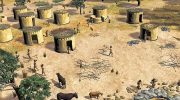
Six kilometers east of Limassol in southern Cyprus sits Shillourokambos, a Neolithic village that rewrote what archaeologists thought they knew about early Mediterranean life. This site rests on a low plateau near the modern village of Parekklisia, occupying land that people first settled at the end of the 9th millennium BC. When excavations began in 1992, researchers could hardly have anticipated the discoveries waiting beneath the soil. Shillourokambos belongs to the Pre-Pottery Neolithic B period, a time when communities across the Near East were making the crucial transition from mobile hunter-gatherers to settled farmers. The settlement passed through four distinct phases between approximately 8,200 BC and the second half of the 8th millennium. Each phase left behind evidence of how…

Read more
Cyprus Buses Connecting Cities

Cyprus Buses Connecting Cities

The bus network in Cyprus operates under a divided structure with four main companies managing different districts. Cyprus Public Transport handles Nicosia and Larnaca districts, EMEL serves Limassol, OSYPA operates in Paphos, and OSEA covers the Famagusta District, including Ayia Napa and Protaras. This fragmentation dates to government restructuring in 2010 that replaced smaller private operators with district-based companies. A separate intercity bus company connects all major cities under one operation. This unified approach to long-distance travel makes planning intercity journeys simpler than navigating local urban routes across different operators. All intercity routes use modern, air-conditioned coaches equipped with WiFi and USB charging ports. The system receives government oversight through the Department of Road Transport, which awards concession contracts to…

Read more
Sanctuary of Apollo at Vouni

Sanctuary of Apollo at Vouni

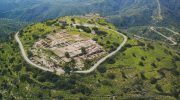
The Sanctuary of Apollo at Vouni embodies the fusion of religious devotion and political authority in ancient Cyprus, where the god of light, prophecy, and healing was venerated within the walls of a grand palace built by a pro-Persian ruler. Located on a hilltop in northwestern Cyprus near the ancient city of Soli, this site dates to the 5th century BC and highlights the island's strategic role in the Persian Empire's influence over the Mediterranean. As part of the Vouni Palace complex, the sanctuary served not only as a spiritual center but also as a symbol of the pro-Persian administration's power, blending local Cypriot traditions with Achaemenid and Hellenic elements. Dedicated to Apollo, the sanctuary facilitated rituals that reinforced loyalty…

Read more
Community Festivals in Cyprus

Community Festivals in Cyprus

Community festivals in Cyprus center on panigyria, traditional religious fairs that combine Orthodox liturgy with secular celebration through music, dancing, and shared meals. These village gatherings honor patron saints on their designated feast days, transforming quiet rural communities into vibrant hubs where extended families reunite, traditional customs are maintained, and social bonds strengthen. The festivals begin with solemn evening Vespers services and icon processions called Litania that wind through village streets, followed by Artoklasia bread blessings where five loaves, wine, and olive oil are consecrated. The next day's Divine Liturgy gives way to festivities featuring folk musicians, tsiattista poetry competitions, traditional circle dances, and food stalls selling loukoumades honey doughnuts, souvla grilled meat, and grape-based sweets. Some panigyria have received…

Read more