Research partnerships in Cyprus bring together tourism operators, conservation organizations, universities, and government agencies to address environmental challenges while supporting the island’s economy.
These collaborations develop science-based solutions for protecting natural and cultural resources that attract visitors. The partnerships combine local knowledge with international expertise, creating programs that benefit both ecosystems and communities.

The Cyprus Institute operates as a regional center of excellence for the Eastern Mediterranean and the Middle East, focusing on climate change, environmental sciences, high-performance computing, and cultural heritage. These arrangements ensure that tourism development proceeds alongside meaningful protection efforts.
How Partnerships Evolved Over Time
The Cyprus Sustainable Tourism Initiative formed in 2006 following a two-year project by the Travel Foundation that created a partnership of UK tour operators, environmental Cypriot NGOs, the Cyprus Tourism Organization, travel agents, and village producers.
This marked a shift from isolated conservation efforts to coordinated action. The University of Cyprus established its Oceanography center to conduct research on Eastern Mediterranean marine systems.

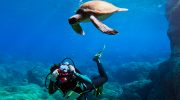
The centre studies marine biodiversity, alien species biology and ecology, climate change impacts, environmental education, creation of diving routes for thematic tourism, and marine pollution.
The Cyprus Institute’s Science and Technology in Archaeology and Culture Research Center was founded in partnership with the Centre de recherche et de restauration des musées de France, applying advanced imaging and materials science to cultural heritage sites. These institutional frameworks created permanent structures for research cooperation.
Key Features of Current Partnerships
Multiple organizations now work across disciplines. Marine & Environmental Research Lab specializes in marine surveys and environmental baseline characterization, evaluation of impacts from coastal or offshore developments, proposition of mitigation measures, and the monitoring of biotic and abiotic variables.
The Cyprus Environmental Studies Centre welcomes about 3,500 students per year from schools and universities in Cyprus, Western Europe, and the Middle East. The Marine Turtle Conservation Project operates as a collaboration between the Society for the Protection of Turtles, University of Exeter’s Marine Turtle Research Group, and the the Turkish-occupied part of Cyprus Department for Environmental Protection. The Tourism Research Center at Eastern Mediterranean University produces knowledge through collaborative partnerships that benefit the tourism and hospitality industry. Projects combine fieldwork, laboratory analysis, public education, and policy development.
Concrete Research Outcomes Worth Knowing
These partnerships generate measurable results. Research documented 322 beaches in Cyprus with a total area of approximately 2.9 square kilometers, establishing baseline data for monitoring changes.
The Department of Fisheries and Marine Research aims to strengthen scientific research on marine ecosystems from the shallow to the deep realm to identify and protect areas with ecologically important features.
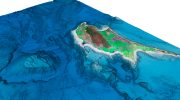
Research on Eratosthenes Seamount, located between Cyprus and the Nile Cone and rising more than 1,500 meters from the sea bottom, aims to identify sensitive deep-sea benthic habitats and provide information on their distribution.
One researcher’s submitted project proposals attracted revenues of around 1.1 million euros to the Oceanography Centre. Studies produce maps of seagrass meadows, assessments of beach carrying capacity under climate change scenarios, and evaluations of tourism impacts on protected areas.
Specific Project Applications
Research partnerships address practical challenges through targeted initiatives. The PROMETHEUS project promotes elasmobranch conservation through by-catch reduction, ecotourism, and alternative sustainable fisheries.
The Lara-Toxeftra Climate-Adaptive and Responsive management plan develops strategies for sea turtle nesting sites. At Choirokoitia Neolithic settlement, the Cyprus Institute began using 3D technologies in 2018 for documentation and creating virtual environments for visitors.
A Master Plan was prepared in 2011 by the Cyprus Department of Antiquities in collaboration with the French Archaeological Mission and the Cyprus Institute. The Cyprus Sustainable Tourism Initiative implements programs addressing plastic pollution on beaches, working directly with hotels to eliminate single-use plastics. Projects demonstrate how scientific knowledge translates into on-ground conservation actions.
Why These Partnerships Matter Today
Tourism generates approximately 15 percent of Cyprus’s GDP, creating pressure to maximize visitor numbers while environmental degradation threatens the attractions that draw tourists. Research partnerships provide objective data for decision-making.

Climate change projections show beaches will experience significant erosion, requiring adaptive management strategies. Marine ecosystems face warming waters, invasive species, and pollution. Cultural heritage sites need protection from visitor damage while remaining accessible.
The Cyprus Sustainable Tourism Initiative uses its network of stakeholders to lobby the Cyprus Government and Parliament to introduce new laws, regulations, and incentives addressing the climate crisis.
Universities train the next generation of conservation professionals while tourism operators gain scientific support for sustainable practices. These collaborations balance economic needs with environmental protection.
How Visitors Benefit from Research
Research partnerships enhance tourist experiences through improved information and access. Digital documentation projects create virtual tours of archaeological sites, reducing physical wear while expanding educational content. Marine research identifies optimal locations and seasons for diving and snorkeling with minimal ecosystem disruption.
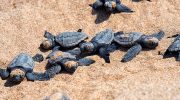
Sea turtle conservation projects offer supervised viewing opportunities backed by scientific monitoring. Hotel partnerships with environmental organizations provide guests with education programs about local ecosystems.
The importance and value of sea turtles as tourist attractions increases as the tourism industry seeks to enrich the traditional sun, sea, and sand experience. Visitors gain access to experiences informed by current scientific understanding rather than outdated information.
The Foundation for Future Conservation
These partnerships represent a fundamental shift in how Cyprus approaches tourism development. The island demonstrates that small territories can maintain robust research programs through international collaboration.
Success requires sustained funding, institutional commitment, and willingness to implement research findings even when they conflict with short-term economic interests. The partnerships create networks that share knowledge, distribute costs, and amplify impacts.
They establish monitoring systems that track environmental changes over decades, not just individual project timelines. Cyprus shows how research and tourism can reinforce rather than undermine each other when structured through genuine partnerships.