Across Cyprus, heritage restoration often begins locally, with villages repairing churches, fountains, houses, and terraces because these places still structure daily life. Community-led projects combine volunteer labour, parish coordination, diaspora funding, and professional guidance to stabilise buildings without turning them into staged monuments. This article explains why communities stepped in, how restoration works in different regions, and what these efforts change socially as well as architecturally.
- Heritage Kept in Daily Use
- Why Communities Stepped In
- Geography Shapes the Effort
- Churches as Active Community Space
- Fountains That Bring People Back
- Archaeology Under Courtyards
- The People Behind the Work
- Funding Without Losing Ownership
- How Restoration Actually Happens
- Social Impact Beyond Stone
- Why Visitors Feel the Difference
- What This Model Protects Long-Term
Heritage Kept in Daily Use
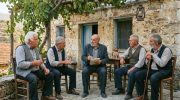
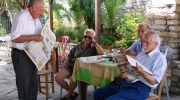
In Cyprus, heritage is rarely experienced as something distant or abstract. Old churches still host festivals, village fountains still define public squares, and traditional houses continue to anchor family memory even after decades of abandonment. Community-led restoration reflects this intimacy. Instead of treating heritage as a frozen monument, local initiatives approach it as something that must remain usable, meaningful, and socially connected.
This shift marks a clear departure from top-down preservation models. While national and international bodies often focus on architectural value or universal significance, communities prioritise continuity. Their goal is not only to save structures, but to protect the rhythms of life tied to them.
Why Communities Stepped In
The rise of community-led restoration in Cyprus is not accidental. It is rooted in historical disruption. Rural depopulation in the mid-20th century left villages empty, roofs collapsing, and terraces eroding. The 1974 Turkish invasion of Cyprus compounded this damage, displacing communities and freezing hundreds of sites in neglect.

In many places, official restoration could not keep pace with decay. Communities responded out of necessity. Parish councils, village committees, and local associations stepped in because no one else would. What began as maintenance gradually evolved into organised preservation, often combining volunteer labour, diaspora funding, and professional guidance.
Geography Shapes the Effort
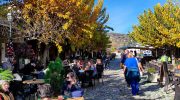
Community restoration looks different depending on where it happens. In mountain villages of the Troodos range, restoring stone houses and terraces is closely tied to survival. These structures prevent erosion, manage water, and make agrotourism viable. In districts like Paphos, fountains and village centres are restored to revive communal life and attract modest tourism without overdevelopment.

Urban environments present a different dynamic. In cities, heritage projects are often professionalised and commercially driven. One exception is the Nicosia buffer zone, where bi-communal restoration has transformed abandoned monuments into symbols of cooperation rather than division. Here, heritage becomes a shared language in a fractured landscape.
Churches as Active Community Space
Churches and monasteries occupy a unique place in community-led restoration because they remain deeply woven into daily and seasonal life. In many villages, these buildings are not passive landmarks but active spaces where baptisms, funerals, weddings, and annual festivals continue to unfold. Their walls hold not only art and architecture, but lived memory.
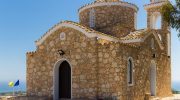
For this reason, restoring a church is rarely treated as a discretionary project. It is understood as a collective responsibility, one tied to ancestry and continuity. In displaced communities, particularly those unable to return permanently to ancestral villages, restoration takes on an even deeper meaning. Repairing a church becomes an act of remembrance, ensuring that spiritual and cultural identity survives even when physical presence is intermittent.
Fountains That Bring People Back
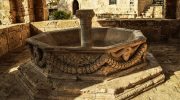
Community-led restoration in Cyprus places equal importance on structures that once governed ordinary routines. Communal fountains, for example, shaped the social geography of villages, drawing people together through the simple necessity of water. When restored, these fountains often reclaim their role as gathering points, reanimating village squares rather than functioning as decorative remnants.
Traditional houses tell a similarly intimate story. Built with local stone, timber, and lime, they were designed for climate, family structure, and shared living. Restoration projects increasingly adapt these homes for contemporary use without stripping away their character. The aim is not preservation for display, but continuity through habitation, allowing villages to remain lived spaces rather than curated environments.
Archaeology Under Courtyards
In many Cypriot villages, archaeological remains exist alongside modern homes, sometimes beneath courtyards or embedded into walls. Unlike large, state-managed sites, these remains depend heavily on community awareness and restraint. Residents act as informal custodians, guiding development choices and protecting what lies beneath.

This proximity encourages a practical relationship with the past. Archaeology is not approached as spectacle or abstraction, but as part of the landscape people navigate daily. Community involvement becomes essential, not symbolic, because the survival of these sites depends on everyday decisions rather than formal supervision alone.
The People Behind the Work
Community-led restoration functions through networks rather than rigid hierarchies. Local residents contribute labour, local knowledge, and fundraising efforts. Parish councils manage coordination and permissions, while cultural associations safeguard both physical structures and the traditions linked to them, from weaving and music to festival organisation.
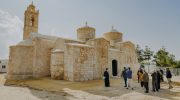
The Cypriot diaspora plays a vital role, particularly in financing restoration projects. Contributions from abroad often reflect a desire to remain connected to villages that may no longer be part of daily life. Alongside this support, skilled masons, conservators, and bi-communal technical teams ensure that enthusiasm is matched with appropriate expertise, protecting sites from well-intentioned but damaging interventions.
Funding Without Losing Ownership
Restoration funding in Cyprus comes from multiple sources, ranging from European and UN-backed programmes to village festivals, donations, and volunteer labour. This layered approach matters. External funding enables larger-scale projects, while local contribution preserves a sense of ownership.
When communities invest their own resources, restored sites are more likely to remain active and cared for over time. Heritage is less likely to slip back into neglect when responsibility is shared rather than outsourced.
How Restoration Actually Happens
Most community-led projects begin with stabilisation rather than transformation. Roofs are secured, walls reinforced, and moisture controlled before aesthetic concerns are addressed. Traditional materials and techniques are preferred not for nostalgic reasons, but because they respond better to Cyprus’s climate and construction logic.
Increasingly, these efforts are supported by digital documentation. 3D scanning, archival recording, and photographic surveys preserve knowledge even if structures are damaged again. In this context, technology does not replace tradition. It strengthens it by extending memory beyond physical vulnerability.
Social Impact Beyond Stone
The impact of restoration reaches far beyond the buildings themselves. Revived squares and churches reintroduce spaces for gathering. Younger generations acquire skills from older craftsmen. In bi-communal projects, cooperation around heritage helps rebuild trust in places where political dialogue has struggled.

Heritage becomes a medium for education and reconciliation, offering shared ground in a divided island. These outcomes cannot be quantified through architectural metrics alone, yet they define the deeper value of community-led preservation.
Why Visitors Feel the Difference
Visitors often describe community-restored sites as feeling more authentic. There are fewer barriers, fewer scripted narratives, and more visible daily use. A restored village does not perform heritage for an audience. It continues to live it.
Respectful engagement means recognising that these places still serve local needs. Supporting small businesses, observing religious customs, and participating thoughtfully in festivals help ensure that tourism reinforces preservation rather than disrupting it.
What This Model Protects Long-Term
The future of heritage preservation in Cyprus depends on balance. State institutions and international frameworks remain essential, but they cannot replace local custodianship. Community-led restoration works are beneficial because they keep heritage functional, familiar, and emotionally rooted.

By restoring their villages, Cypriots are doing more than protecting the past. They are strengthening social ties, environmental resilience, and cultural confidence. In a landscape shaped by disruption, these quiet, collective acts of care remain one of the island’s most enduring forms of continuity.