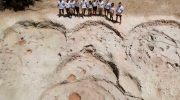
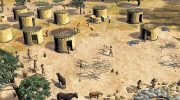
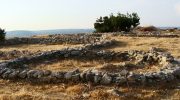
Four kilometers from the village of Kalavasos, on a small hill overlooking the Vasilikos River valley, archaeologists uncovered one of Cyprus’s earliest permanent settlements. Kalavasos-Tenta dates to around 8000-6000 BC and predates the more famous Choirokoitia by nearly a millennium. Today, a distinctive cone-shaped shelter protects the circular stone houses where some of the island’s first farming communities lived over 9,000 years ago.

Kalavasos-Tenta is an Aceramic Neolithic settlement located 38 kilometers southwest of Larnaca and 45 kilometers south of Nicosia. The site occupies a naturally defensible hill on the west side of the Vasilikos valley, positioned to command views of the surrounding agricultural land and the river that provided water for crops and livestock.
The settlement represents the Aceramic Neolithic period, meaning its inhabitants lived before pottery was introduced to Cyprus. Archaeological evidence shows occupation from around 8000 BC through the 6th millennium BC, making it contemporary with other early Cypriot sites like Shillourokambos and Mylouthkia. The population during its peak likely never exceeded 150 people based on the size and number of structures excavated.
According to local tradition, the site’s name derives from a much later event in 327 AD, when Saint Helena, mother of Constantine the Great, stayed in a tent at this location during her visit to Cyprus following the discovery of the True Cross in Jerusalem. Whether historically accurate or not, this legend gave the site its modern name.
Historical Background
Porphyrios Dikaios, the Cypriot archaeologist who also excavated Choirokoitia, first reported Kalavasos-Tenta in 1940 after artifacts were discovered during the construction of a mining railway line. He conducted a brief two-week excavation in 1947, focusing 25 meters south of the hill’s summit. The work revealed stone architecture from the Aceramic Neolithic period but offered limited insight into the site’s full extent and significance.
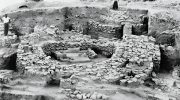
Systematic excavation began in 1976 under the direction of Ian Todd from Brandeis University as part of the Vasilikos Valley Project. This multidisciplinary research program aimed to study the ancient environment and economy of the valley from the Early Neolithic through the medieval period. The project eventually recorded 146 archaeological sites in the valley and transformed a relatively unexamined area into a key region for understanding Cypriot prehistory.
Five seasons of excavation took place at Tenta between 1976 and 1984, funded by the National Science Foundation. These excavations uncovered substantial architectural remains and over 1,000 artifacts crafted from stone, animal bone, and shell. Although fieldwork concluded in 1984, detailed publications about the findings continued to appear as late as 2005, offering ongoing insights into the life and society of Cyprus’s earliest farming communities.
The Settlement and Its Architecture
The structures at Kalavasos-Tenta are distinctly circular, reflecting a hallmark of Aceramic Neolithic architecture in Cyprus. These curvilinear buildings were constructed with stone foundations and mudbrick walls. Most limestone came from local sources, with some diabase stone from the Vasilikos River incorporated into the construction. Wall thickness ranged from 25 to 60 centimeters, and many walls stood over one meter high when excavated.
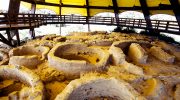
Excavations uncovered approximately 40 to 45 structures. Public buildings occupied the summit of the natural hill and show a clear evolution in construction techniques. Some were first built in a combination of stone and mudbrick, later entirely in mudbrick, and finally entirely in stone. Wall colors varied from grey to reddish-brown and light brown to dark brown, reflecting different phases of building and materials used over time.
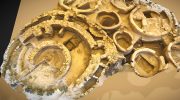
Interior features included platforms, benches, and seats built into the walls. Floors and walls were often coated with gypsum, lime, or a mixture of both, with a thin layer of whitish plaster applied over a base of friable mud plaster. Roofs were flat or domed, constructed from branches, reeds, and rammed earth. Some buildings contained internal piers, which may have supported upper wooden floors and more complex living spaces.

A remarkable discovery was a wall painting depicting two human figures with upraised hands, found on an interior wall and dating to the early 7th millennium BC. This is the earliest known wall painting in Cyprus and demonstrates that these early settlers engaged in symbolic or religious expression beyond purely functional architecture.
The settlement was enclosed by a substantial stone wall, likely topped with a mudbrick superstructure, and a ditch cut into the natural limestone. These defensive features suggest that the community faced potential threats, whether from rival groups or wild animals. The construction of the fortifications required coordinated labor, indicating a social organization that extended beyond simple family units.
Daily Life and Material Culture
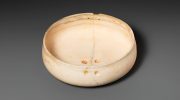
Artifacts recovered from Tenta offer rich insights into the daily life of its inhabitants. Stone vessels reveal impressive skill, with complex shapes carved from diabase, a hard volcanic rock characteristic of the Cypriot Aceramic Neolithic. Working this material required considerable expertise. The community also produced axes, hammerstones, and a variety of chipped stone tools, including blades for cutting and scraping.
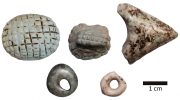
Picrolite, a smooth green stone abundant in the Kouris River west of Limassol, was used for jewelry-making. Beads and other ornamental objects indicate that personal adornment held importance even in this early period. The high quality of craftsmanship in both practical and decorative items points to specialized skills and perhaps part-time craft specialization within the settlement.
Botanical remains provide a window into subsistence practices. Archaeologists used froth flotation to recover remains of wheat, barley, and various legumes. Each excavation deposit, approximately 10 liters in volume, was carefully examined under magnification. Roots, stems, and seeds were analyzed individually and compared with modern plant samples to determine species.
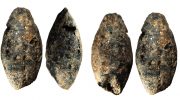
Animal bones show that the inhabitants maintained a mixed diet of domesticated sheep, goats, and pigs, complemented by hunted fallow deer and cattle. This combination of farming and hunting supplied sufficient protein and carbohydrates, as evidenced by skeletal analysis, and reflects a diversified subsistence strategy rather than reliance on a single food source.
Burial Practices and Physical Characteristics
Fourteen human burials containing eighteen individuals were discovered at Tenta. The dead were buried in contracted positions beneath house floors or in open areas outside buildings. Only a red marble bead was found accompanying the remains, suggesting burial customs emphasized simplicity rather than grave goods. This practice of burying the dead under house floors was common at other Neolithic sites in Cyprus including Choirokoitia and indicates a desire to keep ancestors close to the living.
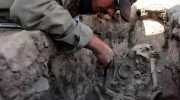
Analysis of the eighteen skeletons provided information about the physical characteristics and health of Tenta’s inhabitants. Males averaged 162.9 centimeters (5 feet 4 inches) in height, while females averaged 153.8 centimeters (5 feet 0.6 inches). These figures are consistent with other Neolithic populations in the Mediterranean.
The average age at death was 30.5 years for males and 36.5 years for females, though this six-year gap may reflect the small sample size and age-averaging techniques rather than an actual pattern. Analysis of teeth indicated generally good dental health and a diet sufficient in protein and carbohydrates. However, some individuals showed evidence of hemolytic anemia and iron-deficiency anemia.
The skeletal analysis also revealed that the inhabitants practiced artificial cranial deformation, deliberately reshaping infants’ skulls during the critical growth period. This practice was common at neighboring Choirokoitia and continued in later periods of Cypriot history including the Late Bronze Age. The practice suggests shared cultural traditions across Neolithic Cyprus and may have served as a marker of group identity.
Why Kalavasos-Tenta Matters
Kalavasos-Tenta is significant because it fills a chronological gap in Cyprus’s early prehistory. Its earliest occupation around 8000 BC predates Choirokoitia by nearly a millennium, demonstrating that Cyprus hosted established, architecturally advanced communities long before the better-known Neolithic sites. This pushes back the timeline of permanent settlement on the island and shows continuity of occupation across several millennia.

The site also highlights regional diversity within Neolithic Cyprus. While Tenta shares many features with Choirokoitia, including circular architecture and burial customs, it also exhibits unique characteristics. The three successive large buildings on the western summit differ in size and plan complexity from other structures. Their precise function remains debated, but they may have served religious, administrative, or communal purposes, distinguishing them from ordinary dwellings and suggesting a more complex social organization.
The Protective Shelter and Modern Preservation
In 1994-1995, a distinctive pyramidal shelter was constructed over the site, financed by the Department of Antiquities and the A.G. Leventis Foundation. This cone-shaped structure protects the delicate ruins from weathering while creating a contemporary architectural intervention in the landscape. The shelter has become an iconic feature visible from the nearby highway and serves as a landmark for the archaeological zone.
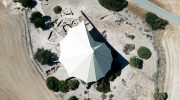
Inside the shelter, a wooden walkway allows visitors to view the excavated remains from above without damaging the fragile structures. Information boards along the walkway provide plans detailing the ruins’ original shape and function, helping visitors understand what they are seeing. The design successfully balances protection of the archaeological remains with public access and educational value.
The site has been virtually reconstructed in a historically accurate video that takes viewers on a 9,500-year journey back in time to see the area during the Aceramic Neolithic period. This digital reconstruction, based on archaeological evidence, shows how the village would have appeared when inhabited and helps bring the stone foundations to life for modern visitors.
Visiting Kalavasos-Tenta
Kalavasos-Tenta is located just off the A1 motorway between Nicosia and Limassol, making it easily accessible for visitors traveling along the main highway. From Larnaca, the site is about a 50-minute drive. Clear signage directs visitors from the highway to the site entrance, where parking is available opposite the ticket office.

The site is open Monday to Friday from 8:00 AM to 4:00 PM. Admission costs €2.50 per person, with standard discounts available for students and groups. Guided tours can be arranged upon request. The protective shelter means the site can be visited comfortably in any weather, unlike many open-air archaeological sites.
A Window Into Cyprus’s Earliest Communities
Kalavasos-Tenta matters because it reveals when permanent settlement truly began in Cyprus and how these early communities organized their lives. The defensive walls, sophisticated architecture, specialized crafts, and spiritual practices demonstrate that by 8000 BC, Cypriot society had already developed complexity. Division of labor, communal decision making, and shared cultural traditions were clearly established at a very early stage.
The site also highlights how much remains unknown. The reasons behind the abandonment of Tenta and other Aceramic Neolithic settlements are still unclear. The purpose of the large buildings on the western summit continues to spark scholarly debate. These unresolved questions make Kalavasos-Tenta more than a static archaeological site. It remains a living field of research where new discoveries continue to reshape our understanding of early Mediterranean civilization.