Hidden in the hills near Protaras, the Cave of the 40 Martyrs is a small chapel carved into limestone rock. This place brings together ancient faith, natural geology, and centuries of devotion in one simple, quiet space.
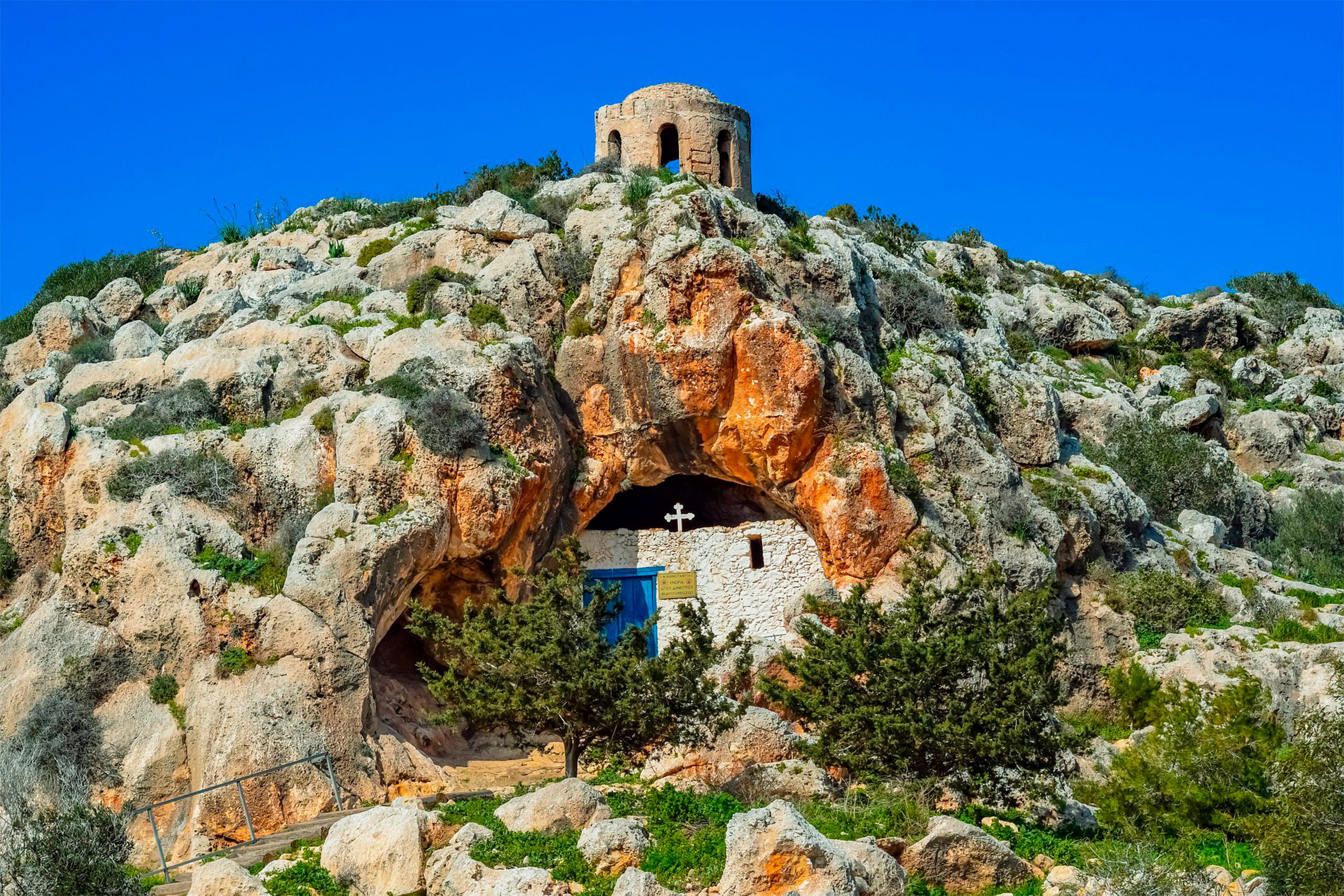
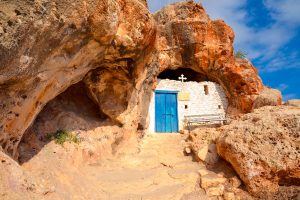
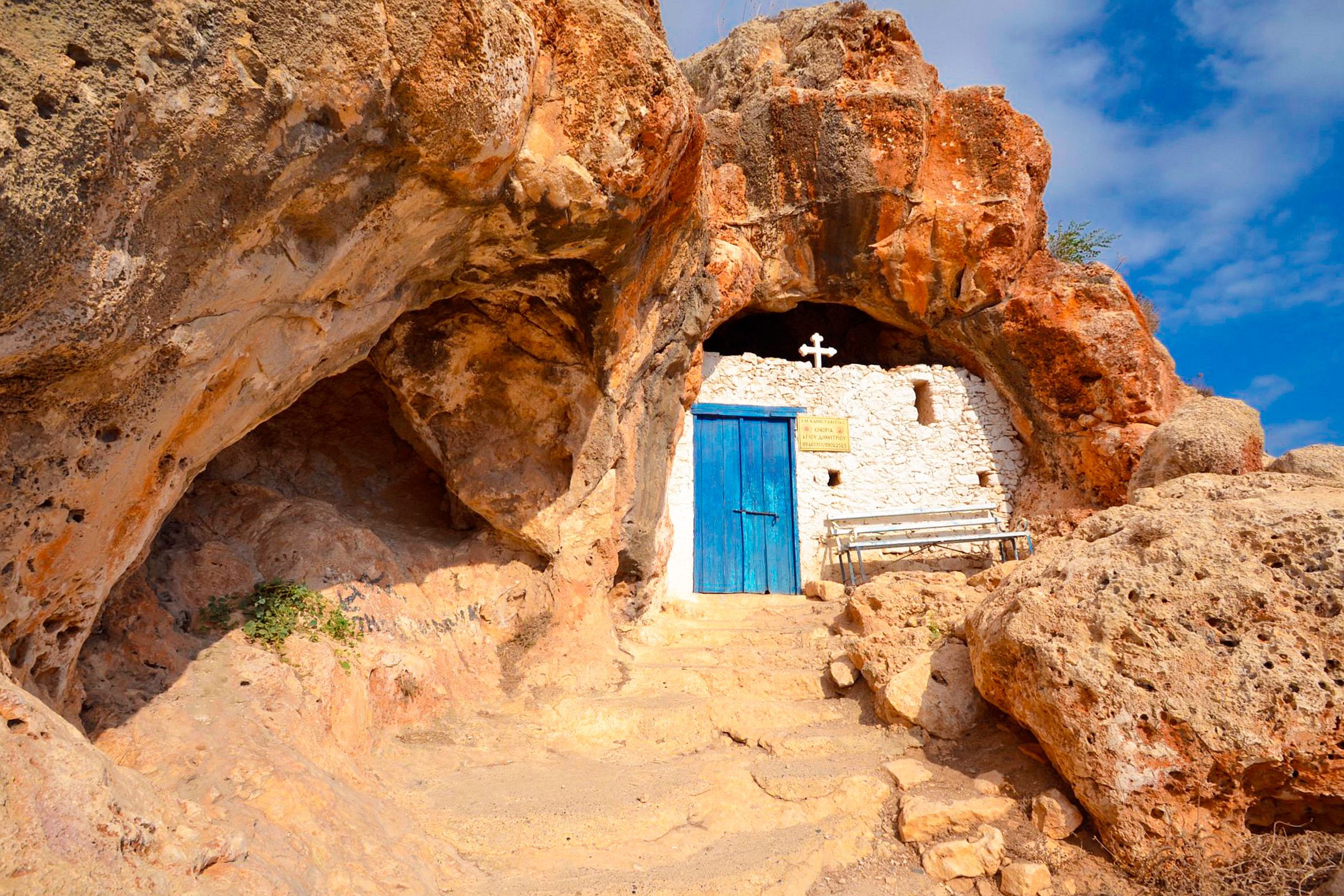
The cave church, known locally as Ayioi Saranta, sits in a natural limestone formation on Fanou Hill. The name translates to the Forty Saints, a direct reference to the 40 Martyrs of Sebaste. This is not a grand cathedral with ornate decoration. It is a cave with a white wall, a blue door, and a stone dome above. Inside, rough rock walls hold a few icons and candles. The floor was paved, but otherwise the cave remains much as nature formed it.
The Story of the 40 Martyrs
The dedication of this cave connects to events that happened over 1,700 years ago. In 320 AD, forty Roman soldiers from the Legio XII Fulminata refused to abandon Christianity during the persecution under Emperor Licinius I. They were stationed near Sebaste in what is now Turkey. Their punishment was brutal. According to Bishop Basil of Caesarea, who documented the story in the 4th century, the soldiers were stripped naked and left to freeze on a frozen lake during a winter night.
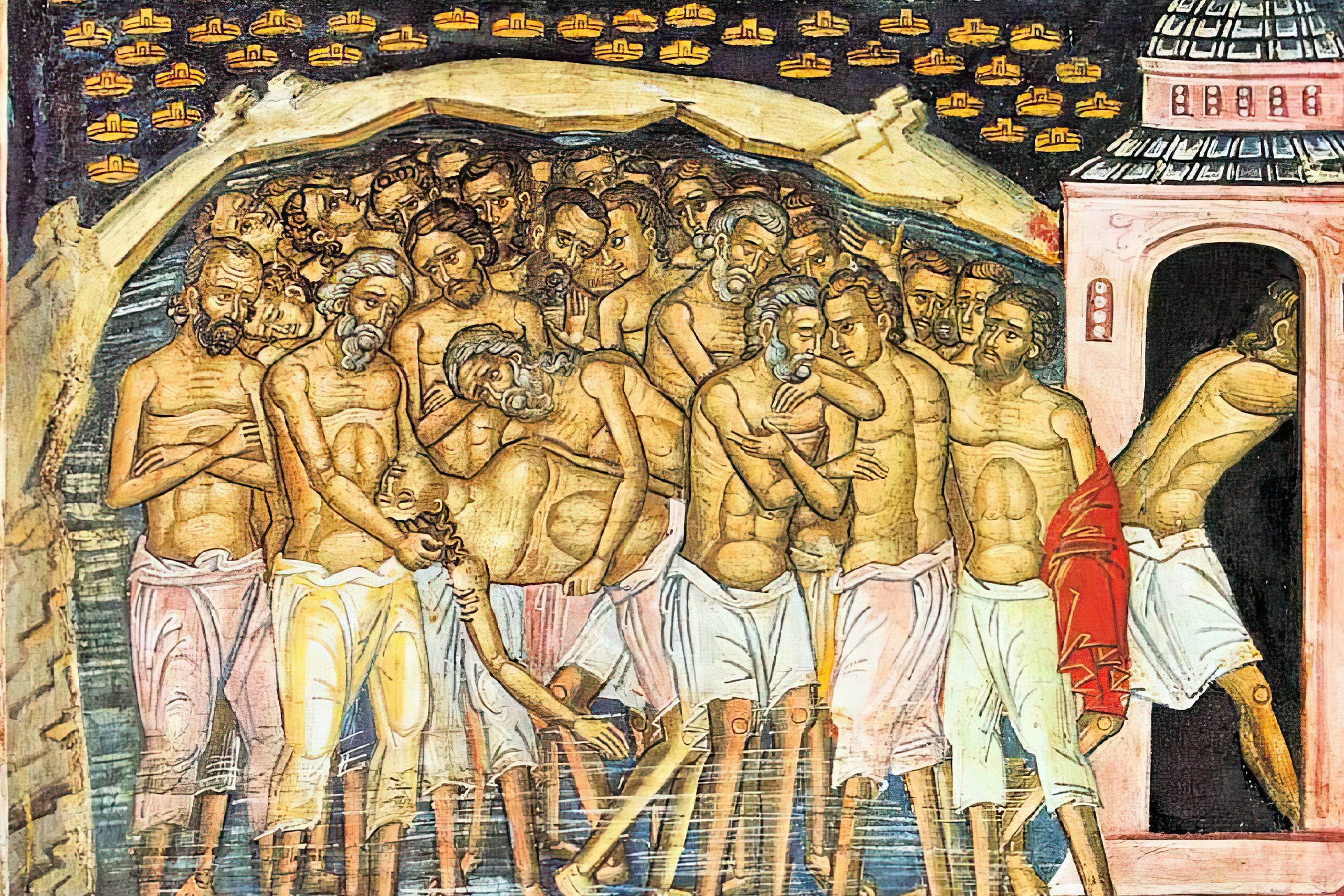
One soldier gave in to the cold and ran to the warm baths on the shore, but he died immediately upon entering the water. A guard named Aglaius witnessed a supernatural light surrounding the remaining men. He declared himself a Christian, removed his clothes, and joined them. This brought the number back to forty. By morning, the soldiers had frozen to death. Their bodies were burned and the ashes thrown into a river, but Christians collected relics that were distributed to churches across the Byzantine world.
What Makes This Cave Church Unique
This cave is different from most churches in Cyprus. It has no priest, no elaborate iconostasis, and no formal records of when it was built or by whom. The interior is minimal. A simple altar stands against the rock, surrounded by a few icons placed in natural crevices in the stone walls. The blue door at the entrance stays unlocked, and visitors are free to enter at any time.
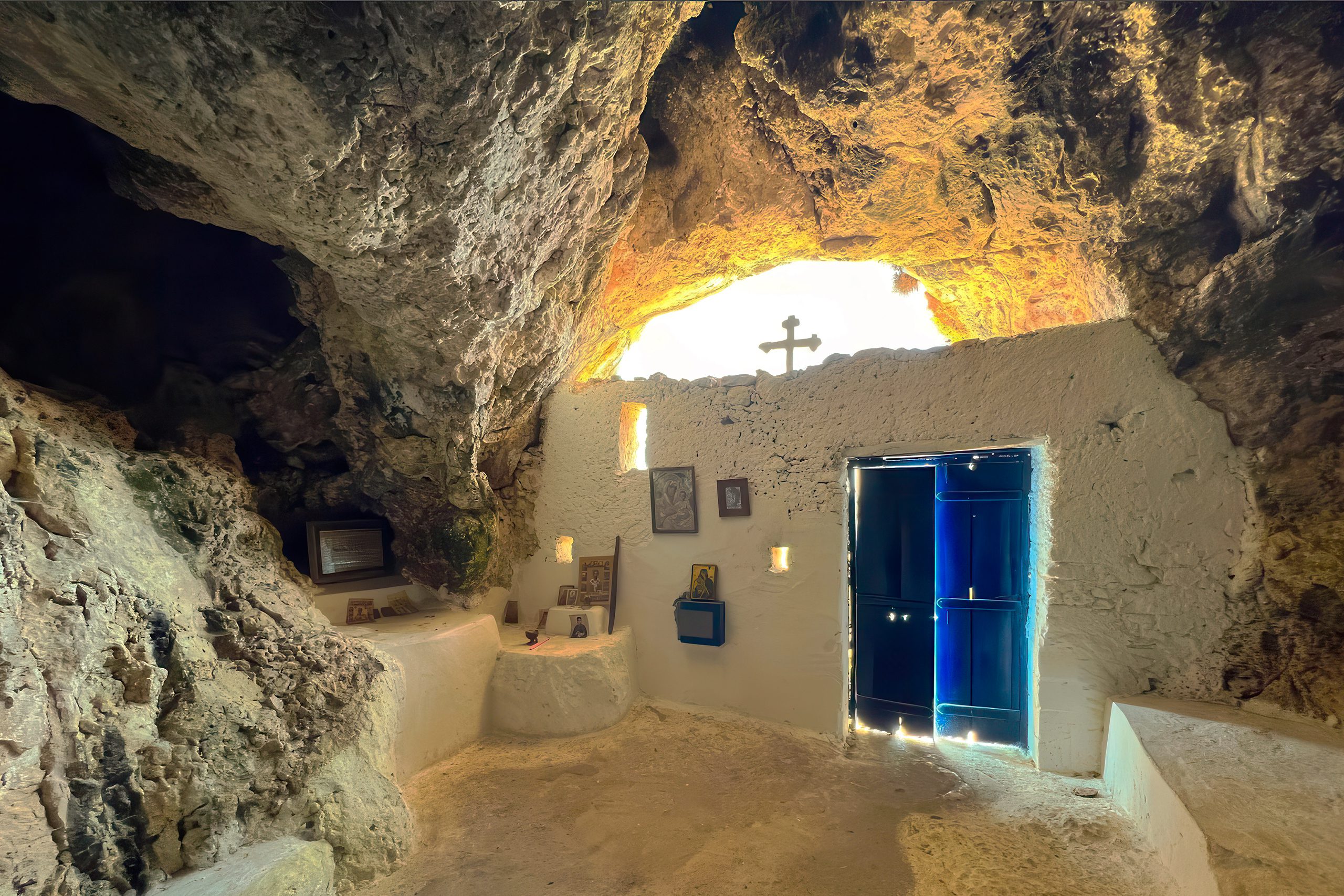
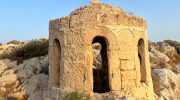
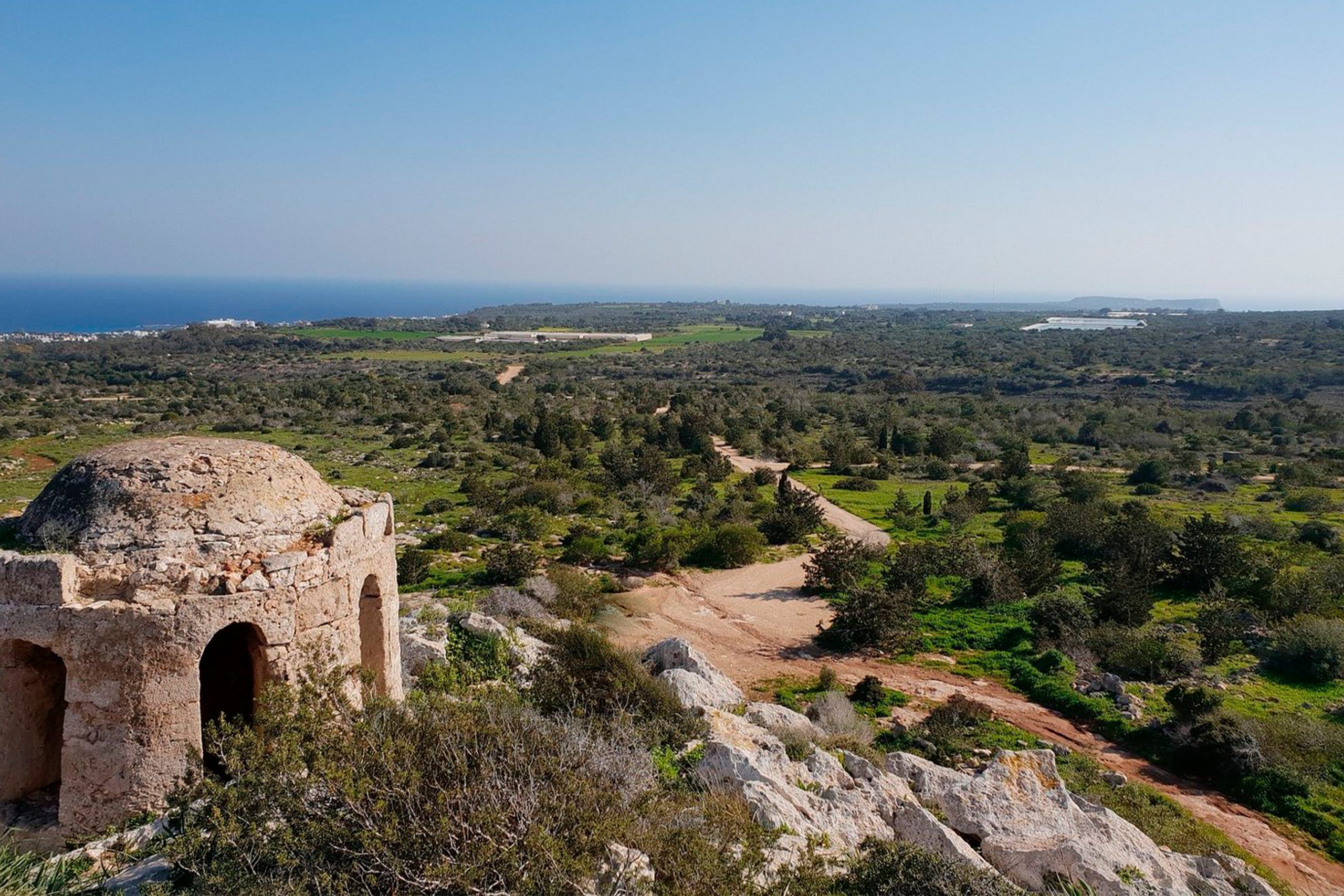
Above the cave, a small white dome protrudes from the hillside, covering an opening in the cave ceiling. This dome helps people locate the church from a distance. Natural light filters through the opening, creating a calm atmosphere that encourages reflection.
Interesting Facts About the Cave
According to local tradition, the cave ceiling contains forty stalactites. These natural rock formations are said to represent the forty martyrs, which may explain why this particular cave was chosen for dedication.
The cave is often unknown even to Cypriots who live in the area. Finding it requires detailed directions, as there are no clear signs once you leave the main roads. The journey involves narrow unpaved roads and a final stretch of gravel track that ends at a wooden stairway.
The feast day of the Forty Martyrs falls on March 9th, when Christian devotees make the trip to pay their respects.
The Geological Formation of the Cave
The cave sits in a limestone formation typical of the coastal areas around Protaras and Ayia Napa. These sedimentary rocks formed millions of years ago from accumulated marine sediments when this region was underwater. Limestone is soluble in acidic water, and over time, rainwater and groundwater slowly dissolved the rock to create caves and cavities.
This limestone cave differs from the volcanic rocks found in the Troodos Mountains further inland. The Troodos Massif is an ophiolite complex, ancient oceanic crust pushed up from the seafloor about 90 million years ago. That region features hard igneous rocks like basalt and gabbro, while the Protaras area has softer limestone formed in shallow seas during more recent geological periods.
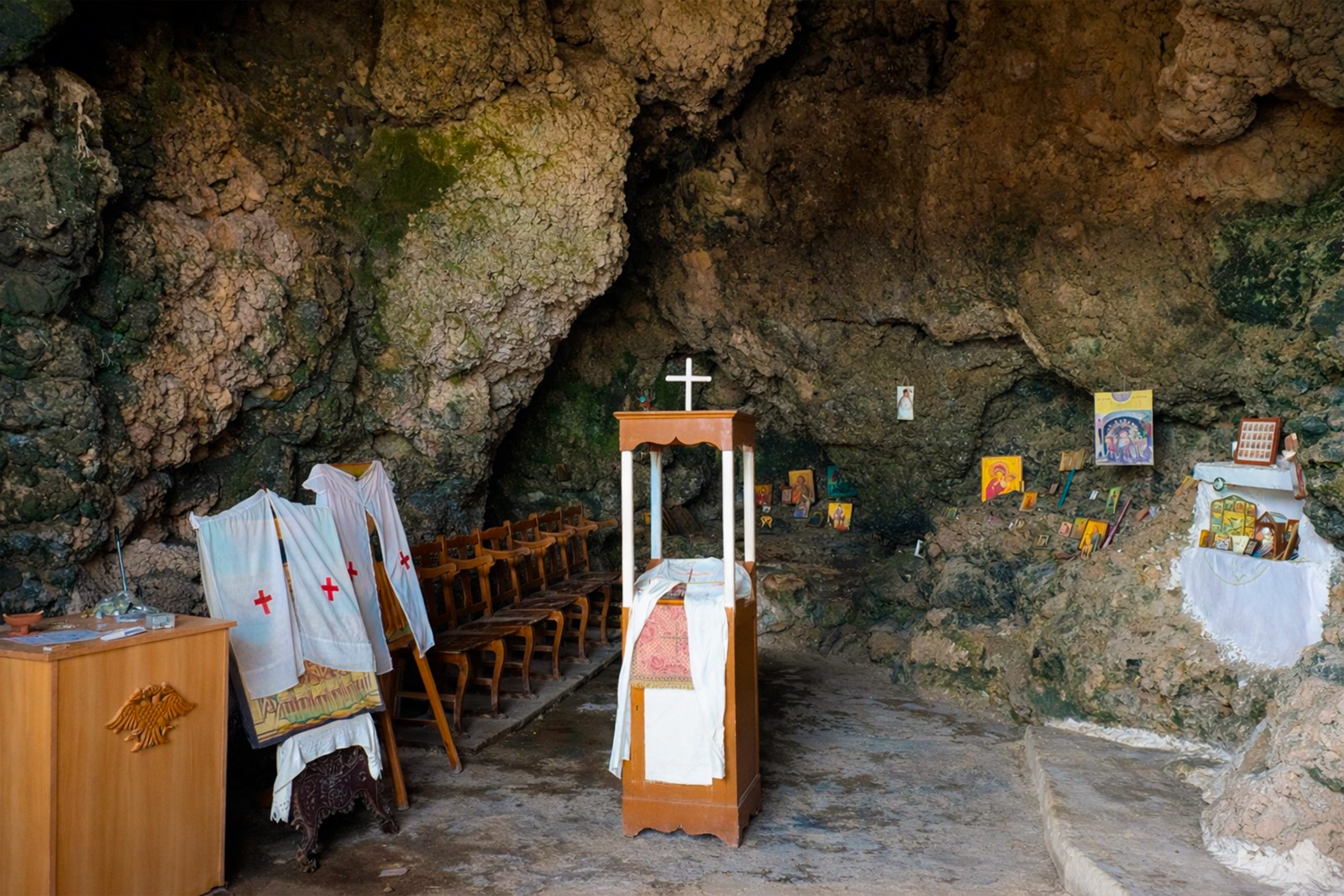
The stalactites inside formed through precipitation. Water seeping through limestone carries dissolved calcium carbonate. When water drips from the ceiling, carbon dioxide escapes and the calcium carbonate solidifies. Over thousands of years, these deposits build up into the hanging formations visible today. The number forty may be coincidental or it may have influenced the choice of this cave for the church dedication.
Why the Cave Still Matters Today
In modern Cyprus, this cave represents a connection to the island’s Christian heritage without the need for grand architecture or formal ceremonies. The Forty Martyrs of Sebaste remain important figures in Orthodox Christianity, and their story of steadfast faith continues to resonate.
The cave offers a reminder that sacred spaces can exist in the most unexpected places. For locals, it is a place to light a candle or say a prayer away from crowds. For visitors, it provides a glimpse into how faith and nature intersect on the island.
How to Visit the Cave Church
The cave is located about 1.6 kilometers from the main road between Ayia Napa and Protaras. Access requires driving down narrow, unpaved roads, with the final 800 meters on a rough gravel track. Regular cars can make the journey, but drivers of rental vehicles may prefer to walk this last section. The track ends at a wooden stairway that leads up to the cave entrance.
Visitors should wear sturdy shoes and bring water, especially during summer months when the heat can be intense. The church is open every day, though the interior is simple and there are no formal services. The blue door is unlocked. Visitors are asked to close it when they leave.
The best time to visit is early morning or late afternoon when temperatures are cooler and the light through the dome creates an atmospheric effect inside the cave.
A Quiet Testament to Faith and Geology
The Cave of the 40 Martyrs is worth knowing about because it shows how history, geology, and faith come together in unexpected ways. This is not a destination designed for tourists. It is a working church, a natural cave, and a memorial to ancient martyrs all at once.
The lack of decoration and formality makes it more, not less, powerful. In a country filled with Byzantine monasteries and ancient ruins, this small cave reminds us that some of the most meaningful places are also the simplest.