All Articles

Leventis Municipal Museum

Leventis Municipal Museum

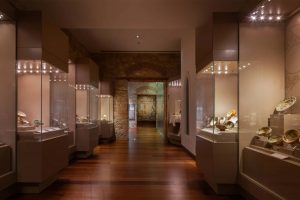
The Leventis Municipal Museum tells the story of Europe's last divided capital through over 10,000 objects collected across five thousand years. Within two years of opening in 1989, it won the European Museum of the Year Award for bringing modern museum standards to Cyprus. The museum occupies a complex of three historic buildings on Ippokratous Street in the Laiki Geitonia neighborhood within the Venetian walls of Nicosia. The main building at number 17 once served as the clinic of Dr. Themistocles Dervis, who was mayor of Nicosia for 27 years between 1929 and 1959. The building at number 15 operated as the Victoria Hotel. The third structure at 18 Solonos Street is a small traditional house from the late 18th…

Read more
Ledra Palace Hotel Nicosia

Ledra Palace Hotel Nicosia

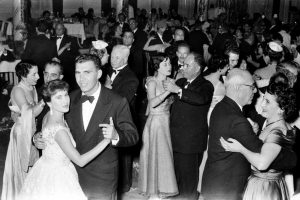
The Ledra Palace Hotel stands in central Nicosia, caught between past glory and present division. Once the capital's most glamorous hotel, it now sits in the UN buffer zone that splits Cyprus in two. The Ledra Palace Hotel occupies a unique position in Cyprus's modern history. Built as a luxury establishment in the late 1940s, it served as the island's social center for Greek, Turkish, British, and Armenian elites. Today the building remains frozen in the Green Line buffer zone, its facade scarred by bullets and mortar craters from the 1974 conflict. The hotel has transformed from a place of celebration to a symbol of division, yet it continues to serve as neutral ground where both communities meet. Historical Background…

Read more
Lapithos

Lapithos

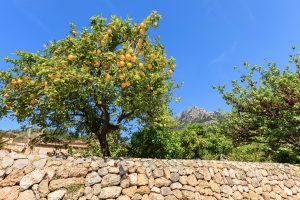
Lapithos sits on the northern coast of Cyprus beneath the Kyrenia mountains, where lemon groves once produced 11 million fruits per year and Byzantine treasures buried during Arab raids emerged a thousand years later in museum collections around the world. This settlement has existed for over 5,000 years under at least four different names. Lapithos is one of the oldest continuously inhabited sites on Cyprus. The modern town of Lapithos occupies the slopes of the Pentadactylos mountain range near where the ancient city kingdom once stood. The coastal ruins three kilometers north are called Lambousa, the name used during Roman and Byzantine times. Ancient writers, including Strabo, knew it as Lapethos. The philosopher Alexander of Ephesus called it Imeroessa, meaning…

Read more
Kyrenia Castle

Kyrenia Castle

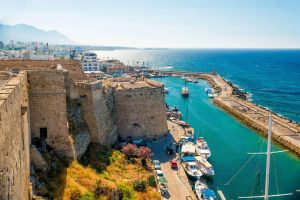
Kyrenia Castle stands at the edge of one of Cyprus’s most sheltered harbours, where land and sea have negotiated power, trade, and survival for centuries. Unlike hilltop fortresses built to dominate territory from afar, this castle was designed to watch the water closely. Its purpose has always been practical: to protect the harbour, control movement, and adapt to whoever ruled Cyprus at the time. That continuous adaptation rather than a single defining moment is what gives Kyrenia Castle its lasting significance. A Fortress Built for a Living Harbour Kyrenia Castle occupies a narrow strip of land between the town and the sea, positioned so that every vessel entering the harbour passes beneath its walls. From its earliest days, the castle…

Read more
Kourion Archaeological Museum

Kourion Archaeological Museum

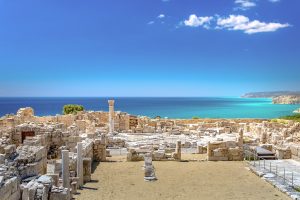
The Kourion Archaeological Museum stands as a small but powerful window into one of Cyprus's most important ancient city-kingdoms. The museum occupies a traditional building that once served as the private residence of George McFadden, who worked as Assistant Director of the University of Pennsylvania and led archaeological research at Kourion from 1934 to 1953. McFadden built this two-story house in 1938-39 to serve both as his home and as the excavation headquarters. After his death in 1953, the Cypriot government took ownership of the property. The building was renovated and opened as a museum in December 1969. The museum consists of two exhibition halls that showcase artifacts recovered from the ancient city of Kourion, the Sanctuary of Apollo Hylates,…

Read more
Kition Phoenician City

Kition Phoenician City

Kition was a city on the southeast coast of Cyprus, where modern Larnaca is today. It was founded in the late 13th century BC during the Late Bronze Age and remained inhabited until the Ptolemaic period. The city had many names: Kittim in the Bible, Kitiya in Phoenician, and Citium in Latin. Kition was an important port, connecting Cyprus with the Aegean, the Levant, and Egypt. The city spread over a large area under modern Larnaca, but only some parts have been dug up. The main archaeological areas are Kathari (Area II), about 500 meters north of Bamboula hill, and Bamboula, about 50 meters north of the Larnaca Archaeological Museum. Excavations here have uncovered temples, city walls, houses, and a…

Read more
Copper Mountains Cyprus Heritage

Copper Mountains Cyprus Heritage

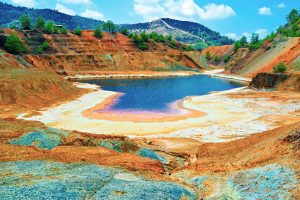
The copper-rich mountains of Cyprus, particularly the Troodos range, were seen by ancient inhabitants as divine gifts from the gods, providing not just vital metal for tools and trade but also spiritual protection and prosperity. These peaks, laced with reddish ore veins, blended natural bounty with sacred myths, making mining a reverent act and turning the island into a Bronze Age powerhouse. Exploring their story reveals how earth, faith, and human ingenuity intertwined to shape Cyprus's enduring legacy. A Sacred Backbone of the Island Step into the heart of Cyprus, and you'll find the Troodos Mountains rising like ancient guardians, their slopes cloaked in pine forests and dotted with villages that seem frozen in time. These aren't just any hills…

Read more
Famagusta Cultural Heritage Museum

Famagusta Cultural Heritage Museum

The Famagusta Cultural Heritage Museum stands as a solemn witness to one of Cyprus's most painful chapters. Built in 1998 on the edge of the United Nations buffer zone in Deryneia, this center offers visitors a rooftop view across barbed wire into Varosha, the abandoned resort district that has remained frozen in time since August 1974. The Cultural Centre of Occupied Famagusta operates as both a museum and an observation point. The facility houses a multipurpose room where visitors watch audiovisual presentations about Famagusta before the 1974 Turkish invasion, when it served as the island's premier tourist destination and cultural hub. The museum displays photographs, posters, and artifacts documenting daily life in Famagusta when the city was home to 40,000…

Read more
Early Seafaring Shipbuilding Traditions

Early Seafaring Shipbuilding Traditions

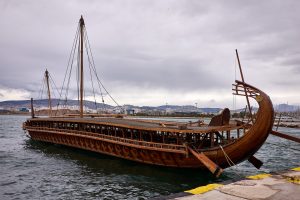
\nCyprus did not become connected to the Mediterranean world by chance. Long before written records, its inhabitants learned to cross open water, build reliable vessels, and read the sea as a route rather than a boundary. These early seafaring and shipbuilding traditions allowed the island to turn geographic isolation into advantage, shaping Cyprus into a place of exchange, movement, and outward connection. To understand Cyprus’s early history is to understand how deeply it was shaped by boats, timber, and the confidence to sail beyond the horizon.\n\n\n\n \n\n\n\n\n\nAn Island That Learned to Look Outward\n\n\n\nFor early communities, water often marked the edge of the known world. In Cyprus, it became the opposite. Surrounded entirely by sea, the island’s survival depended on crossing…

Read more