All Articles

Cyprus Birthplace Mediterranean Copper Trade

Cyprus Birthplace Mediterranean Copper Trade

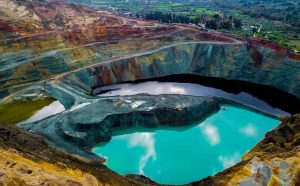
Long before Cyprus became known for beaches or crossroads of empires, it was known for something far more fundamental. Copper. Drawn from its mountains and carried across open water, this metal placed the island at the center of the ancient Mediterranean world. Cyprus did not merely export a resource. It supplied the material that powered the Bronze Age and, in doing so, helped shape the earliest long-distance trade networks ever formed at sea. This is not a story of passive geography or accidental wealth. It is the story of how an island learned to move its resources outward, turning stone into influence and distance into connection. An Island Defined by What Lay Beneath Copper was the first metal to change…

Read more
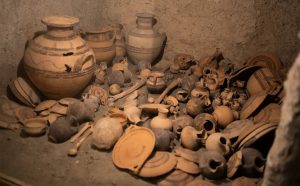
Colour as Theological and Social Language

Colour as Theological and Social Language

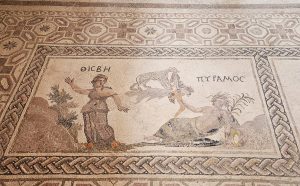
Color as Theological and Social Language in ancient Cypriot art involved the deliberate use of hues to convey concepts of divinity, societal roles, and human experience. Red often symbolized fertility and vital energy, black represented mourning or the mysteries of the afterlife, and gold evoked divine authority. Artists selected these colors with intent, transforming ordinary objects into carriers of profound messages that continue to reveal insights into the island's cultural and spiritual world. A Palette Rich in Symbolism Ancient Cypriot art employed colors as a form of communication, where each shade carried layers of theological and social significance. Far from mere embellishment, these choices reflected a sophisticated system in which hues expressed ideas of sanctity, power, grief, or renewal. Influenced…

Read more
The Chalcolithic Priestesses of Enkomi

The Chalcolithic Priestesses of Enkomi

In the Chalcolithic period of Cyprus, around 3900 to 2500 BC, women likely held key roles as priestesses or ritual leaders in communities like those near what would later become Enkomi. These figures guided ceremonies focused on fertility, birth, and the emerging magic of metallurgy, acting as bridges between daily life and unseen forces. Their story uncovers a time when religion was woven into survival, leaving us with intriguing artifacts that hint at powerful female authority in ancient Cypriot society. Unveiling an Ancient Spiritual World Step back to a Cyprus without cities, kings, or written words - a landscape of scattered villages where life hung on the whims of nature. This was the Chalcolithic era, a bridge between the Stone…

Read more
Copper Age Cyprus

Copper Age Cyprus

Long before Cyprus became famous for its beaches, it was known for something far more valuable: copper. Thousands of years ago, this small island became one of the most important places in the Mediterranean for the shimmering red metal buried in its mountains. The story of how Cyprus rose from simple farming villages to a Bronze Age powerhouse is one of innovation, trade, and transformation. What is Chalcolithic and Bronze Age Cyprus? The Chalcolithic and Bronze Age periods mark when Cyprus evolved from isolated farming communities into a wealthy, interconnected civilization. The Chalcolithic period (around 3900-2500 BC) was a transitional era when people first experimented with copper alongside traditional stone tools. The Bronze Age that followed (roughly 2500-1050 BC) saw…

Read more
Byzantine Cyprus: Eastern Mediterranean Defense

Byzantine Cyprus: Eastern Mediterranean Defense

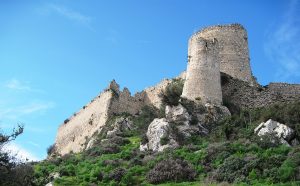
Cyprus was never a distant outpost of the Byzantine Empire. From late antiquity through the Middle Ages, it functioned as a frontline maritime shield, protecting the sea lanes that connected Anatolia, the Levant, and the Aegean. Byzantine naval defense on Cyprus was not limited to fleets and battles. It was a layered system combining geography, coastal fortifications, mountain surveillance, communication networks, and naval presence. Together, these elements allowed the empire to detect threats early, control movement at sea, and preserve stability in one of the Mediterranean’s most contested regions. An Island Positioned to Watch the Sea Cyprus sits at a natural crossroads of the Eastern Mediterranean. From its shores, routes radiate toward southern Anatolia, Syria and Palestine, Egypt, and the…

Read more
Büyük Han Nicosia Ottoman Caravanserai

Büyük Han Nicosia Ottoman Caravanserai

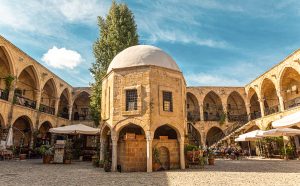
In the center of the Turkish-occupied part of Nicosia’s Old City stands a building that has had many lives. It has been a merchant’s inn, a prison, a home for displaced families, and today it is a lively cultural center. Built in 1572, just two years after the Ottomans took over Cyprus, Büyük Han is the largest and best example of caravanserai architecture on the island. The building is almost square, measuring 50.67 by 45.25 meters, and has 68 rooms on two floors arranged around a central courtyard. It was originally built for traveling merchants and traders who connected Cyprus with Anatolia, the Levant, and beyond. Büyük Han is considered one of the best surviving examples of Ottoman architecture in…

Read more
Roman Cyprus: Mediterranean Maritime Hub

Roman Cyprus: Mediterranean Maritime Hub

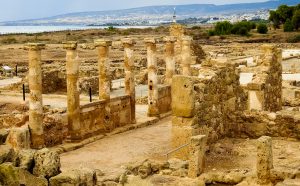
When Cyprus became part of the Roman world, the island did not need to reinvent its relationship with the sea. Instead, Rome refined it. Over centuries, Roman engineers, administrators, and merchants transformed Cyprus into a carefully managed maritime province, one that linked eastern trade routes with the wider Mediterranean through ports, harbors, and logistics designed for permanence rather than improvisation. From Crossroads to System Cyprus had always sat between worlds. Long before Roman rule, ships traveling between the Levant, Egypt, Asia Minor, and the Aegean passed its shores. What changed under Rome was not geography, but organization. The Romans treated the sea as infrastructure. Ports were no longer just safe places to land. They became regulated environments, engineered to control…

Read more
Bellapais Abbey

Bellapais Abbey

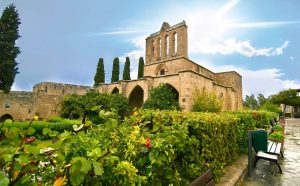
Bellapais Abbey is a 13th-century monastery ruin located in the village of Bellapais, about 5 kilometers from Kyrenia in the Turkish-occupied part of Cyprus. Built on a hillside at 220 meters above sea level, the abbey offers views across the coast to the Mediterranean Sea. This Gothic structure is considered one of the finest examples of medieval architecture in the Eastern Mediterranean and remains one of Cyprus's most visited historical sites. The site may have been known as Episcopia or Piscopia before the abbey was built, suggesting it served as a residence for the Bishop of Kyrenia and as a refuge during Arab raids in the 7th and 8th centuries. The elevated position and defensible location made it suitable for…

Read more
Painted Churches In the Troodos Region

Painted Churches In the Troodos Region

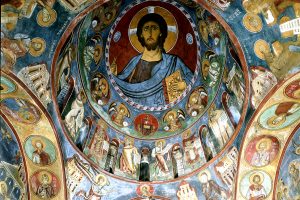
Ten small medieval churches scattered across the Troodos Mountains preserve some of the finest surviving examples of wall painting traditions in the Eastern Mediterranean. These UNESCO World Heritage sites document around 500 years of artistic development through richly decorated interior fresco cycles. Nine of the ten structures are located in the Nicosia District, while one, Timios Stavros in Pelendri, is situated in the Limassol District. The buildings date from the 11th to the 16th centuries and reflect a combination of high-quality metropolitan artistic styles and strong local artistic identity. These structures range from small rural chapels to larger monastic complexes such as Agios Ioannis Lampadistis. Their external simplicity contrasts sharply with their richly decorated interiors, where walls are covered with…

Read more